
Verwandte Artikel zu Ethnography and Virtual Worlds: A Handbook of Method
Inhaltsangabe
A practical guide to the ethnographic study of online cultures, and beyond
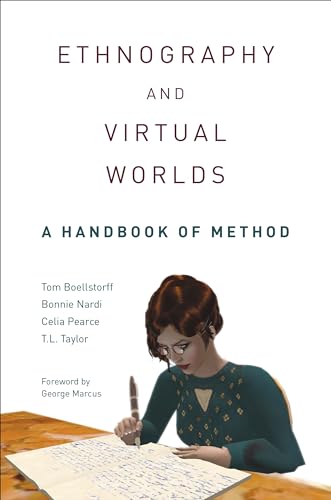
Ethnography and Virtual Worlds is the only book of its kind—a concise, comprehensive, and practical guide for students, teachers, designers, and scholars interested in using ethnographic methods to study online virtual worlds, including both game and nongame environments. Written by leading ethnographers of virtual worlds, and focusing on the key method of participant observation, the book provides invaluable advice, tips, guidelines, and principles to aid researchers through every stage of a project, from choosing an online fieldsite to writing and publishing the results.
- Provides practical and detailed techniques for ethnographic research customized to reflect the specific issues of online virtual worlds, both game and nongame
- Draws on research in a range of virtual worlds, including Everquest, Second Life, There.com, and World of Warcraft
- Provides suggestions for dealing with institutional review boards, human subjects protocols, and ethical issues
- Guides the reader through the full trajectory of ethnographic research, from research design to data collection, data analysis, and writing up and publishing research results
- Addresses myths and misunderstandings about ethnographic research, and argues for the scientific value of ethnography
Die Inhaltsangabe kann sich auf eine andere Ausgabe dieses Titels beziehen.
Über die Autorin bzw. den Autor
Tom Boellstorff is professor of anthropology at the University of California, Irvine. Their books include Coming of Age in Second Life: An Anthropologist Explores the Virtually Human. Bonnie Nardi is professor (emer.) of informatics at the University of California, Irvine. Her books include My Life as a Night Elf Priest: An Anthropological Account of World of Warcraft. Celia Pearce is professor of game design at Northeastern University. Her books include Communities of Play: Emergent Cultures in Multiplayer Games and Virtual Worlds. T. L. Taylor is professor of comparative media studies at the Massachusetts Institute of Technology. Her books include Play Between Worlds: Exploring Online Game Culture.
Von der hinteren Coverseite
"What does 'being there to know there' mean in the virtual world? 'Not much,' I used to think! Maybe 'virtual ethnography' was an oxymoron? This book changed my mind. Most surprising is how the authors' distillation of ethnography for virtual worlds reveals its essential and classical features. This book renews the craft of ethnography for all of the social sciences in virtual and physical worlds alike, making us think differently about both."--Paul Willis, author ofLearning to Labor: How Working Class Kids Get Working Class Jobs
"This might be the best thing I have ever read about ethnography. I love this book."--Lori Kendall, author ofHanging Out in the Virtual Pub
"Written by a very authoritative team, this is a distinctive guide, rich in practical advice grounded in the authors' experiences."--Christine Hine, author ofVirtual Ethnography
Aus dem Klappentext
"What does 'being there to know there' mean in the virtual world? 'Not much,' I used to think! Maybe 'virtual ethnography' was an oxymoron? This book changed my mind. Most surprising is how the authors' distillation of ethnography for virtual worlds reveals its essential and classical features. This book renews the craft of ethnography for all of the social sciences in virtual and physical worlds alike, making us think differently about both."--Paul Willis, author ofLearning to Labor: How Working Class Kids Get Working Class Jobs
"This might be the best thing I have ever read about ethnography. I love this book."--Lori Kendall, author ofHanging Out in the Virtual Pub
"Written by a very authoritative team, this is a distinctive guide, rich in practical advice grounded in the authors' experiences."--Christine Hine, author ofVirtual Ethnography
Auszug. © Genehmigter Nachdruck. Alle Rechte vorbehalten.
ETHNOGRAPHY AND VIRTUAL WORLDS
A Handbook of MethodBy TOM BOELLSTORFF BONNIE NARDI CELIA PEARCE T.L. TAYLORPRINCETON UNIVERSITY PRESS
Copyright © 2012 Tom Boellstorff, Bonnie Nardi, Celia Pearce, and T.L. TaylorAll right reserved.
ISBN: 978-0-691-14950-9
Contents
Acknowledgments..............................................................................xiForeword, by George Marcus...................................................................xiiiCHAPTER 1. WHY THIS HANDBOOK?................................................................1CHAPTER 2. THREE BRIEF HISTORIES.............................................................13CHAPTER 3. TEN MYTHS ABOUT ETHNOGRAPHY.......................................................29CHAPTER 4. RESEARCH DESIGN AND PREPARATION...................................................52CHAPTER 5. PARTICIPANT OBSERVATION IN VIRTUAL WORLDS.........................................65CHAPTER 6. INTERVIEWS AND VIRTUAL WORLDS RESEARCH............................................92CHAPTER 7. OTHER DATA COLLECTION METHODS FOR VIRTUAL WORLDS RESEARCH.........................113CHAPTER 8. ETHICS............................................................................129CHAPTER 9. HUMAN SUBJECTS CLEARANCE AND INSTITUTIONAL REVIEW BOARDS..........................151CHAPTER 10. DATA ANALYSIS....................................................................159CHAPTER 11. WRITING UP, PRESENTING, AND PUBLISHING ETHNOGRAPHIC RESEARCH.....................182CHAPTER 12. CONCLUSION: ARRIVALS AND NEW DEPARTURES..........................................196References...................................................................................201Index........................................................................................223
Chapter One
WHY THIS HANDBOOK?
1.1 BEGINNINGS
Virtual worlds are places of imagination that encompass practices of play, performance, creativity, and ritual. The social lifeworlds that emerge within them are very real. They represent a complex transaction between their designers, who have certain goals and desires about what people will do, and the denizens of virtual worlds themselves, who exercise individual and collective agency. They draw upon physical world cultures in multiple ways yet at the same time create possibilities for the emergence of new cultures and practices. Just as in the physical world, people within virtual worlds perform and cycle through different roles and identities. Virtual worlds make such shifts explicit, as well as introducing spaces for play and experimentation. How can we study these emerging cultural contexts?
Ethnography, an approach for studying everyday life as lived by groups of people, provides powerful resources for the study of the cultures of virtual worlds. As ethnographers, what interests us about virtual worlds is not what is extraordinary about them, but what is ordinary. We are intrigued not only by the individuals in a group, but by the sum of the parts. We aim to study virtual worlds as valid venues for cultural practice, seeking to understand both how they resemble and how they differ from other forms of culture. We do this by immersing our embodied selves within the cultures of interest, even when that embodiment is in the form of an avatar, the representation of self in these spaces. The goal of this handbook is to provide ethnographers with a practical set of tools and approaches for conducting successful fieldwork in virtual worlds.
Cultures, as shared systems of meaning and practice, shape our hopes and beliefs; our ideas about family, identity, and society; our deepest assumptions about being a person in this world. We now face a contemporary moment when the phrase "in this world" requires fresh inquiry. With the rise of virtual worlds, we find novel possibilities for human culture, even as we discover continuities with long-standing physical world conventions and practices.
We are four scholars who became intrigued by virtual worlds, impressed by the social life we saw emerging within them. We were enthusiastic about bringing the approaches used to study physical world cultures into these new online places of social life. In particular, we used ethnographic methods, originally designed for studying cultures in the physical world, to study cultures in virtual worlds. We were surprised and gratified that our approach paid off: in different virtual world contexts, we discovered places rich with social interaction, creativity, challenge, and history. This told us something important about virtual worlds themselves as vital places of social interaction and cultural activity (Hine 2005).
Between 2006 and 2010 each of us completed a book based on our individual research projects (Taylor 2006a; Boellstorff 2008a; Pearce and Artemesia 2009; Nardi 2010). Since publishing these books, all four of us have been surprised at how often we have been asked, "How did you study the virtual world you write about?" Our short answer is usually something like, "Well, as an ethnographer I observed social groups and conducted interviews, but I also participated in ongoing virtual world activities as much as possible." We add that participation entailed intense involvement and engagement, often to the point of mastery.
As ethnographers interested in immersive detail and rich context, we have been painfully aware of the inadequacy of such perfunctory responses and the growing need for better resources and discussion about how to conduct this kind of work. For a time we suffered our frustrations in relative isolation. However, in the early months of 2009, the four of us began a series of lively conversations in which we discovered that we shared this predicament and a desire to do something about it. Eventually we decided to put our heads together and write a text so that we could, in a principled and productive way, offload the question "How did you do it?"—by suggesting to our interrogators that they grab this short volume. Our intention is to elucidate as succinctly as possible what it means to ethnographically investigate a virtual world. As noted below, we discussed the genre of a "handbook" at length and concluded that our contribution would be a practical text to be stashed in a backpack, easily consulted, and kept "on hand" when doing fieldwork—even when the "field" in question is online.
As we plunged into writing, we realized that we wanted to do more than craft a guide to ethnography in virtual worlds. We also intend this handbook to serve as a primer on ethnographic research as a core social science methodology, and as a valuable mindset or approach to scientific inquiry. We hope our discussions resonate with virtual worlds researchers as well as those studying other online contexts, and even beyond. We discuss how ethnographic research requires immersion in a fieldsite using a palette of methods that always includes the central technique of participant observation. The goal is to grasp everyday perspectives by participating in daily life, rather than to subject people to experimental stimuli or decontextualized interviews. Ethnographers often speak of their work as "holistic." Rather than slicing up social life according to variables chosen for their contribution to variance in a statistically drawn sample, ethnographers attend to how cultural domains constitute and influence each other. We aim to discern broad patterns and meanings within what ethnographers often term "lifeworlds." Because of this focus, ethnographic research is predicated upon remaining in the field for a...
„Über diesen Titel“ kann sich auf eine andere Ausgabe dieses Titels beziehen.
Suchergebnisse für Ethnography and Virtual Worlds: A Handbook of Method

Beispielbild für diese ISBN
Ethnography and Virtual Worlds: A Handbook of Method
Anbieter: Labyrinth Books, Princeton, NJ, USA
Verkäuferbewertung 5 von 5 Sternen

Zustand: New. Artikel-Nr. 154204
Neu kaufen
EUR 42,13
EUR 3,92 Versand
Versand innerhalb von USA
Versand innerhalb von USA
Anzahl: 4 verfügbar