
Verwandte Artikel zu The Pragmatism Reader: From Peirce through the Present
Inhaltsangabe
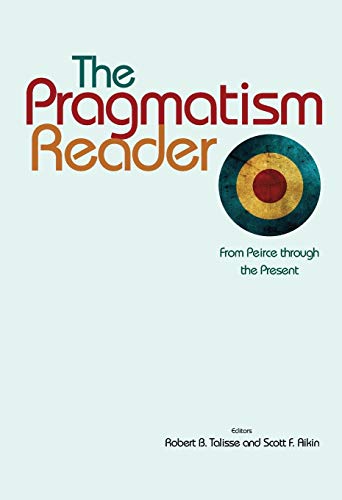
A wide-ranging anthology of key pragmatist writings The Pragmatism Reader is the essential anthology of this important philosophical movement. Each selection featured here is a key writing by a leading pragmatist thinker, and represents a distinctively pragmatist approach to a core philosophical problem. The collection includes work by pragmatism's founders, Charles Peirce, William James, and John Dewey, as well as seminal writings by mid-twentieth-century pragmatists such as Sidney Hook, C. I. Lewis, Nelson Goodman, Rudolf Carnap, Wilfrid Sellars, and W.V.O. Quine. This reader also includes the most important work in contemporary pragmatism by philosophers like Susan Haack, Cornel West, Hilary Putnam, Richard Rorty, Cheryl Misak, and Robert Brandom. Each selection is a stand-alone piece-not an excerpt or book chapter-and each is presented fully unabridged. The Pragmatism Reader challenges the notion that pragmatism fell into a midcentury decline and was dormant until the advent of "neopragmatism" in the 1980s. This comprehensive anthology reveals a rich and highly influential tradition running unbroken through twentieth-century philosophy and continuing today. It shows how American pragmatist philosophers have contributed to leading philosophical debates about truth, meaning, knowledge, experience, belief, existence, justification, and freedom. Covers pragmatist philosophy from its origins to today Features key writings by the leading pragmatist thinkers Demonstrates the continuity and enduring influence of pragmatism Challenges prevailing notions about pragmatism Includes only stand-alone pieces, completely unabridged Reflects the full range of pragmatist themes, arguments, concerns, and commitments
Die Inhaltsangabe kann sich auf eine andere Ausgabe dieses Titels beziehen.
Über die Autorin bzw. den Autor
Robert B. Talisse is professor of philosophy at Vanderbilt University. His books include A Pragmatist Philosophy of Democracy. Scott F. Aikin is senior lecturer in philosophy at Vanderbilt. He is the coauthor, with Robert Talisse, of Pragmatism: A Guide for the Perplexed.
Von der hinteren Coverseite
"With an excellent selection of papers by all the classical pragmatists and a very well judged collection of pieces by more recent philosophers sympathetic to pragmatism, this superb volume provides material for a successful course on pragmatism and also offers readers a fascinating overview of its varieties."--Christopher Hookway, University of Sheffield
"The alleged patterns of storied philosophies are always contestable, and contested. Do they reflect objective joints or only artificial impositions? This collection helps to show just how objective the pattern of pragmatism is, and how broad its scope. It is a welcome arrangement of skillfully selected contributions."--Ernest Sosa, Rutgers University
"An excellent collection. The Pragmatism Reader currently offers the best selection of writings from the pragmatist tradition, and successfully presents the movement as a continuous and coherent strain in twentieth- and twenty-first-century philosophy."--Henry Jackman, York University
"The Pragmatism Reader does a much better job of bringing into bold relief the continuities in the development of pragmatism from its inception to the present than does any other anthology. Talisse and Aikin's introduction is bold and original and helps the reader to see these strands of continuity among the different pieces included here."--Richard M. Gale, professor emeritus, University of Pittsburgh
Auszug. © Genehmigter Nachdruck. Alle Rechte vorbehalten.
The Pragmatism Reader
FROM PEIRCE THROUGH THE PRESENTPRINCETON UNIVERSITY PRESS
Copyright © 2011 Princeton University PressAll right reserved.
ISBN: 978-0-691-13706-3
Contents
Introduction..............................................................................1Some Consequences of Four Incapacities....................................................12The Fixation of Belief....................................................................37How to Make Our Ideas Clear...............................................................50Philosophical Conceptions and Practical Results...........................................66Pragmatism's Conception of Truth..........................................................79The Will to Believe.......................................................................92The Need for a Recovery of Philosophy.....................................................109The Influence of Darwinism on Philosophy..................................................141Creative Democracy—The Task before Us...............................................150The Democratic Way of Life................................................................155A Pragmatic Conception of the A Priori....................................................166Words, Works, Worlds......................................................................174The New Riddle of Induction...............................................................188Two Dogmas of Empiricism..................................................................202On What There Is..........................................................................221Natural Kinds.............................................................................234Empiricism, Semantics, and Ontology.......................................................249Language as Thought and Communication.....................................................265On the Very Idea of a Conceptual Scheme...................................................286Meaning and Reference.....................................................................299Realism with a Human Face.................................................................309A Reconsideration of Deweyan Democracy....................................................331The World Well Lost.......................................................................353Solidarity or Objectivity?................................................................367The Priority of Democracy to Philosophy...................................................381Dispensing with Metaphysics in Religious Thought..........................................403Double-Aspect Foundherentism: A New Theory of Empirical Justification.....................407Pragmatic Adjudication....................................................................423From Truth to Semantics: A Path through Making It Explicit................................440Truth as a Convenient Friction............................................................451Making Disagreement Matter: Pragmatism and Deliberative Democracy.........................471Credits...................................................................................485Index.....................................................................................487
Chapter One
This essay was originally published in 1868. Here Peirce launches the kind of attack on cartesianism that lies at the heart of most subsequent pragmatism.
CHARLES S. PEIRCE
Some Consequences of Four Incapacities
Descartes is the father of modern philosophy, and the spirit of Cartesianism—that which principally distinguishes it from the scholasticism which it displaced—may be compendiously stated as follows:
1. It teaches that philosophy must begin with universal doubt; whereas scholasticism had never questioned fundamentals.
2. It teaches that the ultimate test of certainty is to be found in the individual consciousness; whereas scholasticism had rested on the testimony of sages and of the Catholic Church.
3. The multiform argumentation of the middle ages is replaced by a single thread of inference depending often upon inconspicuous premisses.
4. Scholasticism had its mysteries of faith, but undertook to explain all created things. But there are many facts which Cartesianism not only does not explain but renders absolutely inexplicable, unless to say that "God makes them so" is to be regarded as an explanation.
In some, or all of these respects, most modern philosophers have been, in effect, Cartesians. Now without wishing to return to scholasticism, it seems to me that modern science and modern logic require us to stand upon a very different platform from this.
1. We cannot begin with complete doubt. We must begin with all the prejudices which we actually have when we enter upon the study of philosophy. These prejudices are not to be dispelled by a maxim, for they are things which it does not occur to us can be questioned. Hence this initial skepticism will be a mere self-deception, and not real doubt; and no one who follows the Cartesian method will ever be satisfied until he has formally recovered all those beliefs which in form he has given up. It is, therefore, as useless a preliminary as going to the North Pole would be in order to get to Constantinople by coming down regularly upon a meridian. A person may, it is true, in the course of his studies, find reason to doubt what he began by believing; but in that case he doubts because he has a positive reason for it, and not on account of the Cartesian maxim. Let us not pretend to doubt in philosophy what we do not doubt in our hearts.
2. The same formalism appears in the Cartesian criterion, which amounts to this: "Whatever I am clearly convinced of, is true." If I were really convinced, I should have done with reasoning and should require no test of certainty. But thus to make single individuals absolute judges of truth is most pernicious. The result is that metaphysicians will all agree that metaphysics has reached a pitch of certainty far beyond that of the physical sciences;—only they can agree upon nothing else. In sciences in which men come to agreement, when a theory has been broached it is considered to be on probation until this agreement is reached. After it is reached, the question of certainty becomes an idle one, because there is no one left who doubts it. We individually cannot reasonably hope to attain the ultimate philosophy which we pursue; we can only seek it, therefore, for the community of philosophers. Hence, if disciplined and candid minds carefully examine a theory and refuse to accept it, this ought to create doubts in the mind of the author of the theory himself.
3. Philosophy ought to imitate the successful sciences in its methods, so far as to proceed only from tangible premisses which can be subjected to careful scrutiny, and to trust rather to the multitude and variety of its arguments than to the conclusiveness of any one. Its reasoning should not form a chain which is no stronger than its weakest link, but a cable whose fibers may be ever so slender, provided they are sufficiently numerous and intimately connected.
4. Every unidealistic philosophy supposes some absolutely inexplicable, unanalyzable ultimate; in short, something resulting from mediation itself not susceptible of mediation. Now that anything is thus inexplicable can only be known by reasoning from signs. But the only...
„Über diesen Titel“ kann sich auf eine andere Ausgabe dieses Titels beziehen.
Weitere beliebte Ausgaben desselben Titels

Suchergebnisse für The Pragmatism Reader: From Peirce through the Present

Beispielbild für diese ISBN
The Pragmatism Reader
Anbieter: PBShop.store UK, Fairford, GLOS, Vereinigtes Königreich
Verkäuferbewertung 5 von 5 Sternen

PAP. Zustand: New. New Book. Shipped from UK. Established seller since 2000. Artikel-Nr. WP-9780691137063
Neu kaufen
EUR 48,98
EUR 6,87 Versand
Versand von Vereinigtes Königreich nach USA
Versand von Vereinigtes Königreich nach USA
Anzahl: 2 verfügbar
Beispielbild für diese ISBN
The Pragmatism Reader: From Peirce through the Present
Anbieter: Kennys Bookstore, Olney, MD, USA
Verkäuferbewertung 5 von 5 Sternen
Zustand: New. 2011. Paperback. Challenges the notion that pragmatism fell into a midcentury decline and was dormant until the advent of 'neopragmatism' in the 1980s. This title reveals an influential tradition running unbroken through twentieth-century philosophy and continuing today. Editor(s): Talisse, Robert B.; Aikin, Scott F. Num Pages: 504 pages, 5 line illus. BIC Classification: HPCF. Category: (P) Professional & Vocational; (U) Tertiary Education (US: College). Dimension: 239 x 164 x 34. Weight in Grams: 786. . . . . . Books ship from the US and Ireland. Artikel-Nr. V9780691137063
Neu kaufen
EUR 69,95
EUR 9,08 Versand
Versand innerhalb von USA
Versand innerhalb von USA
Anzahl: 1 verfügbar
Beispielbild für diese ISBN
The Pragmatism Reader From Peirce through the Present
Anbieter: Revaluation Books, Exeter, Vereinigtes Königreich
Verkäuferbewertung 5 von 5 Sternen
Paperback. Zustand: Brand New. 492 pages. 9.25x6.50x1.25 inches. In Stock. Artikel-Nr. x-0691137064
Neu kaufen
EUR 68,83
EUR 14,62 Versand
Versand von Vereinigtes Königreich nach USA
Versand von Vereinigtes Königreich nach USA
Anzahl: 2 verfügbar