
Verwandte Artikel zu Japan Transformed: Political Change and Economic Restructuri...
Inhaltsangabe
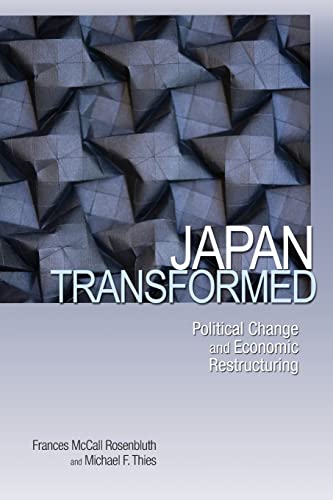
With little domestic fanfare and even less attention internationally, Japan has been reinventing itself since the 1990s, dramatically changing its political economy, from one managed by regulations to one with a neoliberal orientation. Rebuilding from the economic misfortunes of its recent past, the country retains a formidable economy and its political system is healthier than at any time in its history. Japan Transformed explores the historical, political, and economic forces that led to the country's recent evolution, and looks at the consequences for Japan's citizens and global neighbors. The book examines Japanese history, illustrating the country's multiple transformations over the centuries, and then focuses on the critical and inexorable advance of economic globalization. It describes how global economic integration and urbanization destabilized Japan's postwar policy coalition, undercut the ruling Liberal Democratic Party's ability to buy votes, and paved the way for new electoral rules that emphasized competing visions of the public good. In contrast to the previous system that pitted candidates from the same party against each other, the new rules tether policymaking to the vast swath of voters in the middle of the political spectrum. Regardless of ruling party, Japan's politics, economics, and foreign policy are on a neoliberal path. Japan Transformed combines broad context and comparative analysis to provide an accurate understanding of Japan's past, present, and future.
Die Inhaltsangabe kann sich auf eine andere Ausgabe dieses Titels beziehen.
Über die Autorin bzw. den Autor
Frances McCall Rosenbluth & Michael F. Thies
Von der hinteren Coverseite
"Japan Transformed offers a crisply written and insightful analysis of Japan's most recent 'Meiji moment'--the 1994 electoral reforms. As did the earlier and more famous events of 1868, the 1994 reforms sparked profound and interrelated changes, opening both the economy and politics to new competitive forces and incentives. Rosenbluth and Thies provide the most comprehensive analysis to date of these epochal changes, one which will command attention from all those interested in the interplay between electoral incentives and economic outcomes."--Gary Cox, University of California, San Diego
"Amidst the gloom and doom of Japan's aging society and sputtering economy, Rosenbluth and Thies infuse a breath of hope: the transformation of the electoral system is pushing Japan steadily toward a responsible system of majoritarian governance privileging mainstream urban voters over entrenched interest groups and part-time farmers. The importance of the electoral system is not new to studies of Japanese politics, but never has it received such bold and ambitious treatment. Concise yet broad-ranging, Japan Transformed will become required reading for beginner and specialist alike."--Gregory W. Noble, University of Tokyo
"This book fills a niche on Japan's political economy. It weaves together comparative politics, political economy, and area studies to produce an interesting and accessible account of the changes Japan has experienced over the last twenty years."--Margarita Estévez-Abe, Syracuse University
"This book offers a new definitive statement of the rational institutionalist take on Japanese politics. Its main claims are carefully presented with appropriate qualifications and nuance, while its most provocative claim--that significant change in Japanese policy has been driven by electoral reforms adopted in the 1990s--will provoke discussion and debate."--Leonard Schoppa, University of Virginia
Auszug. © Genehmigter Nachdruck. Alle Rechte vorbehalten.
Japan Transformed
POLITICAL CHANGE AND ECONOMIC RESTRUCTURINGBy Frances McCall Rosenbluth Michael F. ThiesPRINCETON UNIVERSITY PRESS
Copyright © 2010 Princeton University PressAll right reserved.
ISBN: 978-0-691-13592-2
Contents
List of Tables and Figures..................................................................viiPreface.....................................................................................ixAcknowledgments.............................................................................xiiiAbbreviations and Stylistic Conventions.....................................................xvChapter 1 Why Study Japanese Political Economy?............................................1Chapter 2 Japanese History and Culture.....................................................15Chapter 3 Japan's Political Experiments....................................................32Chapter 4 The Old Japanese Politics, 1955–1993.......................................53Chapter 5 Japan's Postwar Political Economy................................................72Chapter 6 Japan's New Politics.............................................................95Chapter 7 Japan's New Political Economy....................................................123Chapter 8 Japan's Place in the World.......................................................155Chapter 9 Conclusions......................................................................174EPILOGUE The 2009 General Election and the LDP's Fall from Power...........................186Appendix 1. Japanese Electoral Systems, 1947–Present..................................193Appendix 2. Election Results, House of Representatives, 1986–2005.....................195Appendix 3. Election Results, House of Councillors, 1986–2007.........................201Bibliography................................................................................207Index.......................................................................................233
Chapter One
Why Study Japanese Political Economy?
Introduction
Japan limped into the twenty-first century with an economy in deep malaise. Following the collapse of the Tokyo stock and real estate markets that began in 1990, the Japanese economy failed to regain its stride, languishing at near-zero growth for a decade and a half. Saddled with a large fiscal deficit, the government was hard pressed to stimulate the economy in the wake of the 2008–2009 financial tsunami originating in New York. The prolonged slump that had been called "Japan's lost decade" began to look more like a chronic affliction.
Despite appearances, Japan is not an economic has-been on its last legs but a country in the throes of a transformation from a corrupt, managed economy to an economy shaped by a more open and scrappier political process. Japan's political system is healthier than ever before, though it will be tested heavily by new global pressures, rising inequality, and a rapidly aging population. This book seeks to explain what happened to create Japan's new political economy, how it matters, and what it means for Japan's future.
Japan's twenty-first-century metamorphosis into a "normal democracy" has not gripped the attention of the West as did its earlier phase as a voracious conqueror of export markets seemingly on the verge of global economic dominance. The subject of hysterical movies, xenophobic rhetoric, and countless university courses, the once-defeated Japan had turned the tables and was now the Godzilla invading American shores. In 1988 a group of U.S. congressmen, protesting what they felt were Japan's unfair trading practices, smashed a Toshiba boom box with sledgehammers on the steps of the Capitol. Historian Paul Kennedy declared that Japan was poised to replace the United States as the world's leading economy.
Japan deserves more attention today than it received in its false glory days. As subsequent events made clear, much of the earlier fanfare about, and fear of, Japan was misplaced. Japan's economic model was not nearly as powerful as it looked. Large market shares masked thin profits and low productivity, signaling trouble for the economy's endurance. Government protection let inefficient industries survive for too long, hampering what Joseph Schumpeter once described as capitalism's innovative "creative destruction." Essential postwar industries became national and global laggards, compounding inherited problems in the financial and public sectors of the economy.
Though with little domestic fanfare and even less notice from the rest of the world, Japan began reinventing itself in the 1990s in ways that evoke parallels with the Meiji Restoration of 1868. As with the Meiji overthrow of the Tokugawa regime, Japan's political economy in the twenty-first century replaces a failed attempt to close its borders with one that accepts integration with the world economy as inevitable. Also as occurred in the Meiji Restoration, the old political structure that rested on uncompetitive domestic forces collapsed, to be supplanted by new institutions more compatible with global integration. Japan's new electoral rules, established in 1994, create noticeably different incentives influencing how politicians regulate the economy and how they approach foreign policy. Because Japan remains the world's third largest economy, it is important to understand how its domestic politics will shape its engagement with the world in years to come.
Transformations like those Japan is undergoing tell us about how politics works in a more general sense. When do political institutions change, and do they matter apart from the forces that brought about their change in the first place? How powerful are institutional incentives in shaping the political and economic landscape? How do they interact with inherited political culture and the interests of entrenched elites?
Most theories of politics of the developed world are based on the experiences of the United States and Europe. Despite being one of the world's richest countries, Japan is often the "odd man out," not only because language barriers impede the full integration of Japan's experience into the Western canon, but also because the policies Japan has adopted have seemed anomalous in the context of either Anglo-American laissez-faire or continental European welfare states. Now that Japan is moving in an Anglo-American direction, should we interpret these changes as harbingers of global economic convergence? The key to understanding the economic system to which Japan is moving, we will argue, lies both in pressures from the world economy and in how they are filtered through domestic political institutions.
Japan in the World
Despite nearly two decades of economic stagnation, Japan remains a colossal power. Its economy is enormous, and although it has been surpassed in absolute size by China's (with China's ten-times-as-large population), Japan is economically still more than a third larger than fifth-ranked Germany and twice as large as the United Kingdom or France. Although Japan officially has no army, navy, or air force, owing to its constitutional renunciation of war, the Japan Self Defense Forces (SDF) are in fact a formidable military by another name. By many other measures as well, Japan is an extremely influential player whose actions have bearing for world peace, prosperity, and health. Understanding why the Japanese do what they do on the world stage requires knowledge of how Japan's democracy translates the preferences of its citizens,...
„Über diesen Titel“ kann sich auf eine andere Ausgabe dieses Titels beziehen.
Suchergebnisse für Japan Transformed: Political Change and Economic Restructuri...

Beispielbild für diese ISBN
Japan Transformed : Political Change and Economic Restructuring
Verlag:
Princeton University Press, 2010
ISBN 10: 0691135924
ISBN 13: 9780691135922
Gebraucht
Softcover
Anbieter: Better World Books, Mishawaka, IN, USA
Verkäuferbewertung 5 von 5 Sternen

Zustand: Good. Pages intact with minimal writing/highlighting. The binding may be loose and creased. Dust jackets/supplements are not included. Stock photo provided. Product includes identifying sticker. Better World Books: Buy Books. Do Good. Artikel-Nr. 15296044-6
Gebraucht kaufen
EUR 6,96
Versand gratis
Versand innerhalb von USA
Versand innerhalb von USA
Anzahl: 1 verfügbar
Beispielbild für diese ISBN
Japan Transformed : Political Change and Economic Restructuring
Verlag:
Princeton University Press, 2010
ISBN 10: 0691135924
ISBN 13: 9780691135922
Gebraucht
Softcover
Anbieter: Better World Books, Mishawaka, IN, USA
Verkäuferbewertung 5 von 5 Sternen
Zustand: Very Good. Pages intact with possible writing/highlighting. Binding strong with minor wear. Dust jackets/supplements may not be included. Stock photo provided. Product includes identifying sticker. Better World Books: Buy Books. Do Good. Artikel-Nr. 10133144-6
Gebraucht kaufen
EUR 6,96
Versand gratis
Versand innerhalb von USA
Versand innerhalb von USA
Anzahl: 1 verfügbar
Beispielbild für diese ISBN
Japan Transformed: Political Change and Economic Restructuring
Verlag:
Princeton University Press, 2010
ISBN 10: 0691135924
ISBN 13: 9780691135922
Gebraucht
paperback
Anbieter: My Dead Aunt's Books, Hyattsville, MD, USA
Verkäuferbewertung 5 von 5 Sternen
paperback. Zustand: Very Good. Unmarked trade paperback. Artikel-Nr. 132834
Gebraucht kaufen
EUR 2,30
EUR 4,90 Versand
Versand innerhalb von USA
Versand innerhalb von USA
Anzahl: 1 verfügbar
Beispielbild für diese ISBN
Japan Transformed: Political Change and Economic Restructuring
Verlag:
Princeton University Press, 2010
ISBN 10: 0691135924
ISBN 13: 9780691135922
Gebraucht
Paperback
Anbieter: ThriftBooks-Dallas, Dallas, TX, USA
Verkäuferbewertung 5 von 5 Sternen
Paperback. Zustand: Fair. No Jacket. Readable copy. Pages may have considerable notes/highlighting. ~ ThriftBooks: Read More, Spend Less. Artikel-Nr. G0691135924I5N00
Gebraucht kaufen
EUR 9,16
Versand gratis
Versand innerhalb von USA
Versand innerhalb von USA
Anzahl: 1 verfügbar
Beispielbild für diese ISBN
Japan Transformed: Political Change and Economic Restructuring
Verlag:
Princeton University Press, 2010
ISBN 10: 0691135924
ISBN 13: 9780691135922
Gebraucht
paperback
Anbieter: Sell Books, Elland, YORKS, Vereinigtes Königreich
Verkäuferbewertung 5 von 5 Sternen
paperback. Zustand: Good. Our good condition books are generally good for reading but not for gifting or collecting. They could have imperfections such as creasing, fanning, inscriptions, margin notes, yellowing, staining on edge or cover or pages, bumps, scuffs, etc etc (sometimes multiple of these). It's a wide category that encompasses anything that isn't almost-new down to anything that is slightly better than poor. We would NOT recommend gifting Good books - these should be considered reading copies. Our books are dispatched from a Yorkshire former cotton mill. We list via barcode/ISBN so please note that the images are stock images and may not be the exact copy you receive, furthermore the details about edition and year might not be accurate as many publishers reuse the same ISBN for multiple editions and as we simply scan a barcode or enter an ISBN we do not check the validity of the edition data when listing. If you're looking for an exact edition please don't order (at least not without checking with us first, although we don't always have time to check). We aim to dispatch prompty, the service used will depend on order value and book size. We can ship to most countries, see our shipping policies. Payment is via Abe only. Artikel-Nr. L-BFP00200-RAG-20231030-G
Gebraucht kaufen
EUR 5,33
EUR 14,32 Versand
Versand von Vereinigtes Königreich nach USA
Versand von Vereinigtes Königreich nach USA
Anzahl: 1 verfügbar
Beispielbild für diese ISBN
Japan Transformed: Political Change and Economic Restructuring
Verlag:
Princeton University Press, 2010
ISBN 10: 0691135924
ISBN 13: 9780691135922
Gebraucht
Soft cover
Anbieter: Joseph Burridge Books, Dagenham, Vereinigtes Königreich
Verkäuferbewertung 5 von 5 Sternen
Soft cover. Zustand: Very Good. Summary:With little domestic fanfare and even less attention internationally, Japan has been reinventing itself since the 1990s, dramatically changing its political economy, from one managed by regulations to one with a neoliberal orientation. Rebuilding from the economic misfortunes of its recent past, the country retains a formidable economy and its political system is healthier than at any time in its history. Japan Transformed explores the historical, political, and economic forces that led to the country's recent evolution, and looks at the consequences for Japan's citizens and global neighbors. Artikel-Nr. dmc908
Gebraucht kaufen
EUR 16,99
EUR 27,10 Versand
Versand von Vereinigtes Königreich nach USA
Versand von Vereinigtes Königreich nach USA
Anzahl: 1 verfügbar
Beispielbild für diese ISBN
Japan Transformed
Anbieter: PBShop.store US, Wood Dale, IL, USA
Verkäuferbewertung 5 von 5 Sternen
PAP. Zustand: New. New Book. Shipped from UK. Established seller since 2000. Artikel-Nr. WP-9780691135922
Beispielbild für diese ISBN
Japan Transformed
Anbieter: PBShop.store UK, Fairford, GLOS, Vereinigtes Königreich
Verkäuferbewertung 5 von 5 Sternen
PAP. Zustand: New. New Book. Shipped from UK. Established seller since 2000. Artikel-Nr. WP-9780691135922
Neu kaufen
EUR 46,64
EUR 4,90 Versand
Versand von Vereinigtes Königreich nach USA
Versand von Vereinigtes Königreich nach USA
Anzahl: 2 verfügbar
Beispielbild für diese ISBN
Japan Transformed: Political Change and Economic Restructuring
Anbieter: Kennys Bookstore, Olney, MD, USA
Verkäuferbewertung 5 von 5 Sternen
Zustand: New. 2010. Paperback. With little domestic fanfare and even less attention internationally, Japan has been reinventing itself since the 1990s, dramatically changing its political economy, from one managed by regulations to one with a neoliberal orientation. This title explores the historical, political, and economic forces that led to the country's evolution. Num Pages: 264 pages, 8 line illus. 7 tables. BIC Classification: 1FPJ; JP; KCP. Category: (P) Professional & Vocational; (U) Tertiary Education (US: College). Dimension: 234 x 156 x 17. Weight in Grams: 380. . . . . . Books ship from the US and Ireland. Artikel-Nr. V9780691135922
Neu kaufen
EUR 54,07
EUR 9,36 Versand
Versand innerhalb von USA
Versand innerhalb von USA
Anzahl: 1 verfügbar
Beispielbild für diese ISBN
Japan Transformed: Political Change and Economic Restructuring
Anbieter: Ria Christie Collections, Uxbridge, Vereinigtes Königreich
Verkäuferbewertung 5 von 5 Sternen
Zustand: New. In English. Artikel-Nr. ria9780691135922_new
Neu kaufen
EUR 56,62
EUR 11,04 Versand
Versand von Vereinigtes Königreich nach USA
Versand von Vereinigtes Königreich nach USA
Anzahl: 2 verfügbar