
Verwandte Artikel zu What They Think of Us: International Perceptions of...
Inhaltsangabe
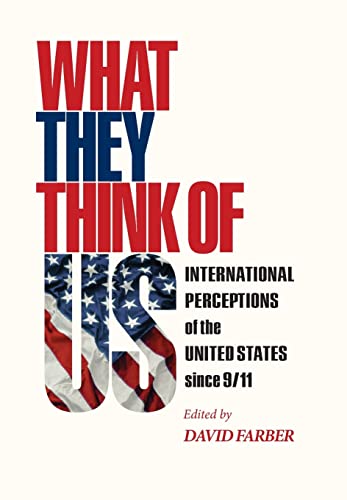
It has never been more important for Americans to understand why the world both hates and loves the United States. In What They Think of Us, a remarkable group of writers from the Middle East, Europe, Asia, and Latin America describes the world's profoundly ambivalent attitudes toward the United States--before and since 9/11.
While many people around the world continue to see the United States as a model despite the Iraq war and the war on terror, the U.S. response to 9/11 has undoubtedly intensified global anti-Americanism. What They Think of Us reveals that substantial goodwill toward America still exists, but that this sympathy is in peril--and that there is an immense gap between how Americans view their country and how it is viewed abroad.
Drawing on broad research and personal experience while avoiding anecdotalism and polemics, the writers gathered here combine political, cultural, and historical analysis to explain how people in different parts of the world see the United States. They show that not all anti-Americanism can be blamed on U.S. foreign policy. America is disliked not just for what it does but also for what it is, and perceptions of both are profoundly shaped--and sometimes warped--by the domestic realities of the countries where anti-Americanism thrives. In addition to analyzing America's battered global reputation, these writers propose ways the United States and other countries can build better relations through greater understanding and respect.
Die Inhaltsangabe kann sich auf eine andere Ausgabe dieses Titels beziehen.
Über die Autorin bzw. den Autor
David Farber is Professor of History at Temple University. His books include Taken Hostage: The Iran Hostage Crisis and America's First Encounter with Radical Islam (Princeton).
Von der hinteren Coverseite
"These essays highlight what we have long observed from our international polling, that people do not judge us by what we say about ourselves, but by how they perceive we are threatening them.What They Think of Us is a must-read book for Ms. Karen Hughes and Co."--James J. Zogby, founder and President of the Arab American Institute
"This is an important and timely book. To my knowledge there is no other book that does what this one does--collect commentaries on the United States written by foreigners. It is terrifically fresh in its approach and a valuable addition to writing about the post-9/11 world."--Mark Lawrence, University of Texas, Austin
"Offering a broad international perspective on anti-American attitudes, What They Think of Us is timely and provocative. It helps explain why so many educated and even democratic-minded citizens around the world have grown increasingly critical of the United States in the last decade. The essays point to the corrosive effects of American military intervention, economic expansion, and cultural insensitivity. This book allows the reader to understand, if not always sympathize with, the experiences and attitudes of people who see the world very differently from the average American."--Jeremi Suri, University of Wisconsin, Madison
Aus dem Klappentext
"These essays highlight what we have long observed from our international polling, that people do not judge us by what we say about ourselves, but by how they perceive we are threatening them.What They Think of Us is a must-read book for Ms. Karen Hughes and Co."--James J. Zogby, founder and President of the Arab American Institute
"This is an important and timely book. To my knowledge there is no other book that does what this one does--collect commentaries on the United States written by foreigners. It is terrifically fresh in its approach and a valuable addition to writing about the post-9/11 world."--Mark Lawrence, University of Texas, Austin
"Offering a broad international perspective on anti-American attitudes, What They Think of Us is timely and provocative. It helps explain why so many educated and even democratic-minded citizens around the world have grown increasingly critical of the United States in the last decade. The essays point to the corrosive effects of American military intervention, economic expansion, and cultural insensitivity. This book allows the reader to understand, if not always sympathize with, the experiences and attitudes of people who see the world very differently from the average American."--Jeremi Suri, University of Wisconsin, Madison
Auszug. © Genehmigter Nachdruck. Alle Rechte vorbehalten.
WHAT THEY THINK OF US
International Perceptions of the United States since 9/11Princeton University Press
Copyright © 2007 Princeton University PressAll right reserved.
ISBN: 978-0-691-13025-5
Contents
Contributors.........................................................................................................................................viiPreface David Farber................................................................................................................................xiIraqis' Bleak Views of the United States Ibrahim Al-Marashi and Abdul Hadi al-Khalili...............................................................1Beyond the Stained Glass Window: Indonesian Perceptions of the United States and the War on Terror Melani Budianta..................................27Turkish Perceptions of the United States Nur Bilge Criss............................................................................................49Beautiful Imperialist or Warmongering Hegemon: Contemporary Chinese Views of the United States Yufan Hao and Lin Su.................................74From the Cold War to a Lukewarm Peace: Russian Views of September 11 and Beyond Eric Shiraev and Olga Makhovskaya...................................95Nuestro Once de Septiembre: The Kingdom of the Comma Fernando Escalante-Gonzalbo and Mauricio Tenorio-Trillo........................................125The Twilight of American Cultural Hegemony: A Historical Perspective on Western Europe's Distancing from America Federico Romero.....................153Index................................................................................................................................................177
Chapter One
IRAQIS' BLEAK VIEWS OF THE UNITED STATESIbrahim Al-Marashi and Abdul Hadi al-Khalili
First, I (al-Khalili) was carjacked right in front of my home. That was terrifying enough. But then, on April 28, 2004, I was kidnapped. I was riding in a car owned by a friend. Suddenly, a late-model BMW swerved in front of us, blocking our way. Three armed men jumped out, called me by name, and demanded that I come with them. I was handcuffed and blindfolded. They moved me from one car to another and then I was imprisoned in a small house occupied, strangely enough, by a woman and her three children. The kidnappers demanded that my family pay them $500,000. My family desperately negotiated the ransom down to $30,000. They paid and I lived.
Such was life in Iraq a year after the Americans overthrew Saddam Hussein. Kidnappings, killings, and carjackings were carried out in broad daylight. These acts were perpetrated by well-equipped, professional Iraqi criminals organized into gangs. The Iraqi police were, to put it most generously, not committed to stopping this organized crime. After my ordeal, for example, not a single Iraqi official wished to enquire about the details of my kidnapping in order to catch the criminals or to gather information that might help them prevent future attacks. Many middle-class and professional Iraqis responded to this nearly unfettered criminality by fleeing the country or by greatly curtailing their activities.
Here is the tragic irony. Crimes like carjacking, murder, and kidnapping were nearly unheard of during the years of Saddam's repressive police state. The United States successfully dismantled Saddam's government but completely failed to bring a sense of law and order to the nation of Iraq. This failure was disastrous. Worse, the Americans' failure to insure domestic security for Iraqis was and is not the only problem keeping Iraqis from embracing or even accepting the United States as a true friend. Iraq and the United States (as well as Great Britain and Iraq) have an uncomfortable history that few Americans know but that few Iraqis have forgotten. To understand Americans' difficulties in convincing Iraqis that the United States can and should be their ally, some of that history has to be communicated. This historically conditioned perspective combines with the contemporary predicament to explain a great deal about what must be done if Iraqis are to perceive the United States in a more favorable light.
We aim to highlight four key phases during which Iraqis, generally but not totally, came to share strongly negative or cynical views of the United States. The first phase came right after the 1967 Arab-Israeli war, which was punctuated in Iraq with the Ba'ath Party takeover in 1968. Then, in 1980, Iraqis became focused on the Iran-Iraq War. As a result, the Saddam regime, which had total control of the mass media, toned down its anti-U.S. rhetoric as a means to garner American support for its war against Iran. This stage in Iraqis' perceptions of the United States ended in August 1990 when Saddam, in an attempt to stop the United States from ending the takeover of Kuwait, used his control of the mass media to focus the nation's hatred toward the United States. This era of unrelenting anti-Americanism lasted throughout the 1991 Gulf War and the twelve years of UN-imposed sanctions. The fourth phase began after the American occupation, which resulted in the emergence of an independent Iraqi media and numerous civil society organizations that tended to blast the United States for its mishandling of the occupation or for simply being an aggressive imperialist nation.
These four phases have produced, to put the matter schematically, some common Iraqi perceptions of the United States. Many Iraqis argue, sometime in only inchoate forms, that American policy in Iraq is repeating the same disastrous mistakes British imperialists made in their administration of Iraq after 1920. And a great many people have continued to believe the view of the United States spread so effectively and sometimes quite accurately by the Saddam regime that the United States is a neocolonialist, pro-"Zionist" power that wants to steal Iraq's oil resources.
The Rise of the Ba'ath and Anti-Americanism in Iraq
First, a bit of deep historical context: the modern nation of Iraq since the sixteenth century had comprised three provinces of the Ottoman Turkish Empire. British forces overran these provinces toward the end of World War I, beginning a military occupation that was met with widespread resistance among Iraq's tribes, as well as other segments of the Sunni, Shia, and Kurdish communities. The events culminated in 1920 in what is referred to by the Iraqis as the "Great Revolt." Iraq gained independence in 1932. However, the ruling monarchy had signed an Anglo-Iraqi treaty that allowed Great Britain to intervene in Iraq's domestic affairs. The British interference in Iraqi affairs fiercely alienated many segments of its population. In 1958, Iraqi military officer Abdul Karim Qassim overthrew the monarchy in a military coup and ended its pro-Western stance. Qassim's government was overthrown on February 8, 1963, by elements of the Arab Socialist Ba'ath Party and the military. However, the Ba'ath Party held power for only nine months, until they were purged from the government by factions loyal to General Abdul Salam Arif. Much of the public discourse in Iraqi circles from the 1920s to 1958 expressed hostility toward British control over Iraq's affairs.
This hostility was slowly redirected toward the Americans after the 1967 Six-Day War between Israel and its Arab neighbors. After Israel's lightning victory, the United States began to side far...
„Über diesen Titel“ kann sich auf eine andere Ausgabe dieses Titels beziehen.
Suchergebnisse für What They Think of Us: International Perceptions of...

Beispielbild für diese ISBN
What They Think of Us : International Perceptions of the United States Since 9/11
Verlag:
Princeton University Press, 2007
ISBN 10: 0691130256
ISBN 13: 9780691130255
Gebraucht
Hardcover
Anbieter: Better World Books: West, Reno, NV, USA
Verkäuferbewertung 5 von 5 Sternen

Zustand: Very Good. Former library copy. Pages intact with possible writing/highlighting. Binding strong with minor wear. Dust jackets/supplements may not be included. Includes library markings. Stock photo provided. Product includes identifying sticker. Better World Books: Buy Books. Do Good. Artikel-Nr. 2427428-75
Gebraucht kaufen
EUR 8,56
Versand gratis
Versand innerhalb von USA
Versand innerhalb von USA
Anzahl: 1 verfügbar
Beispielbild für diese ISBN
What They Think of Us : International Perceptions of the United States Since 9/11
Verlag:
Princeton University Press, 2007
ISBN 10: 0691130256
ISBN 13: 9780691130255
Gebraucht
Hardcover
Anbieter: Better World Books, Mishawaka, IN, USA
Verkäuferbewertung 5 von 5 Sternen
Zustand: Good. Former library copy. Pages intact with minimal writing/highlighting. The binding may be loose and creased. Dust jackets/supplements are not included. Includes library markings. Stock photo provided. Product includes identifying sticker. Better World Books: Buy Books. Do Good. Artikel-Nr. 2427427-20
Gebraucht kaufen
EUR 8,56
Versand gratis
Versand innerhalb von USA
Versand innerhalb von USA
Anzahl: 1 verfügbar
Beispielbild für diese ISBN
What They Think of Us: International Perceptions of the United States since 9/11
Verlag:
Princeton University Press, 2007
ISBN 10: 0691130256
ISBN 13: 9780691130255
Gebraucht
Hardcover
Anbieter: Wonder Book, Frederick, MD, USA
Verkäuferbewertung 5 von 5 Sternen
Zustand: Good. Good condition. Very Good dust jacket. A copy that has been read but remains intact. May contain markings such as bookplates, stamps, limited notes and highlighting, or a few light stains. Artikel-Nr. H19A-01985
Gebraucht kaufen
EUR 9,94
Versand gratis
Versand innerhalb von USA
Versand innerhalb von USA
Anzahl: 1 verfügbar
Foto des Verkäufers
What They Think of Us: International Perceptions of the United States Since 9/11
Verlag:
Princeton University Press, 2007
ISBN 10: 0691130256
ISBN 13: 9780691130255
Gebraucht
Hardcover
Anbieter: BoundlessBookstore, Wallingford, Vereinigtes Königreich
Verkäuferbewertung 5 von 5 Sternen
Hardcover. Zustand: Good. VG condition book with dust jacket. DJ is clean, has fresh colours and has little wear to edges. Book has clean and bright contents. Artikel-Nr. 9999-9996460000
Gebraucht kaufen
EUR 3,69
EUR 8,34 Versand
Versand von Vereinigtes Königreich nach USA
Versand von Vereinigtes Königreich nach USA
Anzahl: 1 verfügbar
Beispielbild für diese ISBN
What They Think of Us
Anbieter: PBShop.store US, Wood Dale, IL, USA
Verkäuferbewertung 5 von 5 Sternen
HRD. Zustand: New. New Book. Shipped from UK. Established seller since 2000. Artikel-Nr. WP-9780691130255
Beispielbild für diese ISBN
What They Think of Us
Anbieter: PBShop.store UK, Fairford, GLOS, Vereinigtes Königreich
Verkäuferbewertung 5 von 5 Sternen
HRD. Zustand: New. New Book. Shipped from UK. Established seller since 2000. Artikel-Nr. WP-9780691130255
Neu kaufen
EUR 45,45
EUR 6,00 Versand
Versand von Vereinigtes Königreich nach USA
Versand von Vereinigtes Königreich nach USA
Anzahl: 1 verfügbar
Beispielbild für diese ISBN
What They Think of Us: International Perceptions of the United States since 9/11
Anbieter: Kennys Bookstore, Olney, MD, USA
Verkäuferbewertung 5 von 5 Sternen
Zustand: New. While many people around the world see the United States as a model, the US response to 9/11 has undoubtedly intensified global anti-Americanism. This book reveals that goodwill toward America still exists, and that this sympathy is in peril - and that there is an immense gap between how Americans view their country and how it is viewed abroad. Editor(s): Farber, David. Num Pages: 208 pages, black & white illustrations. BIC Classification: 1KBB; JPS. Category: (P) Professional & Vocational; (U) Tertiary Education (US: College). Dimension: 229 x 152 x 22. Weight in Grams: 457. . 2007. Annotated. Hardcover. . . . . Books ship from the US and Ireland. Artikel-Nr. V9780691130255
Neu kaufen
EUR 51,62
EUR 9,36 Versand
Versand innerhalb von USA
Versand innerhalb von USA
Anzahl: 1 verfügbar
Beispielbild für diese ISBN
What They Think of Us: International Perceptions of the United States since 9/11
Anbieter: Ria Christie Collections, Uxbridge, Vereinigtes Königreich
Verkäuferbewertung 5 von 5 Sternen
Zustand: New. In English. Artikel-Nr. ria9780691130255_new
Neu kaufen
EUR 54,91
EUR 13,49 Versand
Versand von Vereinigtes Königreich nach USA
Versand von Vereinigtes Königreich nach USA
Anzahl: 1 verfügbar
Beispielbild für diese ISBN
What They Think of Us International Perceptions of the United States since 9/11
Anbieter: Revaluation Books, Exeter, Vereinigtes Königreich
Verkäuferbewertung 5 von 5 Sternen
Hardcover. Zustand: Brand New. annotated edition. 206 pages. 9.75x6.50x1.00 inches. In Stock. Artikel-Nr. x-0691130256
Neu kaufen
EUR 81,34
EUR 11,94 Versand
Versand von Vereinigtes Königreich nach USA
Versand von Vereinigtes Königreich nach USA
Anzahl: 2 verfügbar
Foto des Verkäufers
What They Think of Us
Anbieter: moluna, Greven, Deutschland
Verkäuferbewertung 5 von 5 Sternen
Gebunden. Zustand: New. While many people around the world see the United States as a model, the US response to 9/11 has undoubtedly intensified global anti-Americanism. This book reveals that goodwill toward America still exists, and that this sympathy is in peril - and that ther. Artikel-Nr. 447030789
Neu kaufen
EUR 62,30
EUR 48,99 Versand
Versand von Deutschland nach USA
Versand von Deutschland nach USA
Anzahl: Mehr als 20 verfügbar