
Verwandte Artikel zu Enhancing Evolution: The Ethical Case for Making Better...
Inhaltsangabe
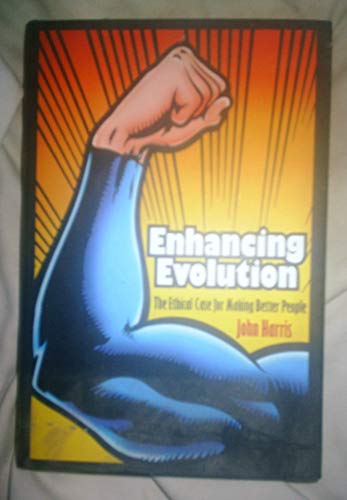
Decisive biotechnological interventions in the lottery of human life--to enhance our bodies and brains and perhaps irreversibly change our genetic makeup--have been widely rejected as unethical and undesirable, and have often met with extreme hostility. But in Enhancing Evolution, leading bioethicist John Harris dismantles objections to genetic engineering, stem-cell research, designer babies, and cloning to make a forthright, sweeping, and rigorous ethical case for using biotechnology to improve human life.
Human enhancement, Harris argues, is a good thing--good morally, good for individuals, good as social policy, and good for a genetic heritage that needs serious improvement.Enhancing Evolution defends biotechnological interventions that could allow us to live longer, healthier, and even happier lives by, for example, providing us with immunity from cancer and HIV/AIDS. But the book advocates far more than therapies designed to free us from sickness and disability. Harris champions the possibility of influencing the very course of evolution to give us increased mental and physical powers--from reasoning, concentration, and memory to strength, stamina, and reaction speed. Indeed, he supports enhancing ourselves in almost any way we desire. And it's not only morally defensible to enhance ourselves, Harris says. In some cases, it's morally obligatory.
Whether one looks upon biotechnology with hope, fear, or a little of both, Enhancing Evolution makes a case for it that no one can ignore.
Die Inhaltsangabe kann sich auf eine andere Ausgabe dieses Titels beziehen.
Über die Autorin bzw. den Autor
John Harris is the Sir David Alliance Professor of Bioethics at the University of Manchester School of Law.
Von der hinteren Coverseite
"John Harris has an enormous reputation in bioethics for his adroit, acerbic, dead-on argumentation, his ingenuity at undermining familiar but flaccid argument, his immense imaginative capacities, and his skewering wit. These are rare qualities in an often goody-goody field like bioethics, and his intellectual skills earn him real respect. His philosophical work is an exploration, as he puts it, of our shared responsibility to make the world a better place.Enhancing Evolution is an ample demonstration of this work at its best."--Margaret P. Battin, University of Utah
"John Harris can be depended on to sharply challenge conventional thinking in bioethics, especially when that thinking takes a conservative cast. He does not disappoint here. Harris shows how deep-seated a part of human history enhancement is and how weak most objections to it are; indeed, he makes a persuasive case that it is not only generally morally permissible, but often morally required."--Dan W. Brock, director of the Division of Medical Ethics, Harvard Medical School
"John Harris's writings are always provocative as well as superbly reasoned. In this latest book, he succeeds in demolishing the arguments of those who claim that enhancements are a threat to humankind."--Ruth Macklin, Albert Einstein College of Medicine
"Enhancing Evolution is a pleasure to read and an important contribution to bioethics. Against writers such as Leon Kass, Michael Sandel, and Jürgen Habermas, John Harris argues for using genetic and other technologies to improve and extend human life, and even to design and clone humans. Whether or not one shares his optimism that humans are wise, prudent, or moral enough to use technology to benefit humankind, his cogent and elegantly expressed arguments must be taken seriously."--Bonnie Steinbock, University of Albany
"Over his illustrious career, John Harris has explored the most challenging bioethical questions with insight, engaging wit, and eloquence. InEnhancing Evolution, Harris does it again. He argues that it is not just an option but an obligation for people to use available biomedical technologies to enhance their own--and their children's--physical and mental abilities. Harris rightly deserves his reputation for fearlessly following his ethical arguments wherever they lead."--Ezekiel J. Emanuel, M.D., Ph.D.
"Full of witty arguments, Enhancing Evolution is a powerful response to concerns about human enhancement and genetic selection. It is also a deep, enlightening, and delightful (often hilarious) philosophical read. Scholars studying these topics, as well as the status of embryos and research on human subjects, would be wise to give Harris's arguments serious consideration."--Nir Eyal, Harvard Medical School
"Enhancing Evolution is the most comprehensive, robust defense of human enhancement in the literature to date. Harris blends more than fifteen years of work on human enhancement into a single volume and mixes in new arguments that definitively make the pro case for enhancement. The bioconservatives are in retreat. Harris has now set the agenda for the future of humankind. This will be the locus classicus for the enhancement debate."--Julian Savulescu, University of Oxford
Aus dem Klappentext
"John Harris has an enormous reputation in bioethics for his adroit, acerbic, dead-on argumentation, his ingenuity at undermining familiar but flaccid argument, his immense imaginative capacities, and his skewering wit. These are rare qualities in an often goody-goody field like bioethics, and his intellectual skills earn him real respect. His philosophical work is an exploration, as he puts it, of our shared responsibility to make the world a better place.Enhancing Evolution is an ample demonstration of this work at its best."--Margaret P. Battin, University of Utah
"John Harris can be depended on to sharply challenge conventional thinking in bioethics, especially when that thinking takes a conservative cast. He does not disappoint here. Harris shows how deep-seated a part of human history enhancement is and how weak most objections to it are; indeed, he makes a persuasive case that it is not only generally morally permissible, but often morally required."--Dan W. Brock, director of the Division of Medical Ethics, Harvard Medical School
"John Harris's writings are always provocative as well as superbly reasoned. In this latest book, he succeeds in demolishing the arguments of those who claim that enhancements are a threat to humankind."--Ruth Macklin, Albert Einstein College of Medicine
"Enhancing Evolution is a pleasure to read and an important contribution to bioethics. Against writers such as Leon Kass, Michael Sandel, and Jürgen Habermas, John Harris argues for using genetic and other technologies to improve and extend human life, and even to design and clone humans. Whether or not one shares his optimism that humans are wise, prudent, or moral enough to use technology to benefit humankind, his cogent and elegantly expressed arguments must be taken seriously."--Bonnie Steinbock, University of Albany
"Over his illustrious career, John Harris has explored the most challenging bioethical questions with insight, engaging wit, and eloquence. InEnhancing Evolution, Harris does it again. He argues that it is not just an option but an obligation for people to use available biomedical technologies to enhance their own--and their children's--physical and mental abilities. Harris rightly deserves his reputation for fearlessly following his ethical arguments wherever they lead."--Ezekiel J. Emanuel, M.D., Ph.D.
"Full of witty arguments, Enhancing Evolution is a powerful response to concerns about human enhancement and genetic selection. It is also a deep, enlightening, and delightful (often hilarious) philosophical read. Scholars studying these topics, as well as the status of embryos and research on human subjects, would be wise to give Harris's arguments serious consideration."--Nir Eyal, Harvard Medical School
"Enhancing Evolution is the most comprehensive, robust defense of human enhancement in the literature to date. Harris blends more than fifteen years of work on human enhancement into a single volume and mixes in new arguments that definitively make the pro case for enhancement. The bioconservatives are in retreat. Harris has now set the agenda for the future of humankind. This will be the locus classicus for the enhancement debate."--Julian Savulescu, University of Oxford
„Über diesen Titel“ kann sich auf eine andere Ausgabe dieses Titels beziehen.
Suchergebnisse für Enhancing Evolution: The Ethical Case for Making Better...

Beispielbild für diese ISBN
Enhancing Evolution: The Ethical Case for Making Better People
Verlag:
Princeton University Press, 2007
ISBN 10: 0691128448
ISBN 13: 9780691128443
Gebraucht
Hardcover
Anbieter: ThriftBooks-Dallas, Dallas, TX, USA
Verkäuferbewertung 5 von 5 Sternen

Hardcover. Zustand: Fair. No Jacket. Readable copy. Pages may have considerable notes/highlighting. ~ ThriftBooks: Read More, Spend Less. Artikel-Nr. G0691128448I5N00
Gebraucht kaufen
EUR 7,22
Versand gratis
Versand innerhalb von USA
Versand innerhalb von USA
Anzahl: 1 verfügbar
Beispielbild für diese ISBN
Enhancing Evolution: The Ethical Case for Making Better People
Verlag:
Princeton University Press, 2007
ISBN 10: 0691128448
ISBN 13: 9780691128443
Gebraucht
Hardcover
Anbieter: ThriftBooks-Dallas, Dallas, TX, USA
Verkäuferbewertung 5 von 5 Sternen
Hardcover. Zustand: Good. No Jacket. Former library book; Missing dust jacket; Pages can have notes/highlighting. Spine may show signs of wear. ~ ThriftBooks: Read More, Spend Less. Artikel-Nr. G0691128448I3N11
Gebraucht kaufen
EUR 7,22
Versand gratis
Versand innerhalb von USA
Versand innerhalb von USA
Anzahl: 1 verfügbar
Beispielbild für diese ISBN
Enhancing Evolution: The Ethical Case for Making Better People
Verlag:
Princeton University Press, 2007
ISBN 10: 0691128448
ISBN 13: 9780691128443
Gebraucht
Hardcover
Anbieter: World of Books (was SecondSale), Montgomery, IL, USA
Verkäuferbewertung 5 von 5 Sternen
Hardback. Zustand: Good. Dismantles objections to genetic engineering, stem-cell research, designer babies, and cloning to make an ethical case for using biotechnology to improve human life. This work argues that human enhancement is a good thing - good morally, good for individuals, good as social policy, and good for a genetic heritage that needs serious improvement. Artikel-Nr. 00099633279
Gebraucht kaufen
EUR 7,26
Versand gratis
Versand innerhalb von USA
Versand innerhalb von USA
Anzahl: 4 verfügbar
Beispielbild für diese ISBN
Enhancing Evolution: The Ethical Case for Making Better People
Verlag:
Princeton University Press (edition 1), 2007
ISBN 10: 0691128448
ISBN 13: 9780691128443
Gebraucht
Hardcover
Anbieter: BooksRun, Philadelphia, PA, USA
Verkäuferbewertung 5 von 5 Sternen
Hardcover. Zustand: Very Good. 1. With dust jacket. It's a well-cared-for item that has seen limited use. The item may show minor signs of wear. All the text is legible, with all pages included. It may have slight markings and/or highlighting. Artikel-Nr. 0691128448-11-1-29
Gebraucht kaufen
EUR 8,22
Versand gratis
Versand innerhalb von USA
Versand innerhalb von USA
Anzahl: 1 verfügbar
Beispielbild für diese ISBN
Enhancing Evolution : The Ethical Case for Making Better People
Verlag:
Princeton University Press, 2007
ISBN 10: 0691128448
ISBN 13: 9780691128443
Gebraucht
Hardcover
Anbieter: Better World Books: West, Reno, NV, USA
Verkäuferbewertung 5 von 5 Sternen
Zustand: Very Good. Pages intact with possible writing/highlighting. Binding strong with minor wear. Dust jackets/supplements may not be included. Stock photo provided. Product includes identifying sticker. Better World Books: Buy Books. Do Good. Artikel-Nr. 5266026-6
Gebraucht kaufen
EUR 8,54
Versand gratis
Versand innerhalb von USA
Versand innerhalb von USA
Anzahl: 1 verfügbar
Beispielbild für diese ISBN
Enhancing Evolution : The Ethical Case for Making Better People
Verlag:
Princeton University Press, 2007
ISBN 10: 0691128448
ISBN 13: 9780691128443
Gebraucht
Hardcover
Anbieter: Better World Books, Mishawaka, IN, USA
Verkäuferbewertung 5 von 5 Sternen
Zustand: Good. Former library copy. Pages intact with minimal writing/highlighting. The binding may be loose and creased. Dust jackets/supplements are not included. Includes library markings. Stock photo provided. Product includes identifying sticker. Better World Books: Buy Books. Do Good. Artikel-Nr. 5089590-6
Gebraucht kaufen
EUR 8,54
Versand gratis
Versand innerhalb von USA
Versand innerhalb von USA
Anzahl: 1 verfügbar
Beispielbild für diese ISBN
Enhancing Evolution: The Ethical Case for Making Better People
Verlag:
Princeton University Press, 2007
ISBN 10: 0691128448
ISBN 13: 9780691128443
Gebraucht
Hardcover
Anbieter: WorldofBooks, Goring-By-Sea, WS, Vereinigtes Königreich
Verkäuferbewertung 5 von 5 Sternen
Hardback. Zustand: Very Good. The book has been read, but is in excellent condition. Pages are intact and not marred by notes or highlighting. The spine remains undamaged. Artikel-Nr. GOR004325069
Gebraucht kaufen
EUR 2,93
EUR 6,64 Versand
Versand von Vereinigtes Königreich nach USA
Versand von Vereinigtes Königreich nach USA
Anzahl: 3 verfügbar
Beispielbild für diese ISBN
Enhancing Evolution: The Ethical Case for Making Better People
Anbieter: AwesomeBooks, Wallingford, Vereinigtes Königreich
Verkäuferbewertung 5 von 5 Sternen
Hardcover. Zustand: Very Good. Enhancing Evolution: The Ethical Case for Making Better People This book is in very good condition and will be shipped within 24 hours of ordering. The cover may have some limited signs of wear but the pages are clean, intact and the spine remains undamaged. This book has clearly been well maintained and looked after thus far. Money back guarantee if you are not satisfied. See all our books here, order more than 1 book and get discounted shipping. Artikel-Nr. 7719-9780691128443
Gebraucht kaufen
EUR 4,97
EUR 4,89 Versand
Versand von Vereinigtes Königreich nach USA
Versand von Vereinigtes Königreich nach USA
Anzahl: 2 verfügbar
Beispielbild für diese ISBN
Enhancing Evolution : The Ethical Case for Making Better People
Verlag:
Princeton University Press, 2007
ISBN 10: 0691128448
ISBN 13: 9780691128443
Gebraucht
Hardcover
Anbieter: Better World Books Ltd, Dunfermline, Vereinigtes Königreich
Verkäuferbewertung 5 von 5 Sternen
Zustand: Very Good. Former library copy. Pages intact with possible writing/highlighting. Binding strong with minor wear. Dust jackets/supplements may not be included. Includes library markings. Stock photo provided. Product includes identifying sticker. Better World Books: Buy Books. Do Good. Artikel-Nr. GRP72668774
Gebraucht kaufen
EUR 5,69
EUR 5,93 Versand
Versand von Vereinigtes Königreich nach USA
Versand von Vereinigtes Königreich nach USA
Anzahl: 1 verfügbar
Beispielbild für diese ISBN
Enhancing Evolution: The Ethical Case for Making Better People
Verlag:
Princeton University Press 02/09/2007, 2007
ISBN 10: 0691128448
ISBN 13: 9780691128443
Gebraucht
Hardcover
Anbieter: Bahamut Media, Reading, Vereinigtes Königreich
Verkäuferbewertung 4 von 5 Sternen

Zustand: Very Good. Shipped within 24 hours from our UK warehouse. Clean, undamaged book with no damage to pages and minimal wear to the cover. Spine still tight, in very good condition. Remember if you are not happy, you are covered by our 100% money back guarantee. Artikel-Nr. 6545-9780691128443
Gebraucht kaufen
EUR 5,66
EUR 8,28 Versand
Versand von Vereinigtes Königreich nach USA
Versand von Vereinigtes Königreich nach USA
Anzahl: 2 verfügbar