
Inhaltsangabe
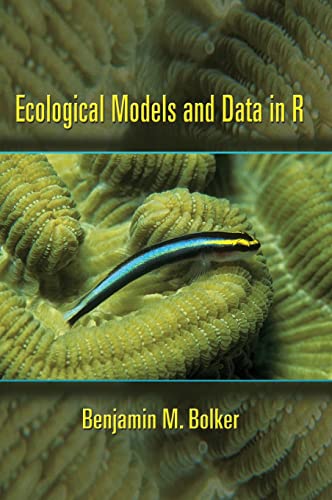
Ecological Models and Data in R is the first truly practical introduction to modern statistical methods for ecology. In step-by-step detail, the book teaches ecology graduate students and researchers everything they need to know in order to use maximum likelihood, information-theoretic, and Bayesian techniques to analyze their own data using the programming language R. Drawing on extensive experience teaching these techniques to graduate students in ecology, Benjamin Bolker shows how to choose among and construct statistical models for data, estimate their parameters and confidence limits, and interpret the results. The book also covers statistical frameworks, the philosophy of statistical modeling, and critical mathematical functions and probability distributions. It requires no programming background--only basic calculus and statistics.
- Practical, beginner-friendly introduction to modern statistical techniques for ecology using the programming language R
- Step-by-step instructions for fitting models to messy, real-world data
- Balanced view of different statistical approaches
- Wide coverage of techniques--from simple (distribution fitting) to complex (state-space modeling)
- Techniques for data manipulation and graphical display
- Companion Web site with data and R code for all examples
Die Inhaltsangabe kann sich auf eine andere Ausgabe dieses Titels beziehen.
Über die Autorinnen und Autoren
Benjamin M. Bolker is a theoretical ecologist in the departments of Mathematics & Statistics and Biology at McMaster University.
Benjamin M. Bolker is a theoretical ecologist in the departments of Mathematics & Statistics and Biology at McMaster University.
Von der hinteren Coverseite
"This user-friendly introduction to likelihood and Bayesian statistical methods for ecology students is set apart by its emphasis on implementation in R. This alone will make it more useful than previous books. In contrast to other texts, Bolker's book explains how to fit models to data in enough detail that even students with little programming experience will be able to follow along. I expect this to become an exceedingly popular textbook."--Stephan B. Munch, Stony Brook University
"Benjamin Bolker is a pioneer in helping ecology students make the leap from a casual understanding of modern statistical methods to a hands-on application of these tools to their own precious data sets. This book shows the lessons learned from teaching this material to several cohorts of graduate students. No other book I've read gives such a good feel for the compromises scientists have to make in searching for good statistical models."--Brian Inouye, Florida State University
"I have no doubt that this book will become a fixture on many ecologists' bookshelves (it certainly will be on mine). With a presentation that is gentle and encouraging rather than jargon-filled and intimidating, it empowers ecologists to develop their own statistical procedures. I strongly recommend it."--Timothy Essington, University of Washington
Auszug. © Genehmigter Nachdruck. Alle Rechte vorbehalten.
Ecological Models and Data in R
By B.M. BolkerPrinceton University Press
Copyright © 2008 Princeton University PressAll right reserved.
ISBN: 978-0-691-12522-0
Chapter One
Introduction and Background
This chapter gives a broad overview of the philosophy and techniques of ecological modeling. A small data set on seed removal illustrates the three most common frameworks for statistical modeling in ecology: frequentist, likelihood-based, and Bayesian. The chapter also reviews what you should know to get the most out of the book, discusses the R language, and spells out a step-by-step process for building models of ecological systems.
If you're impatient with philosophical discussion, you can read Section 1.4 and the R supplement at the end of the chapter and move on to Chapter 2.
1.1 Introduction
This book is about combining models with data to answer ecological questions. Pursuing this worthwhile goal will lead to topics ranging from basic statistics, to the cutting edge of modern statistics, to the nuts and bolts of computer programming, to the philosophy of science. Remember as we go along not to miss the ecological forest for the statistical trees; all of these complexities are in the service of answering ecological questions, and the most important thing is to keep your common sense about you and your focus on the biological questions you set out to answer. "Does this make sense?" and "What does this answer really mean?" are the two questions you should ask constantly. If you cannot answer them, back up to the last point you understood.
If you want to combine models with data, you need to use statistical tools. Ecological statistics has gotten much more complicated in the last few decades. Research papers in ecology now routinely refer to likelihood, Markov chain Monte Carlo, and other arcana. This new complexity arises from the explosion of cheap computing power, which allows us to run complicated tests quickly and easily-or at least more easily than before. But there is still a lot to know about how these tests work, which is what this book is about. The good news is that we can now develop statistical methods that directly answer our ecological questions, adapting statistics to the data rather than vice versa. Instead of asking "What is the probability of observing at least this much variability among the arcsine-square-root-transformed counts of seeds in different treatments?" we can ask "Is the number of seeds removed consistent with standard foraging theory, and what are the attack rates and handling times of predators? Do the attack rates or handling times increase with mean seed size? With the time that the seeds have been available? Is there evidence for variability among seeds?" By customizing statistical tests we can squeeze more information, and more relevant information, from expensive data. Building your own statistical tests is not easy, but it is really no harder than using any of the other tools ecologists have picked up in their ongoing effort to extract meaning from the natural world (stable isotope techniques, radiotelemetry, microsatellite population genetics, geographic information systems, otolith analysis, flow cytometry, mist netting ... you can probably identify several more from your own field). Custom statistical techniques are just another set of tools in the modern ecologist's toolbox; the information this book presents should show you how to use them on your own data, to answer your own questions.
For example, Sandin and Pacala (2005b) combined population counts through time with remote underwater video monitoring to analyze how the density of reef fishes in the Caribbean affected their risk of predation. The classic approach to this problem would be to test for a significant correlation between density and mortality rate, or between density and predator activity. A positive correlation between prey population density and the number of observed predator visits or attacks would suggest that prey aggregations attract predators. If predator attacks on the prey population are proportional to population density, then the predation rate per prey individual will be independent of density; predator attacks would need to accelerate with increasing population density in order for predators to regulate the prey population. One could test for positive correlations between prey density and per capita mortality to see whether this is so.
However, correlation analysis assumes the data are bivariate normally distributed, while linear regression assumes a linear relationship between a predictor variable and a normally distributed response variable. Although one can sometimes transform data to satisfy these assumptions, or simply ignore minor violations, Sandin and Pacala took a more powerful approach: they built explicit models to describe how the absolute and per capita predator visits or mortality depended on prey population density. For example, the absolute mortality probability would be [r.sub.0] + [r.sub.1]n and the per capita mortality probability would be ([r.sub.0] + [r.sub.1]n)/n if predator visits are proportional to prey density. They also used realistic binomial and Poisson probability distributions to describe the variation in the data, rather than assuming normality (a particularly awkward assumption when there are lots of zeros in the data). By doing so, they were able to choose among a variety of possible mod els and conclude that predators induce inverse density dependence in this system (i.e., that smaller prey populations experience higher per capita mortality, because predators are present at relatively constant numbers independent of prey density). Because they fitted models rather than running classical statistical tests on transformed data, they were also able to estimate meaningful parameter values, such as the increase in predator visits per hour for every additional prey individual present. These values are more useful than p (significance) values, or than regression slopes from transformed data, because they express statistical information in ecological terms.
1.2 What This Book Is Not About
1.2.1 What You Should Already Know
To get the most out of the material presented here you should already have a good grasp of basic statistics, be comfortable with computers (e.g., have used Microsoft Excel to deal with data), and have some rusty calculus. But attitude and aptitude are more important than previous classroom experience. Getting into this material requires some hard work at the outset, but it will become easier as you brush up on basic concepts.
STATISTICS
I assume that you've had the equivalent of a one-semester undergraduate statistics course. The phrases hypothesis test, analysis of variance, linear regression, normal distribution (maybe even Central Limit Theorem) should be familiar to you, even if you don't remember all of the details. The basics of experimental design-the meaning of and need for randomization, control, independence, and replication in setting up experiments, the idea of statistical power, and the concept of pseudoreplication (Hurlbert, 1984; Hargrove and Pickering, 1992; Heffner et al., 1996; Oksanen, 2001)-are essential tools for any working ecologist, but you can learn them from a good introductory statistics class or textbook such as Gotelli and Ellison (2004) or Quinn and Keough (2002).
Further reading: If you need to review statistics, try Crawley (2002), Dalgaard (2003), or Gotelli...
„Über diesen Titel“ kann sich auf eine andere Ausgabe dieses Titels beziehen.
Weitere beliebte Ausgaben desselben Titels

Suchergebnisse für Ecological Models and Data in R

Beispielbild für diese ISBN
Ecological Models and Data in
Verlag:
Princeton University Press, 2008
ISBN 10: 0691125228
ISBN 13: 9780691125220
Gebraucht
Hardcover
Anbieter: World of Books (was SecondSale), Montgomery, IL, USA
Verkäuferbewertung 5 von 5 Sternen

Zustand: Good. Item in good condition. Textbooks may not include supplemental items i.e. CDs, access codes etc. Artikel-Nr. 00103540915
Gebraucht kaufen
EUR 46,15
Versand gratis
Versand innerhalb von USA
Versand innerhalb von USA
Anzahl: 1 verfügbar
Beispielbild für diese ISBN
Ecological Models and Data in R
Verlag:
Princeton University Press, 2008
ISBN 10: 0691125228
ISBN 13: 9780691125220
Gebraucht
Hardcover
Anbieter: Anybook.com, Lincoln, Vereinigtes Königreich
Verkäuferbewertung 5 von 5 Sternen
Zustand: Fair. This is an ex-library book and may have the usual library/used-book markings inside.This book has hardback covers. In fair condition, suitable as a study copy. No dust jacket. Please note the Image in this listing is a stock photo and may not match the covers of the actual item,950grams, ISBN:9780691125220. Artikel-Nr. 9544767
Gebraucht kaufen
EUR 44,33
EUR 15,59 Versand
Versand von Vereinigtes Königreich nach USA
Versand von Vereinigtes Königreich nach USA
Anzahl: 1 verfügbar
Beispielbild für diese ISBN
Ecological Models and Data in R
Verlag:
Princeton University Press, 2008
ISBN 10: 0691125228
ISBN 13: 9780691125220
Gebraucht
Hardcover
Anbieter: medimops, Berlin, Deutschland
Verkäuferbewertung 5 von 5 Sternen
Zustand: good. Befriedigend/Good: Durchschnittlich erhaltenes Buch bzw. Schutzumschlag mit Gebrauchsspuren, aber vollständigen Seiten. / Describes the average WORN book or dust jacket that has all the pages present. Artikel-Nr. M00691125228-G
Gebraucht kaufen
EUR 55,53
EUR 10,00 Versand
Versand von Deutschland nach USA
Versand von Deutschland nach USA
Anzahl: 1 verfügbar
Beispielbild für diese ISBN
Ecological Models and Data in R
Verlag:
Princeton University Press, 2008
ISBN 10: 0691125228
ISBN 13: 9780691125220
Gebraucht
Hardcover
Anbieter: Anybook.com, Lincoln, Vereinigtes Königreich
Verkäuferbewertung 5 von 5 Sternen
Zustand: Good. This is an ex-library book and may have the usual library/used-book markings inside.This book has hardback covers. In good all round condition. Please note the Image in this listing is a stock photo and may not match the covers of the actual item,1000grams, ISBN:9780691125220. Artikel-Nr. 9964842
Gebraucht kaufen
EUR 50,15
EUR 15,59 Versand
Versand von Vereinigtes Königreich nach USA
Versand von Vereinigtes Königreich nach USA
Anzahl: 1 verfügbar
Beispielbild für diese ISBN
Ecological Models and Data in R
Anbieter: PBShop.store UK, Fairford, GLOS, Vereinigtes Königreich
Verkäuferbewertung 5 von 5 Sternen
HRD. Zustand: New. New Book. Shipped from UK. Established seller since 2000. Artikel-Nr. WP-9780691125220
Neu kaufen
EUR 61,77
EUR 7,75 Versand
Versand von Vereinigtes Königreich nach USA
Versand von Vereinigtes Königreich nach USA
Anzahl: 12 verfügbar
Beispielbild für diese ISBN
Ecological Models and Data in R
Anbieter: PBShop.store US, Wood Dale, IL, USA
Verkäuferbewertung 5 von 5 Sternen
HRD. Zustand: New. New Book. Shipped from UK. Established seller since 2000. Artikel-Nr. WP-9780691125220
Beispielbild für diese ISBN
Ecological Models and Data in R
Anbieter: Ria Christie Collections, Uxbridge, Vereinigtes Königreich
Verkäuferbewertung 5 von 5 Sternen
Zustand: New. In. Artikel-Nr. ria9780691125220_new
Neu kaufen
EUR 74,88
EUR 13,73 Versand
Versand von Vereinigtes Königreich nach USA
Versand von Vereinigtes Königreich nach USA
Anzahl: 1 verfügbar
Beispielbild für diese ISBN
Ecological Models and Data in R
Anbieter: Majestic Books, Hounslow, Vereinigtes Königreich
Verkäuferbewertung 4 von 5 Sternen

Zustand: New. pp. 408 Figures, Illus. Artikel-Nr. 8064200
Neu kaufen
EUR 84,53
EUR 7,45 Versand
Versand von Vereinigtes Königreich nach USA
Versand von Vereinigtes Königreich nach USA
Anzahl: 3 verfügbar
Beispielbild für diese ISBN
Ecological Models and Data in R
Anbieter: Kennys Bookstore, Olney, MD, USA
Verkäuferbewertung 5 von 5 Sternen
Zustand: New. 2008. 508th Edition. Hardcover. Offers an introduction to the modern statistical methods for ecology. This book shows how to construct statistical models for data, estimate their parameters and confidence limits, and interpret the results. It covers statistical frameworks, the philosophy of statistical modeling, and critical mathematical functions and probability distributions. Num Pages: 408 pages, 99 line illus. BIC Classification: PBWH; PSAF. Category: (P) Professional & Vocational; (U) Tertiary Education (US: College). Dimension: 262 x 187 x 24. Weight in Grams: 904. . . . . . Books ship from the US and Ireland. Artikel-Nr. V9780691125220
Neu kaufen
EUR 86,09
EUR 9,04 Versand
Versand innerhalb von USA
Versand innerhalb von USA
Anzahl: 12 verfügbar
Beispielbild für diese ISBN
ECOLOGICAL MODELS & DATA IN R
Anbieter: Speedyhen, Hertfordshire, Vereinigtes Königreich
Verkäuferbewertung 5 von 5 Sternen
Zustand: NEW. Artikel-Nr. NW9780691125220
Neu kaufen
EUR 61,72
EUR 46,99 Versand
Versand von Vereinigtes Königreich nach USA
Versand von Vereinigtes Königreich nach USA
Anzahl: 1 verfügbar