
Verwandte Artikel zu Birds of the West Indies (Princeton Field Guides)
Inhaltsangabe
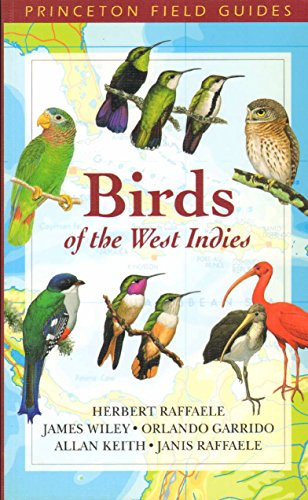
Fully illustrated, easy to use, and completely up-to-date, Birds of the West Indies is the only field guide that covers all of the bird species known to occur in the region--including migrants and infrequently occurring forms. Each species is represented by a full description that includes identification field marks, status and range, habitat, and voice. A map showing the bird's distribution accompanies many species accounts, and plumages of all species are depicted in ninety-three beautifully rendered color plates.
Bird lovers, vacationing tourists, local residents, and "armchair travelers" will all want to own this definitive field guide to the birds of the West Indies.
- Includes all species recorded in the region
- Features ninety-three color plates with concise text on facing pages for quick reference and easy identification
- Species accounts cover identification, voice, status and habitat, and range
- Color distribution maps
Die Inhaltsangabe kann sich auf eine andere Ausgabe dieses Titels beziehen.
Über die Autorin bzw. den Autor
Herbert Raffaele is Chief of the Office of International Conservation of the United States Fish and Wildlife Service. He is the author of A Guide to the Birds of Puerto Rico and the Virgin Islands (Princeton).
Auszug. © Genehmigter Nachdruck. Alle Rechte vorbehalten.
BIRDS OF THE WEST INDIES
By Herbert Raffaele James Wiley Orlando Garrido Allan Keith Janis RaffaelePrinceton University Press
Copyright © 2003 Princeton University PressAll right reserved.
ISBN: 978-0-691-11319-7
Contents
Introduction........................................................................................................................7Species Accounts and Color Plates...................................................................................................16SEABIRDS............................................................................................................................16HERONS AND OTHER LONG-LEGGED WADERS.................................................................................................34MARSHBIRDS AND WATERFOWL............................................................................................................58HAWKS, OWLS, AND NIGHTJARS..........................................................................................................76, 100GAMEBIRDS AND PIGEONS; PARROTS AND CUCKOOS; SWIFTS, HUMMINGBIRDS, TROGONS, TODIES, KINGFISHERS, AND WOODPECKERS.....................84, 106FLYCATCHERS.........................................................................................................................118CROWS, SWALLOWS, GNATCATCHERS, THRUSHES, THRASHERS, AND MOCKINGBIRDS................................................................126VIREOS AND WARBLERS.................................................................................................................144EUPHONIAS, HONEYCREEPERS, TANAGERS, ORIOLES, AND BLACKBIRDS.........................................................................174FINCH-LIKE BIRDS....................................................................................................................188Selected References.................................................................................................................204Index of English and Scientific Names...............................................................................................206
Chapter One
* GREATER SHEARWATER Puffinus gravis 48cm (19in). One of two large shearwaters in West Indies; noticeable white bands on hindneck and rump contrast with black cap and dark grayish-brown upperparts. STATUS AND RANGE: Uncommon non-breeding resident among Bahamas and off Puerto Rico primarily May through July, but can occur any month. Likely rare through rest of West Indies during these months. HABITAT: At sea.* CORY'S SHEARWATER Calonectris diomedea 46-53cm (18-21in). Large shearwater, appears featureless at distance. Pale yellowish bill, white uppertail-coverts variable in extent; coloration of cheek and neck blend with underparts. FLIGHT: Leisurely on broad, loosely held wings, noticeably angled at wrist. STATUS AND RANGE: Uncommon migrant among Bahamas primarily May and June, but until September. Rare in rest of West Indies; likely transits off all islands. HABITAT: At sea.
* BLACK-CAPPED PETREL Pterodroma hasitata 35-40cm (14-16in). Upperparts blackish except for white rump, hindneck and forehead. Extent of white variable. FLIGHT: Black front-edge of underwing. Wrist more bent than shearwater's and flight more erratic. STATUS AND RANGE: Rare and very local breeding resident in West Indies. Critically endangered. HABITAT: At sea.
* JAMAICAN PETREL Pterodroma caribbaea 35-46cm (14-18in). Dark gray overall, except white rump and uppertail-coverts; legs and feet pinkish-white. STATUS AND RANGE: Endemic to Jamaica, but believed extinct. May persist in John Crow Mountains. HABITAT: At sea.
* SOOTY SHEARWATER Puffinus griseus 40-46cm (16-18in). Medium-sized, blackish overall with whitish underwings. Wings long and narrow. FLIGHT: Swift and direct, with rapid flapping ascents and long glides usually close to the water. STATUS AND RANGE: Apparently rare migrant in West Indies primarily late May through July, but some through November. Might be expected any month. HABITAT: At sea.
* MANX SHEARWATER Puffinus puffinus 30-38cm (12-15in). Medium-sized; short tail. Blackish above and white below, including wing linings and undertail-coverts. FLIGHT: Four or five distinctive snappy wingbeats and a rocking glide in light winds or flat seas. STATUS AND RANGE: Rare migrant in West Indies primarily November through March. HABITAT: At sea.
* AUDUBON'S SHEARWATER Puffinus lherminieri 30cm (12in). Relatively small, long-tailed shearwater, blackish-brown above and white below, but with dark undertail-coverts. STATUS AND RANGE: The only shearwater regularly encountered in West Indies. In the Bahamas, a common breeding resident primarily March through July; uncommon in other months. Elsewhere in West Indies a generally uncommon and local breeding resident, rare outside breeding season. HABITAT: At sea.
* BAND-RUMPED STORM-PETREL Oceanodroma castro 19-21cm (7.5-8in). Mediumsized; black head and upperparts. Conspicuous narrow white rump band contrasts with blackish tail and underparts; square tail. FLIGHT: Buoyant and direct, though sometimes erratic and shearwater-like with deep wingbeats. Feet do not extend beyond tail. STATUS AND RANGE: Very rare off Bahamas, Cuba, and Antigua. Expected primarily May through August. Status in West Indies poorly known. HABITAT: At sea.
* LEACH'S STORM-PETREL Oceanodroma leucorhoa 20cm (8in). A small, brownish-black seabird with white rump. Has slightly forked tail, pale brown wing band, and white rump patch appearing divided at close range. FLIGHT: Feet do not extend beyond tail. STATUS AND RANGE: Rare non-breeding resident throughout West Indies primarily November through June, but sometimes in other months. HABITAT: At sea.
* WILSON'S STORM-PETREL Oceanites oceanicus 18-19cm (7-7.5in). Small, dark brownish-black seabird with white rump. Blacker, wings shorter, broader and more rounded with less angled wrists than Leach's Storm-Petrel, also tail more square. FLIGHT: Feet, with yellow toe-webbing, extend beyond tail. Regularly follows boats, swooping over wake and touching sea with feet. STATUS AND RANGE: Rare non-breeding resident in much of West Indies primarily May and June. Most frequent among Bahamas where uncommon. HABITAT: At sea.
* WHITE-TAILED TROPICBIRD Phaethon lepturus 81cm (31in) (with plumes), 37-40cm (15-16in) (without plumes). ADULT: White overall; long tail feathers; heavy black stripes on upperwing and outer primaries. Bill yellow or orange. IMMATURE: Barred back; short central tail feathers. Bill yellowish, ringed with black. VOICE: Raspy crick-et. STATUS AND RANGE: Widespread; very locally common breeding resident in West Indies primarily March through June (through October in Bahamas). The typical tropicbird of Bahamas, Greater Antilles, and Cayman Islands; scarcer in Lesser Antilles. HABITAT: At sea.
* RED-BILLED TROPICBIRD Phaethon aethereus 91-107cm (36-42in) (with plumes), 46-51cm (18-20in) (without plumes). ADULT: White overall; black barred back; long tail plumes; red bill. IMMATURE: Similar to White-tailed, but back less boldly barred, darker black band across hindneck. VOICE: Long, harsh, raspy kearrr. STATUS AND RANGE: Common in Virgin Islands;...
„Über diesen Titel“ kann sich auf eine andere Ausgabe dieses Titels beziehen.
Suchergebnisse für Birds of the West Indies (Princeton Field Guides)

Beispielbild für diese ISBN
Birds of the West Indies
Verlag:
Princeton University Press, 2003
ISBN 10: 069111319X
ISBN 13: 9780691113197
Gebraucht
Paperback
Anbieter: World of Books (was SecondSale), Montgomery, IL, USA
Verkäuferbewertung 5 von 5 Sternen

Paperback. Zustand: Good. Pedersen, Tracy; Williams, Kristin (illustrator). A field guide that covers the bird species known to occur in West Indies - including migrants and infrequently occurring forms. Each species is represented by a full description that includes identification field marks, status and range, habitat, and voice. Artikel-Nr. 00108709670
Gebraucht kaufen
EUR 5,58
Versand gratis
Versand innerhalb von USA
Versand innerhalb von USA
Anzahl: 1 verfügbar
Beispielbild für diese ISBN
Birds of the West Indies
Verlag:
Princeton University Press, 2003
ISBN 10: 069111319X
ISBN 13: 9780691113197
Gebraucht
Paperback
Anbieter: ThriftBooks-Atlanta, AUSTELL, GA, USA
Verkäuferbewertung 5 von 5 Sternen
Paperback. Zustand: Good. No Jacket. Pedersen, Tracy; Williams, Kristin (illustrator). Pages can have notes/highlighting. Spine may show signs of wear. ~ ThriftBooks: Read More, Spend Less. Artikel-Nr. G069111319XI3N00
Gebraucht kaufen
EUR 7,21
Versand gratis
Versand innerhalb von USA
Versand innerhalb von USA
Anzahl: 1 verfügbar
Beispielbild für diese ISBN
Birds of the West Indies
Verlag:
Princeton University Press, 2003
ISBN 10: 069111319X
ISBN 13: 9780691113197
Gebraucht
Softcover
Anbieter: Better World Books, Mishawaka, IN, USA
Verkäuferbewertung 5 von 5 Sternen
Zustand: Good. Pedersen, Tracy; Williams, Kristin (illustrator). Former library copy. Pages intact with minimal writing/highlighting. The binding may be loose and creased. Dust jackets/supplements are not included. Includes library markings. Stock photo provided. Product includes identifying sticker. Better World Books: Buy Books. Do Good. Artikel-Nr. 45697759-6
Gebraucht kaufen
EUR 8,35
Versand gratis
Versand innerhalb von USA
Versand innerhalb von USA
Anzahl: 1 verfügbar
Beispielbild für diese ISBN
Birds of the West Indies
Verlag:
Princeton University Press, 2003
ISBN 10: 069111319X
ISBN 13: 9780691113197
Gebraucht
Softcover
Anbieter: Better World Books, Mishawaka, IN, USA
Verkäuferbewertung 5 von 5 Sternen
Zustand: Good. Pedersen, Tracy; Williams, Kristin (illustrator). Pages intact with minimal writing/highlighting. The binding may be loose and creased. Dust jackets/supplements are not included. Stock photo provided. Product includes identifying sticker. Better World Books: Buy Books. Do Good. Artikel-Nr. 39285031-75
Gebraucht kaufen
EUR 8,35
Versand gratis
Versand innerhalb von USA
Versand innerhalb von USA
Anzahl: 1 verfügbar
Beispielbild für diese ISBN
Birds of the West Indies, Princeton Field Guides.
Verlag:
Princeton University Press, 2003
ISBN 10: 069111319X
ISBN 13: 9780691113197
Gebraucht
Soft cover
Anbieter: N. Fagin Books, Chicago, IL, USA
Verkäuferbewertung 5 von 5 Sternen
Soft cover. Zustand: Near Fine. Pedersen, Tracy; Williams, Kristin (illustrator). 2003. Birds, field guides. Princeton University Press. 216p., near fine paperback. 11/25. Artikel-Nr. 5421
Gebraucht kaufen
EUR 13,79
EUR 5,36 Versand
Versand innerhalb von USA
Versand innerhalb von USA
Anzahl: 1 verfügbar
Beispielbild für diese ISBN
Birds of the West Indies (Princeton Field Guides)
Verlag:
Princeton University Press, 2003
ISBN 10: 069111319X
ISBN 13: 9780691113197
Gebraucht
Paperback
Anbieter: AwesomeBooks, Wallingford, Vereinigtes Königreich
Verkäuferbewertung 5 von 5 Sternen
Paperback. Zustand: Very Good. Pedersen, Tracy; Williams, Kristin (illustrator). Birds of the West Indies (Princeton Field Guides) This book is in very good condition and will be shipped within 24 hours of ordering. The cover may have some limited signs of wear but the pages are clean, intact and the spine remains undamaged. This book has clearly been well maintained and looked after thus far. Money back guarantee if you are not satisfied. See all our books here, order more than 1 book and get discounted shipping. . Artikel-Nr. 7719-9780691113197
Gebraucht kaufen
EUR 16,26
EUR 4,92 Versand
Versand von Vereinigtes Königreich nach USA
Versand von Vereinigtes Königreich nach USA
Anzahl: 1 verfügbar
Beispielbild für diese ISBN
Birds of the West Indies (Princeton Field Guides)
Verlag:
Princeton University Press 22/09/2003, 2003
ISBN 10: 069111319X
ISBN 13: 9780691113197
Gebraucht
Paperback
Anbieter: Bahamut Media, Reading, Vereinigtes Königreich
Verkäuferbewertung 4 von 5 Sternen

Paperback. Zustand: Very Good. Pedersen, Tracy; Williams, Kristin (illustrator). Shipped within 24 hours from our UK warehouse. Clean, undamaged book with no damage to pages and minimal wear to the cover. Spine still tight, in very good condition. Remember if you are not happy, you are covered by our 100% money back guarantee. Artikel-Nr. 6545-9780691113197
Gebraucht kaufen
EUR 16,26
EUR 8,33 Versand
Versand von Vereinigtes Königreich nach USA
Versand von Vereinigtes Königreich nach USA
Anzahl: 1 verfügbar
Beispielbild für diese ISBN
Birds of the West Indies (Princeton Field Guides)
Anbieter: Revaluation Books, Exeter, Vereinigtes Königreich
Verkäuferbewertung 5 von 5 Sternen
Paperback. Zustand: Brand New. Pedersen, Tracy; Williams, Kristin (illustrator). 216 pages. 8.50x5.00x0.75 inches. In Stock. Artikel-Nr. 069111319X
Neu kaufen
EUR 30,55
EUR 11,94 Versand
Versand von Vereinigtes Königreich nach USA
Versand von Vereinigtes Königreich nach USA
Anzahl: 1 verfügbar
Foto des Verkäufers
Birds of the West Indies (Princeton Field Guides)
Verlag:
Princeton University Press., 2003
ISBN 10: 069111319X
ISBN 13: 9780691113197
Gebraucht
21,5*13 cm. OBroschur.
Anbieter: Antiquariat BehnkeBuch, Neu Kaliß, Deutschland
Verkäuferbewertung 5 von 5 Sternen
21,5*13 cm. OBroschur. 215 S. Einband berieben, leicht fleckig und leicht knickspurig. Kapitale und Ecken leicht gestaucht. Rücken lichtheller. Schnitt fleckig. Spiegel fleckig. Teils leicht wasserwellig und leicht eselohrig, sonst gut. L18-1 ISBN 069111319x Wichtiger Hinweis: Aufgrund der EPR-Regelung zur Zeit KEIN Versand in EU-Länder. Due to EPR, there is currently no delivery to EU-countries. Sprache: Englisch Gewicht in Gramm: 550. Artikel-Nr. 157020
Gebraucht kaufen
EUR 12,00
EUR 100,00 Versand
Versand von Deutschland nach USA
Versand von Deutschland nach USA
Anzahl: 1 verfügbar