
Multiculturalism: Expanded Paperback Edition: Examining the Politics of Recognition (University Center for Human Values) - Softcover
Buch 1 von 16: University Center for Human Values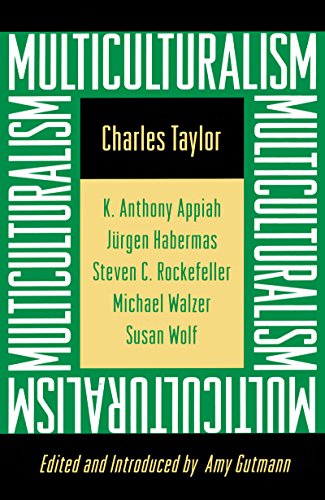
Inhaltsangabe
A new edition of the highly acclaimed book Multiculturalism and "The Politics of Recognition," this paperback brings together an even wider range of leading philosophers and social scientists to probe the political controversy surrounding multiculturalism. Charles Taylor's initial inquiry, which considers whether the institutions of liberal democratic government make room--or should make room--for recognizing the worth of distinctive cultural traditions, remains the centerpiece of this discussion. It is now joined by Jürgen Habermas's extensive essay on the issues of recognition and the democratic constitutional state and by K. Anthony Appiah's commentary on the tensions between personal and collective identities, such as those shaped by religion, gender, ethnicity, race, and sexuality, and on the dangerous tendency of multicultural politics to gloss over such tensions. These contributions are joined by those of other well-known thinkers, who further relate the demand for recognition to issues of multicultural education, feminism, and cultural separatism.
Praise for the previous edition:
Die Inhaltsangabe kann sich auf eine andere Ausgabe dieses Titels beziehen.
Über die Autorin bzw. den Autor
Charles Taylor is Professor of Philosophy and Political Science at McGill University; K. Anthony Appiah, Professor of Afro-American Studies and Philosophy at Harvard University; Jürgen Habermas, Professor of Philosophy at Johann Wolfgang Goethe-Universitat, Frankfurt am Main; Steven C. Rockefeller, Professor of Religion at Middlebury College; Michael Walzer, Permanent Member of the Faculty at the School of Social Sciences at the Institute for Advanced Study in Princeton; Susan Wolf, Professor of Philosophy at The Johns Hopkins University; and Amy Gutmann, Laurance S. Rockefeller University Professor of Politics and Director of the University Center for Human Values at Princeton University.
Von der hinteren Coverseite
Charles Taylor's initial inquiry, which considers whether the institutions of liberal democratic government make room - or should make room - for recognizing the worth of distinctive cultural traditions, remains the centerpiece of this discussion. It is now joined by Jurgen Habermas's extensive essay on the issues of recognition and the democratic constitutional state and by K. Anthony Appiah's commentary on the tensions between personal and collective identities, such as those shaped by religion, gender, ethnicity, race, and sexuality, and the dangerous tendency of multicultural politics to gloss over such tensions.
Auszug. © Genehmigter Nachdruck. Alle Rechte vorbehalten.
Multiculturalism
EXAMINING THE POLITICS OF RECOGNITIONBy Charles Taylor K. Anthony Appiah Jürgen Habermas Steven C. Rockefeller Michael Walzer Susan WolfPRINCETON UNIVERSITY PRESS
Copyright © 1994 Princeton University PressAll right reserved.
ISBN: 978-0-691-03779-0
Contents
Preface (1994).....................................................................................................................................ixPreface and Acknowledgments........................................................................................................................xiiiPART ONE...........................................................................................................................................1Introduction Amy Gutmann..........................................................................................................................3The Politics of Recognition Charles Taylor........................................................................................................25Comment Susan Wolf................................................................................................................................75Comment Steven C. Rockefeller.....................................................................................................................87Comment Michael Walzer............................................................................................................................99PART TWO...........................................................................................................................................105Struggles for Recognition in the Democratic Constitutional State Jürgen Habermas Translated by Shierry Weber Nicholsen.....................107Identity, Authenticity, Survival: Multicultural Societies and Social Reproduction K. Anthony Appiah...............................................149Contributors.......................................................................................................................................165Index..............................................................................................................................................169
Chapter One
The Politics of RecognitionCHARLES TAYLOR
I
A number of strands in contemporary politics turn on the need, sometimes the demand, for recognition. The need, it can be argued, is one of the driving forces behind nationalist movements in politics. And the demand comes to the fore in a number of ways in today's politics, on behalf of minority or "subaltern" groups, in some forms of feminism and in what is today called the politics of "multiculturalism."
The demand for recognition in these latter cases is given urgency by the supposed links between recognition and identity, where this latter term designates something like a person's understanding of who they are, of their fundamental defining characteristics as a human being. The thesis is that our identity is partly shaped by recognition or its absence, often by the misrecognition of others, and so a person or group of people can suffer real damage, real distortion, if the people or society around them mirror back to them a confining or demeaning or contemptible picture of themselves. Nonrecognition or misrecognition can inflict harm, can be a form of oppression, imprisoning someone in a false, distorted, and reduced mode of being.
Thus some feminists have argued that women in patriarchal societies have been induced to adopt a depreciatory image of themselves. They have internalized a picture of their own inferiority, so that even when some of the objective obstacles to their advancement fall away, they may be incapable of taking advantage of the new opportunities. And beyond this, they are condemned to suffer the pain of low self-esteem. An analogous point has been made in relation to blacks: that white society has for generations projected a demeaning image of them, which some of them have been unable to resist adopting. Their own self-depreciation, on this view, becomes one of the most potent instruments of their own oppression. Their first task ought to be to purge themselves of this imposed and destructive identity. Recently, a similar point has been made in relation to indigenous and colonized people in general. It is held that since 1492 Europeans have projected an image of such people as somehow inferior, "uncivilized," and through the force of conquest have often been able to impose this image on the conquered. The figure of Caliban has been held to epitomize this crushing portrait of contempt of New World aboriginals.
Within these perspectives, misrecognition shows not just a lack of due respect. It can inflict a grievous wound, saddling its victims with a crippling self-hatred. Due recognition is not just a courtesy we owe people. It is a vital human need.
In order to examine some of the issues that have arisen here, I'd like to take a step back, achieve a little distance, and look first at how this discourse of recognition and identity came to seem familiar, or at least readily understandable, to us. For it was not always so, and our ancestors of more than a couple of centuries ago would have stared at us uncomprehendingly if we had used these terms in their current sense. How did we get started on this?
Hegel comes to mind right off, with his famous dialectic of the master and the slave. This is an important stage, but we need to go a little farther back to see how this passage came to have the sense it did. What changed to make this kind of talk have sense for us?
We can distinguish two changes that together have made the modern preoccupation with identity and recognition inevitable. The first is the collapse of social hierarchies, which used to be the basis for honor. I am using honor in the ancien régime sense in which it is intrinsically linked to inequalities. For some to have honor in this sense, it is essential that not everyone have it. This is the sense in which Montesquieu uses it in his description of monarchy. Honor is intrinsically a matter of "préférences." It is also the sense in which we use the term when we speak of honoring someone by giving her some public award, for example, the Order of Canada. Clearly, this award would be without worth if tomorrow we decided to give it to every adult Canadian.
As against this notion of honor, we have the modern notion of dignity, now used in a universalist and egalitarian sense, where we talk of the inherent "dignity of human beings," or of citizen dignity. The underlying premise here is that everyone shares in it. It is obvious that this concept of dignity is the only one compatible with a democratic society, and that it was inevitable that the old concept of honor was superseded. But this has also meant that the forms of equal recognition have been essential to democratic culture. For instance, that everyone be called "Mr.," "Mrs.," or "Miss," rather than some people being called "Lord" or "Lady" and others simply by their surnames—or, even more demeaning, by their first names—has been thought essential in some democratic societies, such as the United States. More recently, for similar reasons, "Mrs." and "Miss" have been collapsed into "Ms." Democracy has ushered in a politics of equal recognition, which has taken various forms over the years, and has now returned in the form of demands for...
„Über diesen Titel“ kann sich auf eine andere Ausgabe dieses Titels beziehen.
Suchergebnisse für Multiculturalism: Expanded Paperback Edition: Examining...

Beispielbild für diese ISBN
Multiculturalism: Examining the Politics of Recognition
Verlag:
Princeton University Press, 1994
ISBN 10: 0691037795
ISBN 13: 9780691037790
Gebraucht
Softcover
Anbieter: World of Books (was SecondSale), Montgomery, IL, USA
Verkäuferbewertung 5 von 5 Sternen

Zustand: Good. Item in good condition. Textbooks may not include supplemental items i.e. CDs, access codes etc. Artikel-Nr. 00094422325
Gebraucht kaufen
EUR 4,92
Versand gratis
Versand innerhalb von USA
Versand innerhalb von USA
Anzahl: 4 verfügbar
Beispielbild für diese ISBN
Multiculturalism: Examining the Politics of Recognition
Verlag:
Princeton University Press, 1994
ISBN 10: 0691037795
ISBN 13: 9780691037790
Gebraucht
Softcover
Anbieter: World of Books (was SecondSale), Montgomery, IL, USA
Verkäuferbewertung 5 von 5 Sternen
Zustand: Very Good. Item in very good condition! Textbooks may not include supplemental items i.e. CDs, access codes etc. Artikel-Nr. 00102184701
Gebraucht kaufen
EUR 4,92
Versand gratis
Versand innerhalb von USA
Versand innerhalb von USA
Anzahl: 3 verfügbar
Beispielbild für diese ISBN
Multiculturalism : Expanded Paperback Edition
Verlag:
Princeton University Press, 1994
ISBN 10: 0691037795
ISBN 13: 9780691037790
Gebraucht
Softcover
Anbieter: Better World Books, Mishawaka, IN, USA
Verkäuferbewertung 5 von 5 Sternen
Zustand: Good. (expanded) Edition. Pages intact with minimal writing/highlighting. The binding may be loose and creased. Dust jackets/supplements are not included. Stock photo provided. Product includes identifying sticker. Better World Books: Buy Books. Do Good. Artikel-Nr. 3965871-6
Gebraucht kaufen
EUR 6,10
Versand gratis
Versand innerhalb von USA
Versand innerhalb von USA
Anzahl: 1 verfügbar
Beispielbild für diese ISBN
Multiculturalism : Expanded Paperback Edition
Verlag:
Princeton University Press, 1994
ISBN 10: 0691037795
ISBN 13: 9780691037790
Gebraucht
Softcover
Anbieter: Better World Books: West, Reno, NV, USA
Verkäuferbewertung 5 von 5 Sternen
Zustand: Good. (expanded) Edition. Pages intact with minimal writing/highlighting. The binding may be loose and creased. Dust jackets/supplements are not included. Stock photo provided. Product includes identifying sticker. Better World Books: Buy Books. Do Good. Artikel-Nr. 3965871-6
Gebraucht kaufen
EUR 6,10
Versand gratis
Versand innerhalb von USA
Versand innerhalb von USA
Anzahl: 1 verfügbar
Beispielbild für diese ISBN
Multiculturalism: Examining the Politics of Recognition
Verlag:
Princeton University Press, 1994
ISBN 10: 0691037795
ISBN 13: 9780691037790
Gebraucht
Softcover
Anbieter: Wonder Book, Frederick, MD, USA
Verkäuferbewertung 5 von 5 Sternen
Zustand: Good. Good condition. A copy that has been read but remains intact. May contain markings such as bookplates, stamps, limited notes and highlighting, or a few light stains. Artikel-Nr. Y13B-02421
Gebraucht kaufen
EUR 7,09
Versand gratis
Versand innerhalb von USA
Versand innerhalb von USA
Anzahl: 2 verfügbar
Beispielbild für diese ISBN
Multiculturalism: Examining the Politics of Recognition
Verlag:
Princeton University Press, 1994
ISBN 10: 0691037795
ISBN 13: 9780691037790
Gebraucht
Softcover
Anbieter: Wonder Book, Frederick, MD, USA
Verkäuferbewertung 5 von 5 Sternen
Zustand: Very Good. Very Good condition. A copy that may have a few cosmetic defects. May also contain light spine creasing or a few markings such as an owner's name, short gifter's inscription or light stamp. Artikel-Nr. Q10D-01438
Gebraucht kaufen
EUR 7,09
Versand gratis
Versand innerhalb von USA
Versand innerhalb von USA
Anzahl: 2 verfügbar
Beispielbild für diese ISBN
Multiculturalism: Expanded Paperback Edition
Verlag:
Princeton University Press, 1994
ISBN 10: 0691037795
ISBN 13: 9780691037790
Gebraucht
Paperback
Anbieter: ThriftBooks-Reno, Reno, NV, USA
Verkäuferbewertung 5 von 5 Sternen
Paperback. Zustand: Good. No Jacket. Pages can have notes/highlighting. Spine may show signs of wear. ~ ThriftBooks: Read More, Spend Less. Artikel-Nr. G0691037795I3N00
Gebraucht kaufen
EUR 7,50
Versand gratis
Versand innerhalb von USA
Versand innerhalb von USA
Anzahl: 1 verfügbar
Beispielbild für diese ISBN
Multiculturalism: Expanded Paperback Edition
Verlag:
Princeton University Press, 1994
ISBN 10: 0691037795
ISBN 13: 9780691037790
Gebraucht
Paperback
Anbieter: ThriftBooks-Atlanta, AUSTELL, GA, USA
Verkäuferbewertung 5 von 5 Sternen
Paperback. Zustand: Good. No Jacket. Pages can have notes/highlighting. Spine may show signs of wear. ~ ThriftBooks: Read More, Spend Less. Artikel-Nr. G0691037795I3N00
Gebraucht kaufen
EUR 7,50
Versand gratis
Versand innerhalb von USA
Versand innerhalb von USA
Anzahl: 1 verfügbar
Beispielbild für diese ISBN
Multiculturalism: Expanded Paperback Edition
Verlag:
Princeton University Press, 1994
ISBN 10: 0691037795
ISBN 13: 9780691037790
Gebraucht
Paperback
Anbieter: ThriftBooks-Phoenix, Phoenix, AZ, USA
Verkäuferbewertung 5 von 5 Sternen
Paperback. Zustand: Good. No Jacket. Pages can have notes/highlighting. Spine may show signs of wear. ~ ThriftBooks: Read More, Spend Less. Artikel-Nr. G0691037795I3N00
Gebraucht kaufen
EUR 7,50
Versand gratis
Versand innerhalb von USA
Versand innerhalb von USA
Anzahl: 1 verfügbar
Beispielbild für diese ISBN
Multiculturalism: Expanded Paperback Edition
Verlag:
Princeton University Press, 1994
ISBN 10: 0691037795
ISBN 13: 9780691037790
Gebraucht
Paperback
Anbieter: ThriftBooks-Atlanta, AUSTELL, GA, USA
Verkäuferbewertung 5 von 5 Sternen
Paperback. Zustand: Good. No Jacket. Former library book; Pages can have notes/highlighting. Spine may show signs of wear. ~ ThriftBooks: Read More, Spend Less. Artikel-Nr. G0691037795I3N10
Gebraucht kaufen
EUR 7,50
Versand gratis
Versand innerhalb von USA
Versand innerhalb von USA
Anzahl: 1 verfügbar