
Verwandte Artikel zu Makers of Modern Strategy from Machiavelli to the Nuclear...
Inhaltsangabe
"Authoritative and convincing."—New York Times Book Review
The classic reference on the theory and practice of war
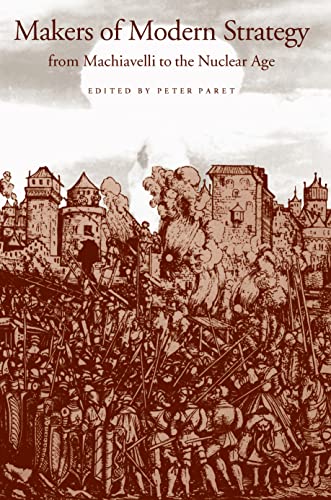
The essays in this volume analyze war, its strategic characterisitics, and its political and social functions over the past five centuries. The diversity of its themes and the broad perspectives applied to them make the book a work of general history as much as a history of the theory and practice of war from the Renaissance to the present. Makers of Modern Strategy from Machiavelli to the Nuclear Age takes the first part of its title from an earlier collection of essays that became a classic of historical scholarship. Three essays are repinted from the earlier book while four others have been extensively revised. The rest—twenty-two essays—are new.
The subjects addressed range from major theorists and political and military leaders to impersonal forces. Machiavelli, Clausewitz, and Marx and Engels are discussed, as are Napoleon, Churchill, and Mao. Other essays trace the interaction of theory and experience over generations—the evolution of American strategy, for instance, or the emergence of revolutionary war in the modern world. Still others analyze the strategy of particular conflicts—the First and Second World Wars—or the relationship between technology, policy, and war in the nuclear age. Whatever its theme, each essay places the specifics of military thought and action in their political, social, and economic environment. Together, the contributors have produced a book that reinterprets and illuminates war, one of the most powerful forces in history and one that cannot be controlled in the future without an understanding of its past.
Die Inhaltsangabe kann sich auf eine andere Ausgabe dieses Titels beziehen.
Über die Autorin bzw. den Autor
Peter Paret (1924–2020) was the Raymond A. Spruance Professor of International History at Stanford University. His books include Clausewitz and the State: The Man, His Theories, and His Times (Princeton). Gordon A. Craig (1913–2005) was the J. E. Wallace Sterling Professor of Humanities Emeritus at Stanford University. Felix Gilbert (1905–1991) was professor emeritus in the School of Historical Studies at the Institute for Advanced Study in Princeton.
Von der hinteren Coverseite
Carl Von Clausewitz defined strategy as the use of combat, or the threat of combat, for the purpose of the war in which it takes place. This formulation, which a modern historian has characterized as both revolutionary and defiantly simplistic, can be amended or expanded without difficulty.
Auszug. © Genehmigter Nachdruck. Alle Rechte vorbehalten.
Makers of Modern Strategy from Machiavelli to the Nuclear Age
Princeton University Press
Copyright © 1986 Princeton University PressAll right reserved.
ISBN: 978-0-691-02764-7
Contents
Acknowledgments.....................................................................................................................................................viiIntroduction Peter Paret............................................................................................................................................31. Machiavelli: The Renaissance of the Art of War Felix Gilbert....................................................................................................112. Maurice of Nassau, Gustavus Adolphus, Raimondo Montecuccoli, and the "Military Revolution" of the Seventeenth Century Gunther E. Rothenberg.....................323. Vauban: The Impact of Science on War Henry Guerlac..............................................................................................................644. Frederick the Great, Guibert, Bülow: From Dynastic to National War R. R. Palmer............................................................................915. Napoleon and the Revolution in War Peter Paret..................................................................................................................1236. Jomini John Shy.................................................................................................................................................1437. Clausewitz Peter Paret..........................................................................................................................................1868. Adam Smith, Alexander Hamilton, Friedrich List: The Economic Foundations of Military Power Edward Mead Earle....................................................2179. Engels and Marx on Revolution, War, and the Army in Society Sigmund Neumann and Mark von Hagen..................................................................26210. The Prusso-German School: Moltke and the Rise of the General Staff Hajo Holborn................................................................................28111. Moltke, Schlieffen, and the Doctrine of Strategic Envelopment Gunther E. Rothenberg............................................................................29612. Delbrück: The Military Historian Gordon A. Craig..........................................................................................................32613. Russian Military Thought: The Western Model and the Shadow of Suvorov Walter Pintner...........................................................................35414. Bugeaud, Galliéni, Lyautey: The Development of French Colonial Warfare Douglas Porch......................................................................37615. American Strategy from Its Beginnings through the First World War Russell F. Weigley...........................................................................40816. Alfred Thayer Mahan: The Naval Historian Philip A. Crowl.......................................................................................................44417. The Political Leader as Strategist Gordon A. Craig.............................................................................................................48118. Men against Fire: The Doctrine of the Offensive in 1914 Michael Howard.........................................................................................51019. German Strategy in the Age of Machine Warfare, 1914-1945 Michael Geyer.........................................................................................52720. Liddell Hart and De Gaulle: The Doctrines of Limited Liability and Mobile Defense Brian Bond and Martin Alexander..............................................59821. Voices from the Central Blue: The Air Power Theorists David Maclsaac...........................................................................................62422. The Making of Soviet Strategy Condoleezza Rice.................................................................................................................64823. Allied Strategy in Europe, 1939-1945 Maurice Matloff...........................................................................................................67724. American and Japanese Strategies in the Pacific War D. Clayton James...........................................................................................70326. Conventional Warfare in the Nuclear Age Michael Carver.........................................................................................................77927. Revolutionary War John Shy and Thomas W. Collier...............................................................................................................81528. Reflections on Strategy in the Present and Future Gordon A. Craig and Felix Gilbert............................................................................863List of Contributors................................................................................................................................................873Bibliographical Notes...............................................................................................................................................877Index...............................................................................................................................................................933
Chapter One
Machiavelli: The Renaissance of the Art of WarFelix Gilbert
If the various campaigns and uprisings which have taken place in Italy have given the appearance that military ability has become extinct, the true reason is that the old methods of warfare were not good and no one has been able to find new ones. A man newly risen to power cannot acquire greater reputation than by discovering new rules and methods." With these words from the famous last chapter of The Prince—"The exhortation to free Italy from the barbarians"—Machiavelli expressed an idea that recurs frequently in his writings: new military institutions and new processes in warfare are the most urgent and the most fundamental requirement of his time. Machiavelli is usually held to have introduced a new era, the modern era, in the development of political thought; his conviction that the military organization of contemporary Italian states needed changing was a driving force, a central concern behind all his reflections on the world of politics. It hardly goes too far to say that Machiavelli became a political thinker because he was a military thinker. His view of the military problems of his time patterned his entire political outlook.
I
Machiavelli occupies a unique position in the field of military thought because his ideas are based on a recognition of the link between the changes that occurred in military organization and the revolutionary developments that took place in the social and political sphere. To the ordinary observer, the connection between cause and effect in military developments seemed obvious. The discovery of gunpowder and the invention of firearms and artillery suggested that the armor of the knight was doomed and the collapse of the military organization of the Middle Ages, in which knights played the decisive role, had become inevitable. In his epic Orlando Furioso (1516), Ariosto, Machiavelli's contemporary and Italian compatriot, narrates how Orlando, his hero and the embodiment of all knightly virtues, was forced to face an enemy with a firearm:
At once the lightning flashes, shakes the ground, The trembling bulwarks...
„Über diesen Titel“ kann sich auf eine andere Ausgabe dieses Titels beziehen.
Suchergebnisse für Makers of Modern Strategy from Machiavelli to the Nuclear...

Beispielbild für diese ISBN
Makers of Modern Strategy from
Verlag:
Princeton University Press, 1986
ISBN 10: 0691027641
ISBN 13: 9780691027647
Gebraucht
Softcover
Anbieter: World of Books (was SecondSale), Montgomery, IL, USA
Verkäuferbewertung 5 von 5 Sternen

Zustand: Good. Item in good condition and has highlighting/writing on text. Used texts may not contain supplemental items such as CDs, info-trac etc. Artikel-Nr. 00107935308
Gebraucht kaufen
EUR 3,99
Versand gratis
Versand innerhalb von USA
Versand innerhalb von USA
Anzahl: 1 verfügbar
Beispielbild für diese ISBN
Makers of Modern Strategy from
Verlag:
Princeton University Press, 1986
ISBN 10: 0691027641
ISBN 13: 9780691027647
Gebraucht
Softcover
Anbieter: World of Books (was SecondSale), Montgomery, IL, USA
Verkäuferbewertung 5 von 5 Sternen
Zustand: Good. Item in good condition. Textbooks may not include supplemental items i.e. CDs, access codes etc. Artikel-Nr. 00108572980
Gebraucht kaufen
EUR 5,33
Versand gratis
Versand innerhalb von USA
Versand innerhalb von USA
Anzahl: 6 verfügbar
Beispielbild für diese ISBN
Makers of Modern Strategy from Machiavelli to the Nuclear Age
Verlag:
Princeton University Press, 1986
ISBN 10: 0691027641
ISBN 13: 9780691027647
Gebraucht
Paperback
Anbieter: ThriftBooks-Reno, Reno, NV, USA
Verkäuferbewertung 5 von 5 Sternen
Paperback. Zustand: Fair. No Jacket. Readable copy. Pages may have considerable notes/highlighting. ~ ThriftBooks: Read More, Spend Less. Artikel-Nr. G0691027641I5N00
Gebraucht kaufen
EUR 6,58
Versand gratis
Versand innerhalb von USA
Versand innerhalb von USA
Anzahl: 1 verfügbar
Beispielbild für diese ISBN
Makers of Modern Strategy from Machiavelli to the Nuclear Age
Verlag:
Princeton University Press, 1986
ISBN 10: 0691027641
ISBN 13: 9780691027647
Gebraucht
Paperback
Anbieter: ThriftBooks-Phoenix, Phoenix, AZ, USA
Verkäuferbewertung 5 von 5 Sternen
Paperback. Zustand: Good. No Jacket. Pages can have notes/highlighting. Spine may show signs of wear. ~ ThriftBooks: Read More, Spend Less. Artikel-Nr. G0691027641I3N00
Gebraucht kaufen
EUR 6,58
Versand gratis
Versand innerhalb von USA
Versand innerhalb von USA
Anzahl: 1 verfügbar
Beispielbild für diese ISBN
Makers of Modern Strategy from Machiavelli to the Nuclear Age
Verlag:
Princeton University Press, 1986
ISBN 10: 0691027641
ISBN 13: 9780691027647
Gebraucht
Paperback
Anbieter: ThriftBooks-Dallas, Dallas, TX, USA
Verkäuferbewertung 5 von 5 Sternen
Paperback. Zustand: Good. No Jacket. Pages can have notes/highlighting. Spine may show signs of wear. ~ ThriftBooks: Read More, Spend Less. Artikel-Nr. G0691027641I3N00
Gebraucht kaufen
EUR 6,58
Versand gratis
Versand innerhalb von USA
Versand innerhalb von USA
Anzahl: 2 verfügbar
Beispielbild für diese ISBN
Makers of Modern Strategy from Machiavelli to the Nuclear Age
Verlag:
Princeton University Press, 1986
ISBN 10: 0691027641
ISBN 13: 9780691027647
Gebraucht
Paperback
Anbieter: ThriftBooks-Phoenix, Phoenix, AZ, USA
Verkäuferbewertung 5 von 5 Sternen
Paperback. Zustand: Fair. No Jacket. Readable copy. Pages may have considerable notes/highlighting. ~ ThriftBooks: Read More, Spend Less. Artikel-Nr. G0691027641I5N00
Gebraucht kaufen
EUR 6,58
Versand gratis
Versand innerhalb von USA
Versand innerhalb von USA
Anzahl: 1 verfügbar
Beispielbild für diese ISBN
Makers of Modern Strategy from Machiavelli to the Nuclear Age
Verlag:
Princeton University Press, 1986
ISBN 10: 0691027641
ISBN 13: 9780691027647
Gebraucht
Paperback
Anbieter: ThriftBooks-Atlanta, AUSTELL, GA, USA
Verkäuferbewertung 5 von 5 Sternen
Paperback. Zustand: Good. No Jacket. Pages can have notes/highlighting. Spine may show signs of wear. ~ ThriftBooks: Read More, Spend Less. Artikel-Nr. G0691027641I3N00
Gebraucht kaufen
EUR 6,58
Versand gratis
Versand innerhalb von USA
Versand innerhalb von USA
Anzahl: 1 verfügbar
Beispielbild für diese ISBN
Makers of Modern Strategy from Machiavelli to the Nuclear Age
Verlag:
Princeton University Press, 1986
ISBN 10: 0691027641
ISBN 13: 9780691027647
Gebraucht
Paperback
Anbieter: ThriftBooks-Reno, Reno, NV, USA
Verkäuferbewertung 5 von 5 Sternen
Paperback. Zustand: Good. No Jacket. Pages can have notes/highlighting. Spine may show signs of wear. ~ ThriftBooks: Read More, Spend Less. Artikel-Nr. G0691027641I3N00
Gebraucht kaufen
EUR 6,58
Versand gratis
Versand innerhalb von USA
Versand innerhalb von USA
Anzahl: 1 verfügbar
Beispielbild für diese ISBN
Makers of Modern Strategy from Machiavelli to the Nuclear Age
Verlag:
Princeton University Press, 1986
ISBN 10: 0691027641
ISBN 13: 9780691027647
Gebraucht
Paperback
Anbieter: ThriftBooks-Dallas, Dallas, TX, USA
Verkäuferbewertung 5 von 5 Sternen
Paperback. Zustand: Fair. No Jacket. Readable copy. Pages may have considerable notes/highlighting. ~ ThriftBooks: Read More, Spend Less. Artikel-Nr. G0691027641I5N00
Gebraucht kaufen
EUR 6,58
Versand gratis
Versand innerhalb von USA
Versand innerhalb von USA
Anzahl: 1 verfügbar
Beispielbild für diese ISBN
Makers of Modern Strategy from Machiavelli to the Nuclear Age
Verlag:
Princeton University Press, 1986
ISBN 10: 0691027641
ISBN 13: 9780691027647
Gebraucht
Paperback
Anbieter: ThriftBooks-Atlanta, AUSTELL, GA, USA
Verkäuferbewertung 5 von 5 Sternen
Paperback. Zustand: Fair. No Jacket. Readable copy. Pages may have considerable notes/highlighting. ~ ThriftBooks: Read More, Spend Less. Artikel-Nr. G0691027641I5N00
Gebraucht kaufen
EUR 6,58
Versand gratis
Versand innerhalb von USA
Versand innerhalb von USA
Anzahl: 1 verfügbar