
Inhaltsangabe
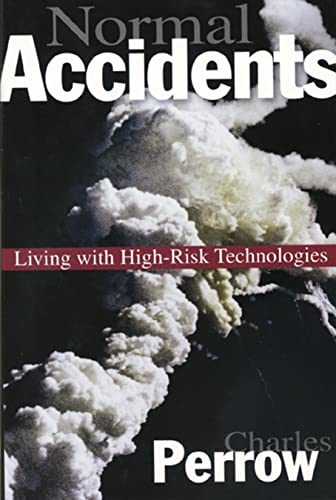
Normal Accidents analyzes the social side of technological risk. Charles Perrow argues that the conventional engineering approach to ensuring safety--building in more warnings and safeguards--fails because systems complexity makes failures inevitable. He asserts that typical precautions, by adding to complexity, may help create new categories of accidents. (At Chernobyl, tests of a new safety system helped produce the meltdown and subsequent fire.) By recognizing two dimensions of risk--complex versus linear interactions, and tight versus loose coupling--this book provides a powerful framework for analyzing risks and the organizations that insist we run them.
The first edition fulfilled one reviewer's prediction that it "may mark the beginning of accident research." In the new afterword to this edition Perrow reviews the extensive work on the major accidents of the last fifteen years, including Bhopal, Chernobyl, and the Challenger disaster. The new postscript probes what the author considers to be the "quintessential 'Normal Accident'" of our time: the Y2K computer problem.
Die Inhaltsangabe kann sich auf eine andere Ausgabe dieses Titels beziehen.
Über die Autorin bzw. den Autor
Charles Perrow is Professor of Sociology at Yale University. His other books include The Radical Attack on Business, Organizational Analysis: A Sociological View, Complex Organizations: A Critical Essay, and The AIDS Disaster: The Failure of Organizations in New York and the Nation.
Auszug. © Genehmigter Nachdruck. Alle Rechte vorbehalten.
NORMAL ACCIDENTS
Living with High-Risk TechnologiesBy CHARLES PERROWPrinceton University Press
Copyright © 1999 Princeton University PressAll right reserved.
ISBN: 978-0-691-00412-9
Contents
Abnormal Blessings............................................................................................viiIntroduction..................................................................................................31. Normal Accident at Three Mile Island.......................................................................152. Nuclear Power as a High-Risk System: Why We Have Not Had More TMIs—But Will Soon.....................323. Complexity, Coupling, and Catastrophe......................................................................624. Petrochemical Plants.......................................................................................1015. Aircraft and Airways.......................................................................................1236. Marine Accidents...........................................................................................1707. Earthbound Systems: Dams, Quakes, Mines, and Lakes.........................................................2328. Exotics: Space, Weapons, and DNA...........................................................................2569. Living with High-Risk Systems..............................................................................304Afterword.....................................................................................................353Postscript: The Y2K Problem...................................................................................388List of Acronyms..............................................................................................413Notes.........................................................................................................415Bibliography..................................................................................................426Index.........................................................................................................441
Chapter One
Normal Accident at Three Mile Island
Our first example of the accident potential of complex systems is the accident at the Three Mile Island Unit 2 nuclear plant near Harrisburg, Pennsylvania, on March 28, 1979. I have simplified the technical details a great deal and have not tried to define all of the terms. It is not necessary to understand the technology in any depth. What I wish to convey is the interconnectedness of the system, and the occasions for baffling interactions. This will be the most demanding technological account in the book, but even a general sense of the complexity will suffice if one wishes to merely follow the drama rather than the technical evolution of the accident.
TMI is clearly our most serious nuclear power plant accident to date. The high drama of the event gripped the nation for a fortnight, as reassurance gave way to near panic, and we learned of a massive hydrogen bubble and releases that sent pregnant women and others fleeing the area. The President of the United States toured the plant while two feeble pumps, designed for quite other duties, labored to keep the core from melting further. (One of them soon failed, but fortunately by the time the second pump failed the system had cooled sufficiently to allow for natural circulation.) The subsequent investigations and law suits disclosed a seemingly endless story of incompetence, dishonesty, and cover-ups before, during, and after the event; indeed, new disclosures were appearing as this book went to press. Yet, as we shall see in chapter 2 when we examine other accidents, the performance of all concerned—utility, manufacturer, regulatory agency, and industry—was about average. Rather sizeable bits and pieces of the TMI disaster can be found elsewhere in the industry; they had just never been put together so dramatically before.
Unit 2 at Three Mile Island (TMI) had a hard time getting underway at the end of 1978. Nuclear plants are always plagued with start-up problems because the system is so complex, and the technology so new. Many processes are still not well understood, and the tolerances are frightfully small for some components. A nuclear plant is also a hybrid creation—the reactor itself being complex and new and carefully engineered by one company, while the system for drawing off the heat and using it to turn turbines is a rather conventional, old, and comparatively unsophisticated system built by another company. Unit 2 may have had more than the usual problems. The maintenance force was overworked at the time of the accident and had been reduced in size during an economizing drive. There were many shutdowns, and a variety of things turned out, in retrospect, to be out of order. But one suspects that it was not all that different from other plants; after a plant sustains an accident, a thorough investigation will turn up numerous problems that would have gone unnoticed or undocumented had the accident been avoided. Indeed, in the 1982 court case where the utility, Metropolitan Edison, sued the builder of the reactor, Babcock and Wilcox, the utility charged the builder with an embarrassing number of errors and failures, and the vendor returned the favor by charging that the utility was incompetent to run their machine. But Metropolitan Edison runs other machines, and Babcock and Wilson have built many reactors that have not had such a serious accident. We know so much about the problems of Unit 2 only because the accident at Three Mile Island made it a subject for intense study; it is probably the most well-documented examination of organizational performance in the public record. At last count I found ten published technical volumes or books on the accident alone, perhaps one hundred articles, and many volumes of testimony.
The accident started in the cooling system. There are two cooling systems. The primary cooling system contains water under high pressure and at high temperature that circulates through the core where the nuclear reaction is taking place. This water goes into a steam generator, where it bathes small tubes circulating water in a quite separate system, the secondary cooling system, and heats this water in the secondary system. This transfer of heat from the primary to the secondary system keeps the core from overheating, and uses the heat to make steam. Water in the secondary system is also under high pressure until it is called upon to turn into steam, which drives the turbines that generate the electric power. The accident started in the secondary cooling system.
The water in the secondary system is not radioactive (as is the water in the primary system), but it must be very pure because its steam drives the finely precisioned turbine blades. Resins get into the water and have to be removed by the condensate polisher system, which removes particles that are precipitated out.
The polisher is a balky system, and it had failed three times in the few months the new unit had been in operation. After about eleven hours of work on the system, at 4:00 A.M. on March 28, 1979, the turbine tripped (stopped). Though the operators did not know why at the time, it is believed that some water leaked out of the polisher system—perhaps a cupful—through a leaky seal.
Seals are always in danger of leaking, but normally it is not a problem. In this case, however, the moisture got into the instrument air system of the...
„Über diesen Titel“ kann sich auf eine andere Ausgabe dieses Titels beziehen.
Suchergebnisse für Normal Accidents: Living With High-Risk Technologies...

Beispielbild für diese ISBN
Normal Accidents : Living with High Risk Technologies - Updated Edition
Verlag:
Princeton University Press, 1999
ISBN 10: 0691004129
ISBN 13: 9780691004129
Gebraucht
Softcover
Anbieter: Better World Books, Mishawaka, IN, USA
Verkäuferbewertung 5 von 5 Sternen

Zustand: Good. Pages intact with minimal writing/highlighting. The binding may be loose and creased. Dust jackets/supplements are not included. Stock photo provided. Product includes identifying sticker. Better World Books: Buy Books. Do Good. Artikel-Nr. 2426402-6
Gebraucht kaufen
EUR 17,48
Versand gratis
Versand innerhalb von USA
Versand innerhalb von USA
Anzahl: 1 verfügbar
Beispielbild für diese ISBN
Normal Accidents
Anbieter: PBShop.store UK, Fairford, GLOS, Vereinigtes Königreich
Verkäuferbewertung 4 von 5 Sternen

PAP. Zustand: New. New Book. Shipped from UK. Established seller since 2000. Artikel-Nr. WP-9780691004129
Neu kaufen
EUR 33,40
EUR 5,76 Versand
Versand von Vereinigtes Königreich nach USA
Versand von Vereinigtes Königreich nach USA
Anzahl: 15 verfügbar
Beispielbild für diese ISBN
Normal Accidents
Anbieter: PBShop.store US, Wood Dale, IL, USA
Verkäuferbewertung 5 von 5 Sternen
PAP. Zustand: New. New Book. Shipped from UK. Established seller since 2000. Artikel-Nr. GB-9780691004129
Beispielbild für diese ISBN
Normal Accidents: Living with High-Risk Technologies
Anbieter: Majestic Books, Hounslow, Vereinigtes Königreich
Verkäuferbewertung 4 von 5 Sternen
Zustand: New. pp. 462. Artikel-Nr. 8063112
Neu kaufen
EUR 44,97
EUR 7,45 Versand
Versand von Vereinigtes Königreich nach USA
Versand von Vereinigtes Königreich nach USA
Anzahl: 3 verfügbar
Beispielbild für diese ISBN
Normal Accidents
Anbieter: Kennys Bookstore, Olney, MD, USA
Verkäuferbewertung 4 von 5 Sternen
Zustand: New. 1999. Revised ed. Paperback. Analyzes the social side of technological risk. This book argues that the conventional engineering approach to ensuring safety - building in more warnings and safeguards - fails because systems complexity makes failures inevitable. It asserts that typical precautions, by adding to complexity, may help create new categories of accidents. Num Pages: 464 pages. BIC Classification: JH; KNXC; TGPR. Category: (G) General (US: Trade); (P) Professional & Vocational; (U) Tertiary Education (US: College). Dimension: 234 x 155 x 28. Weight in Grams: 654. . . . . . Books ship from the US and Ireland. Artikel-Nr. V9780691004129
Neu kaufen
EUR 45,77
EUR 8,98 Versand
Versand innerhalb von USA
Versand innerhalb von USA
Anzahl: Mehr als 20 verfügbar
Beispielbild für diese ISBN
Normal Accidents Living with High Risk Technologies Updated Edition
Anbieter: Revaluation Books, Exeter, Vereinigtes Königreich
Verkäuferbewertung 5 von 5 Sternen
Paperback. Zustand: Brand New. updated edition. 386 pages. 9.50x6.25x1.00 inches. In Stock. Artikel-Nr. __0691004129
Neu kaufen
EUR 44,67
EUR 14,33 Versand
Versand von Vereinigtes Königreich nach USA
Versand von Vereinigtes Königreich nach USA
Anzahl: 2 verfügbar
Beispielbild für diese ISBN
Normal Accidents: Living with High Risk Technologies (Princeton Paperbacks)
Verlag:
Princeton University Press, USA, 1999
ISBN 10: 0691004129
ISBN 13: 9780691004129
Gebraucht
Trade Paperback
Anbieter: Anytime Books, London, Vereinigtes Königreich
Verkäuferbewertung 4 von 5 Sternen
Trade Paperback. Zustand: Fine. A key work. pp.x.451. Artikel-Nr. 009738
Gebraucht kaufen
EUR 41,33
EUR 34,40 Versand
Versand von Vereinigtes Königreich nach USA
Versand von Vereinigtes Königreich nach USA
Anzahl: 1 verfügbar
Foto des Verkäufers
Normal Accidents: Living with High Risk Technologies (Princeton Paperbacks)
Verlag:
Princeton University Press, USA, 1999
ISBN 10: 0691004129
ISBN 13: 9780691004129
Gebraucht
Trade Paperback
Anbieter: Anytime Books, London, Vereinigtes Königreich
Verkäuferbewertung 4 von 5 Sternen
Trade Paperback. Zustand: As New. A key work; Perrow argues that most accidents are the consequnce of standard procedures. pp.x.451. Artikel-Nr. 015321
Gebraucht kaufen
EUR 41,33
EUR 34,40 Versand
Versand von Vereinigtes Königreich nach USA
Versand von Vereinigtes Königreich nach USA
Anzahl: 1 verfügbar
Beispielbild für diese ISBN
NORMAL ACCIDENTS
Anbieter: Speedyhen, Hertfordshire, Vereinigtes Königreich
Verkäuferbewertung 5 von 5 Sternen
Zustand: NEW. Artikel-Nr. NW9780691004129
Neu kaufen
EUR 33,41
EUR 47,01 Versand
Versand von Vereinigtes Königreich nach USA
Versand von Vereinigtes Königreich nach USA
Anzahl: 8 verfügbar
Foto des Verkäufers
Normal Accidents
Anbieter: moluna, Greven, Deutschland
Verkäuferbewertung 4 von 5 Sternen
Zustand: New. Analyzes the social side of technological risk. This book argues that the conventional engineering approach to ensuring safety - building in more warnings and safeguards - fails because systems complexity makes failures inevitable. It asserts that typical p. Artikel-Nr. 594880932
Neu kaufen
EUR 44,26
EUR 48,99 Versand
Versand von Deutschland nach USA
Versand von Deutschland nach USA
Anzahl: 5 verfügbar