
Verwandte Artikel zu An Introduction to Jesus And the Gospels
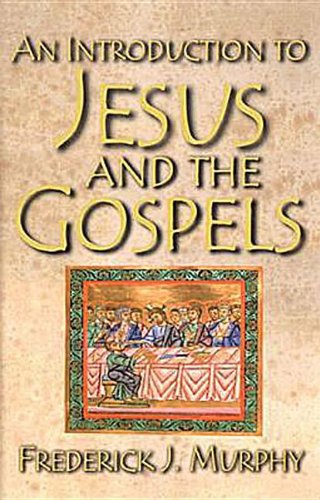
Inhaltsangabe
“Jesus and the Gospels” is one of the most popular religion courses at colleges, and it is required at many seminaries and divinity schools. This textbook, written by an award-winning educator, is designed for a semester-long course in both these settings. Moreover, it could be used as a supplementary text in courses on christology, the historical Jesus, New Testament literature, and the Bible.
Murphy will provide an introduction to the gospels that does justice to the full range of modern critical methods and insights. He will discuss the implications of these methods for how we understand the nature of the gospels and how we can read them today. The chapters will sketch the portrait of Jesus that emerges from each gospel, and then examine the “canonical” view of Jesus by comparing and contrasting these pictures, as well as the ones that emerge from the non-canonical gospels and from the modern quest for the historical Jesus.
Chapter list:
Introduction, Theological and Historical Backgrounds;
Chapter 1, What is a Gospel?
Chapter 2, History of Critical Methods for Gospel Study;
Chapter 3, The Gospel of Mark;
Chapter 4, Q;
Chapter 5, Matthew;
Chapter 6, Luke;
Chapter 7, John;
Chapter 8, Other Gospels (Gospel of Thomas, Infancy Gospels, other Apocryphal Gospels); Chapter 8, Christian Interpretations of Jesus;
Chapter 9, The Historical Jesus;
Chapter 10, Conclusion; Glossary; Further Reading; Notes; Subject Index. (Charts, sidebars, illustrations, and maps.)
Die Inhaltsangabe kann sich auf eine andere Ausgabe dieses Titels beziehen.
Auszug. © Genehmigter Nachdruck. Alle Rechte vorbehalten.
An Introduction to Jesus and the Gospels
By Frederick J. MurphyAbingdon Press
Copyright © 2005 Abingdon Press
All rights reserved.
ISBN: 978-0-687-49692-1All rights reserved.
Contents
List of Maps,
Acknowledgments,
Introduction,
Abbreviations,
1. Critical Study of the Gospels,
2. Reconstructing Ancient Worlds: Gospel Contexts,
3. The Gospel of Mark,
4. The Gospel of Matthew,
5. The Gospel of Luke and Acts of the Apostles,
6. The Gospel of John and Letters of John,
7. Other Gospels,
8. The Historical Jesus,
9. Canonization,
Glossary,
Index,
CHAPTER 1
Critical Study of the Gospels
* * *
FROM JESUS TO THE GOSPELS
Most readers of this book have at least a rough picture of Jesus of Nazareth—who he was, when he lived, what he did, and so on. Where do we get this information? Our picture comes from a variety of sources. We might have read the New Testament or parts of it, heard sermons in church, or taken classes in Sunday school or a religious school. Even if we have not grown up Christian, chances are we have formed an impression of Jesus from the culture that surrounds us. We have naturally blended and harmonized information we have received without being too conscious of just how we have put our picture together. If we engage in conversation about Jesus, we quickly learn that even among believers, people hold many pictures of him that differ in important ways. Even when we agree on some basic points, there is still much room for disagreement and interpretation. Why such variety? Do we get a single, unified view if we go back far enough in history?
If we give it a moment's thought, we realize that even if we go back to Jesus' contemporaries, we will not find a single, unanimous opinion about him. Those who encountered Jesus during his earthly life reacted to him in a range of ways. Some believed in him, followed him, and became the first members of the early church. Others opposed him, even to the point of executing him. Still others, perhaps the majority, shrugged their shoulders and continued their lives as they had before they met him. But didn't the earliest Christians all agree? We need only read the Apostle Paul's letters, our earliest extant Christian sources, to see that from the beginning there were serious disagreements among Christians on a multiplicity of things, including how to interpret Jesus and his work. But the New Testament does not include writings by Paul's opponents—so doesn't the process of choosing some texts and excluding others yield a collection completely at one with itself? The answer is "no," or at least, "not entirely."
The New Testament contains twenty-seven books, composed at different times and places by different authors. The first four texts are the Gospels—Matthew, Mark, Luke, and John. That should give us pause. Four Gospels? Why four? Why not just one? Some basic facts help us answer that question. To begin with, none of the four evangelists witnessed the events of Jesus' life and death. Each depended on sources, some oral and some written. No two gospels had exactly the same sources. We must remember also that the ancient world was quite different from our own in many respects. Today we take for granted the widespread use of writing, mass production of books, recording devices such as tape recorders and video cameras, communications media such as radio, television, newspapers, magazines, and even, in recent years, the Internet, with access to a dizzying amount of information. We truly live in the information age. The ancient world was nothing like that. Few were literate. Books were copied manually, and it was next to impossible to control a book's contents once it left the author's hand and began to be copied and distributed. Travel was slow. The postal system existed only for the convenience of the ruling classes. In such a world, the production, reproduction, control of content, and dissemination of texts of any kind was not simple. Further, even if the production and control of Christian documents had been possible, who would control it? Careful study of the New Testament and early Christian literature shows that diversity characterized the churches from the outset. There was no single authority that could speak for all Christians and all churches. Conflict was common, and it involved even central matters such as Jesus' true nature and work.
Central to the Gospels is Jesus of Nazareth. All we hear about him comes from others. He himself left no writings. He was a prophet, as we shall see, and prophets often did not write down their prophecies. It was not uncommon in Israel for others who esteemed a prophet's words to write them down. That is exactly what happened in the case of Jesus. To some degree, he also fit the ancient categories of wise man and philosopher, and it was common for such figures to have their lives recorded by those who lived later and revered them. Again, the same applies to Jesus. So no matter how early our sources, we are always reading a report of what someone else says that Jesus said or did.
There was an interval between Jesus' career and the writing of the Gospels. When anything noteworthy happens in today's world, it is quickly followed by a stream of articles and books about it. Two thousand years ago, things did not automatically get reduced to writing. Excited by the amazing things that had happened among them (the ministry of Jesus, his crucifixion, and his resurrection), and convinced that God had changed the world through Jesus, the earliest Christians launched an intensive effort to convert others to their way of seeing things, to teach one another about Jesus, and to establish institutions to support their beliefs and activity. All of this involved preserving, shaping, adapting, and passing on information about Jesus. So the Jesus tradition was at first transmitted orally in the context of missionary work, liturgy, and teaching.
Some Christians, a small minority, could read and write. As years passed and it became apparent that the great eschatological events (events signaling the turn of the ages and the end of the world as we know it) that Christians expected were not going to happen immediately, they began to record what they knew about Jesus. They may have begun by collecting Jesus' teachings, and perhaps penning accounts of his powerful deeds. Eventually some perceived a need to present Jesus more fully, in a form that would relate his deeds to his words and connect both to his violent death, viewing all in light of his resurrection. The result was the Gospels. The Gospels in the New Testament were written for different local churches at different times. Mark was written first, probably around 70 C.E. Matthew and Luke soon followed, perhaps fifteen years or so later, both using Mark as a source but being unaware of each other's work. John was probably written still later, perhaps in the 90s.
The first three canonical gospels, Matthew, Mark, and Luke, are so similar that they are called the Synoptic Gospels. The word synoptic comes from the Greek meaning something like "to see together." Books called gospel parallels arrange these gospels in three parallel columns for easy comparison. John is quite different from the other three gospels. There is no compelling evidence that it depends literarily on the other three. It may, however, be related to them in some other way. One suggestion is that Christians in the Johannine community composed this gospel in reaction to the writing of the Synoptics, but did so on the basis of its own...
„Über diesen Titel“ kann sich auf eine andere Ausgabe dieses Titels beziehen.
Suchergebnisse für An Introduction to Jesus And the Gospels

Beispielbild für diese ISBN
An Introduction to Jesus and the Gospels
Anbieter: World of Books (was SecondSale), Montgomery, IL, USA
Verkäuferbewertung 5 von 5 Sternen

Hardback. Zustand: Good. Jesus and the Gospels is one of the most popular religion courses at colleges, and it is required at many seminaries and divinity schools. This textbook, written by an award-winning educator, is designed for a semester-long course in both these settings. Moreover, it could be used as a supplementary text in courses on christology, the historical Jesus, New Testament literature, and the Bible. Murphy will provide an introduction to the gospels that does justice to the full range of modern critical methods and insights. He will discuss the implications of these methods for how we understand the nature of the gospels and how we can read them today. The chapters will sketch the portrait of Jesus that emerges from each gospel, and then examine the canonical view of Jesus by comparing and contrasting these pictures, as well as the ones that emerge from the non-canonical gospels and from the modern quest for the historical Jesus. Chapter list: Introduction, Theological and Historical Backgrounds; Chapter 1, What is a Gospel? Chapter 2, History of Critical Methods for Gospel Study; Chapter 3, The Gospel of Mark; Chapter 4, Q; Chapter 5, Matthew; Chapter 6, Luke; Chapter 7, John; Chapter 8, Other Gospels (Gospel of Thomas, Infancy Gospels, other Apocryphal Gospels); Chapter 8, Christian Interpretations of Jesus; Chapter 9, The Historical Jesus; Chapter 10, Conclusion; Glossary; Further Reading; Notes; Subject Index. (Charts, sidebars, illustrations, and maps.). Artikel-Nr. 00103723000
Gebraucht kaufen
EUR 8,05
Versand gratis
Versand innerhalb von USA
Versand innerhalb von USA
Anzahl: 1 verfügbar
Beispielbild für diese ISBN
An Introduction to Jesus and the Gospels
Anbieter: ThriftBooks-Atlanta, AUSTELL, GA, USA
Verkäuferbewertung 5 von 5 Sternen
Hardcover. Zustand: Good. No Jacket. Pages can have notes/highlighting. Spine may show signs of wear. ~ ThriftBooks: Read More, Spend Less. Artikel-Nr. G0687496926I3N00
Gebraucht kaufen
EUR 8,11
Versand gratis
Versand innerhalb von USA
Versand innerhalb von USA
Anzahl: 1 verfügbar
Beispielbild für diese ISBN
An Introduction to Jesus and the Gospels
Anbieter: ThriftBooks-Atlanta, AUSTELL, GA, USA
Verkäuferbewertung 5 von 5 Sternen
Hardcover. Zustand: Very Good. No Jacket. May have limited writing in cover pages. Pages are unmarked. ~ ThriftBooks: Read More, Spend Less. Artikel-Nr. G0687496926I4N00
Gebraucht kaufen
EUR 8,11
Versand gratis
Versand innerhalb von USA
Versand innerhalb von USA
Anzahl: 1 verfügbar
Beispielbild für diese ISBN
An Introduction to Jesus and the Gospels
Anbieter: ThriftBooks-Atlanta, AUSTELL, GA, USA
Verkäuferbewertung 5 von 5 Sternen
Hardcover. Zustand: Fair. No Jacket. Readable copy. Pages may have considerable notes/highlighting. ~ ThriftBooks: Read More, Spend Less. Artikel-Nr. G0687496926I5N00
Gebraucht kaufen
EUR 8,11
Versand gratis
Versand innerhalb von USA
Versand innerhalb von USA
Anzahl: 1 verfügbar
Beispielbild für diese ISBN
An Introduction to Jesus and the Gospels
Anbieter: ThriftBooks-Dallas, Dallas, TX, USA
Verkäuferbewertung 5 von 5 Sternen
Hardcover. Zustand: Very Good. No Jacket. May have limited writing in cover pages. Pages are unmarked. ~ ThriftBooks: Read More, Spend Less. Artikel-Nr. G0687496926I4N00
Gebraucht kaufen
EUR 8,11
Versand gratis
Versand innerhalb von USA
Versand innerhalb von USA
Anzahl: 1 verfügbar
Beispielbild für diese ISBN
An Introduction to Jesus and the Gospels
Anbieter: ThriftBooks-Dallas, Dallas, TX, USA
Verkäuferbewertung 5 von 5 Sternen
Hardcover. Zustand: Very Good. No Jacket. Former library book; May have limited writing in cover pages. Pages are unmarked. ~ ThriftBooks: Read More, Spend Less. Artikel-Nr. G0687496926I4N10
Gebraucht kaufen
EUR 8,11
Versand gratis
Versand innerhalb von USA
Versand innerhalb von USA
Anzahl: 1 verfügbar
Beispielbild für diese ISBN
An Introduction to Jesus and the Gospels
Anbieter: WorldofBooks, Goring-By-Sea, WS, Vereinigtes Königreich
Verkäuferbewertung 5 von 5 Sternen
Paperback. Zustand: Very Good. The book has been read, but is in excellent condition. Pages are intact and not marred by notes or highlighting. The spine remains undamaged. Artikel-Nr. GOR009957999
Gebraucht kaufen
EUR 65,84
EUR 6,51 Versand
Versand von Vereinigtes Königreich nach USA
Versand von Vereinigtes Königreich nach USA
Anzahl: 1 verfügbar