
Verwandte Artikel zu Educating Congregations: The Future of Christian Education
Inhaltsangabe
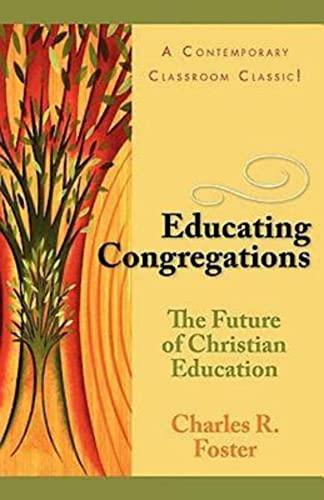
A leading Christian educator offers a practical guide for revisioning a church's educational program. After identifying the weaknesses in current education programs, Charles Foster offers an alternative vision that is more cooperative, more attentive to the whole of the congregation's life, and that helps people critically correlate the Bible and Christian tradition to their own experience.
Die Inhaltsangabe kann sich auf eine andere Ausgabe dieses Titels beziehen.
Über die Autorin bzw. den Autor
Charles R. Foster is Professor of Religion and Education emeritus at the Candler School of Theology, Emory University. He is the author of Educating Congregations, project director and lead author of Educating Clergy: Teaching Practices and Pastoral Imagination, and coauthor of Working with Black Youth and The Church in the Education of the Public.
Auszug. © Genehmigter Nachdruck. Alle Rechte vorbehalten.
Educating Congregations
The Future of Christian Education
By Charles R. FosterAbingdon Press
Copyright © 1994 Abingdon Press
All rights reserved.
ISBN: 978-0-687-00245-0All rights reserved.
Contents
Preface,
Acknowledgments,
Introduction,
1. Flaws in the Church Education Vessel,
2. Events that Form and Transform,
3. Building Community,
4. Making Meaning,
5. Nurturing Hope,
A Guide to Revisioning Local Church Education,
Notes,
CHAPTER 1
Flaws in the Church Education Vessel
A STORY FOR OUR TIME
Once upon a time a congregation took seriously its educational responsibilities. Its members knew the stories of the Bible and the saints in the church's history. Their imaginations were enlivened by the poetry of the psalms and the hymns of worship. They knew the prayers, creeds, and many of the hymns by memory. They engaged in acts of compassion and sought justice for the hungry, homeless, dispossessed, alienated, and marginalized.
This congregation taught its children from a very young age. Adults told them stories of God's faithfulness over and over again. They taught children hymns of praise and thanksgiving until they were so familiar the children often sang them in their play. They involved children in the practice of praying in the manner of Jesus. They visited sacred places together and engaged in acts of service among people hurting and hungering for the bounty of God's love and benefice. They explored the scriptures and traditions of faith together for clues to moral decision making and faithful living.
After these children had grown, a crisis fell on this congregation and its community. The form of the crisis makes little difference to the outcome of this story. It could have been caused by an act of nature: a tornado, flood, drought, or earthquake. It could have been caused by an economic depression or war that stretched loyalties and moral commitments. It could have been precipitated by an internal conflict among church members over church teachings, practices, or programs.
In the midst of the crisis, the members of this congregation remembered the sacred places and took their children to visit them. They probed the ancient stories for clues to the crisis. They sang and prayed through their anxieties, frustrations, and confusion. They listened and watched for signs to lead them out of the crisis. They shared their money, food, clothing, and shelter with victims of the crisis.
They survived. Although weary and filled with grief over those who had been hurt and lost during the experience, they continued to praise God, serve their neighbors, and teach their children by precept and example.
Years later another crisis hit the congregation. Again the nature of the crisis is not important, but this time its members were not as prepared for its severity. When they had been children, their teachers had read to them stories from scripture. They sang several hymns often enough to recognize them when they came upon them in the hymnal. They had been introduced to the primary doctrines of the church's heritage during confirmation. The pastor and one or two wise lay leaders answered their faith and moral questions when asked. The congregation's sacred places continued to provide comfort and an occasional moment of inspiration. Parents made sure their children participated in religious education classes whenever they were in town, took them to special Christmas and Easter worship events, and sent them to educational programs during summer vacations. But for many people in the congregation the connections between the experience in church and the issues, decisions, and circumstances of their lives did not seem very obvious.
When this second crisis enveloped the congregation, some people gathered to pray and to listen to the advice of the pastor. A core of congregational leaders explored biblical and church traditions with the pastor for clues to living faithfully through the crisis. Some adults remembered a few hymns and prayers from their childhood. A few children were reminded of the longtime relationship their families had had with the church. They eventually survived the crisis—a little weary and worn from the experience, but praising God for blessings they discovered in their time of trial.
And so the congregation continued to meet on that street corner for many more years. Changes in the church corresponded to changes in the community. Many people who had grown up in the congregation moved away. New people who did not know the congregation's history joined its fellowship. The church competed for people's time with work, leisure, and school schedules. Parents did not know the stories, hymns, and prayers well enough to teach them to their children. They no longer knew the location of the places that had been sacred to their ancestors, although a few of the older members knew they were listed in an ancient directory stored in the church library. The congregation had difficulty finding teachers, and few adults knew the names of the children who passed them in the halls or sat near them during worship. Only a few older members of the congregation had any real familiarity with the doctrines, traditions, and rituals that had enlivened the congregation's past. To most the words seemed archaic and strange—even offensive.
Although the congregation continued to sponsor religious education classes, many children did not know the words to the Lord's Prayer. Many stumbled over the strange language of the creed. Few had a sense of the sweep of the story of God's love for Israel. The stories of Jesus seemed quaint. The scriptures were rarely used by their parents to explore the ethical issues confronting them. The pastor and lay leaders spent most of their time planning programs, managing church finances, listening to people's problems, and maintaining the church building. Every once in awhile the pastor would lead some people to one of the sacred places to tell a story that had enlivened the imaginations of their great-grandparents and people would glimpse something of the power of the faith that had built that place.
A crisis again fell upon this congregation. Many were so busy they did not even notice. Some older members gathered to pray for the congregation. The administration committee appointed a task force to address the situation, but its members did not know what to do, so they hired a consultant to guide them. The choir director taught the congregation a few choruses to increase a sense of participation in worship. The pastor preached a series of sermons on the crisis. Children joined the pastor on the chancel steps for a special "sermon" each Sunday during the worship service. The education committee ordered a new curriculum.
Did the congregation survive? We do not know yet, because that is the situation in which most congregations now find themselves. In a recent study of Christian education in six major denominations, the Search Institute discovered a vast difference in the maturity of faith between those over sixty and those under. This study points to a strange situation. For at least the past fifty years, the identification of people in the church with the sources and meanings of Christian faith and tradition has decreased with each succeeding generation.
Several years ago in his popular book Will Our Children Have Faith? John Westerhoff warned the churches of this impending crisis. He wrote: "No longer can we assume that the educational understandings that have informed us, or the theological...
„Über diesen Titel“ kann sich auf eine andere Ausgabe dieses Titels beziehen.
Suchergebnisse für Educating Congregations: The Future of Christian Education

Beispielbild für diese ISBN
Educating Congregations: The Future of Christian Education
Anbieter: World of Books (was SecondSale), Montgomery, IL, USA
Verkäuferbewertung 5 von 5 Sternen

Zustand: Acceptable. Item in acceptable condition! Textbooks may not include supplemental items i.e. CDs, access codes etc. Artikel-Nr. 00102341148
Gebraucht kaufen
EUR 3,67
Versand gratis
Versand innerhalb von USA
Versand innerhalb von USA
Anzahl: 1 verfügbar
Beispielbild für diese ISBN
Educating Congregations: The Future of Christian Education
Anbieter: World of Books (was SecondSale), Montgomery, IL, USA
Verkäuferbewertung 5 von 5 Sternen
Zustand: Very Good. Item in very good condition! Textbooks may not include supplemental items i.e. CDs, access codes etc. Artikel-Nr. 00095055609
Gebraucht kaufen
EUR 3,67
Versand gratis
Versand innerhalb von USA
Versand innerhalb von USA
Anzahl: 1 verfügbar
Beispielbild für diese ISBN
Educating Congregations: The Future of Christian Education
Anbieter: World of Books (was SecondSale), Montgomery, IL, USA
Verkäuferbewertung 5 von 5 Sternen
Zustand: Good. Item in good condition. Textbooks may not include supplemental items i.e. CDs, access codes etc. Artikel-Nr. 00095910259
Gebraucht kaufen
EUR 3,67
Versand gratis
Versand innerhalb von USA
Versand innerhalb von USA
Anzahl: 7 verfügbar
Beispielbild für diese ISBN
Educating Congregations: The Future of Christian Education
Verlag:
Abingdon Press (edition First Edition), 1994
ISBN 10: 0687002451
ISBN 13: 9780687002450
Gebraucht
Paperback
Erstausgabe
Anbieter: BooksRun, Philadelphia, PA, USA
Verkäuferbewertung 5 von 5 Sternen
Paperback. Zustand: Fair. First Edition. The item might be beaten up but readable. May contain markings or highlighting, as well as stains, bent corners, or any other major defect, but the text is not obscured in any way. Artikel-Nr. 0687002451-7-1
Gebraucht kaufen
EUR 4,77
Versand gratis
Versand innerhalb von USA
Versand innerhalb von USA
Anzahl: 1 verfügbar
Beispielbild für diese ISBN
Educating Congregations : The Future of Christian Education
Anbieter: Better World Books: West, Reno, NV, USA
Verkäuferbewertung 5 von 5 Sternen
Zustand: Good. Pages intact with minimal writing/highlighting. The binding may be loose and creased. Dust jackets/supplements are not included. Stock photo provided. Product includes identifying sticker. Better World Books: Buy Books. Do Good. Artikel-Nr. 740607-6
Gebraucht kaufen
EUR 6,09
Versand gratis
Versand innerhalb von USA
Versand innerhalb von USA
Anzahl: 1 verfügbar
Beispielbild für diese ISBN
Educating Congregations : The Future of Christian Education
Anbieter: Better World Books, Mishawaka, IN, USA
Verkäuferbewertung 5 von 5 Sternen
Zustand: Very Good. Former library copy. Pages intact with possible writing/highlighting. Binding strong with minor wear. Dust jackets/supplements may not be included. Includes library markings. Stock photo provided. Product includes identifying sticker. Better World Books: Buy Books. Do Good. Artikel-Nr. 5266815-6
Gebraucht kaufen
EUR 6,09
Versand gratis
Versand innerhalb von USA
Versand innerhalb von USA
Anzahl: 1 verfügbar
Beispielbild für diese ISBN
Educating Congregations
Anbieter: ThriftBooks-Dallas, Dallas, TX, USA
Verkäuferbewertung 5 von 5 Sternen
Paperback. Zustand: Very Good. No Jacket. May have limited writing in cover pages. Pages are unmarked. ~ ThriftBooks: Read More, Spend Less. Artikel-Nr. G0687002451I4N00
Gebraucht kaufen
EUR 6,32
Versand gratis
Versand innerhalb von USA
Versand innerhalb von USA
Anzahl: 1 verfügbar
Beispielbild für diese ISBN
Educating Congregations
Anbieter: ThriftBooks-Dallas, Dallas, TX, USA
Verkäuferbewertung 5 von 5 Sternen
Paperback. Zustand: As New. No Jacket. Pages are clean and are not marred by notes or folds of any kind. ~ ThriftBooks: Read More, Spend Less. Artikel-Nr. G0687002451I2N00
Gebraucht kaufen
EUR 6,32
Versand gratis
Versand innerhalb von USA
Versand innerhalb von USA
Anzahl: 1 verfügbar
Beispielbild für diese ISBN
Educating Congregations: The Future of Christian Education
Anbieter: Wonder Book, Frederick, MD, USA
Verkäuferbewertung 5 von 5 Sternen
Zustand: Very Good. Very Good condition. A copy that may have a few cosmetic defects. May also contain light spine creasing or a few markings such as an owner's name, short gifter's inscription or light stamp. Artikel-Nr. T11B-06054
Gebraucht kaufen
EUR 6,33
Versand gratis
Versand innerhalb von USA
Versand innerhalb von USA
Anzahl: 1 verfügbar
Beispielbild für diese ISBN
Educating Congregations: The Future of Christian Education
Anbieter: Ria Christie Collections, Uxbridge, Vereinigtes Königreich
Verkäuferbewertung 5 von 5 Sternen
Zustand: New. In English. Artikel-Nr. ria9780687002450_new
Neu kaufen
EUR 22,50
EUR 10,88 Versand
Versand von Vereinigtes Königreich nach USA
Versand von Vereinigtes Königreich nach USA
Anzahl: Mehr als 20 verfügbar