
Verwandte Artikel zu Flesh And Blood
Inhaltsangabe
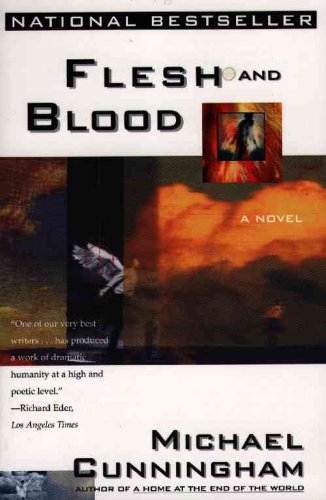
In Flesh and Blood, Michael Cunningham takes us on a masterful journey through four generations of the Stassos family as he examines the dynamics of a family struggling to "come of age" in the 20th century. In 1950, Constantine Stassos, a Greek immigrant laborer, marries Mary Cuccio, an Italian-American girl, and together they produce three children: Susan, an ambitious beauty, Billy, a brilliant homosexual, and Zoe, a wild child. Over the years, a web of tangled longings, love, inadequacies and unfulfilled dreams unfolds as Mary and Constantine's marriage fails and Susan, Billy, and Zoe leave to make families of their own. Zoe raises a child with the help of a transvestite, Billy makes a life with another man, and Susan raises a son conceived in secret, each extending the meaning of family and love. With the power of a Greek tragedy, the story builds to a heartbreaking crescendo, allowing a glimpse into contemporary life which will echo in one's heart for years to come.
Die Inhaltsangabe kann sich auf eine andere Ausgabe dieses Titels beziehen.
Über die Autorin bzw. den Autor
Michael Cunningham
Flesh and Blood is Michael Cunningham's third novel. His first, Golden States, was published in 1984. His second, A Home at the End of the World, published in 1991, was widely acclaimed and was shortlisted for the Irish Times/Aer Lingus International Fiction Prize.
Cunningham has also published a wide array of short stories, including "White Angel" in The New Yorker (1988), "Pearls" in The Paris Review (1982), and "Ignorant Armies" in The Penguin Book of Gay Short Stories (Viking/Penguin 1994). He has also written articles for publications such as Esquire, Vogue, and Out including "After AIDS, Gay Art Aims for a New Reality" for the front page of the Arts & Leisure section of The New York Times in April 1992.
Having won numerous fellowships from institutions such as the Mrs. Giles Whiting Foundation and the John Simon Guggenheim Memorial Foundation, Cunningham has been awarded for his prose time and time again. His education includes a Bachelor of Arts from Stanford University and a Master of Arts from the University of Iowa, Writer's Workshop.
Michael Cunningham currently lives in New York City.
Reading Group Discussion Points
Other Books With Reading Group Guides
Auszug. © Genehmigter Nachdruck. Alle Rechte vorbehalten.
Flesh And Blood
By Michael CunninghamTouchstone
Copyright © 1996 Michael CunninghamAll right reserved.
ISBN: 0684874318
1935
Constantine, eight years old, was working in his father's garden and thinking
about his own garden, a square of powdered granite he had staked out and combed
into rows at the top of his family's land. First he weeded his father's bean
rows
and then he crawled among the gnarls and snags of his father's vineyard, tying
errant tendrils back to the stakes with rough brown cord that was to his mind
the
exact color and texture of righteous, doomed effort. When his father talked
about
"working ourselves to death to keep ourselves alive," Constantine imagined this
cord, coarse and strong and drab, electric with stray hairs of its own,
wrapping
the world up into an awkward parcel that would not submit or stay tied, just as
the grapevines kept working themselves loose and shooting out at ecstatic,
skyward angles. It was one of his jobs to train the vines, and he had come to
despise and respect them for their wild insistence. The vines had a secret,
tangled life, a slumbering will, but it was he, Constantine, who would suffer
if
they weren't kept staked and orderly. His father had a merciless eye that could
find one bad straw in ten bales of good intentions.
As he worked he thought of his garden, hidden away in the blare of the hilltop
sun, three square feet so useless to his father's tightly bound future that
they
were given over as a toy to Constantine, the youngest. The earth in his garden
was little more than a quarter inch of dust caught in a declivity of rock, but
he
would draw fruit from it by determination and work, the push of his own will.
From his mother's kitchen he had spirited dozens of seeds, the odd ones that
stuck to the knife or fell on the floor no matter how carefully she checked
herself for the sin of waste. His garden lay high on a crown of scorched rock
where no one bothered to go; if it produced he could tend the crop without
telling anyone. He could wait until harvest time and descend triumphantly,
carrying an eggplant or a pepper, perhaps a tomato. He could walk through the
autumn dusk to the house where his mother would be laying out supper for his
father and brothers. The light would be at his back, hammered and golden. It
would cut into the dimness of the kitchen as he threw open the door. His mother
and father and brothers would look at him, the runt, of whom so little was
expected. When he stood in the vineyard looking down at the world -- the ruins
of
the Papandreous' farm, the Kalamata Company's olive groves, the remote shimmer
of
town -- he thought of climbing the rocks one day to find green shoots pushing
through his patch of dust. The priest counseled that miracles were the result
of
diligence and blind faith. He was faithful.
And he was diligent. Every day he took his ration of water, drank half, and
sprinkled half over his seeds. That was easy, but he needed better soil as
well.
The pants sewn by his mother had no pockets, and it would be impossible to
steal
handfuls of dirt from his father's garden and climb with them past the goats'
shed and across the curving face of the rock without being detected. So he
stole
the only way he could, by bending over every evening at the end of the workday,
as if tying down one last low vine, and filling his mouth with earth. The soil
had a heady, fecal taste; a darkness on his tongue that was at once revolting
and
strangely, dangerously delicious. With his mouth full he made his way up the
steep yard to the rocks. There was not much risk, even if he passed his father
or
one of his brothers. They were used to him not speaking. They believed he was
silent because his thoughts were simple. In fact, he kept quiet because he
feared
mistakes. The world was made of mistakes, a thorny tangle, and no amount of
cord,
however fastidiously tied, could bind them all down. Punishment waited
everywhere. It was wiser not to speak. Every evening he walked in his customary
silence past whatever brothers might still be at work among the goats, holding
his cheeks in so no one would guess his mouth was full. As he crossed the yard
and ascended the rocks he struggled not to swallow but inevitably he did, and
some of the dirt sifted down his throat, reinfecting him with its pungent black
taste. The dirt was threaded with goat dung, and his eyes watered. Still, by
the
time he reached the top, there remained a fair-sized ball of wet earth to spit
into his palm. Quickly then, fearful that one of his brothers might have
followed
to tease him, he worked the handful of soil into his miniature garden. It was
drenched with his saliva. He massaged it in and thought of his mother, who
forgot
to look at him because her own life held too many troubles for her to watch. He
thought of her carrying food to his ravenous, shouting brothers. He thought of
how her face would look as he came through the door one harvest evening. He
would
stand in the bent, dusty light before his surprised family. Then he would walk
up
to the table and lay out what he'd brought: a pepper, an eggplant, a tomato.
Reading Group Discussion Points
Other Books With Reading Group Guides
Continues...
Excerpted from Flesh And Bloodby Michael Cunningham Copyright © 1996 by Michael Cunningham. Excerpted by permission.
All rights reserved. No part of this excerpt may be reproduced or reprinted without permission in writing from the publisher.
Excerpts are provided by Dial-A-Book Inc. solely for the personal use of visitors to this web site.
„Über diesen Titel“ kann sich auf eine andere Ausgabe dieses Titels beziehen.
Suchergebnisse für Flesh And Blood

Beispielbild für diese ISBN
Flesh and Blood
Verlag:
Prentice Hall (a Pearson Education company), 1996
ISBN 10: 0684874318
ISBN 13: 9780684874319
Gebraucht
Paperback
Anbieter: World of Books (was SecondSale), Montgomery, IL, USA
Verkäuferbewertung 5 von 5 Sternen

Paperback. Zustand: Very Good. From the bestselling author of The Hours and Specimen Days comes a generous, masterfully crafted novel with all the power of a Greek tragedy.The epic tale of an American family, Flesh and Blood follows three generations of the Stassos clan as it is transformed by ambition, love, and history. Constantine Stassos, a Greek immigrant, marries Mary Cuccio, an Italian-American girl, and they have three children, each fated to a complex life. Susan is oppressed by her beauty and her father's affections; Billy is brilliant, and gay; Zoe is a wild, heedless visionary. As the years pass, their lives unfold in ways that compel them--and their parents--to meet ever greater challenges. Artikel-Nr. 00094943378
Gebraucht kaufen
EUR 4,69
Versand gratis
Versand innerhalb von USA
Versand innerhalb von USA
Anzahl: 3 verfügbar
Beispielbild für diese ISBN
Flesh and Blood
Verlag:
Prentice Hall (a Pearson Education company), 1996
ISBN 10: 0684874318
ISBN 13: 9780684874319
Gebraucht
Paperback
Anbieter: World of Books (was SecondSale), Montgomery, IL, USA
Verkäuferbewertung 5 von 5 Sternen
Paperback. Zustand: Fair. From the bestselling author of The Hours and Specimen Days comes a generous, masterfully crafted novel with all the power of a Greek tragedy.The epic tale of an American family, Flesh and Blood follows three generations of the Stassos clan as it is transformed by ambition, love, and history. Constantine Stassos, a Greek immigrant, marries Mary Cuccio, an Italian-American girl, and they have three children, each fated to a complex life. Susan is oppressed by her beauty and her father's affections; Billy is brilliant, and gay; Zoe is a wild, heedless visionary. As the years pass, their lives unfold in ways that compel them--and their parents--to meet ever greater challenges. Artikel-Nr. 00093560408
Gebraucht kaufen
EUR 4,69
Versand gratis
Versand innerhalb von USA
Versand innerhalb von USA
Anzahl: 1 verfügbar
Beispielbild für diese ISBN
Flesh and Blood
Verlag:
Prentice Hall (a Pearson Education company), 1996
ISBN 10: 0684874318
ISBN 13: 9780684874319
Gebraucht
Paperback
Anbieter: World of Books (was SecondSale), Montgomery, IL, USA
Verkäuferbewertung 5 von 5 Sternen
Paperback. Zustand: Good. From the bestselling author of The Hours and Specimen Days comes a generous, masterfully crafted novel with all the power of a Greek tragedy.The epic tale of an American family, Flesh and Blood follows three generations of the Stassos clan as it is transformed by ambition, love, and history. Constantine Stassos, a Greek immigrant, marries Mary Cuccio, an Italian-American girl, and they have three children, each fated to a complex life. Susan is oppressed by her beauty and her father's affections; Billy is brilliant, and gay; Zoe is a wild, heedless visionary. As the years pass, their lives unfold in ways that compel them--and their parents--to meet ever greater challenges. Artikel-Nr. 00093910499
Gebraucht kaufen
EUR 4,69
Versand gratis
Versand innerhalb von USA
Versand innerhalb von USA
Anzahl: 4 verfügbar
Beispielbild für diese ISBN
Flesh And Blood
Anbieter: ThriftBooks-Phoenix, Phoenix, AZ, USA
Verkäuferbewertung 5 von 5 Sternen
Paperback. Zustand: Very Good. No Jacket. May have limited writing in cover pages. Pages are unmarked. ~ ThriftBooks: Read More, Spend Less. Artikel-Nr. G0684874318I4N00
Gebraucht kaufen
EUR 5,97
Versand gratis
Versand innerhalb von USA
Versand innerhalb von USA
Anzahl: 1 verfügbar
Beispielbild für diese ISBN
Flesh And Blood
Anbieter: ThriftBooks-Reno, Reno, NV, USA
Verkäuferbewertung 5 von 5 Sternen
Paperback. Zustand: Very Good. No Jacket. May have limited writing in cover pages. Pages are unmarked. ~ ThriftBooks: Read More, Spend Less. Artikel-Nr. G0684874318I4N00
Gebraucht kaufen
EUR 5,97
Versand gratis
Versand innerhalb von USA
Versand innerhalb von USA
Anzahl: 1 verfügbar
Beispielbild für diese ISBN
Flesh And Blood
Anbieter: ThriftBooks-Dallas, Dallas, TX, USA
Verkäuferbewertung 5 von 5 Sternen
Paperback. Zustand: Very Good. No Jacket. May have limited writing in cover pages. Pages are unmarked. ~ ThriftBooks: Read More, Spend Less. Artikel-Nr. G0684874318I4N00
Gebraucht kaufen
EUR 5,97
Versand gratis
Versand innerhalb von USA
Versand innerhalb von USA
Anzahl: 1 verfügbar
Beispielbild für diese ISBN
Flesh And Blood
Anbieter: ThriftBooks-Atlanta, AUSTELL, GA, USA
Verkäuferbewertung 5 von 5 Sternen
Paperback. Zustand: Very Good. No Jacket. May have limited writing in cover pages. Pages are unmarked. ~ ThriftBooks: Read More, Spend Less. Artikel-Nr. G0684874318I4N00
Gebraucht kaufen
EUR 5,97
Versand gratis
Versand innerhalb von USA
Versand innerhalb von USA
Anzahl: 1 verfügbar
Beispielbild für diese ISBN
Flesh And Blood
Anbieter: Wonder Book, Frederick, MD, USA
Verkäuferbewertung 5 von 5 Sternen
Zustand: Very Good. Very Good condition. A copy that may have a few cosmetic defects. May also contain light spine creasing or a few markings such as an owner's name, short gifter's inscription or light stamp. Artikel-Nr. Q12H-00989
Gebraucht kaufen
EUR 6,43
Versand gratis
Versand innerhalb von USA
Versand innerhalb von USA
Anzahl: 2 verfügbar
Beispielbild für diese ISBN
Flesh And Blood
Anbieter: Wonder Book, Frederick, MD, USA
Verkäuferbewertung 5 von 5 Sternen
Zustand: Good. Good condition. A copy that has been read but remains intact. May contain markings such as bookplates, stamps, limited notes and highlighting, or a few light stains. Bundled media such as CDs, DVDs, floppy disks or access codes may not be included. Artikel-Nr. Q07O-00466
Gebraucht kaufen
EUR 6,43
Versand gratis
Versand innerhalb von USA
Versand innerhalb von USA
Anzahl: 1 verfügbar
Beispielbild für diese ISBN
Flesh and Blood
Anbieter: AwesomeBooks, Wallingford, Vereinigtes Königreich
Verkäuferbewertung 5 von 5 Sternen
Paperback. Zustand: Very Good. Flesh and Blood This book is in very good condition and will be shipped within 24 hours of ordering. The cover may have some limited signs of wear but the pages are clean, intact and the spine remains undamaged. This book has clearly been well maintained and looked after thus far. Money back guarantee if you are not satisfied. See all our books here, order more than 1 book and get discounted shipping. Artikel-Nr. 7719-9780684874319
Gebraucht kaufen
EUR 3,72
EUR 4,87 Versand
Versand von Vereinigtes Königreich nach USA
Versand von Vereinigtes Königreich nach USA
Anzahl: 2 verfügbar