
Verwandte Artikel zu The Tender Heart: Conquering Your Insecurity
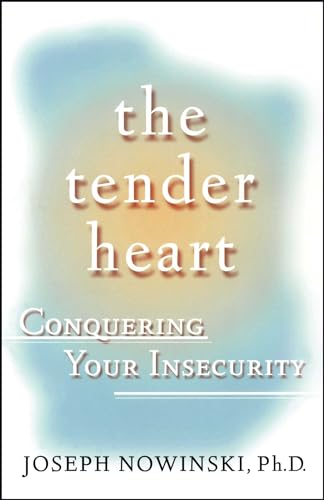
Inhaltsangabe
Insight, explanations, and practical solutions for overcoming insecurity and sensitivity -- from a top psychologist
In simple language, Joseph Nowinski explains that insecurity is not a flaw or shortcoming, but rather a personality trait that reflects both temperament and life experiences. And, most important, he shows how insecurity can be conquered so that one can thrive -- especially in work and love.
The first book to investigate insecurity, The Tender Heart sheds light on its common causes and provides guidelines for overcoming the self-doubt, debilitating self-consciousness, and chronic lack of confidence that prevent many people from enjoying life to its fullest. Combining personality quizzes and case histories of people who have conquered their insecurities, The Tender Heart offers expert advice on:
- Healing insecurity
- Avoiding emotional predators who seek out sensitive people
- Coping with a tough-hearted partner or colleague
- Finding your emotional mate
- Raising children who are self-confident
The Tender Heart is for anyone who has experienced times when their own insecurity or the insecurity of others has interfered with valued relationships or prevented them from realizing their potential.
Die Inhaltsangabe kann sich auf eine andere Ausgabe dieses Titels beziehen.
Über die Autorin bzw. den Autor
Joseph Nowinski, Ph.D., is a psychologist at the University of Connecticut Health Center. The founder of the Institute of Interpersonal Sensitivity, he also has a private practice in Tolland, Connecticut, where he lives.
Auszug. © Genehmigter Nachdruck. Alle Rechte vorbehalten.
Chapter 1: Insecurity
Perhaps you know someone who reacted severely -- to the point where it struck you as irrational or pathological -- to the loss of a relationship. Perhaps you know someone who gets deeply depressed or feels unnecessarily betrayed in response to the slightest criticism. Maybe you yourself tend to react this way. Then again, maybe you are one of those people whose heart gets broken more often than seems fair, or who is drawn to exactly the wrong kind of person -- one who is insensitive and inevitably hurts you.
The intense reactions associated with a dysfunctional response to loss, rejection, or criticism are the result of insecurity. Insecurity may mean different things to different people. In general, though, whenever I ask people for their impressions, they typically associate insecurity with someone who is constantly second-guessing himself, whose feelings are easily hurt, and who seeks continual reassurance. These commonsense definitions accurately capture the essence of insecurity.
In this book the word insecurity has a particular meaning, and a particular cause. Insecurity refers to a profound sense of self-doubt -- a deep feeling of uncertainty about our basic worth and our place in the world. Insecurity is associated with chronic self-consciousness, along with a chronic lack of confidence in ourselves and anxiety about our relationships. The insecure man or woman lives in constant fear of rejection and a deep uncertainty about whether his or her own feelings and desires are legitimate. In men as well as women, insecurity comes from a combination of a sensitive disposition and experiences of loss, abuse, rejection, or neglect. However, while insecurity has the same causes in men and women, outwardly men and women usually express insecurity in different ways.
The insecure person also harbors unrealistic expectations about love and relationships. These expectations, for themselves and for others, are often unconscious. The insecure person creates a situation in which being disappointed and hurt in relationships is almost inevitable. Ironically, although insecure people are easily and frequently hurt, they are usually unaware of how they are unwitting accomplices in creating their own misery.
Although the two can be related, insecurity is not the same as sensitivity. It's entirely possible, in other words, to be sensitive but not insecure. In fact, one goal of this book is to give parents guidance in how to foster sensitivity in their children without creating insecurity. Another goal is to help insecure people shed their insecurity without sacrificing their sensitivity. We'll be looking much closer at what kinds of experiences tend to make an interpersonally sensitive person vulnerable to becoming insecure, what kind of experiences can make insecurity worse, and what kinds of experiences can help to heal it.
HOW INSECURE AM I?
This is a question that most people would like an answer to. Since most of us can relate to the idea of being insecure sometimes, the bigger issue is just how much insecurity is an issue in our lives. You can begin to find the answer by assessing your own level of insecurity (or that of someone you love) as it is right now. To do this, complete the following questionnaire by checking off all statements that describe you (or your loved one).
Insecurity Inventory
___I often worry about my relationship.
___I do not like being in the spotlight socially.
___I often feel that others don't take me seriously.
___I am an exceptionally jealous person.
___I'm forever thinking that others are smarter, more attractive, or more interesting than me.
___I worry that my partner is going to leave me for someone else.
___I would describe myself as very self-conscious.
___I've been told that I'm thin-skinned, overly sensitive.
___I often seek other people's approval, even if I don't particularly respect them.
___I've been told by friends and partners that I expect too much from myself and others.
___If someone hurts my feelings I have a hard time letting go of it and tend to dwell on it for a long time.
___I am very hard on myself when I make a mistake.
___I often ask my partner for reassurance that she/he still loves me.
___I get either angry or depressed if someone I care about disappoints me.
___I cry easily.
___I am very sensitive to criticism.
___I worry about how I look.
___I have a hard time trusting my partner not to cheat on me.
___I have a strong desire to make amends whenever I do or say something that seems to hurt someone else.
___I'm more inclined to think too little than too much of myself.
___Sometimes I feel anxious for no apparent reason.
___I worry about being disapproved of.
___I've been told that I'm very defensive if I'm criticized even slightly.
___I have often felt let down by people, even the ones who love me.
___I secretly feel that I'm not smart enough or attractive enough.
___I sometimes worry that even my best friends don't really like me.
___Most of the time I would sooner give in than fight for what I want.
___My feelings are easily hurt.
___If I do something that gets my partner angry I have a hard time getting it out of my mind.
___I often don't have confidence in decisions I make.
___It really bothers me when I think someone doesn't like me.
___If someone hurts my feelings I am more likely to give them the cold shoulder than to confront them.
___I often make up excuses rather just telling the truth.
___I worry more than most people about what other people think of me.
___I will do almost anything to avoid conflicts with others.
The more items you checked off, the more likely it is that the person you are rating -- either yourself or someone you love -- is insecure.
It's important to understand that insecurity is not something that a person either has or doesn't have, period. Just as people's reactions to loss (or abuse or rejection) can vary, people can differ a great deal in how insecure they are. There is no sharp boundary line separating those of us who are secure from those who are insecure. Few if any of us could say that we have never experienced any symptoms of insecurity. Most of us have some degree of sensitivity, and most of us have experienced at least some significant losses or separations, abuse, or rejection in our lives. On the other hand, not all of us have reacted to these experiences by becoming intensely insecure. The issue, then, is not whether any of us has any insecurity, but rather how severe and debilitating our insecurity is.
Human beings seem programmed to form attachments -- to people, places, even things. The more sensitive we are by nature, the more this is true. One route to insecurity is through experiencing broken attachments. In general, the more significant the attachment is and the younger we are when it happens, the more a broken attachment affects us. This is all the more true for those who are sensitive by nature. Attachments can be broken by physical separation, as when a parent dies or our parents divorce. They can also be broken through abuse or neglect. It's important to keep in mind that children experience emotional coldness, physical abuse, and chronic criticism as loss, just as surely as they experience physical separation that way.
When they think about broken attachments, most people think about very young children who are either separated from their parents or abused. These kinds of experiences do place young children at risk for becoming insecure. It's also true that broken attachments throughout childhood and adolescence have the potential to create insecurity. In...
„Über diesen Titel“ kann sich auf eine andere Ausgabe dieses Titels beziehen.
Suchergebnisse für The Tender Heart: Conquering Your Insecurity

Beispielbild für diese ISBN
The Tender Heart: Conquering Your Insecurity
Anbieter: World of Books (was SecondSale), Montgomery, IL, USA
Verkäuferbewertung 5 von 5 Sternen

Paperback. Zustand: Very Good. A psychologist introduces a practical program designed to help insecure or hypersensitive people conquer their self-doubt, self-consciousness, and lack of confidence. Artikel-Nr. 00109857493
Gebraucht kaufen
EUR 4,91
Versand gratis
Versand innerhalb von USA
Versand innerhalb von USA
Anzahl: 1 verfügbar
Beispielbild für diese ISBN
The Tender Heart: Conquering Your Insecurity
Anbieter: World of Books (was SecondSale), Montgomery, IL, USA
Verkäuferbewertung 5 von 5 Sternen
Paperback. Zustand: Good. A psychologist introduces a practical program designed to help insecure or hypersensitive people conquer their self-doubt, self-consciousness, and lack of confidence. Artikel-Nr. 00040500211
Gebraucht kaufen
EUR 4,91
Versand gratis
Versand innerhalb von USA
Versand innerhalb von USA
Anzahl: 3 verfügbar
Beispielbild für diese ISBN
The Tender Heart: Conquering Your Insecurity
Verlag:
Touchstone (edition Original ed.), 2001
ISBN 10: 068487167X
ISBN 13: 9780684871677
Gebraucht
Paperback
Anbieter: BooksRun, Philadelphia, PA, USA
Verkäuferbewertung 5 von 5 Sternen
Paperback. Zustand: Very Good. Original ed. It's a well-cared-for item that has seen limited use. The item may show minor signs of wear. All the text is legible, with all pages included. It may have slight markings and/or highlighting. Artikel-Nr. 068487167X-11-1
Gebraucht kaufen
EUR 4,96
Versand gratis
Versand innerhalb von USA
Versand innerhalb von USA
Anzahl: 1 verfügbar
Beispielbild für diese ISBN
The Tender Heart: Conquering Your Insecurity
Anbieter: Redux Books, Grand Rapids, MI, USA
Verkäuferbewertung 5 von 5 Sternen
Paperback. Zustand: Very Good. Paperback. Pages are clean and unmarked. Covers show very minor shelving wear.; 100% Satisfaction Guaranteed! Ships same or next business day! Artikel-Nr. 142607010051
Gebraucht kaufen
EUR 6,22
Versand gratis
Versand innerhalb von USA
Versand innerhalb von USA
Anzahl: 1 verfügbar
Beispielbild für diese ISBN
The Tender Heart: Conquering Your Insecurity
Anbieter: Wonder Book, Frederick, MD, USA
Verkäuferbewertung 5 von 5 Sternen
Zustand: Good. Good condition. With remainder mark. A copy that has been read but remains intact. May contain markings such as bookplates, stamps, limited notes and highlighting, or a few light stains. Artikel-Nr. E14A-04413
Gebraucht kaufen
EUR 6,40
Versand gratis
Versand innerhalb von USA
Versand innerhalb von USA
Anzahl: 1 verfügbar
Beispielbild für diese ISBN
The Tender Heart: Conquering Your Insecurity
Anbieter: ThriftBooks-Dallas, Dallas, TX, USA
Verkäuferbewertung 5 von 5 Sternen
Paperback. Zustand: Good. No Jacket. Pages can have notes/highlighting. Spine may show signs of wear. ~ ThriftBooks: Read More, Spend Less. Artikel-Nr. G068487167XI3N00
Gebraucht kaufen
EUR 6,67
Versand gratis
Versand innerhalb von USA
Versand innerhalb von USA
Anzahl: 1 verfügbar
Beispielbild für diese ISBN
The Tender Heart : Conquering Your Insecurity
Anbieter: Better World Books, Mishawaka, IN, USA
Verkäuferbewertung 5 von 5 Sternen
Zustand: Good. Original. Pages intact with minimal writing/highlighting. The binding may be loose and creased. Dust jackets/supplements are not included. Stock photo provided. Product includes identifying sticker. Better World Books: Buy Books. Do Good. Artikel-Nr. 4022555-6
Gebraucht kaufen
EUR 8,31
Versand gratis
Versand innerhalb von USA
Versand innerhalb von USA
Anzahl: 1 verfügbar
Beispielbild für diese ISBN
The Tender Heart: Conquering Your Insecurity
Anbieter: WorldofBooks, Goring-By-Sea, WS, Vereinigtes Königreich
Verkäuferbewertung 5 von 5 Sternen
Paperback. Zustand: Very Good. The book has been read, but is in excellent condition. Pages are intact and not marred by notes or highlighting. The spine remains undamaged. Artikel-Nr. GOR001401925
Gebraucht kaufen
EUR 3,39
EUR 6,59 Versand
Versand von Vereinigtes Königreich nach USA
Versand von Vereinigtes Königreich nach USA
Anzahl: 1 verfügbar
Beispielbild für diese ISBN
The Tender Heart: Conquering Your Insecurity
Anbieter: Robinson Street Books, IOBA, Binghamton, NY, USA
Verkäuferbewertung 4 von 5 Sternen

Paperback. Zustand: Very Good. Prompt Shipment, shipped in Boxes, Tracking PROVIDEDVery good. Clean text. Email for further information. Artikel-Nr. bingx83312805
Gebraucht kaufen
EUR 12,36
EUR 8,44 Versand
Versand innerhalb von USA
Versand innerhalb von USA
Anzahl: 1 verfügbar
Beispielbild für diese ISBN
The Tender Heart: Conquering Your Insecurity
Anbieter: Robinson Street Books, IOBA, Binghamton, NY, USA
Verkäuferbewertung 4 von 5 Sternen
Paperback. Zustand: Very Good. Prompt Shipment, shipped in Boxes, Tracking PROVIDEDVery good. Artikel-Nr. bing89213108
Gebraucht kaufen
EUR 12,36
EUR 8,44 Versand
Versand innerhalb von USA
Versand innerhalb von USA
Anzahl: 1 verfügbar