
Verwandte Artikel zu Finest Hour: The Battle of Britain
Inhaltsangabe
AGAINST ALL ODDS
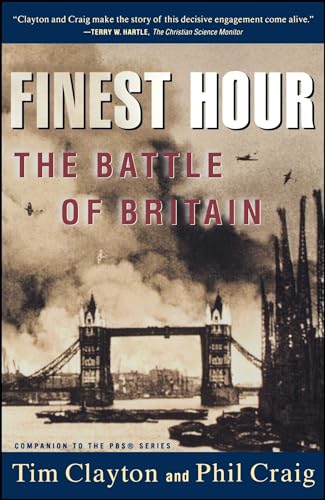
Sixty years ago, Europe lay at the feet of Adolf Hitler. Standing between Hitler and world domination was the just-appointed Prime Minister Winston Churchill...and a few hundred pilots in the Royal Air Force's Fighter Command. Defeat seemed inevitable. Instead, a legend was born.
Taking its readers on a breathtaking journey from open lifeboats in North Atlantic gales to the cockpits of burning fighter planes, Finest Hour re-creates the tensions and uncertainties of the events of 1940 -- months when the fate of the world truly hung in the balance. It is a powerful account, told through the voices, diaries, letters, and memoirs of the men and women who lived and loved, fought and died, during that terrible yet ultimately triumphant year. The personal stories of these soldiers and airmen, diplomats and politicians, journalists and spies, are combined with a fresh and often controversial account of the swirling political intrigues and betrayals of the period.
A testament to a year when a nation's darkest hour became its finest, Finest Hour is a singular achievement and an indispensable contribution to the literature of World War II.
Die Inhaltsangabe kann sich auf eine andere Ausgabe dieses Titels beziehen.
Über die Autorinnen und Autoren
Tim Clayton is a former research fellow at Worcester College, Oxford, and the author of numerous articles and books, including The English Print, 1688-1802. He has also worked as a writer and producer of television documentaries, including Voices in the Dark, a film about the historian Carlo Ginzburg.
The late Philip R. Craig was the author of nineteen novels in the Martha’s Vineyard Mystery series. A professor emeritus of English at Wheelock College in Boston, he loved the Vineyard and lived there year-round with his wife, Shirley.
Auszug. © Genehmigter Nachdruck. Alle Rechte vorbehalten.
Chapter 1: May 10-14, 1940
RAF 85 Squadron
SECLIN, NEAR LILLE, FRANCE
The pilots awoke to the urgent battering of antiaircraft fire. Richard "Dickey" Lee, Benjy Angus, and "Paddy" Hemingway tumbled out into the dawn. Denis Wissler followed them to the door of their sleeping quarters. "Look, up there!" High above the control tower orange flashes filled the sky over Lille. Somewhere a phone was ringing. Moments later Lee was sprinting across the dewy grass of Seclin airfield to his Hurricane: VY R. VY for 85 Squadron, R for Richard. Angus and Hemingway followed. B Flight took off, first Lee, then the others. Farther away a section of three planes from A Flight was already racing along the strip.
All through Friday, May 10, they flew patrols in sections of three. Armorers, in shirtsleeves in the baking heat, hauled out case after case of machine-gun belts. Dusty fuel trucks trundled across the airfield, ready for the next time the planes came back. Refueled and rearmed, the fighters roared up again into the haze. All day the sun beat down and the score mounted. A Flight claimed five before breakfast. The ground crew cheered and slapped the pilots' backs. Some photographers were there, snapping away for the government. They photographed the armorers at work, they photographed the pilots as they landed, and they photographed A Flight as a group, minus one pilot who was now in hospital with a cut eye after a bullet smashed his cockpit cover. Denis Wissler had been with the squadron for a week. He did not even know the name of the man in hospital. His own flight, B Flight, had done well too. Dickey Lee came back with several holes in his aircraft and a graze to his leg, but by the end of the day he had been awarded two kills. Benjy Angus, the Canadian, had bailed out over Belgium. He phoned through later to say that he was okay. No one had been killed or even seriously injured, and the total claim for the day was sixteen. Bombers everywhere, with little in the way of fighter protection.
Wissler hadn't flown. Squadron Leader Oliver had told him gently that he was too inexperienced for combat. He'd spent the day scanning the skies enviously from outside the officers' mess.
2nd Battalion, Royal Norfolk Regiment
ORCHIES, NEAR LILLE
Someone was hammering on the door of the billet. Private Ernie Leggett pulled the curtain from the window and looked outside. In the gray first light, Company Sergeant Major George Gristock was barking instructions. As his head cleared, Leggett searched frantically for his wristwatch and stumbled out onto the Rue de la Gare, where the men stationed in Orchies were already mustering. There was a thunder of guns from the direction of Lille and a red glow in the sky over the air bases less than ten miles away. Sergeant Gristock ordered the company out on parade. One hundred and twenty men, A Company of the 2nd Battalion, Royal Norfolk Regiment, stood to attention as he shouted: "Get your kit together, we're moving out now." They were no more than a mile from Orchies, about halfway to the forest of Marchiennes, when German bombers flew over fast and low and plumes of smoke rose from their billets around the station. The men climbed out of the ditches by the road, dusted themselves down, looked back for a few moments, and hurried on toward the safety of the trees.
Rabbits bolted at the sound of marching boots. The oak trees reminded Leggett of home. He was a country boy, raised in a scattered hamlet called Clippesby a couple of miles from Filby Broad. He used to walk two miles to school in one direction and a mile to church in the other. His father was a farm laborer; his brother had been crippled in an accident and could no longer work. At eleven Leggett passed the exam that entitled him to go to Yarmouth grammar school, but his parents could not afford the uniform.
Farmwork was hard to find and so Leggett, aged sixteen, joined the army. Army life suited him; he was tall and strong and he liked to look smart. Each week he saved some of his ten shillings pay to send to his mother. He had shot rabbits with his brother from earliest boyhood and now he won marksman's badges for both rifle and Bren light machine gun. The Bren, with a distinctive banana clip on top, fired five hundred rounds per minute and could slice through the trunk of a tree. But shooting at anything other than targets had seemed a distant prospect during three happy years in Gibraltar. Then war had come. "We were the boys who met the enemy eye-to-eye and we would have to do the fighting. It suddenly sunk into our brains, not only me but other people as well -- what the hell have we done?"
All day the soldiers shuffled about, talking in hushed voices, brewing tea and waiting for their marching orders. Sunlight flickered through the shielding canopy of trees. Leggett felt his stomach turning over with anxiety. He was determined to do his best. The only thing that unnerved him was the thought of close combat. "I just couldn't bear anything to do with bayonets -- using one or, even worse, being stabbed by one. We'd been taught all about it -- how to push it in, twist it, and rip it out -- and just the idea of it made me feel cold inside."
They would move under cover of darkness. As the light faded, Captain Peter Barclay, Sergeant Major Gristock, and some of the other sergeants came out carrying hurricane lamps. Barclay said, "Right-ho, lads, gather round, I've got something to tell you." A Company knelt round their captain in the gloom. It was his last words that they remembered: "Now more than ever your training will stand you in good stead. Keep your heads down and your spirits high, and from now on when you aim your rifle to shoot, you shoot to kill."
Impressed with these ominous instructions, the company formed up and marched away into the darkness. They crossed the Belgian frontier by back lanes and then met their transport. During the night they traveled unscathed but the roads were crowded and they were still in their lorries at dawn. German reconnaissance found them. "We heard the planes coming and we were given the order, 'Everybody out,' and we tumbled out of the back into the ditches and when we got back there was one man on the floor. A single bullet through the head had killed him. That was the first dead man I had ever seen in my life and of course it upset all of us."
Sergeant Major Gristock told his men to pull themselves together. But he looked up at the skies anxiously. Why was it that German aircraft could attack British infantry with such impunity? Where was the RAF?
* * *
The RAF was busy shooting down German planes all over northern and eastern France. But there were nothing like enough of them to cope with the hundreds of air attacks. The first light of day on May 10 had brought bombs screaming down on airfields and barracks all over France, Belgium, and Holland. Within hours half of the Belgian air force and nearly all the Dutch was destroyed on the ground. German paratroopers and glider forces were landing behind the front line. Waalhaven airport near Rotterdam was seized. Six RAF Blenheim fighter-bombers of 600 Squadron were sent there to destroy any aircraft on the ground. Only one returned home. The British Royal Air Force in France was under French command. Orders were slow to arrive and hesitant when they came. "At all costs avoid bombing built-up areas" was one injunction. Plans were quickly made to attack the advancing German units. But sending Britain's lumbering and lightly armed bombers against enemy forces protected by mobile antiaircraft guns and fighter cover was to invite disaster. Later that day four waves of eight Fairey Battle light bombers attempted to disrupt a German column advancing through Luxembourg. Thirteen were destroyed and all the surviving planes were damaged. It was hard...
„Über diesen Titel“ kann sich auf eine andere Ausgabe dieses Titels beziehen.
Suchergebnisse für Finest Hour: The Battle of Britain

Beispielbild für diese ISBN
Finest Hour: The Battle of Britain
Anbieter: ThriftBooks-Atlanta, AUSTELL, GA, USA
Verkäuferbewertung 5 von 5 Sternen

Paperback. Zustand: Very Good. No Jacket. May have limited writing in cover pages. Pages are unmarked. ~ ThriftBooks: Read More, Spend Less. Artikel-Nr. G0684869314I4N00
Gebraucht kaufen
EUR 6,03
Versand gratis
Versand innerhalb von USA
Versand innerhalb von USA
Anzahl: 1 verfügbar
Beispielbild für diese ISBN
Finest Hour
Anbieter: World of Books (was SecondSale), Montgomery, IL, USA
Verkäuferbewertung 5 von 5 Sternen
Paperback. Zustand: Good. AGAINST ALL ODDS Sixty years ago, Europe lay at the feet of Adolf Hitler. Standing between Hitler and world domination was the just-appointed Prime Minister Winston Churchill.and a few hundred pilots in the Royal Air Force's Fighter Command. Defeat seemed inevitable. Instead, a legend was born. Taking its readers on a breathtaking journey from open lifeboats in North Atlantic gales to the cockpits of burning fighter planes, Finest Hour re-creates the tensions and uncertainties of the events of 1940 -- months when the fate of the world truly hung in the balance. It is a powerful account, told through the voices, diaries, letters, and memoirs of the men and women who lived and loved, fought and died, during that terrible yet ultimately triumphant year. The personal stories of these soldiers and airmen, diplomats and politicians, journalists and spies, are combined with a fresh and often controversial account of the swirling political intrigues and betrayals of the period. A testament to a year when a nation's darkest hour became its finest, Finest Hour is a singular achievement and an indispensable contribution to the literature of World War II. Artikel-Nr. 00105468033
Gebraucht kaufen
EUR 6,08
Versand gratis
Versand innerhalb von USA
Versand innerhalb von USA
Anzahl: 3 verfügbar
Beispielbild für diese ISBN
Finest Hour
Anbieter: World of Books (was SecondSale), Montgomery, IL, USA
Verkäuferbewertung 5 von 5 Sternen
Paperback. Zustand: Fair. AGAINST ALL ODDS Sixty years ago, Europe lay at the feet of Adolf Hitler. Standing between Hitler and world domination was the just-appointed Prime Minister Winston Churchill.and a few hundred pilots in the Royal Air Force's Fighter Command. Defeat seemed inevitable. Instead, a legend was born. Taking its readers on a breathtaking journey from open lifeboats in North Atlantic gales to the cockpits of burning fighter planes, Finest Hour re-creates the tensions and uncertainties of the events of 1940 -- months when the fate of the world truly hung in the balance. It is a powerful account, told through the voices, diaries, letters, and memoirs of the men and women who lived and loved, fought and died, during that terrible yet ultimately triumphant year. The personal stories of these soldiers and airmen, diplomats and politicians, journalists and spies, are combined with a fresh and often controversial account of the swirling political intrigues and betrayals of the period. A testament to a year when a nation's darkest hour became its finest, Finest Hour is a singular achievement and an indispensable contribution to the literature of World War II. Artikel-Nr. 00100523533
Gebraucht kaufen
EUR 6,08
Versand gratis
Versand innerhalb von USA
Versand innerhalb von USA
Anzahl: 2 verfügbar
Beispielbild für diese ISBN
Finest Hour
Anbieter: World of Books (was SecondSale), Montgomery, IL, USA
Verkäuferbewertung 5 von 5 Sternen
Paperback. Zustand: Very Good. AGAINST ALL ODDS Sixty years ago, Europe lay at the feet of Adolf Hitler. Standing between Hitler and world domination was the just-appointed Prime Minister Winston Churchill.and a few hundred pilots in the Royal Air Force's Fighter Command. Defeat seemed inevitable. Instead, a legend was born. Taking its readers on a breathtaking journey from open lifeboats in North Atlantic gales to the cockpits of burning fighter planes, Finest Hour re-creates the tensions and uncertainties of the events of 1940 -- months when the fate of the world truly hung in the balance. It is a powerful account, told through the voices, diaries, letters, and memoirs of the men and women who lived and loved, fought and died, during that terrible yet ultimately triumphant year. The personal stories of these soldiers and airmen, diplomats and politicians, journalists and spies, are combined with a fresh and often controversial account of the swirling political intrigues and betrayals of the period. A testament to a year when a nation's darkest hour became its finest, Finest Hour is a singular achievement and an indispensable contribution to the literature of World War II. Artikel-Nr. 00102776541
Gebraucht kaufen
EUR 6,08
Versand gratis
Versand innerhalb von USA
Versand innerhalb von USA
Anzahl: 2 verfügbar
Beispielbild für diese ISBN
Finest Hour: The Battle of Britain
Anbieter: Wonder Book, Frederick, MD, USA
Verkäuferbewertung 5 von 5 Sternen
Zustand: Good. Good condition. . A copy that has been read but remains intact. May contain markings such as bookplates, stamps, limited notes and highlighting, or a few light stains. Artikel-Nr. Z07B-02165
Gebraucht kaufen
EUR 6,43
Versand gratis
Versand innerhalb von USA
Versand innerhalb von USA
Anzahl: 1 verfügbar
Beispielbild für diese ISBN
Finest Hour: The Battle of Britain
Anbieter: Redux Books, Grand Rapids, MI, USA
Verkäuferbewertung 5 von 5 Sternen
Paperback. Zustand: As New. Paperback. Cover shows very minor shelving wear, otherwise an unblemished copy.; 100% Satisfaction Guaranteed! Ships same or next business day! Artikel-Nr. 132507150033
Gebraucht kaufen
EUR 6,44
Versand gratis
Versand innerhalb von USA
Versand innerhalb von USA
Anzahl: 1 verfügbar
Beispielbild für diese ISBN
Finest Hour : The Battle of Britain
Anbieter: Better World Books, Mishawaka, IN, USA
Verkäuferbewertung 5 von 5 Sternen
Zustand: Good. Reprint. Pages intact with minimal writing/highlighting. The binding may be loose and creased. Dust jackets/supplements are not included. Stock photo provided. Product includes identifying sticker. Better World Books: Buy Books. Do Good. Artikel-Nr. GRP102368090
Gebraucht kaufen
EUR 6,57
Versand gratis
Versand innerhalb von USA
Versand innerhalb von USA
Anzahl: 3 verfügbar
Beispielbild für diese ISBN
Finest Hour : The Battle of Britain
Anbieter: Better World Books, Mishawaka, IN, USA
Verkäuferbewertung 5 von 5 Sternen
Zustand: Good. Reprint. Former library copy. Pages intact with minimal writing/highlighting. The binding may be loose and creased. Dust jackets/supplements are not included. Includes library markings. Stock photo provided. Product includes identifying sticker. Better World Books: Buy Books. Do Good. Artikel-Nr. 10150439-6
Gebraucht kaufen
EUR 6,57
Versand gratis
Versand innerhalb von USA
Versand innerhalb von USA
Anzahl: 1 verfügbar
Beispielbild für diese ISBN
Finest Hour: The Battle of Britain
Anbieter: WorldofBooks, Goring-By-Sea, WS, Vereinigtes Königreich
Verkäuferbewertung 5 von 5 Sternen
Paperback. Zustand: Very Good. The book has been read, but is in excellent condition. Pages are intact and not marred by notes or highlighting. The spine remains undamaged. Artikel-Nr. GOR004158496
Gebraucht kaufen
EUR 3,90
EUR 6,62 Versand
Versand von Vereinigtes Königreich nach USA
Versand von Vereinigtes Königreich nach USA
Anzahl: 2 verfügbar
Beispielbild für diese ISBN
Finest Hour : The Battle of Britain
Anbieter: Powell's Bookstores Chicago, ABAA, Chicago, IL, USA
Verkäuferbewertung 5 von 5 Sternen
paperback. Zustand: Used-Very Good. Reprint. Pbk. Some shelf-wear. Else bright, clean copy. Artikel-Nr. 1738082
Gebraucht kaufen
EUR 8,28
EUR 4,46 Versand
Versand innerhalb von USA
Versand innerhalb von USA
Anzahl: 1 verfügbar