
Verwandte Artikel zu The Lost Civilizations of the Stone Age
Inhaltsangabe
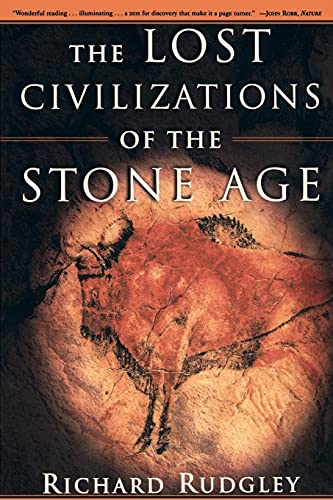
An authoritative, eye-opening look at Stone Age civilizations that explodes traditional portrayals of prehistory
The rise of historical civilization 5,000 years ago is often depicted as if those societies were somehow created out of nothing. However, recent discoveries of astonishing accomplishments from the Neolithic Age -- in art, technology, writing, math, science, religion, medicine and exploration -- demand a fundamental rethinking of humanity before the dawn of written history.
In this fascinating book, Richard Rudgley describes how
* The intrepid explorers of the Stone Age discovered all of the world's major land masses long before the so-called Age of Discovery
* Stone Age man performed medical operations, including amputations and delicate cranial surgeries
* Paleolithic cave artists of Western Europe used techniques that were forgotten until the Renaissance
* Prehistoric life expectancy was better than it is for contemporary third-world populations
Rudgley reminds us just how savage so-called civilized people can be, and demonstrates how the cultures that have been reviled as savage were truly civilized. The Lost Civilizations of the Stone Age shows the great debt that contemporary society owes to its prehistoric predecessors. It is a rich introduction to a lost world that will redefine the meaning of civilization itself.
Die Inhaltsangabe kann sich auf eine andere Ausgabe dieses Titels beziehen.
Über die Autorin bzw. den Autor
Richard Rudgley is an Oxford-trained scholar of Stone Age art, religion and technology. He is also the author of Essential Substances: A Cultural History of Intoxicants in Society (for which he won the British Museum Prometheus Award) and The Encyclopaedia of Psychoactive Substances and the editor of Wildest Dreams: An Anthology of Drug-Related Literature. He lives with his wife and two children in Notting Hill, London.
Von der hinteren Coverseite
An authoritative, eye-opening look at Stone Age civilizations that explodes traditional portrayals of prehistory
The rise of historical civilization 5,000 years ago is often depicted as if those societies were somehow created out of nothing. However, recent discoveries of astonishing accomplishments from the Neolithic Age -- in art, technology, writing, math, science, religion, medicine and exploration -- demand a fundamental rethinking of humanity before the dawn of written history.
In this fascinating book, Richard Rudgley describes how
-- The intrepid explorers of the Stone Age discovered all of the world's major land masses long before the so-called Age of Discovery
-- Stone Age man performed medical operations, including amputations and delicate cranial surgeries
-- Paleolithic cave artists of Western Europe used techniques that were forgotten until the Renaissance
-- Prehistoric life expectancy was better than it is for contemporary third-world populations
Rudgley reminds us just how savage so-called civilized people can be, and demonstrates how the cultures that have been reviled as savage were truly civilized. The Lost Civilizations of the Stone Age shows the great debt that contemporary society owes to its prehistoric predecessors. It is a rich introduction to a lost world that will redefine the meaning of civilization itself.
Auszug. © Genehmigter Nachdruck. Alle Rechte vorbehalten.
Introduction
A near-universal theme in the mythologies of the world is that the present state of the world, and more specifically the social world, is in decline -- a fall from the Garden of Eden or from a Golden Age. Modern civilisation has turned these traditional mythological assumptions on their head and written a new script, one based on the idea of social progress and evolution. In this new mythology the notion of civilisation (as it is generally understood) replaces Eden and this novel paradise exists not at the beginning of time but, if not right now, then just around the corner. Civilisation is, in the plot of this new mythology, envisaged as a great success story -- from prehistoric rags to civilised riches -- and it is presented as the final flowering of human achievement born out of a long and interminable struggle against the powers of darkness and ignorance that are represented by the Stone Age.
The way in which the human story has been written to date is so abridged and poorly edited that it has provided us with an account of ourselves which leaves out most of the contents of the early chapters. Despite the fact that prehistory makes up more than 95 per cent of our time on this planet, history, the remaining 5 per cent, makes up at least 95 per cent of most accounts of the human story. The prehistory of humankind is no mere prelude to history; history is rather a colourful and eventful afterword to the Stone Age. In this book I will show how rich and eventful were the contents of these early chapters of the life of our species; how great is the debt of historical societies to their prehistoric counterparts in all spheres of cultural life; and how civilised in many respects were those human cultures that have been reviled as savage. Before doing so I shall show how savage the so-called civilised peoples can be, and how the barbarism of our own culture is projected outward into the geographically remote (modern tribal cultures) as well as into the temporally remote prehistoric cultures.
One might expect that anthropologists, as the representatives of civilised scientific practices in the investigation of tribal societies, would have had a greater respect for their subjects than other colonial groups who had direct experience of the 'natives'. But here we find a sinister skeleton in the cupboard. In 1863 the Anthropological Society of London was set up and included among its members Sir James Hunt, the famous explorer Richard Burton and Robert Knox the anatomist. Burton described it as 'a refuge for Destitute Truth', a reference to the fact that it was the only outlet for his ethnological writings on sexual matters and related subjects that were strictly taboo among the mainstream Victorian intelligentsia. Hunt used the society as a vehicle to express his racist assumptions of the biological basis of white supremacy, juggling anthropometric measurements to lend scientific weight to his prejudices. Within the ranks of the society was an unofficial and informal circle known as the Cannibal Club, with Hunt in the chair calling his comrades to order with a gavel fashioned in the form of a negro's head. Knox was later to resign from his teaching position at Edinburgh University when he was implicated in the notorious criminal activities of Burke and Hare. These partners in crime graduated from grave-robbing to murder in their attempts to keep up with the medical demand for human corpses for dissection. Knox had unwittingly received some of Burke and Hare's unfortunate victims on to his own dissecting table. Despite the scandal surrounding Knox's name, other individuals with anthropological interests did not even bother to obtain their human subjects through middle men but did the dirty work themselves; some even took a certain relish in indulging in this grisly pastime.
The anthropologist James Urry has collected a whole host of grim tales of early anthropologists who behaved no better then the necromancers of the Middle Ages in their respect for the dead. He cites the case of the Russian explorer and ethnographer Nikolai Miklouho-Maclay, who was pursuing science of a most dubious kind in the coastal regions of New Guinea in 1871. He was assisted in his research by a Swedish sailor named Will Olsson and also had a young male Polynesian servant, simply called 'Boy' in his writings. When the boy died from malaria, Miklouho-Maclay was anxious to dispose of the body, fearing that the locals might think he had been personally responsible. Before dumping the corpse in the sea, he was determined to preserve what he could for science. This sordid act is described in its perpetrator's own account, quoted by Urry:
In thinking of the best way to perform the operation, I discovered, to my chagrin, that I did not have a vessel large enough to contain a whole brain. Expecting the natives to appear every hour, most likely with grave intentions, I gave up, not without regret, the idea of preserving the Polynesian's brain but not the chance to obtain a preparation of the larynx with all the muscles, the tongue, etc., as I had promised my former teacher, Professor H. now living in Strasbourg, the larynx of a dark man with all the muscles. Preparing anatomical instruments and a jug with spirit, I returned to Boy's room and cut out the larynx with the tongue and all the muscles. A bit of skin from the forehead and head with hair went into my collection. Olsson, shaking with his fear of the dead man, was holding a candle and Boy's head. As I was cutting the plexus brachialis, Boy's hand made a small movement and Olsson, mortally afraid that I was cutting a man still alive, dropped the candle, and we were left in darkness.
Such was the callous nature of the operator that whilst sailing out in his boat to dump the corpse of 'Boy', he was so distracted by the marine life that he went into a sort of scientific reverie deep enough for him to temporarily forget that the corpse was on board. Having surreptitiously and successfully thrown 'Boy' overboard, and satisfied that the sharks would do the rest, he returned to shore to relax over a cup of tea.
A comparable example of total disregard for the remains of native people, this time from South America, has been brought to light by the Oxford anthropologist Peter Rivière. It concerns the activities of a German traveller in British Guiana in the 1840s named Richard Schomburgk. Despite being aware that the local Indians considered their dead to be sacrosanct, he was determined to raid their final resting places in the name of science. With a partner in crime he dug up a skeleton of a Warao Indian, later presented to the Anatomy Museum in Berlin. On another occasion they obtained two recently buried Macusi Indian skeletons, both of which had been buried for no more than a year. During this particular instance of body-snatching the two were nearly caught red-handed and quickly had to hide both the skeletons and their digging tools under a bush until they could be safely retrieved later. Unlike his Russian counterpart in New Guinea, Schomburgk, as Rivière points out, seems to have had mixed feelings about what he had done and wrote that he 'was glad when the wicked work was finally and successfully accomplished'. In this act we can see a clear parallel with Burke and Hare, with the distinction that these mortal remains were snatched not to be dissected in a morgue but rather to be displayed in a museum.
Urry describes what is probably the most savage and appalling example of the immoral actions routinely pursued by civilised medical and scientific institutions on the mortal remains of natives. William Lanney and Truganini, described as the last of the Tasmanian Aborigines, had asked to be buried in peace when their time came. In 1869 Lanney died, and despite his wishes his corpse became the property of scientists. Urry gives an account of what...
„Über diesen Titel“ kann sich auf eine andere Ausgabe dieses Titels beziehen.
Suchergebnisse für The Lost Civilizations of the Stone Age

Beispielbild für diese ISBN
The Lost Civilizations of the Stone Age
Verlag:
Free Press (edition 1st Touchstone Ed), 2000
ISBN 10: 0684862700
ISBN 13: 9780684862705
Gebraucht
Paperback
Anbieter: BooksRun, Philadelphia, PA, USA
Verkäuferbewertung 5 von 5 Sternen

Paperback. Zustand: Very Good. 1st Touchstone Ed. It's a well-cared-for item that has seen limited use. The item may show minor signs of wear. All the text is legible, with all pages included. It may have slight markings and/or highlighting. Artikel-Nr. 0684862700-11-1
Gebraucht kaufen
EUR 4,85
Versand gratis
Versand innerhalb von USA
Versand innerhalb von USA
Anzahl: 1 verfügbar
Beispielbild für diese ISBN
The Lost Civilizations of the Stone Age
Anbieter: World of Books (was SecondSale), Montgomery, IL, USA
Verkäuferbewertung 5 von 5 Sternen
Paperback. Zustand: Good. An authoritative, eye-opening look at Stone Age civilizations that explodes traditional portrayals of prehistory The rise of historical civilization 5,000 years ago is often depicted as if those societies were somehow created out of nothing. However, recent discoveries of astonishing accomplishments from the Neolithic Age -- in art, technology, writing, math, science, religion, medicine and exploration -- demand a fundamental rethinking of humanity before the dawn of written history. In this fascinating book, Richard Rudgley describes how * The intrepid explorers of the Stone Age discovered all of the world's major land masses long before the so-called Age of Discovery * Stone Age man performed medical operations, including amputations and delicate cranial surgeries * Paleolithic cave artists of Western Europe used techniques that were forgotten until the Renaissance * Prehistoric life expectancy was better than it is for contemporary third-world populations Rudgley reminds us just how savage so-called civilized people can be, and demonstrates how the cultures that have been reviled as savage were truly civilized. The Lost Civilizations of the Stone Age shows the great debt that contemporary society owes to its prehistoric predecessors. It is a rich introduction to a lost world that will redefine the meaning of civilization itself. Artikel-Nr. CIN0684862700G
Gebraucht kaufen
EUR 5,50
Versand gratis
Versand innerhalb von USA
Versand innerhalb von USA
Anzahl: 1 verfügbar
Beispielbild für diese ISBN
The Lost Civilizations of the Stone Age
Anbieter: Wonder Book, Frederick, MD, USA
Verkäuferbewertung 5 von 5 Sternen
Zustand: Good. Good condition. A copy that has been read but remains intact. May contain markings such as bookplates, stamps, limited notes and highlighting, or a few light stains. Artikel-Nr. O14M-00472
Gebraucht kaufen
EUR 6,42
Versand gratis
Versand innerhalb von USA
Versand innerhalb von USA
Anzahl: 1 verfügbar
Beispielbild für diese ISBN
The Lost Civilizations of the Stone Age
Anbieter: Wonder Book, Frederick, MD, USA
Verkäuferbewertung 5 von 5 Sternen
Zustand: As New. Like New condition. A near perfect copy that may have very minor cosmetic defects. Artikel-Nr. G01E-01540
Gebraucht kaufen
EUR 6,42
Versand gratis
Versand innerhalb von USA
Versand innerhalb von USA
Anzahl: 1 verfügbar
Beispielbild für diese ISBN
The Lost Civilizations of the Stone Age
Anbieter: ThriftBooks-Dallas, Dallas, TX, USA
Verkäuferbewertung 5 von 5 Sternen
Paperback. Zustand: Fair. No Jacket. Readable copy. Pages may have considerable notes/highlighting. ~ ThriftBooks: Read More, Spend Less. Artikel-Nr. G0684862700I5N00
Gebraucht kaufen
EUR 6,74
Versand gratis
Versand innerhalb von USA
Versand innerhalb von USA
Anzahl: 1 verfügbar
Beispielbild für diese ISBN
The Lost Civilizations of the Stone Age
Anbieter: ThriftBooks-Atlanta, AUSTELL, GA, USA
Verkäuferbewertung 5 von 5 Sternen
Paperback. Zustand: Fair. No Jacket. Readable copy. Pages may have considerable notes/highlighting. ~ ThriftBooks: Read More, Spend Less. Artikel-Nr. G0684862700I5N00
Gebraucht kaufen
EUR 6,74
Versand gratis
Versand innerhalb von USA
Versand innerhalb von USA
Anzahl: 1 verfügbar
Beispielbild für diese ISBN
The Lost Civilizations of the Stone Age
Anbieter: Better World Books, Mishawaka, IN, USA
Verkäuferbewertung 5 von 5 Sternen
Zustand: Good. Former library copy. Pages intact with minimal writing/highlighting. The binding may be loose and creased. Dust jackets/supplements are not included. Includes library markings. Stock photo provided. Product includes identifying sticker. Better World Books: Buy Books. Do Good. Artikel-Nr. 5462164-6
Gebraucht kaufen
EUR 7,20
Versand gratis
Versand innerhalb von USA
Versand innerhalb von USA
Anzahl: 1 verfügbar
Beispielbild für diese ISBN
The Lost Civilizations of the Stone Age
Anbieter: Better World Books, Mishawaka, IN, USA
Verkäuferbewertung 5 von 5 Sternen
Zustand: Good. Pages intact with minimal writing/highlighting. The binding may be loose and creased. Dust jackets/supplements are not included. Stock photo provided. Product includes identifying sticker. Better World Books: Buy Books. Do Good. Artikel-Nr. 8808801-6
Gebraucht kaufen
EUR 7,20
Versand gratis
Versand innerhalb von USA
Versand innerhalb von USA
Anzahl: 1 verfügbar
Foto des Verkäufers
The Lost Civilizations of the Stone Age
Anbieter: Southampton Books, Sag Harbor, NY, USA
Verkäuferbewertung 5 von 5 Sternen
Paperback. Zustand: Like New. First Edition. First Edition, First Printing. Published by Free Press, 2000. Octavo. Paperback. Book is like new. Artikel-Nr. 509405
Gebraucht kaufen
EUR 9,18
EUR 4,45 Versand
Versand innerhalb von USA
Versand innerhalb von USA
Anzahl: 1 verfügbar
Beispielbild für diese ISBN
The Lost Civilizations of the Stone Age
Anbieter: WorldofBooks, Goring-By-Sea, WS, Vereinigtes Königreich
Verkäuferbewertung 5 von 5 Sternen
Paperback. Zustand: Very Good. The book has been read, but is in excellent condition. Pages are intact and not marred by notes or highlighting. The spine remains undamaged. Artikel-Nr. GOR005052756
Gebraucht kaufen
EUR 11,00
EUR 6,69 Versand
Versand von Vereinigtes Königreich nach USA
Versand von Vereinigtes Königreich nach USA
Anzahl: 3 verfügbar