
Verwandte Artikel zu The Complete Short Stories Of Ernest Hemingway: The...
Inhaltsangabe
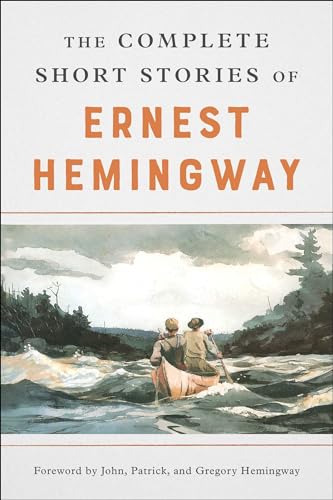
The complete, authoritative collection of Ernest Hemingway's short fiction, including classic stories like "The Snows of Kilimanjaro," "A Clean, Well-Lighted Place," and "The Short Happy Life of Francis Macomber," along with seven previously unpublished stories.
In this definitive collection of the Nobel Prize-winning author’s short stories, readers will delight in Hemingway’s most beloved classics such as "The Snows of Kilimanjaro," "Hills Like White Elephants," and "A Clean, Well-Lighted Place," and will discover seven new tales published for the first time in this collection, totaling in sixty stories. This collection demonstrates Hemingway’s ability to write beautiful prose for each distinct story, with plots that range from experiences of World War II to beautifully touching moments between a father and son. For Hemingway fans, The Complete Short Stories is an invaluable treasury.
Die Inhaltsangabe kann sich auf eine andere Ausgabe dieses Titels beziehen.
Über die Autorin bzw. den Autor
Ernest Hemingway did more to change the style of English prose than any other writer of his time. Publication of The Sun Also Rises and A Farewell to Arms immediately established Hemingway as one of the greatest literary lights of the twentieth century. His classic novel The Old Man and the Sea won the Pulitzer Prize in 1953. Hemingway was awarded the Nobel Prize for Literature in 1954. Known for his larger-than-life personality and his passions for bullfighting, fishing, and big-game hunting, he died in Ketchum, Idaho, on July 2, 1961.
Auszug. © Genehmigter Nachdruck. Alle Rechte vorbehalten.
The Complete Short Stories Of Ernest Hemingway
The Finca Vigia EditionBy Ernest HemingwayScribner
Copyright ©1998 Ernest HemingwayAll right reserved.
ISBN: 0684843323
Publisher's Preface
There has long been a need for a complete and up-to-date edition of the short
stories of Ernest Hemingway. Until now the only such volume was the omnibus
collection of the first forty-nine stories published in 1938 together with
Hemingway's play The Fifth Column. That was a fertile period of
Hemingway's writing and a number of stories based on his experiences in Cuba
and Spain were appearing in magazines, but too late to have been included in
"The First Forty-nine."
In 1939 Hemingway was already considering a new collection of stories that
would take its place beside the earlier books In Our Time, Men Without
Women, and Winner Take Nothing. On February 7 he wrote from his home
in Key West to his editor Maxwell Perkins at Scribners suggesting such a book.
At that time he had already completed five stories: "The Denunciation," "The
Butterfly and the Tank," "Night Before Battle," "Nobody Ever Dies," and
"Landscape with Figures," which is published here for the first time. A sixth
story, "Under the Ridge," would appear shortly in the March 1939 edition of
Cosmopolitan.
As it turned out, Hemingway's plans for that new book did not pan out. He had
committed himself to writing three "very long" stories to round out the
collection (two dealing with battles in the Spanish Civil War and one about the
Cuban fisherman who fought a swordfish for four days and four nights only to
lose it to sharks). But once Hemingway got underway on his novel -- later published as For Whom the Bell Tolls -- all other writing projects were
laid aside. We can only speculate on the two war stories he abandoned, but it
is probable that much of what they might have included found its way into the
novel. As for the story of the Cuban fisherman, he did eventually return to it
thirteen years later when he developed and transformed it into his famous
novella, The Old Man and the Sea.
Many of Hemingway's early stories are set in northern Michigan, where his
family owned a cottage on Waloon Lake and where he spent his summers as a boy
and youth. The group of friends he made there, including the Indians who lived
nearby, are doubtless represented in various stories, and some of the episodes
are probably based at least partly on fact. Hemingway's aim was to convey
vividly and exactly moments of exquisite importance and poignancy, experiences
that might appropriately be described as "epiphanies." The posthumously
published "Summer People" and the fragment called "The Last Good Country" stem
from this period.
Later stories, also set in America, relate to Hemingway's experiences as a
husband and father, and even as a hospital patient. The cast of characters and
the variety of themes became as diversified as the author's own life. One
special source of material was his life in Key West, where he lived in the
twenties and thirties. His encounters with the sea on his fishing boat
Pilar, taken together with his circle of friends, were the inspiration
of some of his best writing. The two Harry Morgan stories, "One Trip Across" (Cosmopolitan, 1934) and "The Tradesman's Return" (Esquire, February 1936), which draw from this period, were ultimately incorporated into the novel To Have and Have Not, but it is appropriate and enjoyable to read them as separate stories, as they first appeared.
Hemingway must have been one of the most perceptive travelers in the history of literature, and his stories taken as a whole present a world of experience. In 1918 he signed up for ambulance duty in Italy as a member of an American Field Service unit. It was his first transatlantic journey and he was eighteen at the time. On the day of his arrival in Milan a munitions factory blew up, and with the other volunteers in his contingent Hemingway was assigned to gather up the remains of the dead. Only three months later he was badly wounded in both legs
and hospitalized in the American Red Cross hospital in Milan, with subsequent
outpatient treatment. These wartime experiences, including the people he met,
provided many details for his novel of World War I, A Farewell to Arms.
They also inspired five short story masterpieces.
In the 1920s he revisited Italy several times; sometimes as a professional
journalist and sometimes for pleasure. His short story about a motor trip with
a friend through Mussolini's Italy, "Che Ti Dice La Patria?," succeeds in
conveying the harsh atmosphere of a totalitarian regime.
Between 1922 and 1924 Hemingway made several trips to Switzerland to gather
material for The Toronto Star. His subjects included economic conditions
and other practical subjects, but also accounts of Swiss winter sports:
bobsledding, skiing, and the hazardous luge. As in other fields, Hemingway was
ahead of his compatriots in discovering places and pleasures that would become
tourist attractions. At the same time, he was storing up ideas for a number of
his short stories, with themes ranging from the comic to the serious and the
macabre.
Hemingway attended his first bullfight, in the company of American friends, in
1923, when he made an excursion to Madrid from Paris, where he was living at
the time. From the moment the first bull burst into the ring he was overwhelmed
by the experience and left the scene a lifelong fan. For him the spectacle of a
man pitted against a wild bull was a tragedy rather than a sport. He was
fascinated by its techniques and conventions, the skill and courage required by
the toreros, and the sheer violence of the bulls. He soon became an
acknowledged expert on bullfighting and wrote a famous treatise on the subject,
Death in the Afternoon. A number of his stories also have bullfighting
themes.
In time, Hemingway came to love all of Spain -- its customs, its landscapes,
its art treasures, and its people. When the Spanish Civil War broke out in the
last week of July 1936, he was a staunch supporter of the Loyalists, helping to
provide support for their cause and covering the war from Madrid as a
correspondent for the North American Newspaper Alliance. Out of the entirety of
his experiences in Spain during the war he produced seven short stories in
addition to his novel, For Whom the Bell Tolls, and his play, The
Fifth Column. It was one of the most prolific and inspired periods of his
writing career.
In 1933, when his wife Pauline's wealthy uncle Gus Pfeiffer offered to stake
the Hemingways to an African safari, Ernest was totally captivated by the
prospect and made endless preparations, including inviting a company of friends
to join them and selecting suitable weapons and other equipment for the trip.
The safari itself lasted about ten weeks, but everything he saw seems to have
made an indelible impression on his mind. Perhaps he regained, as the result of
his enthusiasm and interest, a childlike capacity to record details almost
photographically. It was his first meeting with the famous white hunter Phillip
Percival, whom he admired at once for his cool and sometimes cunning
professionalism. At the end of the safari, Hemingway had filled his mind with
images, incidents, and character studies of unique value for his writings. As
the harvest of the trip he wrote the nonfiction novel Green Hills...
„Über diesen Titel“ kann sich auf eine andere Ausgabe dieses Titels beziehen.
Suchergebnisse für The Complete Short Stories Of Ernest Hemingway: The...

Beispielbild für diese ISBN
The Complete Short Stories of Ernest Hemingway: The Finca Vigia Edition
Verlag:
Scribner (edition 3rd Edition), 1998
ISBN 10: 0684843323
ISBN 13: 9780684843322
Gebraucht
Paperback
Anbieter: BooksRun, Philadelphia, PA, USA
Verkäuferbewertung 5 von 5 Sternen

Paperback. Zustand: Fair. 3rd Edition. The item might be beaten up but readable. May contain markings or highlighting, as well as stains, bent corners, or any other major defect, but the text is not obscured in any way. Artikel-Nr. 0684843323-7-1
Gebraucht kaufen
EUR 6,73
Versand gratis
Versand innerhalb von USA
Versand innerhalb von USA
Anzahl: 4 verfügbar
Beispielbild für diese ISBN
The Complete Short Stories of Ernest Hemingway: The Finca Vigia Edition
Verlag:
Scribner (edition 3rd Edition), 1998
ISBN 10: 0684843323
ISBN 13: 9780684843322
Gebraucht
Paperback
Anbieter: BooksRun, Philadelphia, PA, USA
Verkäuferbewertung 5 von 5 Sternen
Paperback. Zustand: Very Good. 3rd Edition. It's a well-cared-for item that has seen limited use. The item may show minor signs of wear. All the text is legible, with all pages included. It may have slight markings and/or highlighting. Artikel-Nr. 0684843323-11-1
Gebraucht kaufen
EUR 7,97
Versand gratis
Versand innerhalb von USA
Versand innerhalb von USA
Anzahl: 1 verfügbar
Beispielbild für diese ISBN
The Complete Short Stories of Ernest Hemingway: The Finca Vigia Edition
Anbieter: Books From California, Simi Valley, CA, USA
Verkäuferbewertung 4 von 5 Sternen

Paperback. Zustand: Good. Cover and edges may have some wear. Some discoloration due to exposure to the sun, otherwise very good. Artikel-Nr. mon0004248266
Gebraucht kaufen
EUR 4,77
EUR 4,44 Versand
Versand innerhalb von USA
Versand innerhalb von USA
Anzahl: 1 verfügbar
Beispielbild für diese ISBN
The Complete Short Stories of Ernest Hemingway
Anbieter: World of Books (was SecondSale), Montgomery, IL, USA
Verkäuferbewertung 5 von 5 Sternen
Paperback. Zustand: Good. The complete, authoritative collection of Ernest Hemingway's short fiction, including classic stories like "The Snows of Kilimanjaro," "A Clean, Well-Lighted Place," and "The Short Happy Life of Francis Macomber," along with seven previously unpublished stories. In this definitive collection of the Nobel Prize-winning author's short stories, readers will delight in Hemingway's most beloved classics such as "The Snows of Kilimanjaro," "Hills Like White Elephants," and "A Clean, Well-Lighted Place," and will discover seven new tales published for the first time in this collection, totaling in sixty stories. This collection demonstrates Hemingway's ability to write beautiful prose for each distinct story, with plots that range from experiences of World War II to beautifully touching moments between a father and son. For Hemingway fans, The Complete Short Stories is an invaluable treasury. Artikel-Nr. 00110526014
Gebraucht kaufen
EUR 10,18
Versand gratis
Versand innerhalb von USA
Versand innerhalb von USA
Anzahl: Mehr als 20 verfügbar
Beispielbild für diese ISBN
The Complete Short Stories of Ernest Hemingway
Anbieter: World of Books (was SecondSale), Montgomery, IL, USA
Verkäuferbewertung 5 von 5 Sternen
Paperback. Zustand: Fair. The complete, authoritative collection of Ernest Hemingway's short fiction, including classic stories like "The Snows of Kilimanjaro," "A Clean, Well-Lighted Place," and "The Short Happy Life of Francis Macomber," along with seven previously unpublished stories. In this definitive collection of the Nobel Prize-winning author's short stories, readers will delight in Hemingway's most beloved classics such as "The Snows of Kilimanjaro," "Hills Like White Elephants," and "A Clean, Well-Lighted Place," and will discover seven new tales published for the first time in this collection, totaling in sixty stories. This collection demonstrates Hemingway's ability to write beautiful prose for each distinct story, with plots that range from experiences of World War II to beautifully touching moments between a father and son. For Hemingway fans, The Complete Short Stories is an invaluable treasury. Artikel-Nr. 00110205652
Gebraucht kaufen
EUR 10,18
Versand gratis
Versand innerhalb von USA
Versand innerhalb von USA
Anzahl: 5 verfügbar
Beispielbild für diese ISBN
The Complete Short Stories of Ernest Hemingway
Anbieter: World of Books (was SecondSale), Montgomery, IL, USA
Verkäuferbewertung 5 von 5 Sternen
Paperback. Zustand: Very Good. The complete, authoritative collection of Ernest Hemingway's short fiction, including classic stories like "The Snows of Kilimanjaro," "A Clean, Well-Lighted Place," and "The Short Happy Life of Francis Macomber," along with seven previously unpublished stories. In this definitive collection of the Nobel Prize-winning author's short stories, readers will delight in Hemingway's most beloved classics such as "The Snows of Kilimanjaro," "Hills Like White Elephants," and "A Clean, Well-Lighted Place," and will discover seven new tales published for the first time in this collection, totaling in sixty stories. This collection demonstrates Hemingway's ability to write beautiful prose for each distinct story, with plots that range from experiences of World War II to beautifully touching moments between a father and son. For Hemingway fans, The Complete Short Stories is an invaluable treasury. Artikel-Nr. 00110553739
Gebraucht kaufen
EUR 10,18
Versand gratis
Versand innerhalb von USA
Versand innerhalb von USA
Anzahl: 1 verfügbar
Beispielbild für diese ISBN
The Complete Short Stories of Ernest Hemingway: The Finca Vigia Edition
Anbieter: Books From California, Simi Valley, CA, USA
Verkäuferbewertung 4 von 5 Sternen
Paperback. Zustand: Very Good. Cover and edges may have some wear. Artikel-Nr. mon0004209284
Gebraucht kaufen
EUR 6,01
EUR 4,44 Versand
Versand innerhalb von USA
Versand innerhalb von USA
Anzahl: 1 verfügbar
Foto des Verkäufers
The Complete Short Stories of Ernest Hemingway (The Finca Vigia Edition)
Anbieter: Friends of the Multnomah County Library, Portland, OR, USA
Verkäuferbewertung 5 von 5 Sternen
Soft cover. Zustand: Very Good. Trade paper. Includes a foreword by John, Patrick, and Gregory Hemingway and a preface by Charles Scribner, Jr. xviii + 650 pp. English language text. Light soil on covers, else. 8vo. Artikel-Nr. TBH115
Gebraucht kaufen
EUR 9,17
EUR 4,44 Versand
Versand innerhalb von USA
Versand innerhalb von USA
Anzahl: 1 verfügbar
Foto des Verkäufers
The Complete Short Stories of Ernest Hemingway: The Finca Vigia Edition
Anbieter: WeBuyBooks, Rossendale, LANCS, Vereinigtes Königreich
Verkäuferbewertung 5 von 5 Sternen
paperback. Zustand: Good. Most items will be dispatched the same or the next working day. A copy that has been read but remains in clean condition. All of the pages are intact and the cover is intact and the spine may show signs of wear. The book may have minor markings which are not specifically mentioned. Artikel-Nr. rev9276477724
Gebraucht kaufen
EUR 10,47
EUR 8,94 Versand
Versand von Vereinigtes Königreich nach USA
Versand von Vereinigtes Königreich nach USA
Anzahl: 2 verfügbar
Beispielbild für diese ISBN
The Complete Short Stories of Ernest Hemingway: The Finca Vigia Edition
Anbieter: WorldofBooks, Goring-By-Sea, WS, Vereinigtes Königreich
Verkäuferbewertung 5 von 5 Sternen
Paperback. Zustand: Very Good. The book has been read, but is in excellent condition. Pages are intact and not marred by notes or highlighting. The spine remains undamaged. Artikel-Nr. GOR001709519
Gebraucht kaufen
EUR 14,98
EUR 6,65 Versand
Versand von Vereinigtes Königreich nach USA
Versand von Vereinigtes Königreich nach USA
Anzahl: 2 verfügbar