
Verwandte Artikel zu The Promise of Rest
Inhaltsangabe
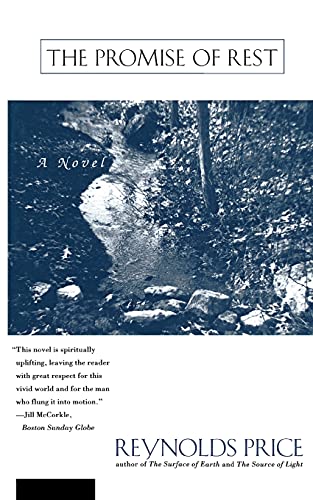
In this stunning and fully independent conclusion to A Great Circle, Reynolds Price tells the complex, moving story of a man's return home to die of AIDS and of the unexpected effect that his arrival -- and his death -- has on his family.
Wade Mayfield's parents are separated, but for the remaining months of his life they and their friends come together to care for Wade with the love they can muster. They are unprepared, however, for the astonishing mystery Wade has prepared to reveal once he is gone -- a mystery that initiates the possible reunion of his parents and promises to continue the proud traditions of a complex, multiracial family.
Die Inhaltsangabe kann sich auf eine andere Ausgabe dieses Titels beziehen.
Über die Autorin bzw. den Autor
Reynolds Price (1933–2011) was born in Macon, North Carolina. Educated at Duke University and, as a Rhodes Scholar, at Merton College, Oxford University, he taught at Duke beginning in 1958 and was the James B. Duke Professor of English at the time of his death. His first short stories, and many later ones, are published in his Collected Stories. A Long and Happy Life was published in 1962 and won the William Faulkner Award for a best first novel. Kate Vaiden was published in 1986 and won the National Book Critics Circle Award. The Good Priest's Son in 2005 was his fourteenth novel. Among his thirty-seven volumes are further collections of fiction, poetry, plays, essays, and translations. Price is a member of both the American Academy of Arts and Letters and the American Academy of Arts and Sciences, and his work has been translated into seventeen languages.
Auszug. © Genehmigter Nachdruck. Alle Rechte vorbehalten.
Chapter 1
BOUND HOME
APRIL 1993
For thirty-odd years, this white narrow room at the top of a granite building in the midst of Duke University had been one place where Hutchins Mayfield never felt less than alive and useful by the day and the hour. For that long stretch he'd met his seminar students here, and this year's group was gathered for its first meeting of the week. There were fourteen of them, eight men and six women, aged nineteen to twenty-two; and by a pleasant accident, each had a winning face, though two of the men were still in the grip of post-adolescent narcolepsy frequent short fade-outs.
This noon they all sat, with Hutch at the head, round a long oak table by a wall of windows that opened on dogwoods in early spring riot; and though today was the class's last hour for dealing with Milton's early poems before moving on to Marvell and Herbert, even more students were dazed by the rising heat and the fragrance borne through every window.
In the hope of rousing them for a last twenty minutes, Hutch raised his voice slightly and asked who knew the Latin root of the word sincere.
A dozen dead sets of eyes shied from him.
He gave his routine fixed class grin, which meant I can wait you out till Doom.
Then the most skittish student of all raised her pale hand and fixed her eyes on Hutch immense and perfectly focused eyes, bluer than glacial lakes. When Hutch had urged her, months ago, to talk more in class, she'd told him that every time she spoke she was racked by dreams the following night. And still, volunteering, she was ready to bolt at the first sign of pressure from Hutch or the class.
Hutch flinched in the grip of her eyes but called her name. "Karen?"
She said "Without wax, from the Latin sine cere."
"Right and what does that mean?"
She hadn't quite mustered the breath and daring for a full explanation; but with one long breath, she managed to say "When a careless Roman sculptor botched his marble, he'd fill the blunder with smooth white wax. A sincere statue was one without wax." Once that was out, Karen blushed a dangerous color of red; and her right hand came up to cover her mouth.
Hutch recalled that Karen was the only member of the class who'd studied Latin, three years in high schoolman all but vanished yet nearvital skill. He thanked her, then said "The thoroughly dumb but central question that's troubled critics of Milton's 'Lycidas' was stated most famously by pompous Dr. Samuel Johnson late in the eighteenth century. He of course objected mightily, if pointlessly, to the shepherd trappings of a pastoral poem -- what would he say about cowboy films today? He even claimed and I think I can very nearly quote him that 'He who thus grieves will excite no sympathy; he who thus praises will confer no honor.' I think he's as wrong as a critic can be, which is saying a lot; and I think I can prove it."
Hutch paused to see if their faces could bear what he had in mind; and since the hour was nearly over, most of their eyes had opened wider and were at least faking consciousness again. So he said "I'd like to read the whole poem aloud again, not because I love my own voice but because any poem is as dead on the page as the notes of a song unless you hear its music performed by a reasonably practiced competent musician. It'll take ten minutes; please wake up and listen." He grinned again.
The narcolepts shook themselves like drowned Labradors. They were oddly both redheads.
One woman with record-long bangs clamped her eyes shut.
Hutch said "Remember now the most skillful technician in English poetry who lived after Milton was Tennyson, two centuries later. Tennyson was no pushover when it came to praising other poets very few poets are but he claimed more than once that 'Lycidas' is the highest touchstone of poetic appreciation in the English language: a touchstone being a device for gauging the gold content of metal. Presumably Tennyson meant that any other English poem, rubbed against 'Lycidas,' will show its gold or base alloy."
Though Hutch had long since memorized the poem, all 193 lines, he looked to his book and started with Milton's prefatory note.
"In this monody the author bewails a learned friend unfortunately drowned in his passage from Chester on the Irish seas, 1637."
Then he braced himself for the steeplechase run-through that had never failed to move him deeply.
"Yet once more, O ye laurels, and once more
Ye myrtles brown, with ivy never sere,
I come to pluck your berries harsh and crude,
And with forced fingers rude,
Shatter your leaves before the mellowing year."
From there on, along the crowded unpredictable way to its visionary end with Lycidas rescued and welcomed in Heaven by a glee club of saints and Christ himself, giving nectar shampoos Hutch stressed what always felt to him like the heart of the poem, its authentic cry. It sounded most clearly in the lines where Milton either feigned or surely poured out genuine grief for the loss of his college friend, Edward King, drowned in a shipwreck at age twenty-five, converted in the poem to an ancient shepherd named Lycidas and longed for in this piercing extravagant cry with its keening vowels.
"Thee shepherd, thee the woods, and desert caves,
With wild thyme and the gadding vine o'ergrown,
And all their echoes mourn.
The willows, and the hazel copses green,
Shall now no more be seen,
Fanning their joyous leaves to thy soft lays.
As killing as the canker to the rose,
Or taint-worm to the weanling herds that graze,
Or frost to flowers, that their gay wardrobe wear,
When first the white thorn blows;
Such, Lycidas, thy loss to shepherd's ear."
Ten minutes later at the poem's hushed end "Tomorrow to fresh woods, and pastures new" Hutch was even more shaken than he'd meant to be. Strangely he hadn't quite foreseen a public collusion between Milton's subject and his own ongoing family tragedy. But at least he hadn't wept; so he sat for five seconds, looking out the window past the creamy white and cruciform blossoms toward the huge water oaks with their new leaves.
Then he faced the class again and repeated from memory the central lines "Thee shepherd, thee the woods, and desert caves...."When he thought they'd sunk as deep as they could into these young television-devastated brains, he said "Estimate the wax content of those few lines."
Even Karen looked fiummoxed again and turned aside.
Hutch tried another way." The sincerity quotient. Does Milton truly miss the sight of young Edward King, King's actual presence before the poet's eyes; if not, what's he doing in so many carefully laid-down words?" When they all stayed blank as whitewashed walls, Hutch laughed. "Anybody, for ten extra points. Take a flying risk for once in your life." (Through the years, except for the glorious and troubling late 1960s, most of his students had proved far more conservative than corporate lawyers.)
Finally Kim said "He's showing off' the class beauty queen, lacquered and painted and grade-obsessed.
Whitney said "Milton's almost thirty years old, right? Then I figure he's stretching he's using King's death as a chinning bar to test his own strengths. Can I write this thing? he seems to be saying, right through to the end." Since Whit was one of the midday nappers, his...
„Über diesen Titel“ kann sich auf eine andere Ausgabe dieses Titels beziehen.
Suchergebnisse für The Promise of Rest

Beispielbild für diese ISBN
The Promise of Rest
Anbieter: World of Books (was SecondSale), Montgomery, IL, USA
Verkäuferbewertung 5 von 5 Sternen

Paperback. Zustand: Fair. Synopsis coming soon. Artikel-Nr. 00095470142
Gebraucht kaufen
EUR 4,51
Versand gratis
Versand innerhalb von USA
Versand innerhalb von USA
Anzahl: 1 verfügbar
Beispielbild für diese ISBN
The Promise of Rest
Anbieter: World of Books (was SecondSale), Montgomery, IL, USA
Verkäuferbewertung 5 von 5 Sternen
Paperback. Zustand: Very Good. Synopsis coming soon. Artikel-Nr. 00102494495
Gebraucht kaufen
EUR 4,51
Versand gratis
Versand innerhalb von USA
Versand innerhalb von USA
Anzahl: 1 verfügbar
Beispielbild für diese ISBN
The Promise of Rest
Anbieter: World of Books (was SecondSale), Montgomery, IL, USA
Verkäuferbewertung 5 von 5 Sternen
Paperback. Zustand: Good. Synopsis coming soon. Artikel-Nr. 00088762829
Gebraucht kaufen
EUR 4,51
Versand gratis
Versand innerhalb von USA
Versand innerhalb von USA
Anzahl: 2 verfügbar
Beispielbild für diese ISBN
The Promise of Rest
Verlag:
Scribner (edition First Edition), 1996
ISBN 10: 0684825104
ISBN 13: 9780684825106
Gebraucht
Paperback
Erstausgabe
Anbieter: BooksRun, Philadelphia, PA, USA
Verkäuferbewertung 5 von 5 Sternen
Paperback. Zustand: Very Good. First Edition. It's a well-cared-for item that has seen limited use. The item may show minor signs of wear. All the text is legible, with all pages included. It may have slight markings and/or highlighting. Artikel-Nr. 0684825104-11-1
Gebraucht kaufen
EUR 4,54
Versand gratis
Versand innerhalb von USA
Versand innerhalb von USA
Anzahl: 1 verfügbar
Beispielbild für diese ISBN
The Promise of Rest
Verlag:
Scribner (edition First Edition), 1996
ISBN 10: 0684825104
ISBN 13: 9780684825106
Gebraucht
Paperback
Erstausgabe
Anbieter: BooksRun, Philadelphia, PA, USA
Verkäuferbewertung 5 von 5 Sternen
Paperback. Zustand: Very Good. First Edition. It's a well-cared-for item that has seen limited use. The item may show minor signs of wear. All the text is legible, with all pages included. It may have slight markings and/or highlighting. Artikel-Nr. 0684825104-8-1
Gebraucht kaufen
EUR 4,60
Versand gratis
Versand innerhalb von USA
Versand innerhalb von USA
Anzahl: 1 verfügbar
Beispielbild für diese ISBN
The Promise of Rest
Anbieter: ThriftBooks-Phoenix, Phoenix, AZ, USA
Verkäuferbewertung 5 von 5 Sternen
Paperback. Zustand: Very Good. No Jacket. May have limited writing in cover pages. Pages are unmarked. ~ ThriftBooks: Read More, Spend Less. Artikel-Nr. G0684825104I4N00
Gebraucht kaufen
EUR 6,32
Versand gratis
Versand innerhalb von USA
Versand innerhalb von USA
Anzahl: 1 verfügbar
Beispielbild für diese ISBN
The Promise of Rest
Anbieter: ThriftBooks-Reno, Reno, NV, USA
Verkäuferbewertung 5 von 5 Sternen
Paperback. Zustand: Very Good. No Jacket. May have limited writing in cover pages. Pages are unmarked. ~ ThriftBooks: Read More, Spend Less. Artikel-Nr. G0684825104I4N00
Gebraucht kaufen
EUR 6,32
Versand gratis
Versand innerhalb von USA
Versand innerhalb von USA
Anzahl: 1 verfügbar
Beispielbild für diese ISBN
The Promise of Rest
Anbieter: ThriftBooks-Atlanta, AUSTELL, GA, USA
Verkäuferbewertung 5 von 5 Sternen
Paperback. Zustand: Very Good. No Jacket. May have limited writing in cover pages. Pages are unmarked. ~ ThriftBooks: Read More, Spend Less. Artikel-Nr. G0684825104I4N00
Gebraucht kaufen
EUR 6,32
Versand gratis
Versand innerhalb von USA
Versand innerhalb von USA
Anzahl: 1 verfügbar
Beispielbild für diese ISBN
The Promise of Rest
Anbieter: ThriftBooks-Dallas, Dallas, TX, USA
Verkäuferbewertung 5 von 5 Sternen
Paperback. Zustand: Very Good. No Jacket. May have limited writing in cover pages. Pages are unmarked. ~ ThriftBooks: Read More, Spend Less. Artikel-Nr. G0684825104I4N00
Gebraucht kaufen
EUR 6,32
Versand gratis
Versand innerhalb von USA
Versand innerhalb von USA
Anzahl: 1 verfügbar
Beispielbild für diese ISBN
The Promise of Rest
Anbieter: Wonder Book, Frederick, MD, USA
Verkäuferbewertung 5 von 5 Sternen
Zustand: Very Good. Very Good condition. A copy that may have a few cosmetic defects. May also contain light spine creasing or a few markings such as an owner's name, short gifter's inscription or light stamp. Artikel-Nr. L07R-01230
Gebraucht kaufen
EUR 6,42
Versand gratis
Versand innerhalb von USA
Versand innerhalb von USA
Anzahl: 1 verfügbar