
Verwandte Artikel zu Babylon Revisited: And Other Stories
Inhaltsangabe
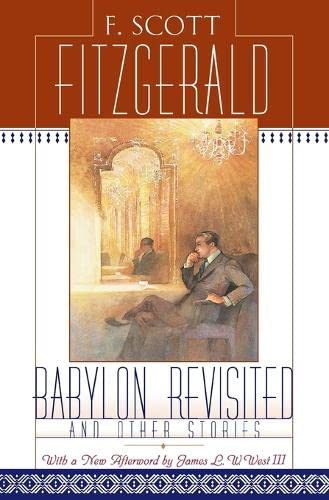
Written between 1920 and 1937, when F. Scott Fitzgerald was at the height of his creative powers, these ten lyric tales represent some of the author's finest fiction. In them, Fitzgerald creates vivid, timeless characters -- a dissatisfied southern belle seeking adventure in the north; the tragic hero of the title story who lost more than money in the stock market; giddy and dissipated young men and women of the interwar period. From the lazy town of Tarleton, Georgia, to the glittering cosmopolitan centers of New York and Paris, Fitzgerald brings the society of the "Lost Generation" to life in these masterfully crafted gems, showcasing the many gifts of one of our most popular writers.
Die Inhaltsangabe kann sich auf eine andere Ausgabe dieses Titels beziehen.
Über die Autorin bzw. den Autor
F. Scott Fitzgerald was born in St. Paul, Minnesota, in 1896. He attended Princeton University, joined the United States Army during World War I, and published his first novel, This Side of Paradise, in 1920. That same year he married Zelda Sayre and for the next decade the couple lived in New York, Paris, and on the Riviera. Fitzgerald’s novels include The Beautiful and Damned, The Great Gatsby, and Tender Is the Night. He died at the age of forty-four while working on The Last Tycoon. Fitzgerald’s fiction has secured his reputation as one of the most important American writers of the twentieth century.
Auszug. © Genehmigter Nachdruck. Alle Rechte vorbehalten.
Babylon Revisited
And Other StoriesBy F. Scott FitzgeraldScribner
Copyright ©1996 F. Scott FitzgeraldAll right reserved.
ISBN: 0684824485
THE DIAMOND AS BIG AS THE RITZ
John T. Unger came from a family that had been well known in Hades -- a small town on the Mississippi River -- for several generations. John's father had held the amateur golf championship through many a heated contest; Mrs. Unger was known "from hot-box to hot-bed," as the local phrase went, for her political addresses; and young John T. Unger, who had just turned sixteen, had danced all the latest dances from New York before he put on long trousers. And now, for a certain time, he was to be away from home. That respect for a New England education which is the bane of all provincial places, which drains them yearly of their most promising young men, had seized upon his parents. Nothing would suit them but that he should go to St. Midas' School near Boston -- Hades was too small to hold their darling and gifted son.
Now in Hades -- as you know if you ever have been there -- the names of the more fashionable preparatory schools and colleges mean very little. The inhabitants have been so long out of the world that, though they make a show of keeping up to date in dress and manners and literature, they depend to a great extent on hearsay, and a function that in Hades would be considered elaborate would doubtless be hailed by a Chicago beef-princess as "perhaps a little tacky."
John T. Unger was on the eve of departure. Mrs. Unger, with maternal fatuity, packed his trunks full of linen suits and electric fans, and Mr. Unger presented his son with an asbestos pocket-book stuffed with money.
"Remember, you are always welcome here," he said. "You can be sure, boy, that we'll keep the home fires burning."
"I know," answered John huskily.
"Don't forget who you are and where you come from," continued his father proudly, "and you can do nothing to harm you. You are an Unger -- from Hades."
So the old man and the young shook hands and John walked away with tears streaming from his eyes. Ten minutes later he had passed outside the city limits, and he stopped to glance back for the last time. Over the gates the old-fashioned Victorian motto seemed strangely attractive to him. His father had tried time and time again to have it changed to something with a little more push and verve about it, such as "Hades -- Your Opportunity," or else a plain "Welcome" sign set over a hearty handshake pricked out in electric lights. The old motto was a little depressing, Mr. Unger had thought -- but now....
So John took his look and then set his face resolutely toward his destination. And, as he turned away, the lights of Hades against the sky seemed full of a warm and passionate beauty.
St. Midas' School is half an hour from Boston in a Rolls-Pierce motor-car. The actual distance will never be known, for no one, except John T. Unger, had ever arrived there save in a Rolls-Pierce and probably no one ever will again. St. Midas' is the most expensive and the most exclusive boys' preparatory school in the world.
John's first two years there passed pleasantly. The fathers of all the boys were money-kings and John spent his summers visiting at fashionable resorts. While he was very fond of all the boys he visited, their fathers struck him as being much of a piece, and in his boyish way he often wondered at their exceeding sameness. When he told them where his home was they would ask jovially, "Pretty hot down there?" and John would muster a faint smile and answer, "It certainly is." His response would have been heartier had they not all made this joke at -- best varying it with, "Is it hot enough for you down there?" which he hated just as much.
In the middle of his second year at school, a quiet, handsome boy named Percy Washington had been put in John's form. The newcomer was pleasant in his manner and exceedingly well dressed even for St. Midas', but for some reason he kept aloof from the other boys.
Copyright © 1960 by Charles Scribner's Sons
Copyright 1920, 1922, 1924, 1925, 1926, 1928, 1931, 1932, 1937 by Charles Scribner's Sons
Copyright renewed 1948, 1950, 1952, 1953, 1954, 1956, 1959, 1960, 1965 by Charles Scribner's Sons
THE RICH BOY
Begin with an individual, and before you know it you find that you have created a type; begin with a type, and you find that you have created -- nothing. That is because we are all queer fish, queerer behind our faces and voices than we want any one to know or than we know ourselves. When I hear a man proclaiming himself an "average, honest, open fellow," I feel pretty sure that he has some definite and perhaps terrible abnormality which he has agreed to conceal -- and his protestation of being average and honest and open is his way of reminding himself of his misprision.
There are no types, no plurals. There is a rich boy, and this is his and not his brothers' story. All my life I have lived among his brothers but this one has been my friend. Besides, if I wrote about his brothers I should have to begin by attacking all the lies that the poor have told about the rich and the rich have told about themselves -- such a wild structure they have erected that when we pick up a book about the rich, some instinct prepares us for unreality. Even the intelligent and impassioned reporters of life have made the country of the rich as unreal as fairy-land.
Let me tell you about the very rich. They are different from you and me. They possess and enjoy early, and it does something to them, makes them soft where we are hard, and cynical where we are trustful, in a way that, unless you were born rich, it is very difficult to understand. They think, deep in their hearts, that they are better than we are because we had to discover the compensations and refuges of life for ourselves. Even when they enter deep into our world or sink below us, they still think that they are better than we are. They are different. The only way I can describe young Anson Hunter is to approach him as if he were a foreigner and cling stubbornly to my point of view. If I accept his for a moment I am lost -- I have nothing to show but a preposterous movie.
II
Anson was the eldest of six children who would some day divide a fortune of fifteen million dollars, and he reached the age of reason -- is it seven? -- at the beginning of the century when daring young women were already gliding along Fifth Avenue in electric "mobiles." In those days he and his brother had an English governess who spoke the language very clearly and crisply and well, so that the two boys grew to speak as she did -- their words and sentences were all crisp and clear and not run together as ours are. They didn't talk exactly like English children but acquired an accent that is peculiar to fashionable people in the city of New York.
In the summer the six children were moved from the house on 71st Street to a big estate in northern Connecticut. It was not a fashionable locality -- Anson's father wanted to delay as long as possible his children's knowledge of that side of life. He was a man somewhat superior to his class, which composed New York society, and to his period, which was the snobbish and formalized vulgarity of the Gilded Age, and he wanted his sons to learn habits of concentration and have sound constitutions and grow up into right-living and successful men. He and his wife kept an eye on them as well as they were able until the two older boys went away to school, but in huge establishments this is difficult -- it was much simpler in...
„Über diesen Titel“ kann sich auf eine andere Ausgabe dieses Titels beziehen.
Suchergebnisse für Babylon Revisited: And Other Stories

Beispielbild für diese ISBN
Babylon Revisted
Verlag:
Prentice Hall (a Pearson Education company), 1996
ISBN 10: 0684824485
ISBN 13: 9780684824482
Gebraucht
Paperback
Anbieter: World of Books (was SecondSale), Montgomery, IL, USA
Verkäuferbewertung 5 von 5 Sternen

Paperback. Zustand: Fair. Written between 1920 and 1937, when F. Scott Fitzgerald was at the height of his creative powers, these ten lyric tales represent some of the author's finest fiction. In them, Fitzgerald creates vivid, timeless characters -- a dissatisfied southern belle seeking adventure in the north; the tragic hero of the title story who lost more than money in the stock market; giddy and dissipated young men and women of the interwar period. From the lazy town of Tarleton, Georgia, to the glittering cosmopolitan centers of New York and Paris, Fitzgerald brings the society of the Lost Generation to life in these masterfully crafted gems, showcasing the many gifts of one of our most popular writers. Artikel-Nr. 00079957982
Gebraucht kaufen
EUR 4,05
Versand gratis
Versand innerhalb von USA
Versand innerhalb von USA
Anzahl: 5 verfügbar
Beispielbild für diese ISBN
Babylon Revisted
Verlag:
Prentice Hall (a Pearson Education company), 1996
ISBN 10: 0684824485
ISBN 13: 9780684824482
Gebraucht
Paperback
Anbieter: World of Books (was SecondSale), Montgomery, IL, USA
Verkäuferbewertung 5 von 5 Sternen
Paperback. Zustand: Good. Written between 1920 and 1937, when F. Scott Fitzgerald was at the height of his creative powers, these ten lyric tales represent some of the author's finest fiction. In them, Fitzgerald creates vivid, timeless characters -- a dissatisfied southern belle seeking adventure in the north; the tragic hero of the title story who lost more than money in the stock market; giddy and dissipated young men and women of the interwar period. From the lazy town of Tarleton, Georgia, to the glittering cosmopolitan centers of New York and Paris, Fitzgerald brings the society of the Lost Generation to life in these masterfully crafted gems, showcasing the many gifts of one of our most popular writers. Artikel-Nr. 00089254077
Gebraucht kaufen
EUR 4,05
Versand gratis
Versand innerhalb von USA
Versand innerhalb von USA
Anzahl: 14 verfügbar
Beispielbild für diese ISBN
Babylon Revisited: And Other Stories
Verlag:
Scribner (edition Reprint), 1996
ISBN 10: 0684824485
ISBN 13: 9780684824482
Gebraucht
Paperback
Anbieter: BooksRun, Philadelphia, PA, USA
Verkäuferbewertung 5 von 5 Sternen
Paperback. Zustand: Very Good. Reprint. It's a well-cared-for item that has seen limited use. The item may show minor signs of wear. All the text is legible, with all pages included. It may have slight markings and/or highlighting. Artikel-Nr. 0684824485-11-1
Gebraucht kaufen
EUR 4,54
Versand gratis
Versand innerhalb von USA
Versand innerhalb von USA
Anzahl: 1 verfügbar
Beispielbild für diese ISBN
Babylon Revisited: And Other Stories
Anbieter: Wonder Book, Frederick, MD, USA
Verkäuferbewertung 5 von 5 Sternen
Zustand: Good. Good condition. Artikel-Nr. E03H-00732
Gebraucht kaufen
EUR 4,77
Versand gratis
Versand innerhalb von USA
Versand innerhalb von USA
Anzahl: 1 verfügbar
Foto des Verkäufers
Babylon Revisited: And Other Stories
Anbieter: Dream Books Co., Denver, CO, USA
Verkäuferbewertung 5 von 5 Sternen
Zustand: good. Gently used with minimal wear on the corners and cover. A few pages may contain light highlighting or writing, but the text remains fully legible. Dust jacket may be missing, and supplemental materials like CDs or codes may not be included. May be ex-library with library markings. Ships promptly! Artikel-Nr. DBV.0684824485.G
Gebraucht kaufen
EUR 5,09
Versand gratis
Versand innerhalb von USA
Versand innerhalb von USA
Anzahl: 1 verfügbar
Beispielbild für diese ISBN
Babylon Revisited: And Other Stories
Anbieter: ThriftBooks-Atlanta, AUSTELL, GA, USA
Verkäuferbewertung 5 von 5 Sternen
Paperback. Zustand: Good. No Jacket. Former library book; Pages can have notes/highlighting. Spine may show signs of wear. ~ ThriftBooks: Read More, Spend Less. Artikel-Nr. G0684824485I3N10
Gebraucht kaufen
EUR 5,96
Versand gratis
Versand innerhalb von USA
Versand innerhalb von USA
Anzahl: 1 verfügbar
Beispielbild für diese ISBN
Babylon Revisited: And Other Stories
Anbieter: ThriftBooks-Atlanta, AUSTELL, GA, USA
Verkäuferbewertung 5 von 5 Sternen
Paperback. Zustand: Fair. No Jacket. Readable copy. Pages may have considerable notes/highlighting. ~ ThriftBooks: Read More, Spend Less. Artikel-Nr. G0684824485I5N00
Gebraucht kaufen
EUR 5,96
Versand gratis
Versand innerhalb von USA
Versand innerhalb von USA
Anzahl: 1 verfügbar
Beispielbild für diese ISBN
Babylon Revisited: And Other Stories
Anbieter: ThriftBooks-Atlanta, AUSTELL, GA, USA
Verkäuferbewertung 5 von 5 Sternen
Paperback. Zustand: Good. No Jacket. Pages can have notes/highlighting. Spine may show signs of wear. ~ ThriftBooks: Read More, Spend Less. Artikel-Nr. G0684824485I3N00
Gebraucht kaufen
EUR 5,96
Versand gratis
Versand innerhalb von USA
Versand innerhalb von USA
Anzahl: 1 verfügbar
Beispielbild für diese ISBN
Babylon Revisited : And Other Stories
Anbieter: Better World Books, Mishawaka, IN, USA
Verkäuferbewertung 5 von 5 Sternen
Zustand: Very Good. Reprint. Pages intact with possible writing/highlighting. Binding strong with minor wear. Dust jackets/supplements may not be included. Stock photo provided. Product includes identifying sticker. Better World Books: Buy Books. Do Good. Artikel-Nr. 4022487-6
Gebraucht kaufen
EUR 6,18
Versand gratis
Versand innerhalb von USA
Versand innerhalb von USA
Anzahl: 1 verfügbar
Beispielbild für diese ISBN
Babylon Revisited : And Other Stories
Anbieter: Better World Books, Mishawaka, IN, USA
Verkäuferbewertung 5 von 5 Sternen
Zustand: Very Good. Reprint. Former library copy. Pages intact with possible writing/highlighting. Binding strong with minor wear. Dust jackets/supplements may not be included. Includes library markings. Stock photo provided. Product includes identifying sticker. Better World Books: Buy Books. Do Good. Artikel-Nr. 10911300-6
Gebraucht kaufen
EUR 6,18
Versand gratis
Versand innerhalb von USA
Versand innerhalb von USA
Anzahl: 1 verfügbar