
Verwandte Artikel zu The Collected Poems of W.B. Yeats: Revised Second Edition
Inhaltsangabe
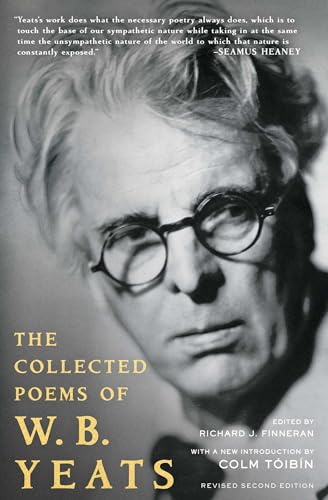
Breathtaking in range, The Collected Poems of W. B. Yeats includes all of the poems authorized by Yeats for inclusion and encompasses the entire arc of his career: reworkings of ancient Irish myths and legends, meditations on youth and old age, whimsical songs of love, and somber poems of life in a nation torn by war and uprising.
The Collected Poems of W. B. Yeats includes all of the poems authorized by Yeats for inclusion in his standard canon. Breathtaking in range, it encompasses the entire arc of his career, from luminous reworkings of ancient Irish myths and legends to passionate meditations on the demands and rewards of youth and old age, from exquisite, occasionally whimsical songs of love, nature, and art to somber and angry poems of life in a nation torn by war and uprising. In observing the development of rich and recurring images and themes over the course of his body of work, we can trace the quest of this century's greatest poet to unite intellect and artistry in a single magnificent vision.
Revised and corrected, this edition includes Yeats's own notes on his poetry, complemented by explanatory notes from esteemed Yeats scholar Richard J. Finneran. The Collected Poems of W. B. Yeats is the most comprehensive edition of one of the world's most beloved poets available in paperback.
Die Inhaltsangabe kann sich auf eine andere Ausgabe dieses Titels beziehen.
Über die Autorinnen und Autoren
William Butler Yeats is generally considered to be Ireland’s greatest poet, living or dead, and one of the most important literary figures of the twentieth century. He was awarded the Nobel Prize in Literature in 1923.
The late Richard J. Finneran was general editor, with George Mills Harper, of The Collected Works of W. B. Yeats for many years; series editor of The Poems in the Cornell Yeats; and editor of Yeats: An Annual of Critical and Textual Studies, among other works. He held the Hodges Chair of Excellence at the University of Tennessee, Knoxville; was a past president of the South Atlantic Modern Language Association; and served as executive director of the Society for Textual Scholarship.
Auszug. © Genehmigter Nachdruck. Alle Rechte vorbehalten.
Chapter 1
Crossways
1 The Song of the Happy Shepherd
The woods of Arcady are dead,
And over is their antique joy;
Of old the world on dreaming fed;
Grey Truth is now her painted toy;
Yet still she turns her restless head:
But O, sick children of the world,
Of all the many changing things
In dreary dancing past us whirled,
To the cracked tune that Chronos sings,
Words alone are certain good.
Where are now the warring kings,
Word be-mockers? -- By the Rood
Where are now the warring kings?
An idle word is now their glory,
By the stammering schoolboy said,
Reading some entangled story:
The kings of the old time are dead;
The wandering earth herself may be
Only a sudden flaming word,
In clanging space a moment heard,
Troubling the endless reverie.
Then nowise worship dusty deeds,
Nor seek, for this is also sooth,
To hunger fiercely after truth,
Lest all thy toiling only breeds
New dreams, new dreams; there is no truth
Saving in thine own heart. Seek, then,
No learning from the starry men,
Who follow with the optic glass
The whirling ways of stars that pass --
Seek, then, for this is also sooth,
No word of theirs -- the cold star-bane
Has cloven and rent their hearts in twain,
And dead is all their human truth.
Go gather by the humming sea
Some twisted, echo-harbouring shell,
And to its lips thy story tell,
And they thy comforters will be,
Rewarding in melodious guile
Thy fretful words a little while,
Till they shall singing fade in ruth
And die a pearly brotherhood;
For words alone are certain good:
Sing, then, for this is also sooth.
I must be gone: there is a grave
Where daffodil and lily wave,
And I would please the hapless faun,
Buried under the sleepy ground,
With mirthful songs before the dawn.
His shouting days with mirth were crowned;
And still I dream he treads the lawn,
Walking ghostly in the dew,
Pierced by my glad singing through,
My songs of old earth's dreamy youth:
But ah! she dreams not now; dream thou!
For fair are poppies on the brow:
Dream, dream, for this is also sooth.
2 The Sad Shepherd
There was a man whom Sorrow named his friend,
And he, of his high comrade Sorrow dreaming,
Went walking with slow steps along the gleaming
And humming sands, where windy surges wend:
And he called loudly to the stars to bend
From their pale thrones and comfort him, but they
Among themselves laugh on and sing alway:
ardAnd then the man whom Sorrow named his friend
Cried out, Dim sea, hear my most piteous story!
The sea swept on and cried her old cry still,
Rolling along in dreams from hill to hill.
He fled the persecution of her glory
And, in a far-off, gentle valley stopping,
Cried all his story to the dewdrops glistening.
But naught they heard, for they are always listening,
The dewdrops, for the sound of their own dropping.
And then the man whom Sorrow named his friend
Sought once again the shore, and found a shell,
And thought, I will my heavy story tell
Till my own words, re-echoing, shall send
Their sadness through a hollow, pearly heart;
And my own tale again for me shall sing,
And my own whispering words be comforting,
And lo! my ancient burden may depart.
Then he sang softly nigh the pearly rim;
But the sad dweller by the sea-ways lone
Changed all he sang to inarticulate moan
Among her wildering whirls, forgetting him.
3 The Cloak, the Boat, and the Shoes
'What do you make so fair and bright?'
'I make the cloak of Sorrow:
O lovely to see in all men's sight
Shall be the cloak of Sorrow,
In all men's sight.'
'What do you build with sails for flight?'
'I build a boat for Sorrow:
O swift on the seas all day and night
Saileth the rover Sorrow,
All day and night.'
'What do you weave with wool so white?'
'I weave the shoes of Sorrow:
Soundless shall be the footfall light
In all men's ears of Sorrow,
Sudden and light.'
4 Anashuya and Vijaya
A little Indian temple in the Golden Age. Around it a garden; around that the forest. Anashuya, the young priestess, kneeling Within the temple.
Anashuya. Send peace on all the lands and flickering corn. --
O, may tranquillity walk by his elbow
When wandering in the forest, if he love
No other. -- Hear, and may the indolent flocks
Be plentiful. -- And if he love another,
May panthers end him. -- Hear, and load our king
With wisdom hour by hour. -- May we two stand,
When we are dead, beyond the setting suns,
A little from the other shades apart,
With mingling hair, and play upon one lute.
Vijaya [entering and throwing a lily at her]. Hail! hail, my Anashuya.
Anashuya. No: be still.
I, priestess of this temple, offer up
Prayers for the land.
Vijaya. I will wait here, Amrita.
Anashuya. By mighty Brahma's ever-rustling robe,
Who is Amrita? Sorrow of all sorrows!
Another fills your mind.
Vijaya. My mother's name.
Anashuya [sings, coming out of the temple].
A sad, sad thought went by me slowly:
Sigh, O you little stars! O sigh and shake your blue apparel!
The sad, sad thought has gone from me now wholly:
Sing, O you little stars! O sing and raise your rapturous carol
To mighty Brahma, he who made you many as the sands,
And laid you on the gates of evening with his quiet hands.
[Sits down on the steps of the temple.]
Vijaya, I have brought my evening rice;
The sun has laid his chin on the grey wood,
Weary, with all his poppies gathered round him.
Vijaya. The hour when Kama, full of sleepy laughter,
Rises, and showers abroad his fragrant arrows,
Piercing the twilight with their murmuring barbs.
Anashuya. See how the sacred old flamingoes come,
Painting with shadow all the marble steps:
Aged and wise, they seek their wonted perches
Within the temple, devious walking, made
To wander by their melancholy minds.
Yon tall one eyes my supper; chase him away,
Far, far away. I named him after you.
He is a famous fisher; hour by hour
He ruffles with his bill the minnowed streams.
Ah! there he snaps my rice. I told you so.
Now cuff him off. He's off! A kiss for you,
Because you saved my rice. Have you no thanks?
Vijaya [sings]. Sing you of her, O first few stars,
Whom Brahma, touching with his finger, praises, for you hold
The van of wandering quiet; ere you be too calm and old,
Sing, turning in your cars,
Sing, till you raise your hands and sigh, and from your car-heads peer,
With all your whirling hair, and drop many an azure tear.
Anashuya. What know the pilots of the stars of tears?
Vijaya. Their faces are all worn, and in their eyes
Flashes the fire of sadness, for they see
The icicles that famish all the North,
Where men lie frozen in the glimmering snow;
And in the flaming forests cower the lion
And lioness, with all their whimpering cubs;
And, ever pacing on the verge of things,
The phantom, Beauty, in a mist of...
„Über diesen Titel“ kann sich auf eine andere Ausgabe dieses Titels beziehen.
Suchergebnisse für The Collected Poems of W.B. Yeats: Revised Second Edition

Beispielbild für diese ISBN
The Collected Poems of W.B. Yeats
Verlag:
Prentice Hall (a Pearson Education company), 1996
ISBN 10: 0684807319
ISBN 13: 9780684807317
Gebraucht
Paperback
Anbieter: World of Books (was SecondSale), Montgomery, IL, USA
Verkäuferbewertung 5 von 5 Sternen

Paperback. Zustand: Very Good. Breathtaking in range, The Collected Poems of W. B. Yeats includes all of the poems authorized by Yeats for inclusion and encompasses the entire arc of his career: reworkings of ancient Irish myths and legends, meditations on youth and old age, whimsical songs of love, and somber poems of life in a nation torn by war and uprising. The Collected Poems of W. B. Yeats includes all of the poems authorized by Yeats for inclusion in his standard canon. Breathtaking in range, it encompasses the entire arc of his career, from luminous reworkings of ancient Irish myths and legends to passionate meditations on the demands and rewards of youth and old age, from exquisite, occasionally whimsical songs of love, nature, and art to somber and angry poems of life in a nation torn by war and uprising. In observing the development of rich and recurring images and themes over the course of his body of work, we can trace the quest of this century's greatest poet to unite intellect and artistry in a single magnificent vision. Revised and corrected, this edition includes Yeats's own notes on his poetry, complemented by explanatory notes from esteemed Yeats scholar Richard J. Finneran. The Collected Poems of W. B. Yeats is the most comprehensive edition of one of the world's most beloved poets available in paperback. Artikel-Nr. CIN0684807319VG
Gebraucht kaufen
EUR 5,74
Versand gratis
Versand innerhalb von USA
Versand innerhalb von USA
Anzahl: 1 verfügbar
Beispielbild für diese ISBN
The Collected Poems of W.B. Yeats
Verlag:
Prentice Hall (a Pearson Education company), 1996
ISBN 10: 0684807319
ISBN 13: 9780684807317
Gebraucht
Paperback
Anbieter: World of Books (was SecondSale), Montgomery, IL, USA
Verkäuferbewertung 5 von 5 Sternen
Paperback. Zustand: Fair. Breathtaking in range, The Collected Poems of W. B. Yeats includes all of the poems authorized by Yeats for inclusion and encompasses the entire arc of his career: reworkings of ancient Irish myths and legends, meditations on youth and old age, whimsical songs of love, and somber poems of life in a nation torn by war and uprising. The Collected Poems of W. B. Yeats includes all of the poems authorized by Yeats for inclusion in his standard canon. Breathtaking in range, it encompasses the entire arc of his career, from luminous reworkings of ancient Irish myths and legends to passionate meditations on the demands and rewards of youth and old age, from exquisite, occasionally whimsical songs of love, nature, and art to somber and angry poems of life in a nation torn by war and uprising. In observing the development of rich and recurring images and themes over the course of his body of work, we can trace the quest of this century's greatest poet to unite intellect and artistry in a single magnificent vision. Revised and corrected, this edition includes Yeats's own notes on his poetry, complemented by explanatory notes from esteemed Yeats scholar Richard J. Finneran. The Collected Poems of W. B. Yeats is the most comprehensive edition of one of the world's most beloved poets available in paperback. Artikel-Nr. 00105965839
Gebraucht kaufen
EUR 5,74
Versand gratis
Versand innerhalb von USA
Versand innerhalb von USA
Anzahl: 9 verfügbar
Beispielbild für diese ISBN
The Collected Poems of W.B. Yeats
Verlag:
Prentice Hall (a Pearson Education company), 1996
ISBN 10: 0684807319
ISBN 13: 9780684807317
Gebraucht
Paperback
Anbieter: World of Books (was SecondSale), Montgomery, IL, USA
Verkäuferbewertung 5 von 5 Sternen
Paperback. Zustand: Good. Breathtaking in range, The Collected Poems of W. B. Yeats includes all of the poems authorized by Yeats for inclusion and encompasses the entire arc of his career: reworkings of ancient Irish myths and legends, meditations on youth and old age, whimsical songs of love, and somber poems of life in a nation torn by war and uprising. The Collected Poems of W. B. Yeats includes all of the poems authorized by Yeats for inclusion in his standard canon. Breathtaking in range, it encompasses the entire arc of his career, from luminous reworkings of ancient Irish myths and legends to passionate meditations on the demands and rewards of youth and old age, from exquisite, occasionally whimsical songs of love, nature, and art to somber and angry poems of life in a nation torn by war and uprising. In observing the development of rich and recurring images and themes over the course of his body of work, we can trace the quest of this century's greatest poet to unite intellect and artistry in a single magnificent vision. Revised and corrected, this edition includes Yeats's own notes on his poetry, complemented by explanatory notes from esteemed Yeats scholar Richard J. Finneran. The Collected Poems of W. B. Yeats is the most comprehensive edition of one of the world's most beloved poets available in paperback. Artikel-Nr. 00110897648
Gebraucht kaufen
EUR 5,74
Versand gratis
Versand innerhalb von USA
Versand innerhalb von USA
Anzahl: 5 verfügbar
Beispielbild für diese ISBN
The Collected Poems of W.B. Yeats
Verlag:
Scribner (edition 2nd Revised), 1996
ISBN 10: 0684807319
ISBN 13: 9780684807317
Gebraucht
Paperback
Anbieter: BooksRun, Philadelphia, PA, USA
Verkäuferbewertung 5 von 5 Sternen
Paperback. Zustand: Fair. 2nd Revised. The item might be beaten up but readable. May contain markings or highlighting, as well as stains, bent corners, or any other major defect, but the text is not obscured in any way. Artikel-Nr. 0684807319-7-1
Gebraucht kaufen
EUR 5,74
Versand gratis
Versand innerhalb von USA
Versand innerhalb von USA
Anzahl: 1 verfügbar
Foto des Verkäufers
The Collected Poems of W.B. Yeats
Anbieter: Dream Books Co., Denver, CO, USA
Verkäuferbewertung 5 von 5 Sternen
Zustand: good. Gently used with minimal wear on the corners and cover. A few pages may contain light highlighting or writing, but the text remains fully legible. Dust jacket may be missing, and supplemental materials like CDs or codes may not be included. May be ex-library with library markings. Ships promptly! Artikel-Nr. DBV.0684807319.G
Gebraucht kaufen
EUR 6,03
Versand gratis
Versand innerhalb von USA
Versand innerhalb von USA
Anzahl: 4 verfügbar
Beispielbild für diese ISBN
The Collected Poems of W. B. Yeats : Revised Second Edition
Anbieter: Better World Books, Mishawaka, IN, USA
Verkäuferbewertung 5 von 5 Sternen
Zustand: Good. Pages intact with minimal writing/highlighting. The binding may be loose and creased. Dust jackets/supplements are not included. Stock photo provided. Product includes identifying sticker. Better World Books: Buy Books. Do Good. Artikel-Nr. 4287930-6
Gebraucht kaufen
EUR 8,83
Versand gratis
Versand innerhalb von USA
Versand innerhalb von USA
Anzahl: 5 verfügbar
Beispielbild für diese ISBN
The Collected Poems of W. B. Yeats : Revised Second Edition
Anbieter: Better World Books: West, Reno, NV, USA
Verkäuferbewertung 5 von 5 Sternen
Zustand: Good. Pages intact with minimal writing/highlighting. The binding may be loose and creased. Dust jackets/supplements are not included. Stock photo provided. Product includes identifying sticker. Better World Books: Buy Books. Do Good. Artikel-Nr. 4287930-6
Gebraucht kaufen
EUR 8,83
Versand gratis
Versand innerhalb von USA
Versand innerhalb von USA
Anzahl: 1 verfügbar
Beispielbild für diese ISBN
The Collected Poems of W. B. Yeats : Revised Second Edition
Anbieter: Better World Books, Mishawaka, IN, USA
Verkäuferbewertung 5 von 5 Sternen
Zustand: Good. Former library copy. Pages intact with minimal writing/highlighting. The binding may be loose and creased. Dust jackets/supplements are not included. Includes library markings. Stock photo provided. Product includes identifying sticker. Better World Books: Buy Books. Do Good. Artikel-Nr. 2419730-6
Gebraucht kaufen
EUR 8,83
Versand gratis
Versand innerhalb von USA
Versand innerhalb von USA
Anzahl: 1 verfügbar
Beispielbild für diese ISBN
The Collected Poems of W. B. Yeats : Revised Second Edition
Anbieter: Better World Books, Mishawaka, IN, USA
Verkäuferbewertung 5 von 5 Sternen
Zustand: Very Good. Pages intact with possible writing/highlighting. Binding strong with minor wear. Dust jackets/supplements may not be included. Stock photo provided. Product includes identifying sticker. Better World Books: Buy Books. Do Good. Artikel-Nr. 4858854-6
Gebraucht kaufen
EUR 8,83
Versand gratis
Versand innerhalb von USA
Versand innerhalb von USA
Anzahl: 3 verfügbar
Beispielbild für diese ISBN
The Collected Poems of W.B. Yeats
Anbieter: WorldofBooks, Goring-By-Sea, WS, Vereinigtes Königreich
Verkäuferbewertung 5 von 5 Sternen
Paperback. Zustand: Fair. A readable copy of the book which may include some defects such as highlighting and notes. Cover and pages may be creased and show discolouration. Artikel-Nr. GOR005977904
Gebraucht kaufen
EUR 24,72
EUR 6,72 Versand
Versand von Vereinigtes Königreich nach USA
Versand von Vereinigtes Königreich nach USA
Anzahl: 1 verfügbar