
Verwandte Artikel zu Fury: A Novel (Modern Library Paperbacks)
Inhaltsangabe
A NEW YORK TIMES NOTABLE BOOK
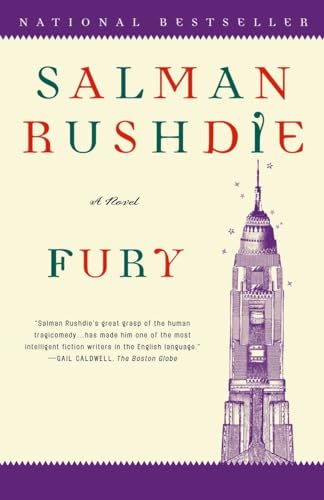
“Salman Rushdie’s great grasp of the human tragicomedy– its dimensions, its absurdities and horrors–has made him one of the most intelligent fiction writers in the English language.”—Gail Caldwell, The Boston Globe
“Fury is a profoundly, ecstatically affirmative work of fiction. It reaffirms Rushdie’s standing . . . at the very front rank of contemporary literary novelists.”—Baltimore Sun
Malik Solanka, historian of ideas and world-famous dollmaker, steps out of his life one day, abandons his family in London without a word of explanation, and flees for New York. There’s a fury within him, and he fears he has become dangerous to those he loves. He arrives in New York at a time of unprecedented plenty, in the highest hour of America’s wealth and power, seeking to “erase” himself. But fury is all around him. An astonishing work of explosive energy, Fury is by turns a pitiless and pitch-black comedy, a love story of mesmerizing force, and a disturbing inquiry into the darkest side of human nature.
“Rushdie’s ideas–about society, about culture, about politics–are embedded in his stories and in the interlocking momentum with which he tells them. . . . All of Rushdie’s synthesizing energy, the way he brings together ancient myth and old story, contemporary incident and archetypal emotion, transfigures reason into a waking dream.”—Los Angeles Times Book Review
“Well, here it is, then, his first 3-D, full-volume American novel, finger-snapping, wildly stupefying, often slyly funny, red-blooded and red-toothed. [Fury] twinkles brightly in tragicomic passages.”—The Miami Herald
Die Inhaltsangabe kann sich auf eine andere Ausgabe dieses Titels beziehen.
Über die Autorin bzw. den Autor
Salman Rushdie is the author of fourteen previous novels, including Midnight’s Children (for which he won the Booker Prize and the Best of the Booker), Shame, The Satanic Verses, The Moor’s Last Sigh, and Quichotte, all of which have been shortlisted for the Booker Prize; a collection of stories, East, West; a memoir, Joseph Anton; a work of reportage, The Jaguar Smile; and three collections of essays, most recently Languages of Truth. His many awards include the Whitbread Prize for Best Novel, which he won twice; the PEN/Allen Foundation Literary Service Award; the National Arts Award; the French Prix du Meilleur Livre Étranger; the European Union’s Aristeion Prize for Literature; the Budapest Grand Prize for Literature; and the Italian Premio Grinzane Cavour. He is a member of the American Academy of Arts and Letters and a fellow of the American Academy of Arts and Sciences, and he is a Distinguished Writer in Residence at New York University. He is a former president of PEN America. His books have been translated into over forty languages.
Von der hinteren Coverseite
Malik Solanka, historian of ideas and world-famous dollmaker, steps out of his life one day, abandons his family in London without a word of explanation, and flees for New York. There's a fury within him, and he fears he has become dangerous to those he loves. He arrives in New York at a time of unprecedented plenty, in the highest hour of America's wealth and power, seeking to "erase" himself. But fury is all around him.
Fury is a work of explosive energy, at once a pitiless and pitch-black comedy, a profoundly disturbing inquiry into the darkest side of human nature, and a love story of mesmerizing force. It is also an astonishing portrait of New York. Not since the Bombay of "Midnight's Children have a time and place been so intensely and accurately captured in a novel.
Auszug. © Genehmigter Nachdruck. Alle Rechte vorbehalten.
Professor Malik Solanka, retired historian of ideas, irascible dollmaker, and since his recent fifty-fifth birthday celibate and solitary by his own (much criticized) choice, in his silvered years found himself living in a golden age. Outside his window a long, humid summer, the first hot season of the third millennium, baked and perspired. The city boiled with money. Rents and property values had never been higher, and in the garment industry it was widely held that fashion had never been so fashionable. New restaurants opened every hour. Stores, dealerships, galleries struggled to satisfy the skyrocketing demand for ever more recherch produce: limited-edition olive oils, three-hundred-dollar corkscrews, customized Humvees, the latest anti-virus software, escort services featuring contortionists and twins, video installations, outsider art, featherlight shawls made from the chin-fluff of extinct mountain goats. So many people were doing up their apartments that supplies of high-grade fixtures and fittings were at a premium. There were waiting lists for baths, doorknobs, imported hardwoods, antiqued fireplaces, bidets, marble slabs. In spite of the recent falls in the value of the Nasdaq index and the value of Amazon stock, the new technology had the city by the ears: the talk was still of start-ups, IPOs, interactivity, the unimaginable future that had just begun to begin. The future was a casino, and everyone was gambling, and everyone expected to win.
On Professor Solanka’s street, well-heeled white youths lounged in baggy garments on roseate stoops, stylishly simulating indigence while they waited for the billionairedom that would surely be along sometime soon. There was a tall, green-eyed young woman with steeply slanting Central European cheekbones who particularly caught his sexually abstinent but still roving eye. Her spiky strawberry-blond hair stuck out clown-fashion from under a black D’Angelo Voodoo baseball cap, her lips were full and sardonic, and she giggled rudely behind a perfunctory palm as old-world, dandyish, cane-twirling little Solly Solanka in straw Panama hat and cream linen suit went by on his afternoon walk. Solly: the college identity he’d never cared for but had not entirely managed to lose.
“Hey, sir? Sir, excuse me?” The blonde was calling out to him, in imperious tones that insisted on a reply. Her satraps became watchful, like a Praetorian guard. She was breaking a rule of big-city life, breaking it brazenly, sure of her power, confident of her turf and posse, fearing nothing. This was just pretty-girl chutzpah; no big deal. Professor Solanka paused and turned to face the lounging goddess of the threshold, who proceeded, unnervingly, to interview him. “You walk a lot. I mean, five or six times a day, I see you walking someplace. I’m sitting here, I see you come, I see you go, but there’s no dog, and it’s not like you come back with lady friends or produce. Also, the hours are strange, it can’t be that you’re going to a job. So I’m asking myself, Why is he always out walking alone? There’s a guy with a lump of concrete hitting women on the head across town, maybe you heard that, but if I thought you were a weirdo, I wouldn’t be talking to you. And you have a British accent, which makes you interesting too, right. A few times there we even followed you, but you weren’t going anywhere, just wandering, just covering ground. I got the impression you were looking for something, and it crossed my mind to ask you what that might be. Just being friendly, sir, just being neighborly. You’re kind of a mystery. To me you are, anyhow.”
Sudden anger rose in him. “What I’m looking for,” he barked, “is to be left in peace.” His voice trembled with a rage far bigger than her intrusion merited, the rage which shocked him whenever it coursed through his nervous system, like a flood. Hearing his vehemence, the young woman recoiled, retreating into silence.
“Man,” said the largest, most protective of the Praetorian guard, her lover, no doubt, and her peroxide-blond centurion, “for an apostle of peace you sure are filled up with war.”
She reminded him of someone, but he couldn’t remember whom, and the little failure of memory, the “senior moment,” nagged at him infuriatingly. Luckily she wasn’t there anymore, no one was, when he returned from the Caribbean carnival damp-hatted and soaked through after being caught unprepared by a squall of hard, hot rain. Passing the Congregation Shearith Israel on Central Park West (a white whale of a building with a triangular pediment supported by four count ’em four massive Corinthian columns), Professor Solanka scurrying through the downpour remembered the newly bat-mitzvahed thirteen-year-old girl he’d glimpsed through the side door, waiting knife in hand for the ceremony of the blessing of the bread. No religion offers a ceremony of the Counting of the Blessings, mused Professor Solanka: you’d think the Anglicans, at least, would have come up with one of those. The girl’s face glowed through the gathered gloom, its young round features utterly confident of achieving the highest expectations. Yes, a blessed time, if you cared to use words like “blessed”; which Solanka, a skeptic, did not.
On nearby Amsterdam Avenue there was a summer block party, a street market, doing good business in spite of the showers. Professor Solanka surmised that in the greater part of the planet the goods piled high on these cut-price barrows would have filled the shelves and display cabinets of the most exclusive little boutiques and upper-echelon department stores. In all of India, China, Africa, and much of the southern American continent, those who had the leisure and wallet for fashion—or more simply, in the poorer latitudes, for the mere acquisition of things—would have killed for the street merchandise of Manhattan, as also for the cast-off clothing and soft furnishings to be found in the opulent thrift stores, the reject china and designer-label bargains to be found in downtown discount emporia. America insulted the rest of the planet, thought Malik Solanka in his old-fashioned way, by treating such bounty with the shoulder-shrugging casualness of the inequitably wealthy. But New York in this time of plenty had become the object and goal of the world’s concupiscence and lust, and the “insult” only made the rest of the planet more desirous than ever. On Central Park West the horse-drawn carriages moved up and down. The jingling of the bells on the harnesses sounded like cash in hand.
The season’s hit movie portrayed the decadence of Caesar Joaquin Phoenix’s imperial Rome, in which honor and dignity, not to mention life-and-death actions and distractions, were to be found only in the computer-regenerated illusion of the great gladiatorial arena, the Flavian Amphitheatre or Colosseum. In New York, too, there were circuses as well as bread: a musical about lovable lions, a bike race on Fifth, Springsteen at the Garden with a song about the forty-one police gunshots that killed innocent Amadou Diallo, the police union’s threat to boycott the Boss’s concert, Hillary vs. Rudy, a cardinal’s funeral, a movie about lovable dinosaurs, the motorcades of two largely interchangeable and certainly unlovable presidential candidates (Gush, Bore), Hillary vs. Rick, the lightning storms that hit the Springsteen concert and Shea Stadium, a cardinal’s inauguration, a cartoon about lovable British chickens, and even a literary festival; plus a series of “exuberant” parades celebrating the city’s many ethnic, national, and sexual subcultures and ending (sometimes) in knifings and assaults on...
„Über diesen Titel“ kann sich auf eine andere Ausgabe dieses Titels beziehen.
Suchergebnisse für Fury: A Novel (Modern Library Paperbacks)

Beispielbild für diese ISBN
Fury A Novel Modern Library
Verlag:
Random House Trade Paperbacks, 2002
ISBN 10: 0679783504
ISBN 13: 9780679783503
Gebraucht
Softcover
Anbieter: World of Books (was SecondSale), Montgomery, IL, USA
Verkäuferbewertung 5 von 5 Sternen

Zustand: Good. Item in good condition. Textbooks may not include supplemental items i.e. CDs, access codes etc. Artikel-Nr. 00089253733
Gebraucht kaufen
EUR 3,57
Versand gratis
Versand innerhalb von USA
Versand innerhalb von USA
Anzahl: 10 verfügbar
Beispielbild für diese ISBN
Fury A Novel Modern Library
Verlag:
Random House Trade Paperbacks, 2002
ISBN 10: 0679783504
ISBN 13: 9780679783503
Gebraucht
Softcover
Anbieter: World of Books (was SecondSale), Montgomery, IL, USA
Verkäuferbewertung 5 von 5 Sternen
Zustand: Acceptable. Item in acceptable condition! Textbooks may not include supplemental items i.e. CDs, access codes etc. Artikel-Nr. 00100749566
Gebraucht kaufen
EUR 3,57
Versand gratis
Versand innerhalb von USA
Versand innerhalb von USA
Anzahl: 3 verfügbar
Beispielbild für diese ISBN
Fury A Novel Modern Library
Verlag:
Random House Trade Paperbacks, 2002
ISBN 10: 0679783504
ISBN 13: 9780679783503
Gebraucht
Softcover
Anbieter: World of Books (was SecondSale), Montgomery, IL, USA
Verkäuferbewertung 5 von 5 Sternen
Zustand: Very Good. Item in very good condition! Textbooks may not include supplemental items i.e. CDs, access codes etc. Artikel-Nr. 00109530267
Gebraucht kaufen
EUR 3,57
Versand gratis
Versand innerhalb von USA
Versand innerhalb von USA
Anzahl: 2 verfügbar
Beispielbild für diese ISBN
Fury: A Novel (Modern Library)
Verlag:
Random House Trade Paperbacks, 2002
ISBN 10: 0679783504
ISBN 13: 9780679783503
Gebraucht
Softcover
Anbieter: World of Books (was SecondSale), Montgomery, IL, USA
Verkäuferbewertung 5 von 5 Sternen
Zustand: Acceptable. Item in very good condition! Textbooks may not include supplemental items i.e. CDs, access codes etc. Artikel-Nr. 00076798520
Gebraucht kaufen
EUR 3,62
Versand gratis
Versand innerhalb von USA
Versand innerhalb von USA
Anzahl: 1 verfügbar
Beispielbild für diese ISBN
Fury: A Novel (Modern Library)
Verlag:
Random House Trade Paperbacks (edition Reprint), 2002
ISBN 10: 0679783504
ISBN 13: 9780679783503
Gebraucht
Paperback
Anbieter: BooksRun, Philadelphia, PA, USA
Verkäuferbewertung 5 von 5 Sternen
Paperback. Zustand: Very Good. Reprint. It's a well-cared-for item that has seen limited use. The item may show minor signs of wear. All the text is legible, with all pages included. It may have slight markings and/or highlighting. Artikel-Nr. 0679783504-11-1
Gebraucht kaufen
EUR 4,36
Versand gratis
Versand innerhalb von USA
Versand innerhalb von USA
Anzahl: 1 verfügbar
Beispielbild für diese ISBN
Fury : A Novel
Verlag:
Random House Publishing Group, 2002
ISBN 10: 0679783504
ISBN 13: 9780679783503
Gebraucht
Softcover
Anbieter: Better World Books: West, Reno, NV, USA
Verkäuferbewertung 5 von 5 Sternen
Zustand: Very Good. Reprint. Pages intact with possible writing/highlighting. Binding strong with minor wear. Dust jackets/supplements may not be included. Stock photo provided. Product includes identifying sticker. Better World Books: Buy Books. Do Good. Artikel-Nr. GRP96091148
Gebraucht kaufen
EUR 6,03
Versand gratis
Versand innerhalb von USA
Versand innerhalb von USA
Anzahl: 1 verfügbar
Beispielbild für diese ISBN
Fury : A Novel
Verlag:
Random House Publishing Group, 2002
ISBN 10: 0679783504
ISBN 13: 9780679783503
Gebraucht
Softcover
Anbieter: Better World Books, Mishawaka, IN, USA
Verkäuferbewertung 5 von 5 Sternen
Zustand: Good. Reprint. Pages intact with minimal writing/highlighting. The binding may be loose and creased. Dust jackets/supplements are not included. Stock photo provided. Product includes identifying sticker. Better World Books: Buy Books. Do Good. Artikel-Nr. GRP94926526
Gebraucht kaufen
EUR 6,03
Versand gratis
Versand innerhalb von USA
Versand innerhalb von USA
Anzahl: 1 verfügbar
Beispielbild für diese ISBN
Fury : A Novel
Verlag:
Random House Publishing Group, 2002
ISBN 10: 0679783504
ISBN 13: 9780679783503
Gebraucht
Softcover
Anbieter: Better World Books, Mishawaka, IN, USA
Verkäuferbewertung 5 von 5 Sternen
Zustand: Very Good. Reprint. Pages intact with possible writing/highlighting. Binding strong with minor wear. Dust jackets/supplements may not be included. Stock photo provided. Product includes identifying sticker. Better World Books: Buy Books. Do Good. Artikel-Nr. GRP96091148
Gebraucht kaufen
EUR 6,03
Versand gratis
Versand innerhalb von USA
Versand innerhalb von USA
Anzahl: 1 verfügbar
Beispielbild für diese ISBN
Fury : A Novel
Verlag:
Random House Publishing Group, 2002
ISBN 10: 0679783504
ISBN 13: 9780679783503
Gebraucht
Softcover
Anbieter: Better World Books: West, Reno, NV, USA
Verkäuferbewertung 5 von 5 Sternen
Zustand: Very Good. Reprint. Former library copy. Pages intact with possible writing/highlighting. Binding strong with minor wear. Dust jackets/supplements may not be included. Includes library markings. Stock photo provided. Product includes identifying sticker. Better World Books: Buy Books. Do Good. Artikel-Nr. 16465088-75
Gebraucht kaufen
EUR 6,03
Versand gratis
Versand innerhalb von USA
Versand innerhalb von USA
Anzahl: 1 verfügbar
Beispielbild für diese ISBN
Fury : A Novel
Verlag:
Random House Publishing Group, 2002
ISBN 10: 0679783504
ISBN 13: 9780679783503
Gebraucht
Softcover
Anbieter: Better World Books: West, Reno, NV, USA
Verkäuferbewertung 5 von 5 Sternen
Zustand: Good. Reprint. Former library copy. Pages intact with minimal writing/highlighting. The binding may be loose and creased. Dust jackets/supplements are not included. Includes library markings. Stock photo provided. Product includes identifying sticker. Better World Books: Buy Books. Do Good. Artikel-Nr. GRP101710709
Gebraucht kaufen
EUR 6,03
Versand gratis
Versand innerhalb von USA
Versand innerhalb von USA
Anzahl: 1 verfügbar