
Verwandte Artikel zu Overcoming Dyslexia (2020 Edition): Second Edition,...
Inhaltsangabe
COMPLETELY REVISED AND UPDATED
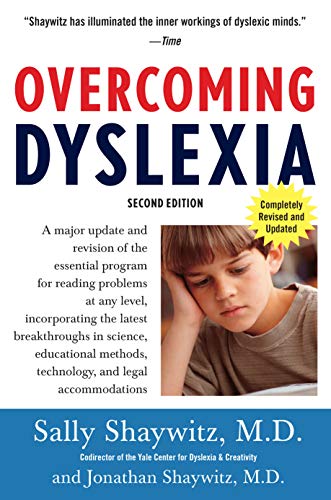
From one of the world's preeminent experts on reading and dyslexia, the most comprehensive, up-to-date, and practical book available on identifying, understanding, and overcoming reading problems--now revised to reflect the latest research and evidence-based approaches.
Dyslexia is the most common learning disorder on the planet, affecting about one in five individuals, regardless of age or gender. Now a world-renowned expert gives us a substantially updated and augmented edition of her classic work: drawing on an additional fifteen years of cutting-edge research, offering new information on all aspects of dyslexia and reading problems, and providing the tools that parents, teachers, and all dyslexic individuals need. This new edition also offers:
• New material on the challenges faced by dyslexic individuals across all ages
• Rich information on ongoing advances in digital technology that have dramatically increased dyslexics' ability to help themselves
• New chapters on diagnosing dyslexia, choosing schools and colleges for dyslexic students, the co-implications of anxiety, ADHD, and dyslexia, and dyslexia in post-menopausal women
• Extensively updated information on helping both dyslexic children and adults become better readers, with a detailed home program to enhance reading
• Evidence-based universal screening for dyslexia as early as kindergarten and first grade – why and how
• New information on how to identify dyslexia in all age ranges
• Exercises to help children strengthen the brain areas that control reading
• Ways to raise a child's self-esteem and reveal her strengths
• Stories of successful men, women, and young adults who are dyslexic
Die Inhaltsangabe kann sich auf eine andere Ausgabe dieses Titels beziehen.
Über die Autorin bzw. den Autor
SALLY E. SHAYWITZ, M.D., is the Audrey G. Ratner Professor in Learning Development at Yale University and co-founder and co-director of the Yale Center for Dyslexia and Creativity. She is the author of more than 350 scientific articles and book chapters, and the creator of the Shaywitz DyslexiaScreenTM, a tool used by teachers to reliably screen young children for dyslexia. Overcoming Dyslexia won the Margo Marek Book Award and the NAMI Book Award. Dr. Shaywitz is an elected member of the National Academy of Medicine and is regularly selected as one of the "Best Doctors in America." She has testified before committees in both the Senate and the House. She lives in Woodbridge, CT.
JONATHAN SHAYWITZ, M.D., is a board-certified psychiatrist. He was the director of the Anxiety Disorders Program at Cedars Sinai in Los Angeles, and more recently the Medical Director of Behavioral Health at Mission Hospital Laguna Beach and Mission Hospital Mission Viejo.
Von der hinteren Coverseite
FOR EVERYONE WHO STRUGGLES TO READ!
Clear, practical, science-based information and advice for successful results
One in five American children has trouble reading. But they are not stupid or lazy. In Overcoming Dyslexia," Dr. Sally Shaywitz, codirector of the Yale Center for the Study of Learning and Attention and a leader in the new research into how the brain works, offers the latest information about reading problems and proven, practical techniques that, along with hard work and the right help, can enable anyone to overcome them. Here are the tools that parents and teachers need to help the dyslexic child, age by age, grade by grade, step by step.
--What dyslexia is and why some intelligent, gifted people read slowly and painfully
--How to identify dyslexia in preschoolers, schoolchildren, young adults, and adults
--How to find the best school and how to work productively with your child's teacher
--Exercises to help children use the parts of the brain that control reading
--A 20-minute nightly home program to enhance reading
--The 150 most common problem words-a list that can give your child a head start
--Ways to raise and preserve a child's self-esteem aqnd reveal his strengths
--Stories of successful men and women who are dyslexic
Auszug. © Genehmigter Nachdruck. Alle Rechte vorbehalten.
I now want to gather together all the clues that combined will serve as an early-warning system for recognizing dyslexia. The clues will help you answer the question: Should my son or daughter (or I) be evaluated for dyslexia?
No one wants to be an “alarmist” and put her child through an evaluation for trivial or transient bumps along the road to reading. Evaluations can take time, and those carried out privately can be expensive. But I think we have to remind ourselves that our children are precious, oneof-a-kind individuals and have only one life to live. If we elect not to evaluate a child and that child later proves to have dyslexia, we cannot give those lost years back to him. The human brain is resilient, but there is no question that early intervention and treatment bring about more positive change at a faster pace than an intervention provided to an older child. And then there is the erosion of self-esteem that accrues over the years as a child struggles to read.
Childhood is a time for learning. A child who delays breaking the phonetic code will miss much of the reading practice that is essential to building fluency and vocabulary; as a consequence, he will fall further and further behind in acquiring comprehension skills and knowledge of the world around him. To see this happen to a child is sad, all the more because it is preventable.
Joseph Torgesen, a reading researcher at Florida State University who has carried out many of the critical studies on intervention, has this to say about the need to identify children early on and the cost of waiting: To the extent that we allow children to fall seriously behind at any point during early elementary school, we are moving to a “remedial” rather than a “preventive” model of intervention. Once children fall behind in the growth of critical word reading skills, it may require very intensive interventions to bring them back up to adequate levels of reading accuracy, and reading fluency may be even more difficult to restore because of the large amount of reading practice that is lost by children each month and year that they remain poor readers.
Most parents and teachers delay evaluating a child with reading difficulties because they believe the problems are just temporary, that they wll be outgrown. This is simply not true. Reading poblems are notoutgrown, they are persistent. As the participants in the Connecticut Longitudinal Study have demonstrated, at least three out of four children who read poorly in third grade continue to have reading problems in high school and beyond. What may seem to be tolerable and overlooked in a third grader certainly won’t be in a high schooler or young adult. Without identification and proven interventions, virtually all children who have reading difficulties early on will still struggle with reading when they are adults.
Luckily, parents can play an active role in the early identification of a reading problem. All that is required is an observant parent who knows what she is looking for and who is willing to spend time with her child listening to him speak and read.
The specific signs of dyslexia, both weaknesses and strengths, in any one individual will vary according to the age and educational level of that person. The five-year-old who can’t quite learn his letters becomes the six-year-old who can’t match sounds to letters and the fourteen-year-old who dreads reading out loud and the twenty-four-year-old who reads excruciatingly slowly. The threads persist throughout a person’s life. The key is knowing how to recognize them at different periods during development. Therefore, I have gathered the clues together to provide three distinct portraits of dyslexia: first, in early childhood from preschool through first grade; next, in school-age children from second grade on; and, last, in young adults and adults.
Clues to Dyslexia in Early Childhood
The earliest clues involve mostly spoken language. The very first clue to a language (and reading) problem may be delayed language. Once the child begins to speak, look for the following problems:
The Preschool Years
• Trouble learning common nursery rhymes such as “Jack and Jill” and “Humpty Dumpty”
• A lack of appreciation of rhymes
• Mispronounced words; persistent baby talk
• Difficulty in learning (and remembering) names of letters
• Failure to know the letters in his own name
Kindergarten and First Grade
• Failure to understand that words come apart; for example, that batboy can be pulled apart into bat and boy, and, later on, that the word bat can be broken down still further and sounded out as: “b” “aaaa” “t”
• Inability to learn to associate letters with sounds, such as being unable to connect the letter b with the “b” sound
• Reading errors that show no connection to the sounds of the letters; for example, the word big is read as goat
• The inability to read common one-syllable words or to sound out even the simplest of words, such as mat, cat, hop, nap
• Complaints about how hard reading is, or running and hiding when it is time to read
• A history of reading problems in parents or siblings
In addition to the problems of speaking and reading, you should be looking for these indications of strengths in higher-level thinking processes:
• Curiosity
• A great imagination
• The ability to figure things out
• Eager embrace of new ideas
• Getting the gist of things
• A good understanding of new concepts
• Surprising maturity
• A large vocabulary for the age group
• Enjoyment in solving puzzles
• Talent at building models
• Excellent comprehension of stories read or told to him
Clues to Dyslexia From Second Grade On
Problems in Speaking
• Mispronunciation of long, unfamiliar, or complicated words; the fracturing of words–leaving out parts of words or confusing the order of the parts of words; for example, aluminum becomes amulium
• Speech that is not fluent–pausing or hesitating often when speaking, lots of um’s during speech, no glibness
• The use of imprecise language, such as vague references to stuff or things instead of the proper name of an object
• Not being able to find the exact word, such as confusing words that sound alike: saying tornado instead of volcano, substituting lotion for ocean, or humanity for humidity
• The need for time to summon an oral response or the inability to come up with a verbal response quickly when questioned
• Difficulty in remembering isolated pieces of verbal information (rote memory)–trouble remembering dates, names, telephone numbers, random lists
Problems in Reading
• Very slow progress in acquiring reading skills
• The lack of a strategy to read new words
• Trouble reading unknown (new, unfamiliar) words that must be sounded out; making wild stabs or guesses at reading a word; failure to systematically sound out words
• The inability to read small “function” words such as that, an, in
• Stumbling on reading multisyllable words, or the failure to come close to sounding out the full word
• Omitting parts of words when reading; the failure to decode parts within a word, as if someone had chewed a hole in the middle of the word, such as conible for...
„Über diesen Titel“ kann sich auf eine andere Ausgabe dieses Titels beziehen.
Suchergebnisse für Overcoming Dyslexia (2020 Edition): Second Edition,...

Beispielbild für diese ISBN
Overcoming Dyslexia (2020 Edit
Anbieter: World of Books (was SecondSale), Montgomery, IL, USA
Verkäuferbewertung 5 von 5 Sternen

Zustand: Good. Item in good condition. Textbooks may not include supplemental items i.e. CDs, access codes etc. Artikel-Nr. 00096994529
Gebraucht kaufen
EUR 3,77
Versand gratis
Versand innerhalb von USA
Versand innerhalb von USA
Anzahl: Mehr als 20 verfügbar
Beispielbild für diese ISBN
Overcoming Dyslexia (2020 Edit
Anbieter: World of Books (was SecondSale), Montgomery, IL, USA
Verkäuferbewertung 5 von 5 Sternen
Zustand: Acceptable. Item in acceptable condition! Textbooks may not include supplemental items i.e. CDs, access codes etc. Artikel-Nr. 00106821314
Gebraucht kaufen
EUR 3,77
Versand gratis
Versand innerhalb von USA
Versand innerhalb von USA
Anzahl: 1 verfügbar
Beispielbild für diese ISBN
Overcoming Dyslexia (2020 Edition): Second Edition, Completely Revised and Updated
Anbieter: BooksRun, Philadelphia, PA, USA
Verkäuferbewertung 5 von 5 Sternen
Paperback. Zustand: Very Good. 2. It's a well-cared-for item that has seen limited use. The item may show minor signs of wear. All the text is legible, with all pages included. It may have slight markings and/or highlighting. Artikel-Nr. 0679781595-11-18
Gebraucht kaufen
EUR 5,84
Versand gratis
Versand innerhalb von USA
Versand innerhalb von USA
Anzahl: 5 verfügbar
Foto des Verkäufers
Overcoming Dyslexia (2020 Edition): Second Edition, Completely Revised and Updated
Anbieter: Dream Books Co., Denver, CO, USA
Verkäuferbewertung 5 von 5 Sternen
Zustand: acceptable. This copy has clearly been enjoyedâ"expect noticeable shelf wear and some minor creases to the cover. Binding is strong, and all pages are legible. May contain previous library markings or stamps. Artikel-Nr. 4EKGLF007X9Y_ns
Gebraucht kaufen
EUR 6,05
Versand gratis
Versand innerhalb von USA
Versand innerhalb von USA
Anzahl: 4 verfügbar
Beispielbild für diese ISBN
Overcoming Dyslexia (2020 Edition): Second Edition, Completely Revised and Updated
Anbieter: Books From California, Simi Valley, CA, USA
Verkäuferbewertung 4 von 5 Sternen

paperback. Zustand: Good. Minimal markings from previous owner threwout pages. Minimal creasing on cover/ threwout pages. Artikel-Nr. mon0003687635
Gebraucht kaufen
EUR 3,54
EUR 4,30 Versand
Versand innerhalb von USA
Versand innerhalb von USA
Anzahl: 1 verfügbar
Beispielbild für diese ISBN
Overcoming Dyslexia: A New and Complete Science-Based Program for Reading Problems at Any Level
Anbieter: Eagle Eye Books, Decatur, GA, USA
Verkäuferbewertung 4 von 5 Sternen
Paper Back. Zustand: Used. Artikel-Nr. 775239
Gebraucht kaufen
EUR 5,31
EUR 3,44 Versand
Versand innerhalb von USA
Versand innerhalb von USA
Anzahl: 1 verfügbar
Beispielbild für diese ISBN
Overcoming Dyslexia By Shaywitz Sally E
ISBN 10: 0679781595
ISBN 13: 9780679781592
Gebraucht
Softcover
Anbieter: Wonder Book, Frederick, MD, USA
Verkäuferbewertung 5 von 5 Sternen
Zustand: Good. Good condition. A copy that has been read but remains intact. May contain markings such as bookplates, stamps, limited notes and highlighting, or a few light stains. Artikel-Nr. F16BB-03523
Gebraucht kaufen
EUR 9,16
Versand gratis
Versand innerhalb von USA
Versand innerhalb von USA
Anzahl: 2 verfügbar
Beispielbild für diese ISBN
Overcoming Dyslexia (2020 Edition): Second Edition, Completely Revised and Updated
Anbieter: AwesomeBooks, Wallingford, Vereinigtes Königreich
Verkäuferbewertung 5 von 5 Sternen
paperback. Zustand: Very Good. Overcoming Dyslexia (2020 Edition): Second Edition, Completely Revised and Updated This book is in very good condition and will be shipped within 24 hours of ordering. The cover may have some limited signs of wear but the pages are clean, intact and the spine remains undamaged. This book has clearly been well maintained and looked after thus far. Money back guarantee if you are not satisfied. See all our books here, order more than 1 book and get discounted shipping. Artikel-Nr. 7719-9780679781592
Gebraucht kaufen
EUR 4,75
EUR 4,79 Versand
Versand von Vereinigtes Königreich nach USA
Versand von Vereinigtes Königreich nach USA
Anzahl: 2 verfügbar
Beispielbild für diese ISBN
Overcoming Dyslexia: A New and Complete Science-Based Program for Reading Problems at Any Level
Anbieter: Eagle Eye Books, Decatur, GA, USA
Verkäuferbewertung 4 von 5 Sternen
Paper Back. Zustand: Used. Artikel-Nr. 896927
Gebraucht kaufen
EUR 6,20
EUR 3,44 Versand
Versand innerhalb von USA
Versand innerhalb von USA
Anzahl: 1 verfügbar
Beispielbild für diese ISBN
Overcoming Dyslexia By Shaywitz Sally E
ISBN 10: 0679781595
ISBN 13: 9780679781592
Gebraucht
Softcover
Anbieter: Wonder Book, Frederick, MD, USA
Verkäuferbewertung 5 von 5 Sternen
Zustand: Very Good. Very Good condition. 2nd edition. A copy that may have a few cosmetic defects. May also contain light spine creasing or a few markings such as an owner's name, short gifter's inscription or light stamp. Artikel-Nr. U02A-04641
Gebraucht kaufen
EUR 9,65
Versand gratis
Versand innerhalb von USA
Versand innerhalb von USA
Anzahl: 1 verfügbar