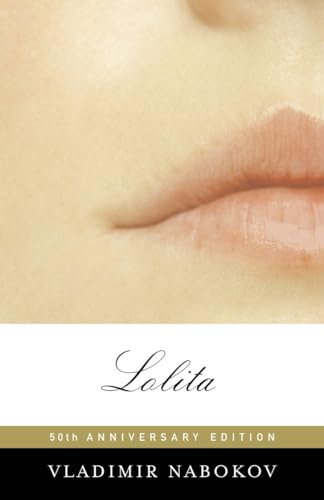
Inhaltsangabe
The most famous and controversial novel from one of the greatest writers of the twentieth century tells the story of Humbert Humbert’s obsessive, devouring, and doomed passion for the nymphet Dolores Haze.
“The conjunction of a sense of humor with a sense of horror [results in] satire of a very special kind.”—The New Yorker
One of The Atlantic’s Great American Novels of the Past 100 Years
Awe and exhilaration—along with heartbreak and mordant wit—abound in Lolita, which tells the story of the aging Humbert Humbert's obsession for the nymphet Dolores Haze. Lolita is also the story of a hypercivilized European colliding with the cheerful barbarism of postwar America.
Most of all, it is a meditation on love—love as outrage and hallucination, madness and transformation.
Die Inhaltsangabe kann sich auf eine andere Ausgabe dieses Titels beziehen.
Über die Autorin bzw. den Autor
VLADIMIR NABOKOV was born in St. Petersburg, Russia, in 1899. After studying French and Russian literature at Trinity College, Cambridge, he launched his literary career in Berlin and Paris. In 1940 he moved to the United States, here he achieved renown as a novelist, poet, critic, and translator. Lolita, arguably his most famous novel, was first published, by the Olympia Press, Paris, on September 15, 1955, and became a controversial success. Nabokov died in Montreux Switzerland in 1977.
Von der hinteren Coverseite
Awe and exhiliration--along with heartbreak and mordant wit--abound in Lolita, Nabokov's most famous and controversial novel, which tells the story of the aging Humbert Humbert's obsessive, devouring, and doomed passion for the nymphet Dolores Haze. Lolita is also the story of a hypercivilized European colliding with the cheerful barbarism of postwar America. Most of all, it is a meditation on love--love as outrage and hallucination, madness and transformation.
Auszug. © Genehmigter Nachdruck. Alle Rechte vorbehalten.
1
Lolita, light of my life, fire of my loins. My sin, my soul. Lo-lee-ta: the tip of the tongue taking a trip of three steps down the palate to tap, at three, on the teeth. Lo. Lee. Ta.
She was Lo, plain Lo, in the morning, standing four feet ten in one sock. She was Lola in slacks. She was Dolly at school. She was Dolores on the dotted line. But in my arms she was always Lolita.
Did she have a precursor? She did, indeed she did. In point of fact, there might have been no Lolita at all had I not loved, one summer, a certain initial girl-child. In a princedom by the sea. Oh when? About as many years before Lolita was born as my age was that summer. You can always count on a murderer for a fancy prose style.
Ladies and gentlemen of the jury, exhibit number one is what the seraphs, the misinformed, simple, noble-winged seraphs, envied. Look at this tangle of thorns.
2
I was born in 1910, in Paris. My father was a gentle, easy-going person, a salad of racial genes: a Swiss citizen, of mixed French and Austrian descent, with a dash of the Danube in his veins. I am going to pass around in a minute some lovely, glossy-blue picture-postcards. He owned a luxurious hotel on the Riviera. His father and two grandfathers had sold wine, jewels and silk, respectively. At thirty he married an English girl, daughter of Jerome Dunn, the alpinist, and granddaughter of two Dorset parsons, experts in obscure subjects-paleopedology and Aeolian harps, respectively. My very photogenic mother died in a freak accident (picnic, lightning) when I was three, and, save for a pocket of warmth in the darkest past, nothing of her subsists within the hollows and dells of memory, over which, if you can still stand my style (I am writing under observation), the sun of my infancy had set: surely, you all know those redolent remnants of day suspended, with the midges, about some hedge in bloom or suddenly entered and traversed by the rambler, at the bottom of a hill, in the summer dusk; a furry warmth, golden midges.
My mother's elder sister, Sybil, whom a cousin of my father's had married and then neglected, served in my immediate family as a kind of unpaid governess and housekeeper. Somebody told me later that she had been in love with my father, and that he had lightheartedly taken advantage of it one rainy day and forgotten it by the time the weather cleared. I was extremely fond of her, despite the rigidity-the fatal rigidity-of some of her rules. Perhaps she wanted to make of me, in the fullness of time, a better widower than my father. Aunt Sybil had pink-rimmed azure eyes and a waxen complexion. She wrote poetry. She was poetically superstitious. She said she knew she would die soon after my sixteenth birthday, and did. Her husband, a great traveler in perfumes, spent most of his time in America, where eventually he founded a firm and acquired a bit of real estate.
I grew, a happy, healthy child in a bright world of illustrated books, clean sand, orange trees, friendly dogs, sea vistas and smiling faces. Around me the splendid Hotel Mirana revolved as a kind of private universe, a whitewashed cosmos within the blue greater one that blazed outside. From the aproned pot-scrubber to the flanneled potentate, everybody liked me, everybody petted me. Elderly American ladies leaning on their canes listed toward me like towers of Pisa. Ruined Russian princesses who could not pay my father, bought me expensive bonbons. He, mon cher petit papa, took me out boating and biking, taught me to swim and dive and water-ski, read to me Don Quixote and Les Mis?rables, and I adored and respected him and felt glad for him whenever I overheard the servants discuss his various lady-friends, beautiful and kind beings who made much of me and cooed and shed precious tears over my cheerful motherlessness.
I attended an English day school a few miles from home, and there I played rackets and fives, and got excellent marks, and was on perfect terms with schoolmates and teachers alike. The only definite sexual events that I can remember as having occurred before my thirteenth birthday (that is, before I first saw my little Annabel) were: a solemn, decorous and purely theoretical talk about pubertal surprises in the rose garden of the school with an American kid, the son of a then celebrated motion-picture actress whom he seldom saw in the three-dimensional world; and some interesting reactions on the part of my organism to certain photographs, pearl and umbra, with infinitely soft partings, in Pichon's sumptuous La Beaut? Humaine that I had filched from under a mountain of marble-bound Graphics in the hotel library. Later, in his delightful debonair manner, my father gave me all the information he thought I needed about sex; this was just before sending me, in the autumn of 1923, to a lyc?e in Lyon (where we were to spend three winters); but alas, in the summer of that year, he was touring Italy with Mme de R. and her daughter, and I had nobody to complain to, nobody to consult.
3
Annabel was, like the writer, of mixed parentage: half-English, half-Dutch, in her case. I remember her features far less distinctly today than I did a few years ago, before I knew Lolita. There are two kinds of visual memory: one when you skillfully recreate an image in the laboratory of your mind, with your eyes open (and then I see Annabel in such general terms as: "honey-colored skin," "thin arms," "brown bobbed hair," "long lashes," "big bright mouth"); and the other when you instantly evoke, with shut eyes, on the dark innerside of your eyelids, the objective, absolutely optical replica of a beloved face, a little ghost in natural colors (and this is how I see Lolita).
Let me therefore primly limit myself, in describing Annabel, to saying she was a lovely child a few months my junior. Her parents were old friends of my aunt's, and as stuffy as she. They had rented a villa not far from Hotel Mirana. Bald brown Mr. Leigh and fat, powdered Mrs. Leigh (born Vanessa van Ness). How I loathed them! At first, Annabel and I talked of peripheral affairs. She kept lifting handfuls of fine sand and letting it pour through her fingers. Our brains were turned the way those of intelligent European preadolescents were in our day and set, and I doubt if much individual genius should be assigned to our interest in the plurality of inhabited worlds, competitive tennis, infinity, solipsism and so on. The softness and fragility of baby animals caused us the same intense pain. She wanted to be a nurse in some famished Asiatic country; I wanted to be a famous spy.
All at once we were madly, clumsily, shamelessly, agonizingly in love with each other; hopelessly, I should add, because that frenzy of mutual possession might have been assuaged only by our actually imbibing and assimilating every particle of each other's soul and flesh; but there we were, unable even to mate as slum children would have so easily found an opportunity to do. After one wild attempt we made to meet at night in her garden (of which more later), the only privacy we were allowed was to be out of earshot but not out of sight on the populous part of the plage. There, on the soft sand, a few feet away from our elders, we would sprawl all morning, in a petrified paroxysm of desire, and take advantage of every blessed quirk in space and time to touch each other: her hand, half-hidden in the sand, would creep toward me, its slender brown fingers sleepwalking nearer and nearer; then, her opalescent knee would start on a long cautious journey; sometimes a chance rampart built by younger children granted us sufficient concealment to graze each other's salty lips; these incomplete contacts drove our healthy and inexperienced young bodies to such a state of exasperation that not even the cold blue water, under which we still clawed at each...
„Über diesen Titel“ kann sich auf eine andere Ausgabe dieses Titels beziehen.
Weitere beliebte Ausgaben desselben Titels

Suchergebnisse für Lolita (Vintage International)

Beispielbild für diese ISBN
Lolita
Verlag:
Vintage (edition Edition Unstated), 1989
ISBN 10: 0679723161
ISBN 13: 9780679723165
Gebraucht
Paperback
Anbieter: BooksRun, Philadelphia, PA, USA
Verkäuferbewertung 5 von 5 Sternen

Paperback. Zustand: Good. Edition Unstated. It's a preowned item in good condition and includes all the pages. It may have some general signs of wear and tear, such as markings, highlighting, slight damage to the cover, minimal wear to the binding, etc., but they will not affect the overall reading experience. Artikel-Nr. 0679723161-11-1
Gebraucht kaufen
EUR 5,52
Versand gratis
Versand innerhalb von USA
Versand innerhalb von USA
Anzahl: 1 verfügbar
Beispielbild für diese ISBN
Lolita
Verlag:
Vintage (edition Edition Unstated), 1989
ISBN 10: 0679723161
ISBN 13: 9780679723165
Gebraucht
Paperback
Anbieter: BooksRun, Philadelphia, PA, USA
Verkäuferbewertung 5 von 5 Sternen
Paperback. Zustand: Fair. Edition Unstated. The item might be beaten up but readable. May contain markings or highlighting, as well as stains, bent corners, or any other major defect, but the text is not obscured in any way. Artikel-Nr. 0679723161-7-1-13
Gebraucht kaufen
EUR 7,66
Versand gratis
Versand innerhalb von USA
Versand innerhalb von USA
Anzahl: 1 verfügbar
Beispielbild für diese ISBN
Lolita
Verlag:
Knopf Doubleday Publishing Group, 1989
ISBN 10: 0679723161
ISBN 13: 9780679723165
Gebraucht
Softcover
Erstausgabe
Anbieter: Better World Books, Mishawaka, IN, USA
Verkäuferbewertung 5 von 5 Sternen
Zustand: Good. 1st. Used book that is in clean, average condition without any missing pages. Artikel-Nr. GRP94400681
Gebraucht kaufen
EUR 8,78
Versand gratis
Versand innerhalb von USA
Versand innerhalb von USA
Anzahl: 17 verfügbar
Beispielbild für diese ISBN
Lolita
Anbieter: Magers and Quinn Booksellers, Minneapolis, MN, USA
Verkäuferbewertung 5 von 5 Sternen
paperback. Zustand: Very Good. May have light to moderate shelf wear and/or a remainder mark. Complete. Clean pages. Artikel-Nr. 1178386
Gebraucht kaufen
EUR 5,70
EUR 3,40 Versand
Versand innerhalb von USA
Versand innerhalb von USA
Anzahl: 1 verfügbar
Beispielbild für diese ISBN
Lolita
Anbieter: Roundabout Books, Greenfield, MA, USA
Verkäuferbewertung 4 von 5 Sternen

paperback. Zustand: Very Good. Condition Notes: Clean, unmarked copy with some edge wear. Good binding. Dust jacket included if issued with one. We ship in recyclable American-made mailers. 100% money-back guarantee on all orders. Artikel-Nr. 1709013
Gebraucht kaufen
EUR 14,83
Versand gratis
Versand innerhalb von USA
Versand innerhalb von USA
Anzahl: 1 verfügbar
Beispielbild für diese ISBN
Lolita (Vintage International)
Anbieter: Sell Books, Elland, YORKS, Vereinigtes Königreich
Verkäuferbewertung 5 von 5 Sternen
paperback. Zustand: Acceptable. Please see the condition note after this for details, if this is missing please consider Acceptable to mean poor quality that could include major staining, water damage, writing, missing dustjacket, etc etc. Our books are dispatched from a Yorkshire former cotton mill. We list via barcode/ISBN so please note that the images are stock images and may not be the exact copy you receive, furthermore the details about edition and year might not be accurate as many publishers reuse the same ISBN for multiple editions and as we simply scan a barcode or enter an ISBN we do not check the validity of the edition data when listing. If you're looking for an exact edition please don't order (at least not without checking with us first, although we don't always have time to check). We aim to dispatch prompty, the service used will depend on order value and book size. We can ship to most countries, see our shipping policies. Payment is via Abe only. Artikel-Nr. L-BJM00333-MIX-20230803-A
Gebraucht kaufen
EUR 5,11
EUR 13,92 Versand
Versand von Vereinigtes Königreich nach USA
Versand von Vereinigtes Königreich nach USA
Anzahl: 1 verfügbar
Foto des Verkäufers
lolita
Anbieter: WeBuyBooks, Rossendale, LANCS, Vereinigtes Königreich
Verkäuferbewertung 5 von 5 Sternen
Zustand: Good. Most items will be dispatched the same or the next working day. A copy that has been read but remains in clean condition. All of the pages are intact and the cover is intact and the spine may show signs of wear. The book may have minor markings which are not specifically mentioned. Artikel-Nr. wbs6742003229
Gebraucht kaufen
EUR 13,63
EUR 6,02 Versand
Versand von Vereinigtes Königreich nach USA
Versand von Vereinigtes Königreich nach USA
Anzahl: 1 verfügbar
Beispielbild für diese ISBN
Lolita (Vintage International)
Anbieter: Sell Books, Elland, YORKS, Vereinigtes Königreich
Verkäuferbewertung 5 von 5 Sternen
paperback. Zustand: Good. Our good condition books are generally good for reading but not for gifting or collecting. They could have imperfections such as creasing, fanning, inscriptions, margin notes, yellowing, staining on edge or cover or pages, bumps, scuffs, etc etc (sometimes multiple of these). It's a wide category that encompasses anything that isn't almost-new down to anything that is slightly better than poor. We would NOT recommend gifting Good books - these should be considered reading copies. Our books are dispatched from a Yorkshire former cotton mill. We list via barcode/ISBN so please note that the images are stock images and may not be the exact copy you receive, furthermore the details about edition and year might not be accurate as many publishers reuse the same ISBN for multiple editions and as we simply scan a barcode or enter an ISBN we do not check the validity of the edition data when listing. If you're looking for an exact edition please don't order (at least not without checking with us first, although we don't always have time to check). We aim to dispatch prompty, the service used will depend on order value and book size. We can ship to most countries, see our shipping policies. Payment is via Abe only. Artikel-Nr. L-BPH01102-MIX-20250922-G
Gebraucht kaufen
EUR 7,14
EUR 13,92 Versand
Versand von Vereinigtes Königreich nach USA
Versand von Vereinigtes Königreich nach USA
Anzahl: 1 verfügbar
Beispielbild für diese ISBN
Lolita
Anbieter: Editions Book Store, Kannapolis, NC, USA
Verkäuferbewertung 5 von 5 Sternen
New Trade. Zustand: New. Brand New copy. Artikel-Nr. 77908
Neu kaufen
EUR 16,69
EUR 5,54 Versand
Versand innerhalb von USA
Versand innerhalb von USA
Anzahl: 1 verfügbar
Beispielbild für diese ISBN
Lolita
Anbieter: Majestic Books, Hounslow, Vereinigtes Königreich
Verkäuferbewertung 4 von 5 Sternen
Zustand: New. pp. 336. Artikel-Nr. 7645905
Neu kaufen
EUR 19,42
EUR 7,45 Versand
Versand von Vereinigtes Königreich nach USA
Versand von Vereinigtes Königreich nach USA
Anzahl: 1 verfügbar