
Inhaltsangabe
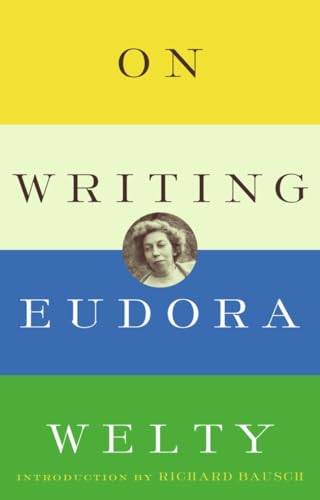
Eudora Welty was one of the twentieth century’s greatest literary figures. For as long as students have been studying her fiction as literature, writers have been looking to her to answer the profound questions of what makes a story good, a novel successful, a writer an artist. On Writing presents the answers in seven concise chapters discussing the subjects most important to the narrative craft, and which every fiction writer should know, such as place, voice, memory, and language. But even more important is what Welty calls “the mystery” of fiction writing—how the writer assembles language and ideas to create a work of art.
Originally part of her larger work The Eye of the Story but never before published in a stand-
alone volume, On Writing is a handbook every fiction writer, whether novice or master, should keep within arm’s reach. Like The Elements of Style, On Writing is concise and fundamental, authoritative and timeless—as was Eudora Welty herself.
Die Inhaltsangabe kann sich auf eine andere Ausgabe dieses Titels beziehen.
Über die Autorin bzw. den Autor
One of America's most admired authors, Eudora Welty was born in Jackson, Mississippi, in 1909. She was educated locally and at Mississippi State College for Women, the University of Wisconsin, and the Columbia University Graduate School of Business. She is the author of, among many other books, One Writer's Beginnings, The Robber Bridegroom, Delta Wedding, The Ponder Heart, Losing Battles, and The Optimist's Daughter, which won the Pulitzer Prize in 1973. She died in 2001.
Von der hinteren Coverseite
Welty was one of the twentieth century’s greatest literary figures. For as long as students have been studying her fiction as literature, writers have been looking to her to answer the profound questions of what makes a story good, a novel successful, a writer an artist. On Writing presents the answers in seven concise chapters discussing the subjects most important to the narrative craft, and which every fiction writer should know, such as place, voice, memory, and language. But even more important is what Welty calls “the mystery” of fiction writing—how the writer assembles language and ideas to create a work of art.
Originally part of her larger work The Eye of the Story but never before published in a stand-
alone volume, On Writing is a handbook every fiction writer, whether novice or master, should keep within arm’s reach. Like The Elements of Style, On Writing is concise and
Aus dem Klappentext
Welty was one of the twentieth century s greatest literary figures. For as long as students have been studying her fiction as literature, writers have been looking to her to answer the profound questions of what makes a story good, a novel successful, a writer an artist. On Writing presents the answers in seven concise chapters discussing the subjects most important to the narrative craft, and which every fiction writer should know, such as place, voice, memory, and language. But even more important is what Welty calls the mystery of fiction writing how the writer assembles language and ideas to create a work of art.
Originally part of her larger work The Eye of the Story but never before published in a stand-
alone volume, On Writing is a handbook every fiction writer, whether novice or master, should keep within arm s reach. Like The Elements of Style, On Writing is concise and
Auszug. © Genehmigter Nachdruck. Alle Rechte vorbehalten.
Looking at Short Stories
Looking at short stories as readers and writers together should be a companionable thing. And why not? Stories in their bardic and fairy-tale beginnings were told, the listeners—and judgers—all in a circle.
E. M. Forster, in Aspects of the Novel, described the great age of the narrative:
Neanderthal man listened to stories, if one may judge by the shape of his skull. The primitive audience was an audience of shock-heads, gaping around the camp-fire, fatigued with contending against the mammoth or woolly-rhinoceros, and only kept awake by suspense. What would happen next? The novelist droned on, and as soon as the audience guessed what happened next, they either fell asleep or killed him.
That suspense is still with us, but it seems to me that now it exists as something shared. Reader and writer make it a double experience. It is part of the great thing in which they share most—pleasure. And it is certainly part of the strong natural curiosity which readers feel to varying degree and which writers feel to the most compelling degree as to how any one story ever gets told. The only way a writer can satisfy his own curiosity is to write it. And how different this already makes it from telling it! Suspense, pleasure, curiosity, all are bound up in the making of the written story.
Forster went on to distinguish between what Neanderthal man told, the narrative thread, and what the written story has made into an art, the plot. “The king died and then the queen died” is the narrative thread; “The king died and then the queen died of grief” is a plot. We have all come from asking What next? to asking Why? The word “which,” of course, opened up everything, or as much of everything as the writer is able to handle.
To take a story:
Jack Potter, the town marshal of Yellow Sky, has gone to San Anton’ and got married and is bringing his bride back in a Pullman as a dazzling surprise for his hometown. And while the train is on its way, back in Yellow Sky Scratchy Wilson gets drunk and turns loose with both hands. Everybody runs to cover: he has come to shoot up the town. “And his boots had red tops with gilded imprints, of the kind beloved in winter by little sledding boys on the hillsides of New England . . . The only sounds were his terrible invitations . . . He comfortably fusilladed the windows of his most intimate friend. The man was playing with the town; it was a toy for him.” The train comes in, Scratchy and the marshal are face to face, and Potter says, “I ain’ t got a gun on me, Scratchy,” and takes only a minute to make up his mind to be shot on his wedding day. “If you ain’t got a gun, why ain’t you got a gun?” “I ain’t got a gun because I’ve just come from San Anton’ with my wife. I’m married.” “Married? Married? . . . Is this the lady?” “Yes; this is the lady.” “ ‘Well,’ said Wilson at last, slowly, I s’pose it’s all off now.’ He was not a student of chivalry; it was merely that in the presence of this condition he was a simple child of the earlier plains.” He picked up his starboard revolver, and, placing both weapons in their holsters, he went away.
Two predicaments meet here, in Stephen Crane’s “The Bride Comes to Yellow Sky.” You might say they are magnetized toward each other—and collide. One is vanquished with neatness and absurdity; as he goes away, Scratchy’s “feet made funnel-shaped tracks in the heavy sand.” Here are the plainest equivalents of comedy, two situations in a construction simple as a seesaw, and not without a seesaw’ s kind of pleasure in reading; like Scratchy Wilson, Crane is playing with us here.
In Katherine Mansfield’s “Miss Brill,” there is only one character and a single situation; Miss Brill’s action con- sists nearly altogether in sitting down—she goes out to sit in the park, returns to sit on her bed. There is no colli- sion. Rather, the forces meeting in the public gardens have, at the story’s end, passed through each other and come out at the other side; there has been not a collision, but a change—something more significant. This is because, although there is one small situation going on, a large, complex one is implied. Life itself corresponds to the part of Scratchy Wilson, so to speak. Not violent life, merely life in a park on Sunday afternoon in Paris. All that it usually does for Miss Brill is promenade, yet, life being life, it does finally threaten. How much more deadly to such a lady than a flourished pistol is a remark overheard about herself. Reality comes to leer at her from a pleasant place, and she has not come prepared to bear it. And so she, who in her innocence could spare even pity for this world—pity, the spectator’s emotion—is defeated. A word is spoken and the blow falls and Miss Brill retires, ridiculously easy to mow down, as the man with the pistols was easy to stare down in “Yellow Sky” for comedy’ s sake. But Miss Brill was from the first defenseless and on the losing side; her defeat is the deeper for it and one feels sure it is for always. So this story, instead of being a simple situation, is an impression of a situation, and tells more for being so.
Looking at these two stories by way of their plots in skeleton, we can’ t help but notice something: their plots are not unlike. “The Bride Comes to Yellow Sky” is its more unpretentious form, “Miss Brill” shows an interesting variation. It is a plot with two sides, or two halves, or two opposites, or two states of mind or feeling side by side; even one such in repeat would be a form of this. The plot is, of course, life versus death, which includes nearly every story in the world.
It could be said equally well that most stories (and novels too) have plots of the errand of search. An idea this pervasive simply pervades life, and the generality that could include in one quick list “The Bear,” “The Jolly Corner,” “The Short Happy Life of Francis Macomber” and “Araby” doesn’t tell us really anything.
And so, plainly, we must distinguish plots not by their skeletons but by their full bodies; for they are embodiments, little worlds. Here is another: let us try to distinguish it as if it were literally a little world, and spinning closely now into our vision.
Now, the first thing we notice about this story is that we can’t really see its solid outlines—it seems bathed in something of its own. It is wrapped in an atmosphere. This is what makes it shine, perhaps, as well as what obscures, at first glance, its plain real shape.
We are bearing in mind that the atmosphere in a story may be not the least of its glories, and also the fact that it may give a first impression that will prove contrary to what lies under it. Some action stories fling off the brightest clouds of obscuring and dazzling light, like ours here. Penetrate that atmosphere and the object may show quite dark within, for all its clouds of speed, those primary colors of red and yellow and blue. It looks like one of Ernest Hemingway’ s stories, and it is.
A story behaves, it goes through motions—that’s part of it. Some stories leave a train of light behind them, meteor-like, so that much later than they strike our eyes we may see their meaning like an aftereffect. And Faulkner’ s seem not meteors but comets; they have a course of their own that brings them around more than once; they reappear in their own time in the sense that they reiterate their meaning and show a whole further story...
„Über diesen Titel“ kann sich auf eine andere Ausgabe dieses Titels beziehen.
Suchergebnisse für On Writing (Modern Library)

Beispielbild für diese ISBN
On Writing
Verlag:
Random House Publishing Group, 2002
ISBN 10: 0679642706
ISBN 13: 9780679642701
Gebraucht
Hardcover
Anbieter: Better World Books, Mishawaka, IN, USA
Verkäuferbewertung 5 von 5 Sternen

Zustand: Good. 2002 Modern Library Ed. Pages intact with minimal writing/highlighting. The binding may be loose and creased. Dust jackets/supplements are not included. Stock photo provided. Product includes identifying sticker. Better World Books: Buy Books. Do Good. Artikel-Nr. 6221707-6
Gebraucht kaufen
EUR 6,49
Versand gratis
Versand innerhalb von USA
Versand innerhalb von USA
Anzahl: 1 verfügbar
Beispielbild für diese ISBN
On Writing
Verlag:
Random House Publishing Group, 2002
ISBN 10: 0679642706
ISBN 13: 9780679642701
Gebraucht
Hardcover
Anbieter: Better World Books, Mishawaka, IN, USA
Verkäuferbewertung 5 von 5 Sternen
Zustand: Very Good. 2002 Modern Library Ed. Former library copy. Pages intact with possible writing/highlighting. Binding strong with minor wear. Dust jackets/supplements may not be included. Includes library markings. Stock photo provided. Product includes identifying sticker. Better World Books: Buy Books. Do Good. Artikel-Nr. 733058-6
Gebraucht kaufen
EUR 6,49
Versand gratis
Versand innerhalb von USA
Versand innerhalb von USA
Anzahl: 1 verfügbar
Beispielbild für diese ISBN
On Writing
Verlag:
Random House Publishing Group, 2002
ISBN 10: 0679642706
ISBN 13: 9780679642701
Gebraucht
Hardcover
Anbieter: Better World Books, Mishawaka, IN, USA
Verkäuferbewertung 5 von 5 Sternen
Zustand: Good. 2002 Modern Library Ed. Former library copy. Pages intact with minimal writing/highlighting. The binding may be loose and creased. Dust jackets/supplements are not included. Includes library markings. Stock photo provided. Product includes identifying sticker. Better World Books: Buy Books. Do Good. Artikel-Nr. 733057-20
Gebraucht kaufen
EUR 6,49
Versand gratis
Versand innerhalb von USA
Versand innerhalb von USA
Anzahl: 1 verfügbar
Beispielbild für diese ISBN
On Writing (Modern Library)
Anbieter: Revaluation Books, Exeter, Vereinigtes Königreich
Verkäuferbewertung 5 von 5 Sternen
Hardcover. Zustand: Brand New. 2002 modern library ed edition. 128 pages. 7.75x5.00x0.75 inches. In Stock. Artikel-Nr. 0679642706
Neu kaufen
EUR 32,97
EUR 11,60 Versand
Versand von Vereinigtes Königreich nach USA
Versand von Vereinigtes Königreich nach USA
Anzahl: 1 verfügbar