
Verwandte Artikel zu Living With Music: Ralph Ellison's Jazz Writings...
Inhaltsangabe
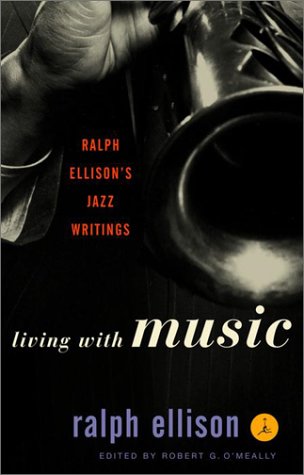
Before Ralph Ellison became one of America's greatest writers, he was a musician and a student of jazz. The author of Invisible Man wrote widely and brilliantly on his favorite music for more than fifty years, immersing himself in the lives and works of America's musicians, some of whom were his close friends. Ellison is, in fact, perhaps the most important jazz analyst we have. In Living with Music, celebrated jazz authority Robert G. O'Meally has collected the very best of Ellison's writings on this subject - each selection vibrant, insightful, and bursting with Ellison's love of the music - in this unique and original anthology.
Die Inhaltsangabe kann sich auf eine andere Ausgabe dieses Titels beziehen.
Über die Autorin bzw. den Autor
Ralph Ellison was born in Oklahoma City in 1914. He was educated at the Frederick Douglass School and at Tuskegee Institute, where he studied the trumpet and music composition. Ellison moved to New York City in 1936 and lived in Harlem until his death in 1994. His novel Invisible Man (1952) was the winner of the National Book Award and one of the most important and influential American novels of the twentieth century. Ellison was elected to the American Academy of Arts and Letters in 1975 and was awarded the National Medal of Arts in 1985.
Robert G. O'Meally is the Zora Neale Hurston Professor of Comparative Literature at Columbia University and the founder and director of the Center for Jazz Studies. He is a leading interpreter of the dynamics of jazz in American culture. O'Meally is the author of sev
Von der hinteren Coverseite
se days it was either live with music or die with noise, and we chose rather desperately to live."
Before Ralph Ellison became one of America's greatest writers, he was a musician and a student of jazz. The author of Invisible Man wrote widely and brilliantly on his favorite music for more than fifty years, immersing himself in the lives and works of America's musicians, some of whom were his close friends. Ellison is, in fact, perhaps the most important jazz analyst we have. In Living with Music, celebrated jazz authority Robert G. O'Meally has collected the very best of Ellison's writings on this subject; each selection vibrant, insightful, and bursting with Ellison's love of the music in this unique and original anthology.
For readers who think they know Ellison's work, this book will be a revelation. For music fans, it is an essential addition to the jazz bookshelf. Selections include the famous Homage to Duke Ellington on His Birthday
Aus dem Klappentext
se days it was either live with music or die with noise, and we chose rather desperately to live."
Before Ralph Ellison became one of America's greatest writers, he was a musician and a student of jazz. The author of Invisible Man wrote widely and brilliantly on his favorite music for more than fifty years, immersing himself in the lives and works of America's musicians, some of whom were his close friends. Ellison is, in fact, perhaps the most important jazz analyst we have. In Living with Music, celebrated jazz authority Robert G. O'Meally has collected the very best of Ellison's writings on this subject; each selection vibrant, insightful, and bursting with Ellison's love of the music in this unique and original anthology.
For readers who think they know Ellison's work, this book will be a revelation. For music fans, it is an essential addition to the jazz bookshelf. Selections include the famous Homage to Duke Ellington on His Birthday
Auszug. © Genehmigter Nachdruck. Alle Rechte vorbehalten.
Living with Music
Ralph Ellison's Jazz WritingsBy Ralph EllisonModern Library
Copyright © 2001 Ralph EllisonAll right reserved.
ISBN: 9780679640349
Living with Music
This piece exemplifies how Ellison used his masterful storytelling gifts in his nonfiction. (Paule Marshall has said that Ellison's true second novel was his 1964 collection of essays and interviews, Shadow and Act.) Using his own story of being a musician who has become a writer, Ellison offers acute definitions of jazz and of the jazz artist's motives and modes of training. He also makes the key point that in the modern United States, with its high-tech communication, cultures blend rapidly and contend with one another: "The step from the spirituality of the spirituals to that of the Beethoven of the symphonies or the Bach of the chorales is not as vast as it seems," writes Ellison. "Nor is the romanticism of a Brahms or Chopin completely unrelated to that of Louis Armstrong." Note, too, the idea of music as defense against chaos and as Proustian madeleine (sweet catalyst of remembrance), reaching "the unconscious levels of the mind" and working "its magic with mood and memory." Considering the essay's background narrative, concerning the building of high-quality audio systems, a practice at which Ellison was extremely skillful, it is fitting that this piece first appeared in High Fidelity in December 1955.
In those days it was either live with music or die with noise, and we chose rather desperately to live. In the process our apartment – what with its booby-trappings of audio equipment, wires, discs and tapes – came to resemble the Collyer mansion, but that was later. First there was the neighborhood, assorted drunks and a singer.
We were living at the time in a tiny ground-floor-rear apartment in which I was trying to write. I say "trying" advisedly. To our right, separated by a thin wall, was a small restaurant with a juke box the size of the Roxy. To our left, a night-employed swing enthusiast who took his lullaby music so loud that every morning promptly at nine Basie's brasses started blasting my typewriter off its stand. Our living room looked out across a small backyard to a rough stone wall to an apartment building which, towering above, caught every passing thoroughfare sound and rifled it straight down to me. There were also howling cats and barking dogs, none capable of music worth living with, so we'll pass them by.
But the court behind the wall, which on the far side came knee-high to a short Iroquois, was a forum for various singing and/or preaching drunks who wandered back from the corner bar. From these you sometimes heard a fair barbershop style "Bill Bailey," free-wheeling versions of "The Bastard King of England," the saga of Uncle Bud, or a deeply felt rendition of Leroy Carr's "How Long Blues." The preaching drunks took on any topic that came to mind: current events, the fate of the long-sunk Titanic, or the relative merits of the Giants and the Dodgers. Naturally there was great argument and occasional fighting?none of it fatal but all of it loud.
I shouldn't complain, however, for these were rather entertaining drunks, who, like the birds, appeared in the spring and left with the first fall cold. A more dedicated fellow was there all the time, day and night, come rain, come shine. Up on the corner lived a drunk of legend, a true phenomenon, who could surely have qualified as the king of all the world's winos, not excluding the French. He was neither poetic like the others nor ambitious like the singer (to whom we'll presently come), but his drinking bouts were truly awe-inspiring and he was not without his sensitivity. In the throes of his passion he would shout to the whole wide world one concise command, "Shut up!" Which was disconcerting enough to all who heard (except, perhaps, the singer), but such were the labyrinthine acoustics of courtyards and areaways that he seemed to direct his command at me. The writer's block which this produced is indescribable. On one heroic occasion he yelled his obsessive command without one interruption longer than necessary to take another drink (and with no appreciable loss of volume, penetration or authority) for three long summer days and nights, and shortly afterwards he died. Just how many lines of agitated prose he cost me I'll never know, but in all that chaos of sound I sympathized with his obsession, for I, too, hungered and thirsted for quiet. Nor did he inspire me to a painful identification, and for that I was thankful. Identification, after all, involves feelings of guilt and responsibility, and since I could hardly hear my own typewriter keys I felt in no way accountable for his condition. We were simply fellow victims of the madding crowd. May he rest in peace.
No, these more involved feelings were aroused by a more intimate source of noise, one that got beneath the skin and worked into the very structure of one's consciousness – like the "fate" motif in Beethoven's Fifth or the knocking-at-the-gates scene in Macbeth. For at the top of our pyramid of noise there was a singer who lived directly above us; you might say we had a singer on our ceiling.
Now, I had learned from the jazz musicians I had known as a boy in Oklahoma City something of the discipline and devotion to his art required of the artist. Hence I knew something of what the singer faced. These jazzmen, many of them now world-famous, lived for and with music intensely. Their driving motivation was neither money nor fame, but the will to achieve the most eloquent expression of idea-emotions through the technical mastery of their instruments (which, incidentally, some of them wore as a priest wears the cross) and the give and take, the subtle rhythmical shaping and blending of idea, tone and imagination demanded of group improvisation. The delicate balance struck between strong individual personality and the group during those early jam sessions was a marvel of social organization. I had learned too that the end of all this discipline and technical mastery was the desire to express an affirmative way of life through its musical tradition, and that this tradition insisted that each artist achieve his creativity within its frame. He must learn the best of the past, and add to it his personal vision. Life could be harsh, loud and wrong if it wished, but they lived it fully, and when they expressed their attitude toward the world it was with a fluid style that reduced the chaos of living to form.
The objectives of these jazzmen were not at all those of the singer on our ceiling, but though a purist committed to the mastery of the bel canto style, German lieder, modern French art songs and a few American slave songs sung as if bel canto, she was intensely devoted to her art. From morning to night she vocalized, regardless of the condition of her voice, the weather or my screaming nerves. There were times when her notes, sifting through her floor and my ceiling, bouncing down the walls and ricocheting off the building in the rear, whistled like tenpenny nails, buzzed like a saw, wheezed like the asthma of a Hercules, trumpeted like an enraged African elephant, and the squeaky pedal of her piano rested plumb center above my typing chair. After a year of non-cooperation from the neighbor on my left I became desperate enough to cool down the hot blast of his phonograph by calling the cops, but the singer presented a serious ethical problem: could I, an aspiring artist, complain against the hard work and devotion to craft of another aspiring artist?
Then there was my sense of guilt. Each...
„Über diesen Titel“ kann sich auf eine andere Ausgabe dieses Titels beziehen.
Suchergebnisse für Living With Music: Ralph Ellison's Jazz Writings...

Beispielbild für diese ISBN
Living with Music: Ralph Ellison's Jazz Writings (Modern Library)
Anbieter: World of Books (was SecondSale), Montgomery, IL, USA
Verkäuferbewertung 5 von 5 Sternen

Zustand: Good. Item in good condition. Textbooks may not include supplemental items i.e. CDs, access codes etc. Artikel-Nr. 00106280513
Gebraucht kaufen
EUR 5,42
Versand gratis
Versand innerhalb von USA
Versand innerhalb von USA
Anzahl: 1 verfügbar
Beispielbild für diese ISBN
Living with Music: Ralph Ellison's Jazz Writings (Modern Library)
Anbieter: ThriftBooks-Dallas, Dallas, TX, USA
Verkäuferbewertung 5 von 5 Sternen
Hardcover. Zustand: Fair. No Jacket. Readable copy. Pages may have considerable notes/highlighting. ~ ThriftBooks: Read More, Spend Less. Artikel-Nr. G0679640347I5N00
Gebraucht kaufen
EUR 13,03
Versand gratis
Versand innerhalb von USA
Versand innerhalb von USA
Anzahl: 1 verfügbar
Beispielbild für diese ISBN
Living with Music: Ralph Ellison's Jazz Writings (Modern Library)
Anbieter: Books From California, Simi Valley, CA, USA
Verkäuferbewertung 4 von 5 Sternen

Hardcover. Zustand: Very Good. Artikel-Nr. mon0004249366
Gebraucht kaufen
EUR 9,16
EUR 4,39 Versand
Versand innerhalb von USA
Versand innerhalb von USA
Anzahl: 1 verfügbar
Foto des Verkäufers
Living with Music: Ralph Ellison's Jazz Writing
Anbieter: Southampton Books, Sag Harbor, NY, USA
Verkäuferbewertung 5 von 5 Sternen
Hardcover. Zustand: Like New. FIRST THUS. First Edition Thus, First Printing. Not price-clipped. Published by Modern Library, 2001. Octavo. Hardcover. Book is like new with light spotting on page ends. Dust jacket is like new.100% positive feedback. 30 day money back guarantee. NEXT DAY SHIPPING! Excellent customer service. Please email with any questions. All books packed carefully and ship with free delivery confirmation/tracking. All books come with free bookmarks. Ships from Sag Harbor, New York. Artikel-Nr. 413156
Gebraucht kaufen
EUR 18,11
EUR 4,39 Versand
Versand innerhalb von USA
Versand innerhalb von USA
Anzahl: 1 verfügbar