
Verwandte Artikel zu About Schmidt: A Novel
Inhaltsangabe
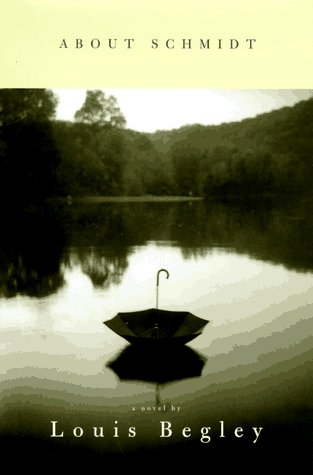
After years of careful management, the life of Albert Schmidt - proud, traditional gentleman and lawyer of the old school - lies about him in shambles. The wife he adored is recently dead. The clients he has served superbly and devotedly throughout his long career are turning to his firm's aggressive young comers as Schmidt stumbles into early retirement. And relations with his only child are going from bad to worse. Charlotte, once the flower of all her father's hopes, and the sole beneficiary of the best of everything he could provide, has matured into a banal yuppie, only too willing to apply her peerless education to work in public relations. And now a desperate quarrel divides them: Charlotte announces her intention to marry a man Schmidt cannot approve of, for reasons he can scarcely admit - even to himself. As the beleaguered father gropes his way out of the corners he is forever backing himself into, he finds the possibility of regeneration, perhaps even happiness, in a new love the old "Schmidtie" could not have imagined.
Set in the Hamptons and Manhattan, infused with black humor and startling eroticism, Louis Begley's fourth novel casts a cold, pitiless eye on a class once-ascendant on the eastern seaboard as it is pushed aside by those whose fortunes are rising. About Schmidt is a meditation on loneliness and on the power of romance to unlock the most impenetrable recesses of the heart; it brilliantly enlarges Begley's exploration of the tragic themes that haunt his earlier works.
Die Inhaltsangabe kann sich auf eine andere Ausgabe dieses Titels beziehen.
Über die Autorin bzw. den Autor
Louis Begley is the author of four novels. Wartime Lies, which was written when he was in his mid-fifties, was followed by The Man Who Was Late, As Max Saw It, and About Schmidt. He is currently finishing a fifth novel. Begley has another life, that of a lawyer. He is a senior partner at Debevoise & Plimpton, one of America's most prestigious firms, and is the head of its international practice.
Wartime Lies was the winner of the PEN Hemingway Award, The Irish Times Aer Lingus International Prize, and the Prix Medicis Etranger, France's most coveted prize for fiction in translation. It was a National Book Award, Los Angeles Times Book Award, and National Book Critics' Circle Award finalist. About Schmidt was likewise a National Book Cr
Von der hinteren Coverseite
to make his life habitable again--after the devastating loss of his wife--retired lawyer Albert Schmidt finds the possibility of regeneration in a new love the old "Schmidtie" would never have dreamt of. Set in the Hamptons and Mahnattan, and laced with black humor, About Schmidt casts a cold, pitiless eye on the eastern seaboard upper class, the last vestiges of once-ascendant WASPs, and the newcomers whose fortunes are rising.
Aus dem Klappentext
to make his life habitable again--after the devastating loss of his wife--retired lawyer Albert Schmidt finds the possibility of regeneration in a new love the old "Schmidtie" would never have dreamt of. Set in the Hamptons and Mahnattan, and laced with black humor, About Schmidt casts a cold, pitiless eye on the eastern seaboard upper class, the last vestiges of once-ascendant WASPs, and the newcomers whose fortunes are rising.
Auszug. © Genehmigter Nachdruck. Alle Rechte vorbehalten.
About Schmidt
By Louis BegleyKnopf
Copyright © 1996 Louis BegleyAll right reserved.
ISBN: 9780679450337
Ballantine Reader's Circle: About Schmidt (Excerpt)
Chapter 1
Schmidt's wife had not been dead more than six months when his only child, Charlotte, told him she had decided to get married. He was finishing breakfast at the kitchen table. The "Metropolitan" section of the Times was in his left hand; as on every Saturday, he had been poring over the mutual fund quotation table to check the prices of two investments, one in small capitalization companies and the other in international equities, both of which he had bought on his own initiative, out of conviction, and had come to regard, irrationally, because the rest of his money was managed with reasonable success by a professional whom he left quite alone, also out of conviction, as the weather vane of his financial standing. The small capitalization fund was down, by ten cents. He thought that made it a loss of about fifty cents for the week. The international stocks were down too. He put aside the paper, looked at his daughter, so tall and, it seemed to him, painfully desirable in her sweat-soaked running clothes, said I am very happy for you, when will it be? and began to cry. He had not cried since the afternoon when the specialist confirmed the advice he had previously given to him over the telephone: Don't think of an operation, why mutilate Mary, it won't give her even one good year, we'll keep her as comfortable as possible. Meanwhile, you two try to have a good time. He held Mary's hand until they were out in the street.
The morning sunlight was blinding. He put Mary into a taxi--ordinarily, she would have walked home, but he saw that she was shaken, almost disoriented--caught one himself, proceeded to the office, told his secretary he didn't want to be disturbed, shut the door, called David Kendall, the family doctor who was also their friend, heard that he and the specialist had discussed the advice before it was given, and, lying facedown on the couch, wept like a boy, the parade of his life with Mary passing on the screen of his burning eyelids like some refurbished newsreel. That day he had been mourning the end of his happiness. But today it was the imminent collapse of a bearable existence he had thought he might be able to sustain. He didn't need to ask Charlotte who the man was: Jon Riker had been around for a long time before Mary began to die. That very minute he was probably shaving, in Charlotte's bathroom.
In June, Dad. We want to talk to you about picking the day. Why are you crying like this?
She sat down and stroked his hand.
From happiness. Or because you are so grown-up. I'll stop now. Promise.
He blew his nose elaborately, using a piece of paper towel he tore off the roll on the upright holder next to the sink. Of late, he was finding himself reluctant to use the handkerchief he always carried in the pocket of his trousers, saving it for some unspecified emergency when having a clean handkerchief would save him from embarrassment. Then he kissed Charlotte and went into the garden.
Jim Bogard, the new gardener he had hired at the beginning of the season, and his crew had been at work all week. He noted once more with satisfaction that dead leaves and broken branches had been raked, even from the mulched flower beds around the house and the more inaccessible spaces beneath the azalea and rhododendron bushes. The wilted yellow tops of Mary's lilies had been cut so close to the ground that one could not suspect the presence of the bulbs underneath; the Montauk daisies looked like topiary porcupines; the hedges of honeysuckle that enclosed the property on three sides, leaving it open only to the saltwater pond that lay beyond a stretch of fields beginning to turn light green with winter rye in this mild weather, had a prim and angular look. If his neighbor Foster decided to subdivide, or a developer finally got to him, it would not be difficult to plant out whatever monstrosities they might build: at worst, they could put up two or three houses. Of course, the feeling of open space and the view would be lost. This was subject of worry for him each year, when the potatoes had been taken in and farmers had time to turn their minds to money and taxes. He had been thinking of it during his last visit to the tree nursery, and noted the great number of mature bushes for sale and their prices, which weren't so high as he had expected. Should he take the initiative and talk to Foster about his plans? Mary had never wanted to tie up such a large part of her own money in the Bridgehampton property, and she didn't want to use his money, but Charlotte, really Charlotte and Jon--he would have to accustom himself to that formulation--might see the problem differently. One never regretted a purchase of land made to protect one's property.
He walked around the house and the garage, examining them closely. Here and there, Bogard's chattering Ecuadoreans had missed an apple. He picked up as many as he saw, threw them on the compost heap, and inspected, one by one, the garage, the pool, which was under a new cover he didn't like, and the pool house--really a strangely minuscule barn--they had been able to convert into a cottage and finish just before the thunderbolt of Mary's illness stuck. It had been her project: Schmidt preferred to have Charlotte and her guests in the house, under the same roof as he--which wasn't awkward since Mary required these young men to use the bedroom and bathroom with the shower stall off the kitchen--so that to see Charlotte at breakfast required no prearrangement. He could linger quite naturally with his newspaper at the kitchen table or in the wicker rocking chair and listen while she talked on the telephone or with the visiting friend, absorbing the texture of the day she planned.
Once the upstairs bedrooms in the pool house, with their Town & Country bathrooms, and the red-tiled kitchen next to the changing rooms had been completed, the mornings became awkward for Schmidt. In theory, Jon Riker still occupied these new quarters alone, or with guests he and Charlotte had invited, but Charlotte would make breakfast there, and something inside Schmidt recoiled from the idea of simply walking in and sitting down with them. Mary had done it quite naturally and laughed at his formality. But he detested surprising others as much as being surprised himself. In his opinion, the whole point of giving the young people a separate house was to ensure their privacy. He was not to go there unless he had been invited; but since it was very rare that an invitation was issued, he would try to get around his own polite rules by telephoning to ask whether they would like him to bring the paper. Sometimes he got the paper early, before there was any sign of activity in the downstairs of the pool house. Jon was asleep, and, one could suppose, Charlotte as well--in Jon's bed. Then that pretext was unavailable, and he would watch miserably as Charlotte took the copy of the Times he had bought for them from the kitchen table, carried it across the lawn, and disappeared behind the forbidding door of the other house.
Schmidt couldn't deny that the pool house turned out to be a blessing during Mary's illness. It had let Charlotte and Jon continue a relatively carefree sort of life alongside theirs, without calling attention to the disparity, and without unduly tiring Mary or forcing Jon to come face-to-face with the indignities, at first small, and then so shattering, of Mary's struggle. By then Charlotte...
„Über diesen Titel“ kann sich auf eine andere Ausgabe dieses Titels beziehen.
Suchergebnisse für About Schmidt: A Novel

Beispielbild für diese ISBN
About Schmidt: a Novel
Anbieter: World of Books (was SecondSale), Montgomery, IL, USA
Verkäuferbewertung 5 von 5 Sternen

Hardback. Zustand: Fair. Artikel-Nr. 00099065599
Gebraucht kaufen
EUR 4,74
Versand gratis
Versand innerhalb von USA
Versand innerhalb von USA
Anzahl: 2 verfügbar
Beispielbild für diese ISBN
About Schmidt
Verlag:
Knopf (edition First Edition), 1996
ISBN 10: 0679450335
ISBN 13: 9780679450337
Gebraucht
Hardcover
Erstausgabe
Anbieter: BooksRun, Philadelphia, PA, USA
Verkäuferbewertung 5 von 5 Sternen
Hardcover. Zustand: Fair. First Edition. With dust jacket. The item might be beaten up but readable. May contain markings or highlighting, as well as stains, bent corners, or any other major defect, but the text is not obscured in any way. Artikel-Nr. 0679450335-7-1-29
Gebraucht kaufen
EUR 5,65
Versand gratis
Versand innerhalb von USA
Versand innerhalb von USA
Anzahl: 2 verfügbar
Beispielbild für diese ISBN
About Schmidt
Anbieter: Wonder Book, Frederick, MD, USA
Verkäuferbewertung 5 von 5 Sternen
Zustand: As New. Like New condition. Very Good dust jacket. A near perfect copy that may have very minor cosmetic defects. Artikel-Nr. J12B-03582
Gebraucht kaufen
EUR 6,40
Versand gratis
Versand innerhalb von USA
Versand innerhalb von USA
Anzahl: 1 verfügbar
Beispielbild für diese ISBN
About Schmidt
Anbieter: Wonder Book, Frederick, MD, USA
Verkäuferbewertung 5 von 5 Sternen
Zustand: Very Good. Very Good condition. Good dust jacket. A copy that may have a few cosmetic defects. May also contain light spine creasing or a few markings such as an owner's name, short gifter's inscription or light stamp. Bundled media such as CDs, DVDs, floppy disks or access codes may not be included. Artikel-Nr. E14I-00158
Gebraucht kaufen
EUR 6,40
Versand gratis
Versand innerhalb von USA
Versand innerhalb von USA
Anzahl: 1 verfügbar
Beispielbild für diese ISBN
About Schmidt
Verlag:
Knopf Doubleday Publishing Group, 1996
ISBN 10: 0679450335
ISBN 13: 9780679450337
Gebraucht
Hardcover
Erstausgabe
Anbieter: Better World Books, Mishawaka, IN, USA
Verkäuferbewertung 5 von 5 Sternen
Zustand: Good. 1st. Former library copy. Pages intact with minimal writing/highlighting. The binding may be loose and creased. Dust jackets/supplements are not included. Includes library markings. Stock photo provided. Product includes identifying sticker. Better World Books: Buy Books. Do Good. Artikel-Nr. GRP72612792
Gebraucht kaufen
EUR 6,54
Versand gratis
Versand innerhalb von USA
Versand innerhalb von USA
Anzahl: 1 verfügbar
Beispielbild für diese ISBN
About Schmidt
Verlag:
Knopf Doubleday Publishing Group, 1996
ISBN 10: 0679450335
ISBN 13: 9780679450337
Gebraucht
Hardcover
Erstausgabe
Anbieter: Better World Books: West, Reno, NV, USA
Verkäuferbewertung 5 von 5 Sternen
Zustand: Good. 1st. Former library copy. Pages intact with minimal writing/highlighting. The binding may be loose and creased. Dust jackets/supplements are not included. Includes library markings. Stock photo provided. Product includes identifying sticker. Better World Books: Buy Books. Do Good. Artikel-Nr. GRP72612792
Gebraucht kaufen
EUR 6,54
Versand gratis
Versand innerhalb von USA
Versand innerhalb von USA
Anzahl: 1 verfügbar
Beispielbild für diese ISBN
About Schmidt
Anbieter: ThriftBooks-Phoenix, Phoenix, AZ, USA
Verkäuferbewertung 5 von 5 Sternen
Hardcover. Zustand: Very Good. No Jacket. May have limited writing in cover pages. Pages are unmarked. ~ ThriftBooks: Read More, Spend Less. Artikel-Nr. G0679450335I4N00
Gebraucht kaufen
EUR 7,30
Versand gratis
Versand innerhalb von USA
Versand innerhalb von USA
Anzahl: 1 verfügbar
Beispielbild für diese ISBN
About Schmidt
Anbieter: ThriftBooks-Atlanta, AUSTELL, GA, USA
Verkäuferbewertung 5 von 5 Sternen
Hardcover. Zustand: Very Good. No Jacket. Missing dust jacket; May have limited writing in cover pages. Pages are unmarked. ~ ThriftBooks: Read More, Spend Less. Artikel-Nr. G0679450335I4N01
Gebraucht kaufen
EUR 7,30
Versand gratis
Versand innerhalb von USA
Versand innerhalb von USA
Anzahl: 1 verfügbar
Beispielbild für diese ISBN
About Schmidt
Anbieter: ThriftBooks-Dallas, Dallas, TX, USA
Verkäuferbewertung 5 von 5 Sternen
Hardcover. Zustand: Very Good. No Jacket. May have limited writing in cover pages. Pages are unmarked. ~ ThriftBooks: Read More, Spend Less. Artikel-Nr. G0679450335I4N00
Gebraucht kaufen
EUR 7,30
Versand gratis
Versand innerhalb von USA
Versand innerhalb von USA
Anzahl: 1 verfügbar
Beispielbild für diese ISBN
About Schmidt
Anbieter: Books From California, Simi Valley, CA, USA
Verkäuferbewertung 4 von 5 Sternen

Hardcover. Zustand: Very Good. First Edition. First edition. Minor wear on the covers, corners, and the edges. May contain some writing and or highlighting within the pages and the covers. Artikel-Nr. mon0002220824
Gebraucht kaufen
EUR 3,65
EUR 4,43 Versand
Versand innerhalb von USA
Versand innerhalb von USA
Anzahl: 1 verfügbar