
Inhaltsangabe
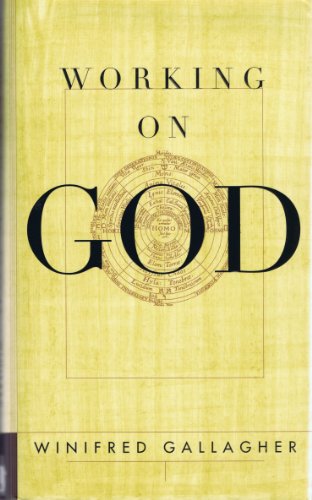
Why do I exist? Is this all there is? What is my true nature? What is most important in life? How should I live? These are humanity's oldest spiritual questions. At the year 2000, however, many who ask them are profoundly estranged from religion. To some, religion is belief in the unbelievable--incom-patible with intelligence and learning. To others, it's just another bureaucratic institution--legalistic, hypo-critical, untrustworthy. Still others have been alienated by their birth traditions, while an increasing number lack any such grounding. What unites this diverse group of skeptical, ambivalent "neoagnostics" is a sense of something deep and vital that eludes the reach of their intellect and education and an inchoate desire for meaning.
A half-century of the great secular experiment of Einstein, Marx, and Freud has proved that if religion--the record of our struggle to understand existence and behave accordingly--has grave flaws, so do the materialistic "faiths" that were intended to replace it. After looking for answers in some obvious places, from relationships and accomplishment to art and science, Winifred Gallagher realized that she had not seriously considered religion since childhood's version of Chris-tianity collided with a college education. Asking the question "What if religion could be about something else?" she decided to explore her own heritage, as well as Buddhism, Judaism, and the New Age. She discovered a vast, quiet, "millennial" spiritual revolution that is transforming religion into a process of moving toward--and struggling with--the sacred. Transcending denom-inational boundaries, this new sensibility embraces modern realities from physics to psychiatry, addresses existential questions, values personal experience over institutional authority, draws insights from multiple traditions, welcomes women as clergy and teachers, and expands morality beyond the personal to the systemic, from economics to ecology.
A reporter of behavioral science, Winifred Gallagher began her investigation of postmodern religion with research and interviews, but watched it also become a very personal story of epektasis--straining toward mystery. Journalism and journey unfold over time spent in a Zen monastery and a cloistered convent, small-group discussions and healing rituals, a Conservative synagogue that shares a Christian church, and the birthplace of the New Age. Written with humor, empathy, and a rigorous curiosity, Working on God breaks new ground in depicting the broad-based spiritual move-ment that is transforming culture as well as religion.
Die Inhaltsangabe kann sich auf eine andere Ausgabe dieses Titels beziehen.
Über die Autorin bzw. den Autor
Winifred Gallagher's previous books are Just the Way You Are: How Heredity and Experience Create the Individual, which was a New York Times Notable Book of the Year, and The Power of Place: How Our Surroundings Shape Our Thoughts, Emotions, and Actions. She has written for many magazines, from The Atlantic Monthly to Rolling Stone. She lives in Manhattan and Long Eddy, New York.
Aus dem Klappentext
st? Is this all there is? What is my true nature? What is most important in life? How should I live? These are humanity's oldest spiritual questions. At the year 2000, however, many who ask them are profoundly estranged from religion. To some, religion is belief in the unbelievable--incom-patible with intelligence and learning. To others, it's just another bureaucratic institution--legalistic, hypo-critical, untrustworthy. Still others have been alienated by their birth traditions, while an increasing number lack any such grounding. What unites this diverse group of skeptical, ambivalent "neoagnostics" is a sense of something deep and vital that eludes the reach of their intellect and education and an inchoate desire for meaning. <br> <br>A half-century of the great secular experiment of Einstein, Marx, and Freud has proved that if religion--the record of our struggle to understand existence and behave accordingly--has grave flaws, so do t
Auszug. © Genehmigter Nachdruck. Alle Rechte vorbehalten.
SPIRITUALITY: JUST DO IT
At four-fifteen on a cold, starry morning in California wine country, I slip out of my sleeping bag and into leggings, two layers of fleece, and sandals. Forgoing toothbrush for flashlight, I head up one of the steep, dew-soaked wooded paths that lead to the heart of the Sonoma Mountain Zen Center. Once an old redwood barn, the warm, oil-lamplit zendo has the soothing feel and smell of a sauna. A bell rings, and some thirty black-robed people, ranging in age from nineteen to the mid-seventies, commence the rapid execution of 108 full prostrations to Buddha. This is a workout, and by the halfway point, a few simply bow. Outside, the wind howls. At a neighboring farm, fighting cocks crow.
When the grueling ceremony is completed, we file out in barefoot, silent pairs for a short break before getting down to the morning's real business: zazen, or seated meditation, and related rituals that will last until eight-thirty. Down in the farmhouse that's the social center for this community, or sangha, I clutch a mug of herbal tea and consider my mute companions' sleepy faces. The thick gray dawn presses against the windows. As my quadriceps turn to wood and my stomach rumbles futilely, I recall the reservations politely voiced by Jakusho Kwong-roshi, the abbot, about a raw beginner's joining them for three days of a rigorous silent Zen retreat called sesshin, meaning "to touch the mind."
In the fading starlight, a great gong sounds. We troop back to the zendo for two forty-minute rounds of zazen, the practice that's at the heart of this form of Buddhism. When I arrived yesterday, I had a brief tutorial with Kwong-roshi, one of America's handful of Zen masters, whose special authority has been transmitted from teacher to teacher through centuries. With his Chinese features, shaved head, robes, and aura of calm cheer, he could be a Hollywood lama. First he showed me how to sit cross-legged toward the edge of the hard round black cushion, resting my folded knees on a thick cotton underpad. After trying several postures, he decided that the Burma pose, which resembles yoga's half-lotus, suited me best. The thumbs of my nested hands pointed upward too much, he noted, which conveyed tension; I quickly corrected at least the digital component of the problem. Next, Kwong-roshi took a yardstick and measured the right place-about twenty-four inches from the floor-for my half-lidded gaze to fall when meditating. "We don't close our eyes," he said. "That may create other problems." Although this posture was comfortable enough, I knew that it wouldn't remain so.
Next, Kwong-roshi demonstrated the long, slow Zen breathing, which gives more energy to the exhale, "like you do when having a baby or using the rest room." He explained that a fetus breathes only once or twice a minute, and a Zen adept a mere five times or even fewer; with the slower, emptier unborn mind that results, conditioning drops away, "and we are able to see our basic goodness." One night, he said, he was driving with his four sons, now grown, when they came upon a terrible automobile accident. He rushed from his car, only to find one man already dead and another gravely injured, "lying in a pool of blood, staring up. I could hear his breathing, and it was unshu-Zen breathing. The man said to me, 'The stars are so bright tonight.' His eyes, too, were brilliant. Then an ambulance came and took him away."
My body taken care of, Kwong-roshi turned to my mind. I must simply concentrate on counting my breaths, he said, going back to "one" each time I'm distracted. "We usually let our thoughts just go," he said, "and our breath follows them, all over the place. Here, we make our thoughts follow the sound of our breath, so they naturally slow down and drop away. Breath sweeps mind." Before dismissing me, Kwong-roshi said that after doing Zen practice for a while, "you begin to live differently." Comparing sesshin to an express train, he advised, "Just get on and go." I nodded but didn't really understand either of these two comments as well as I would even a day later.
Now, finding my assigned place in the zendo, I perch carefully atop my cushion for forty minutes of zazen. Trying to remember all the roshi's instructions, I inhale and, especially, exhale-the optimum starting point for all activities. The redwood building, too, seems to breathe, creaking and groaning in response to the wind. After rushing around on planes and California's freeways for the past few days, I am relieved at first just to be still in the soft dawn darkness. Sitting tall, I earnestly try to do nothing.
A gong rings, and we rise stiffly for ten minutes of kinhin, or silent walking meditation. As if choreographing Waiting for Godot, we baby-step in single file around the zendo, going no place slowly. Gradually, the circulation returns to my right leg. Outside, songbirds announce daylight.
The gong sounds again, summoning us back to our cushions for the next round of zazen. All novelty evaporates, exposing deep holes in my concentration. As a writer, I'm accustomed to recording what's going on, even if it's only in my own head. Giving up thoughts, which are not only my business but my pleasure and existential defense, seems not only hard, but wrong. Some of this difficulty is cultural. The style of meditation I'm familiar with, as a Westerner, involves thinking about something, whether a bit of Scripture or world peace. Could this Asian thinking about nothing but counting my breaths be "better" than focusing on some worthy concept or image? Kwong-roshi said that his own master had taught that before one uses a calculator, one must clear it. Although empty mind eludes me, just gunning for it slows down and reduces the number of my thoughts.
Suddenly, the electrical outlet slightly to the left of my official gazing locus starts to get on my nerves. What is the point of sitting here in this uncomfortable position at a hellish hour of the morning, staring at a wall plug? I devise a koan, or Zen paradox: Why does Zen seem so smart and simple when you read about it and so dumb and hard when you do it? When the bell rings for morning "work practice," the prospect of chores seems Dionysian.
Time flies until ten-thirty, and the particularly grueling triple zazen. With kinhin, chanting, and a ritual meal, we'll be in this room, mostly locked into one position, for nearly four hours. I feel twinges of panic as I lower myself gingerly onto the now dreaded pillow. Familiar with this reaction from starting a long run, I give myself the same moronic, effective pep talk: If they can do it, I can do it. Because counting breaths doesn't feel right to me, I decide to repeat silently a simple phrase instead: "Here. Now." This is probably cheating, I think, despite trying not to.
By the light of the enigmatic, sound-of-one-hand-clapping Zen literature, I'm not sure that what I sense during zazen is "right." I can best describe it as an experiential version of a perception that helped to create modern painting. The elements of life's background-from breathing to consciousness, the sound of the wind to the zendo's barny redwood smell-come to the surface, revealing themselves to be as vital as the more "important" things that usually occupy the foreground, and our attention. There's an awareness of natura naturans-nature naturing. Then, too, I can't help but notice that my thoughts and sensations come and go, but something else doesn't. Although my zazen state has no religious content in the usual sense, I'm reminded of theologian Paul Tillich's definition of God as the "ground of being."
During the afternoon work period, I invoke journalistic license to break the sesshin silence and talk...
„Über diesen Titel“ kann sich auf eine andere Ausgabe dieses Titels beziehen.
Weitere beliebte Ausgaben desselben Titels

Suchergebnisse für Working on God

Beispielbild für diese ISBN
Working on God
Anbieter: World of Books (was SecondSale), Montgomery, IL, USA
Verkäuferbewertung 5 von 5 Sternen

Zustand: Good. Item in good condition. Textbooks may not include supplemental items i.e. CDs, access codes etc. Artikel-Nr. 00085289783
Gebraucht kaufen
EUR 3,12
Versand gratis
Versand innerhalb von USA
Versand innerhalb von USA
Anzahl: 4 verfügbar
Beispielbild für diese ISBN
Working on God
Anbieter: World of Books (was SecondSale), Montgomery, IL, USA
Verkäuferbewertung 5 von 5 Sternen
Zustand: Very Good. Item in very good condition! Textbooks may not include supplemental items i.e. CDs, access codes etc. Artikel-Nr. 00078804673
Gebraucht kaufen
EUR 3,12
Versand gratis
Versand innerhalb von USA
Versand innerhalb von USA
Anzahl: 5 verfügbar
Beispielbild für diese ISBN
Working on God
Verlag:
Random House (edition 1), 1999
ISBN 10: 0679447946
ISBN 13: 9780679447948
Gebraucht
Hardcover
Anbieter: BooksRun, Philadelphia, PA, USA
Verkäuferbewertung 5 von 5 Sternen
Hardcover. Zustand: Very Good. 1. With dust jacket. It's a well-cared-for item that has seen limited use. The item may show minor signs of wear. All the text is legible, with all pages included. It may have slight markings and/or highlighting. Artikel-Nr. 0679447946-11-1-29
Gebraucht kaufen
EUR 6,34
Versand gratis
Versand innerhalb von USA
Versand innerhalb von USA
Anzahl: 1 verfügbar
Beispielbild für diese ISBN
Working on God
Anbieter: Wonder Book, Frederick, MD, USA
Verkäuferbewertung 5 von 5 Sternen
Zustand: As New. Like New condition. Like New dust jacket. A near perfect copy that may have very minor cosmetic defects. Artikel-Nr. R04C-04267
Gebraucht kaufen
EUR 7,08
Versand gratis
Versand innerhalb von USA
Versand innerhalb von USA
Anzahl: 1 verfügbar
Beispielbild für diese ISBN
Working on God
Anbieter: Wonder Book, Frederick, MD, USA
Verkäuferbewertung 5 von 5 Sternen
Zustand: Very Good. Very Good condition. Very Good dust jacket. A copy that may have a few cosmetic defects. May also contain light spine creasing or a few markings such as an owner's name, short gifter's inscription or light stamp. Artikel-Nr. R11A-01390
Gebraucht kaufen
EUR 7,08
Versand gratis
Versand innerhalb von USA
Versand innerhalb von USA
Anzahl: 2 verfügbar
Beispielbild für diese ISBN
Working on God
Anbieter: ThriftBooks-Dallas, Dallas, TX, USA
Verkäuferbewertung 5 von 5 Sternen
Hardcover. Zustand: Good. No Jacket. Pages can have notes/highlighting. Spine may show signs of wear. ~ ThriftBooks: Read More, Spend Less. Artikel-Nr. G0679447946I3N00
Gebraucht kaufen
EUR 8,85
Versand gratis
Versand innerhalb von USA
Versand innerhalb von USA
Anzahl: 1 verfügbar
Beispielbild für diese ISBN
Working on God
Verlag:
Random House Publishing Group, 1999
ISBN 10: 0679447946
ISBN 13: 9780679447948
Gebraucht
Hardcover
Erstausgabe
Anbieter: Better World Books: West, Reno, NV, USA
Verkäuferbewertung 5 von 5 Sternen
Zustand: Good. 1st Edition. Former library copy. Pages intact with minimal writing/highlighting. The binding may be loose and creased. Dust jackets/supplements are not included. Includes library markings. Stock photo provided. Product includes identifying sticker. Better World Books: Buy Books. Do Good. Artikel-Nr. GRP102761378
Gebraucht kaufen
EUR 9,09
Versand gratis
Versand innerhalb von USA
Versand innerhalb von USA
Anzahl: 1 verfügbar
Beispielbild für diese ISBN
Working on God
Verlag:
Random House, New York, 1999
ISBN 10: 0679447946
ISBN 13: 9780679447948
Gebraucht
Hardcover
Erstausgabe
Anbieter: Abacus Bookshop, Pittsford, NY, USA
Verkäuferbewertung 5 von 5 Sternen
hardcover. Zustand: Fine copy in fine dust jacket. 1st. 8vo, 340 pp. Artikel-Nr. 029483
Gebraucht kaufen
EUR 6,65
EUR 3,44 Versand
Versand innerhalb von USA
Versand innerhalb von USA
Anzahl: 1 verfügbar
Foto des Verkäufers
Working on God
Verlag:
Random House, New York, NY, 1999
ISBN 10: 0679447946
ISBN 13: 9780679447948
Gebraucht
Hardcover
Erstausgabe
Anbieter: True Oak Books, Highland, NY, USA
Verkäuferbewertung 5 von 5 Sternen
Hardcover. Zustand: Good+. Zustand des Schutzumschlags: Very Good. First Edition; Second Printing. 5.75 X 1.25 X 10 inches; 340 pages; Underlining in pencil. Pen mark to side edge of pages. Stain to edge of pages due to a spill. Very Good overall condition otherwise. No other noteworthy defects. No markings.; - We offer free returns for any reason and respond promptly to all inquiries. Your order will be packaged with care and ship on the same or next business day. Buy with confidence. Artikel-Nr. HVD-36339-A-0
Gebraucht kaufen
EUR 17,72
Versand gratis
Versand innerhalb von USA
Versand innerhalb von USA
Anzahl: 1 verfügbar
Foto des Verkäufers
Working on God
Verlag:
Random House, New York, 1999
ISBN 10: 0679447946
ISBN 13: 9780679447948
Gebraucht
Hardcover
Erstausgabe
Anbieter: Between the Covers-Rare Books, Inc. ABAA, Gloucester City, NJ, USA
Verkäuferbewertung 5 von 5 Sternen
Hardcover. Zustand: Fine. Zustand des Schutzumschlags: Fine. First edition. Quarto. 340 [1]pp. About fine with a small bump on the crown and like on else fine dust jacket. An investigation of postmodern religion. Artikel-Nr. 426644
Gebraucht kaufen
EUR 17,73
EUR 4,73 Versand
Versand innerhalb von USA
Versand innerhalb von USA
Anzahl: 1 verfügbar