
Verwandte Artikel zu Deep in a Dream: The Long Night of Chet Baker
Inhaltsangabe
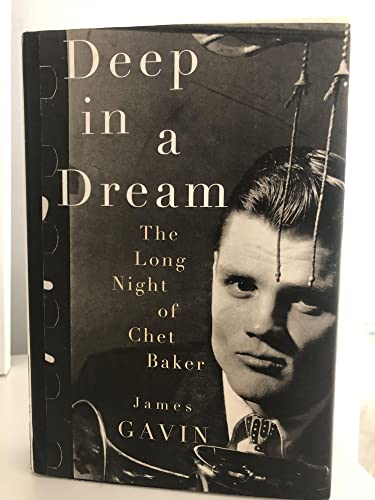
From his emergence in the 1950s - when an uncannily beautiful young man from Oklahoma appeared on the West Coast to become, seemingly overnight, the prince of "cool" jazz - until his violent, drug-related death in Amsterdam in 1988, Chet Baker lived a life that has become an American myth. Now, drawing on hundreds of interviews and previously untapped sources, James Gavin gives a hair-raising account of the trumpeter's dark journey.
The story of Baker's demise - a heretofore unsolved riddle - is revealed here at last. So is the truth behind his tormented childhood, the pain of which haunted his entire life. Gavin explores the birth of the melancholy trumpet playing, the fragile tenor voice, and the otherworldly personal aura that catapulted Baker to fame. Sexy, angelic, needy, and forbidding all at once, Baker became known as the James Dean of jazz. Like Dean, he struck a note of menace in the staid fifties: behind his ultracool, handsome facade lay something ominous, unspoken. The mystery drove both sexes crazy. But his only real romance, apart from music, was with drugs. And in mesmerizing detail, Gavin narrates the harrowing spiral of dependency down which Baker tumbled, dragging with him those who dared get close.
Die Inhaltsangabe kann sich auf eine andere Ausgabe dieses Titels beziehen.
Über die Autorin bzw. den Autor
James Gavin is the author of Intimate Nights: The Golden Age of New York Cabaret, a winner of ASCAP’s Deems Taylor Award. He is a frequent contributor to the New York Times and other publications. His liner notes for Ella Fitzgerald: The Legendary Decca Recordings, a CD boxed set, received a 1996 Grammy nomination. He lives in New York City.
Von der hinteren Coverseite
e of the most romanticized icon in jazz is thrillingly recounted in this first major biography.
From his emergence in the 1950s—when an uncannily beautiful young man from Oklahoma appeared on the West Coast to become, seemingly overnight, the prince of “cool” jazz—until his violent, drug-related death in Amsterdam in 1988, Chet Baker lived a life that has become an American myth. Now, drawing on hundreds of interviews and previously untapped sources, James Gavin gives a hair-raising account of the trumpeter’s dark journey.
The story of Baker’s demise—a heretofore unsolved riddle—is revealed here at last. So is the truth behind his tormented childhood, the pain of which haunted his entire life. Gavin explores the birth of the melancholy trumpet playing, the fragile tenor voice, and the otherworldly personal aura that catapulted Baker to fame. Sexy, angelic, needy, and forbidding all at once, Baker became known as the James Dean o
Aus dem Klappentext
e of the most romanticized icon in jazz is thrillingly recounted in this first major biography.<br><br>From his emergence in the 1950s―when an uncannily beautiful young man from Oklahoma appeared on the West Coast to become, seemingly overnight, the prince of “cool” jazz―until his violent, drug-related death in Amsterdam in 1988, Chet Baker lived a life that has become an American myth. Now, drawing on hundreds of interviews and previously untapped sources, James Gavin gives a hair-raising account of the trumpeter’s dark journey.<br><br>The story of Baker’s demise―a heretofore unsolved riddle―is revealed here at last. So is the truth behind his tormented childhood, the pain of which haunted his entire life. Gavin explores the birth of the melancholy trumpet playing, the fragile tenor voice, and the otherworldly personal aura that catapulted Baker to fame. Sexy, angelic, needy, and forbidding all at once, Baker became known as the James Dean o
Auszug. © Genehmigter Nachdruck. Alle Rechte vorbehalten.
Deep in a Dream
The Long Night of Chet BakerBy James GavinKnopf
Copyright © 2002 James GavinAll right reserved.
ISBN: 9780679442875
1
The Christmas season of 1929 arrived just weeks after the stock market had crashed. But that December, nineteen-year-old Vera Baker got the gift of her dreams. In her little Oklahoma house, she gazed down at the infant in her arms, an angel with alabaster skin and hazel eyes. When he smiled at her, she saw magic. The child would surely lift her above the cold realities of marriage to a frequently unemployed alcoholic; more than that, he would bring meaning to her life, supplying all the tenderness and excitement that were missing. He was named Chesney, after his father. But with his chubby cheeks and dark hair, the child seemed like a tiny replica of herself. From the time of his birth, "Chettie,"as she called him, was the center of Vera's universe.
Her obsession with him, and his father's response to it, had a darker effect on Chet Baker than he ever acknowledged; even he probably didn't understand it. Years later, he told Lisa Galt Bond, his collaborator on an unfinished memoir, "I had a very happy childhood; no problems."The tendency to keep things hidden had been ingrained in him from an early age. In 1954 he brought his French girlfriend, Liliane Cukier, to his parents' home during the first national tour of the Chet Baker Quartet. She observed the Bakers for three weeks. "This was a family where nobody hollered, didn't say what they had in their hearts or in their minds,"she noticed. "Everyone was just trying to be cool."
Cukier recalled Chesney and Vera as "Oklahoma peasants, ordinary white people from way in the center."Starting in 1946, Chesney drove a yellow cab, the only job he had held on to for more than a couple of years. For a while in the twenties, he had lived his dream by touring as a guitar and banjo player. He worked mainly in hillbilly bands, but according to his son, Chesney had a feeling for jazz: he could whistle the licks of his hero, the Texas-born trombone master Jack Teagarden, while improvising on guitar.
Then came the Depression and the birth of his child, and he was forced to quit music and take a series of dreary survival jobs. He rarely mentioned his frustration, but it showed on his face: by his thirties he looked old and haggard, with crow's-feet spreading down his cheeks, pointing to a mouth that rarely smiled. He kept his sandy hair combed back, exposing a deeply furrowed brow. That prematurely ravaged look was inherited by his son, whose facial decay in later years would be commonly blamed on drug abuse. Chesney, though, aged far less strikingly. Bernie Fleischer recalled him as "very bland-looking,"a man who faded into the background: "He was one of those shadowy figures who was always away somewhere."In the forties, Chesney surfaced occasionally to brag to his son's musician friends about a night when the great Teagarden had come to the house to jam with him. Some of them would later suspect that the fabled meeting had never happened at all.
Liquor helped Chesney dull the truth, including memories of a grim childhood. His family had moved from Illinois, where he was born on January 24, 1906, to Snyder, Oklahoma. Life in Snyder seemed cursed–not just by the tornado and fires that had plagued the small town, but by domestic strife. Vera later explained that Chesney's father, George Baker, had deserted his mother, Alice, and their five children for another woman. Alice went on to marry "Grandpa Beardsley,"as the family knew him, a farmer with a bad leg and a nasty temper. Grandpa Beardsley seemed to hate his stepson on sight; Chesney told Vera that the older man beat him with his cane and badgered him to leave the house and never come back. Alice tried to protect her son, but Chesney fled before he was eighteen. For the rest of his life he hated his father and stepfather. Even after the latter had suffered a stroke and needed two canes to walk, Chesney had no sympathy; he grumbled to Vera that he wouldn't cross the street to see his stepfather even if the old man were on his deathbed.
It was in his teens that Chesney first found solace in the infant art of jazz. An improvisational music born of gospel, Negro spirituals, blues, and ragtime, jazz was all about letting the imagination take wing, molding split-second flights of fancy into personal statements of the heart. Chesney needed escape, and jazz seemed like the perfect vehicle. Besides Teagarden, whose ability to play trombone with endless invention defined the form, one other star fascinated Chesney: Bix Beiderbecke, a cornetist with a rich tone, a spareless, and a poignance seldom found in early jazz, which tended to sound like party music.
Chesney taught himself to play banjo, a popular instrument in traditional, or "Dixieland,"jazz, and thus wrote his own ticket out of Snyder. The still-tiny jazz circuit seemed out of his reach, so he joined a series of country-western bands that entertained at dances throughout Oklahoma and other Midwestern states. It was a hand-to-mouth existence, but never had he known such joy: he lived each day for music, then unwound at night by drinking and smoking reefer, just like his heroes.
In 1928, Chesney passed through Yale, Oklahoma, a small oil town between Tulsa and Oklahoma City. Yale was so marginal that, in years to come, many state history books failed to mention it. The city's only claim to fame was Jim Thorpe, the American Indian whose 1912 Olympic triumphs in football and track had won him the title "World's Greatest Athlete"and inspired a Hollywood movie, Jim Thorpe: All American, starring Burt Lancaster. During the twenties, most of Yale's 2,600 other residents worked in the town's oil fields and refineries or as farmers.
One of the latter was Salomon Wesley Moser, a native of Iowa. In 1889, he had joined the legendary Oklahoma Run, in which white settlers charged in on horseback to drive Indians off the fertile land and claim it for themselves. Moser took eighty acres and started a farm. Around that time he met and married Randi, a young blind woman from Norway. The couple had seven children, who tended the farm. The next-to-youngest, Vera Pauline, was born there in May 1910. Vera grew into an unglamorous teenager. Short and stocky, she wore her mousy brown hair hanging down and parted in the middle. Her deep-set eyes were surrounded by little lines, deepened through years of exposure to the Oklahoma sun and dry winds.
At eighteen, Vera went to a Saturday-night barn dance where the young men and women of Yale gathered to find mates. She and the visiting guitar player, Chesney Baker, caught each other's eye. "He was such a handsome fellow!"Vera recalled. After a brief courtship they were wed by a justice of the peace, and found a cozy house at 326 South B Street in Yale. But any dreams Vera may have had for married bliss crumbled when Chesney skipped the honeymoon to go on tour, leaving her in Yale. Rather than live alone, she went back to her parents' farm, where she waited almost a year for her husband to return.
Their estrangement ended abruptly in October 1929, when the stock market crash wiped out people's entertainment budgets, along with Chesney's modest career. Just before Christmas, he came home broke and bereft of prospects to find his wife seven months pregnant, which only compounded his worries. On Monday, December 23, Vera gave birth to Chesney Henry Baker, Jr. Suddenly the disappointments of her marriage didn't seem to matter. Vera refashioned her life around Chettie. She bought a Brownie box...
„Über diesen Titel“ kann sich auf eine andere Ausgabe dieses Titels beziehen.
Suchergebnisse für Deep in a Dream: The Long Night of Chet Baker

Beispielbild für diese ISBN
Deep in a Dream: The Long Night of Chet Baker
Anbieter: ThriftBooks-Atlanta, AUSTELL, GA, USA
Verkäuferbewertung 5 von 5 Sternen

Hardcover. Zustand: Good. No Jacket. Former library book; Pages can have notes/highlighting. Spine may show signs of wear. ~ ThriftBooks: Read More, Spend Less. Artikel-Nr. G0679442871I3N10
Gebraucht kaufen
EUR 9,34
Versand gratis
Versand innerhalb von USA
Versand innerhalb von USA
Anzahl: 1 verfügbar
Beispielbild für diese ISBN
Deep in a Dream: The Long Night of Chet Baker
Anbieter: World of Books (was SecondSale), Montgomery, IL, USA
Verkäuferbewertung 5 von 5 Sternen
Hardback. Zustand: Fair. This first major biography of the most romanticized icon in jazz thrillingly recounts his wild ride. From his emergence in the 1950s--when an uncannily beautiful young man from Oklahoma appeared on the West Coast to become, seemingly overnight, the prince of cool jazz--until his violent, drug-related death in Amsterdam in 1988, Chet Baker lived a life that has become an American myth. Here, drawing on hundreds of interviews and previously untapped sources, James Gavin gives a hair-raising account of the trumpeter's dark journey. Artikel-Nr. 00108494546
Gebraucht kaufen
EUR 9,77
Versand gratis
Versand innerhalb von USA
Versand innerhalb von USA
Anzahl: 2 verfügbar
Beispielbild für diese ISBN
Deep in a Dream: The Long Night of Chet Baker
Anbieter: World of Books (was SecondSale), Montgomery, IL, USA
Verkäuferbewertung 5 von 5 Sternen
Hardback. Zustand: Good. This first major biography of the most romanticized icon in jazz thrillingly recounts his wild ride. From his emergence in the 1950s--when an uncannily beautiful young man from Oklahoma appeared on the West Coast to become, seemingly overnight, the prince of cool jazz--until his violent, drug-related death in Amsterdam in 1988, Chet Baker lived a life that has become an American myth. Here, drawing on hundreds of interviews and previously untapped sources, James Gavin gives a hair-raising account of the trumpeter's dark journey. Artikel-Nr. 00110278760
Gebraucht kaufen
EUR 9,77
Versand gratis
Versand innerhalb von USA
Versand innerhalb von USA
Anzahl: 2 verfügbar
Beispielbild für diese ISBN
Deep in a Dream: The Long Night of Chet Baker
Anbieter: Wonder Book, Frederick, MD, USA
Verkäuferbewertung 5 von 5 Sternen
Zustand: Good. Good condition. Good dust jacket. A copy that has been read but remains intact. May contain markings such as bookplates, stamps, limited notes and highlighting, or a few light stains. Artikel-Nr. Q09U-00891
Gebraucht kaufen
EUR 10,22
Versand gratis
Versand innerhalb von USA
Versand innerhalb von USA
Anzahl: 1 verfügbar
Beispielbild für diese ISBN
Deep in a Dream : The Long Night of Chet Baker
Verlag:
Knopf Doubleday Publishing Group, 2002
ISBN 10: 0679442871
ISBN 13: 9780679442875
Gebraucht
Hardcover
Anbieter: Better World Books: West, Reno, NV, USA
Verkäuferbewertung 5 von 5 Sternen
Zustand: Very Good. Pages intact with possible writing/highlighting. Binding strong with minor wear. Dust jackets/supplements may not be included. Stock photo provided. Product includes identifying sticker. Better World Books: Buy Books. Do Good. Artikel-Nr. 4622210-6
Gebraucht kaufen
EUR 16,71
Versand gratis
Versand innerhalb von USA
Versand innerhalb von USA
Anzahl: 1 verfügbar
Beispielbild für diese ISBN
Deep in a Dream : The Long Night of Chet Baker
Verlag:
Knopf Doubleday Publishing Group, 2002
ISBN 10: 0679442871
ISBN 13: 9780679442875
Gebraucht
Hardcover
Anbieter: Better World Books, Mishawaka, IN, USA
Verkäuferbewertung 5 von 5 Sternen
Zustand: Very Good. Pages intact with possible writing/highlighting. Binding strong with minor wear. Dust jackets/supplements may not be included. Stock photo provided. Product includes identifying sticker. Better World Books: Buy Books. Do Good. Artikel-Nr. 4622210-6
Gebraucht kaufen
EUR 16,71
Versand gratis
Versand innerhalb von USA
Versand innerhalb von USA
Anzahl: 1 verfügbar
Beispielbild für diese ISBN
Deep in a Dream: The Long Night of Chet Baker
Verlag:
Alfred A. Knopf May 2002, 2002
ISBN 10: 0679442871
ISBN 13: 9780679442875
Gebraucht
Hardcover
Erstausgabe
Anbieter: Old Goat Books, Waterloo, ON, Kanada
Verkäuferbewertung 3 von 5 Sternen

Hardcover. Zustand: Very Good. Zustand des Schutzumschlags: Near Fine. First Edition. Binding is square and solid. Pages are clean, unmarked, and not bent. Spine foot bumped. Spine head lightly faded. Stain to spine. Dust jacket has very light wear to spine ends and a bump to top back fore-corner. Artikel-Nr. 19324
Gebraucht kaufen
EUR 9,19
EUR 14,28 Versand
Versand von Kanada nach USA
Versand von Kanada nach USA
Anzahl: 1 verfügbar
Beispielbild für diese ISBN
Deep in a Dream: The Long Night of Chet Baker
Anbieter: Books From California, Simi Valley, CA, USA
Verkäuferbewertung 4 von 5 Sternen

Hardcover. Zustand: Good. First Edition. First edition. Artikel-Nr. mon0003831949
Gebraucht kaufen
EUR 20,99
EUR 4,45 Versand
Versand innerhalb von USA
Versand innerhalb von USA
Anzahl: 1 verfügbar
Beispielbild für diese ISBN
Deep In A Dream: The Long Night Of Chet Baker
Anbieter: Mooney's bookstore, Den Helder, Niederlande
Verkäuferbewertung 4 von 5 Sternen
Zustand: As New. Artikel-Nr. 40B946C2D3B942B
Gebraucht kaufen
EUR 58,59
EUR 14,95 Versand
Versand von Niederlande nach USA
Versand von Niederlande nach USA
Anzahl: 1 verfügbar