
Verwandte Artikel zu All over but the Shoutin'
Inhaltsangabe
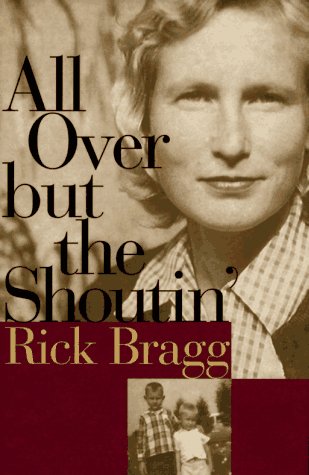
A Pulitzer Prize-winning correspondent for The New York Times recounts growing up in the Alabama hills, the son of a violent veteran and a mother who tried to insulate her children from poverty and ignorance.
Die Inhaltsangabe kann sich auf eine andere Ausgabe dieses Titels beziehen.
Über die Autorin bzw. den Autor
Rick Bragg is a national correspondent for the New York Times. He is based in Atlanta, Georgia.
Aus dem Klappentext
emoir about growing up dirt-poor in the Alabama hills--and about moving on but never really being able to leave.<br><br>The extraordinary gifts for evocation and insight and the stunning talent for story- telling that earned Rick Bragg a Pulitzer Prize for feature writing in 1996 are here brought to bear on the wrenching story of his own family's life. It is the story of a war-haunted, hard-drinking father and a strong-willed, loving mother who struggled to protect her sons from the effects of poverty and ignorance that had constricted her own life. It is the story of the life Bragg was able to carve out for himself on the strength of his mother's encouragement and belief. And it is the story of his attempts to both atone for and avenge the mistakes and cruelties of his past. <br><br>All Over but the Shoutin' is a gripping account of people struggling to make sense and solidity of life's capricious promises. A classic piece of Americana, it is made vividly, movingly particular by Rick Brag
Auszug. © Genehmigter Nachdruck. Alle Rechte vorbehalten.
Chapter 1: A man who buys books because they're pretty
My mother and father were born in the most beautiful place on earth, in the foothills of the Appalachians along the Alabama-Georgia line. It was a place where gray mists hid the tops of low, deep-green mountains, where redbone and bluetick hounds flashed through the pines as they chased possums into the sacks of old men in frayed overalls, where old women in bonnets dipped Bruton snuff and hummed "Faded Love and Winter Roses" as they shelled purple hulls, canned peaches and made biscuits too good for this world. It was a place where playing the church piano loud was near as important as playing it right, where fearless young men steered long, black Buicks loaded with yellow whiskey down roads the color of dried blood, where the first frost meant hog killin' time and the mouthwatering smell of cracklin's would drift for acres from giant, bubbling pots. It was a place where the screams of panthers, like a woman's anguished cry, still haunted the most remote ridges and hollows in the dead of night, where children believed they could choke off the cries of night birds by circling one wrist with a thumb and forefinger and squeezing tight, and where the cotton blew off the wagons and hung like scraps of cloud in the branches of trees.
It was about 120 miles west of Atlanta, about 100 miles east of Birmingham, close to nothin' but that dull red ground. Life here between the meandering dirt roads and skinny blacktop was full, rich, original and real, but harsh, hard, mean as a damn snake. My parents grew up in the 1940s and 1950s in the poor, upland South, a million miles from the Mississippi Delta and the Black Belt and the jasmine-scented verandas of what most people came to know as the Old South. My ancestors never saw a mint julep, but they sipped five-day-old likker out of ceramic jugs and Bell jars until they could not remember their Christian names.
Men paid for their plain-plank houses and a few acres of land by sawing and hand-lifting pulpwood onto ragged trucks for pennies a ton. They worked in the blast furnace heat of the pipe shops, loaded boxcars at the clay pits and tended the nerve gas stockpiles at the army base, carrying caged birds to test for leaks. They coaxed crops to grow in the up-country clay that no amount of fertilizer would ever turn into rich bottomland, tried in vain to keep their fingers, hands and arms out of the hungry machinery of the cotton mills, so that the first thing you thought when you saw an empty sleeve was not war, but the threshing racks. The summers withered the cotton and corn and the tornado season lasted ten months, making splinters out of their barns, twisting the tin off their roofs, yanking their tombstones out of the ground. Their women worked themselves to death, their mules succumbed to worms and their children were crippled by rickets and perished from fever, but every Sunday morning The Word leaked out of
little white-wood sanctuaries where preachers thrust ragged Bibles at the rafters and promised them that while sickness and poverty and Lucifer might take their families, the soul of man never dies.
White people had it hard and black people had it harder than that, because what are the table scraps of nothing? This was not the genteel and parochial South, where monied whites felt they owed some generations-old debt to their black neighbors because their great-great-grandfather owned their great-great-grandfather. No one I knew ever had a mammy. This was two separate states, both wanting and desperate, kept separate by hard men who hid their faces under hoods and their deeds under some twisted interpretation of the Bible, and kicked the living shit out of anyone who thought it should be different. Even into my own youth, the orange fires of shacks and crosses lit up the evening sky. It seems a cliché now, to see it on movie screens. At the time, it burned my eyes.
It was as if God made them pay for the loveliness of their scenery by demanding everything else. Yet the grimness of it faded for a while, at dinner on the ground at the Protestant churches, where people sat on the springtime grass and ate potato salad and sipped sweet tea from an aluminum tub with a huge block of ice floating in it. The pain eased at family reunions where the men barbecued twenty-four hours straight and the women took turns holding babies and balancing plates on their knees, trying to keep the grease from soaking through on the one good dress they had. The hardness of it softened in the all-night gospel singings that ushered in the dawn with the promise that "I'll have a new body, praise the Lord, I'll have a new life," as babies crawled up into the ample laps of grandmothers to sleep across jiggling knees. If all else failed, you could just wash it away for a while, at the stills deep in the woods or in the highly illegal beer joints and so-called social clubs, where the guitar pickers played with their eyes closed, lost in the booze and the words of lost love and betrayal. They sang about women who walked the hills in long black veils, of whispering pines, and trains.
It was the backdrop and the sound track of our lives. I was born into it in the summer of 1959, just in time to taste it, absorb it, love it and hate it and know its secrets. When I was a teenager, I watched it shudder and gasp and finally begin to die, the pines clear-cut into huge patches of muddy wasteland and the character of the little towns murdered by generic subdivisions and generic fast-food restaurants. The South I was born in was eulogized by pay-as-you-pray TV preachers, enclosed in a coffin of light blue aluminum siding and laid to rest in a polyester suit, from Wal-Mart.
I watched the races fall into an uneasy and imperfect peace and the grip of the poverty ease. There was reason to rejoice in that, because while I was never ashamed to be a Southerner there was always a feeling, a need, to explain myself. But as change came in good ways, I saw Southernness become a fashion, watched men wear their camouflage deer-hunting clothes to the mall because they thought it looked cool, watched Hank Williams and his elegant western suits give way to pretty boys in ridiculous Rodeo Drive leather chaps. And I thought of my granddaddy Bobby Bragg, gentler than his son in some ways, who sat down to dinner in clean overalls, a spotless white shirt buttoned to the neck and black wingtip shoes.
Only the religion held. It held even though the piano players went to music school and actually learned to read notes, even though new churches became glass and steel monstrosities that looked like they had just touched down from Venus. It held even though the more prosperous preachers started to tack the pretentious title of "Doctor" in front of their name and started to spend more time at seminars than visiting the sick. It held even though the Baptists started to beat drums and allow electric guitar, even though--Jesus help us--the Church of Christ conceded in the late 1970s that it was probably not a mortal sin if boys went swimming with girls. It held. God hung in there like a rusty fish hook.
Even my father found Him at the end, or at least he went looking for Him.
It was 1974, when he was still a young man and I was a boy in my first year of high school. Several years after he abandoned us or chased us away for the last of too many times, the phone would ring in the little red house where we lived with my grandmother, through the good graces and charity of my aunt Nita and uncle Ed. It would be him, asking for my momma between bone-rattling coughs, the kind that telegraphed death, promised it. She would stop what she was doing, dust the flour from her hands or turn off the iron or put down her fork at supper, and sit for what seemed hours, silent, just listening, twisting the phone cord around...
„Über diesen Titel“ kann sich auf eine andere Ausgabe dieses Titels beziehen.
Weitere beliebte Ausgaben desselben Titels

Suchergebnisse für All over but the Shoutin'

Beispielbild für diese ISBN
All over but the Shoutin
Anbieter: World of Books (was SecondSale), Montgomery, IL, USA
Verkäuferbewertung 5 von 5 Sternen

Zustand: Very Good. Item in very good condition! Textbooks may not include supplemental items i.e. CDs, access codes etc. Artikel-Nr. 00107444313
Gebraucht kaufen
EUR 3,71
Versand gratis
Versand innerhalb von USA
Versand innerhalb von USA
Anzahl: 1 verfügbar
Beispielbild für diese ISBN
All over but the Shoutin
Anbieter: World of Books (was SecondSale), Montgomery, IL, USA
Verkäuferbewertung 5 von 5 Sternen
Zustand: Acceptable. Item in acceptable condition! Textbooks may not include supplemental items i.e. CDs, access codes etc. Artikel-Nr. 00076157415
Gebraucht kaufen
EUR 3,71
Versand gratis
Versand innerhalb von USA
Versand innerhalb von USA
Anzahl: 12 verfügbar
Beispielbild für diese ISBN
All over but the Shoutin
Anbieter: World of Books (was SecondSale), Montgomery, IL, USA
Verkäuferbewertung 5 von 5 Sternen
Zustand: Good. Item in good condition. Textbooks may not include supplemental items i.e. CDs, access codes etc. Artikel-Nr. 00103448426
Gebraucht kaufen
EUR 3,71
Versand gratis
Versand innerhalb von USA
Versand innerhalb von USA
Anzahl: 9 verfügbar
Beispielbild für diese ISBN
All Over but the Shoutin'
Verlag:
Pantheon (edition First Edition), 1997
ISBN 10: 0679442588
ISBN 13: 9780679442585
Gebraucht
Hardcover
Erstausgabe
Anbieter: BooksRun, Philadelphia, PA, USA
Verkäuferbewertung 5 von 5 Sternen
Hardcover. Zustand: Very Good. First Edition. With dust jacket. It's a well-cared-for item that has seen limited use. The item may show minor signs of wear. All the text is legible, with all pages included. It may have slight markings and/or highlighting. Artikel-Nr. 0679442588-11-1-29
Gebraucht kaufen
EUR 5,71
Versand gratis
Versand innerhalb von USA
Versand innerhalb von USA
Anzahl: 1 verfügbar
Beispielbild für diese ISBN
All Over But the Shoutin'
Anbieter: ThriftBooks-Phoenix, Phoenix, AZ, USA
Verkäuferbewertung 5 von 5 Sternen
Hardcover. Zustand: Good. No Jacket. Missing dust jacket; Pages can have notes/highlighting. Spine may show signs of wear. ~ ThriftBooks: Read More, Spend Less. Artikel-Nr. G0679442588I3N01
Gebraucht kaufen
EUR 6,02
Versand gratis
Versand innerhalb von USA
Versand innerhalb von USA
Anzahl: 2 verfügbar
Beispielbild für diese ISBN
All Over But the Shoutin'
Anbieter: ThriftBooks-Reno, Reno, NV, USA
Verkäuferbewertung 5 von 5 Sternen
Hardcover. Zustand: Good. No Jacket. Missing dust jacket; Pages can have notes/highlighting. Spine may show signs of wear. ~ ThriftBooks: Read More, Spend Less. Artikel-Nr. G0679442588I3N01
Gebraucht kaufen
EUR 6,02
Versand gratis
Versand innerhalb von USA
Versand innerhalb von USA
Anzahl: 2 verfügbar
Beispielbild für diese ISBN
All Over But the Shoutin'
Anbieter: ThriftBooks-Reno, Reno, NV, USA
Verkäuferbewertung 5 von 5 Sternen
Hardcover. Zustand: Fair. No Jacket. Former library book; Readable copy. Pages may have considerable notes/highlighting. ~ ThriftBooks: Read More, Spend Less. Artikel-Nr. G0679442588I5N10
Gebraucht kaufen
EUR 6,02
Versand gratis
Versand innerhalb von USA
Versand innerhalb von USA
Anzahl: 1 verfügbar
Beispielbild für diese ISBN
All Over But the Shoutin'
Anbieter: ThriftBooks-Reno, Reno, NV, USA
Verkäuferbewertung 5 von 5 Sternen
Hardcover. Zustand: Good. No Jacket. Former library book; Missing dust jacket; Pages can have notes/highlighting. Spine may show signs of wear. ~ ThriftBooks: Read More, Spend Less. Artikel-Nr. G0679442588I3N11
Gebraucht kaufen
EUR 6,02
Versand gratis
Versand innerhalb von USA
Versand innerhalb von USA
Anzahl: 1 verfügbar
Beispielbild für diese ISBN
All Over But the Shoutin'
Anbieter: ThriftBooks-Phoenix, Phoenix, AZ, USA
Verkäuferbewertung 5 von 5 Sternen
Hardcover. Zustand: Fair. No Jacket. Readable copy. Pages may have considerable notes/highlighting. ~ ThriftBooks: Read More, Spend Less. Artikel-Nr. G0679442588I5N00
Gebraucht kaufen
EUR 6,02
Versand gratis
Versand innerhalb von USA
Versand innerhalb von USA
Anzahl: 5 verfügbar
Beispielbild für diese ISBN
All Over But the Shoutin'
Anbieter: ThriftBooks-Phoenix, Phoenix, AZ, USA
Verkäuferbewertung 5 von 5 Sternen
Hardcover. Zustand: Good. No Jacket. Pages can have notes/highlighting. Spine may show signs of wear. ~ ThriftBooks: Read More, Spend Less. Artikel-Nr. G0679442588I3N00
Gebraucht kaufen
EUR 6,02
Versand gratis
Versand innerhalb von USA
Versand innerhalb von USA
Anzahl: 4 verfügbar