
Inhaltsangabe
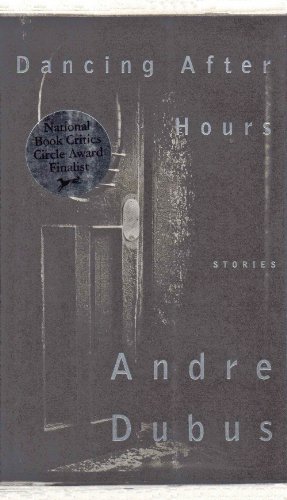
A new collection of fourteen short stories by the author of The Last Worthless Evening explores the unseen mysteries of everyday life as people caught in a wide variety of circumstances contend with the perversities of love, faith, luck, and fate. 20,000 first printing.
Die Inhaltsangabe kann sich auf eine andere Ausgabe dieses Titels beziehen.
Aus dem Klappentext
York Times Notable Book of the Year
From a genuine hero of the American short story comes a luminous collection that reveals the seams of hurt, courage, and tenderness that run through the bedrock of contemporary American life. In these fourteen stories, Dubus depicts ordinary men and women confronting injury and loneliness, the lack of love and the terror of actually having it. Out of his characters' struggles and small failures--and their unexpected moments of redemption--Dubus creates fiction that bears comparison to the short story's greatest creators--Chekhov, Raymond Carver, Flannery O'Connor.
Auszug. © Genehmigter Nachdruck. Alle Rechte vorbehalten.
The Intruder
BECAUSE KENNETH GIRARD LOVED HIS parents and his sister and because he could not tell them why he went to the woods, his first moments there were always uncomfortable ones, as if he had left the house to commit a sin. But he was thirteen and he could not say that he was going to sit on a hill and wait for the silence and trees and sky to close in on him, wait until they all became a part of him and thought and memory ceased and the voices began. He could only say that he was going for a walk and, since there was so much more to say, he felt cowardly and deceitful and more lonely than before.
He could not say that on the hill he became great, that he had saved a beautiful girl from a river (the voice then had been gentle and serious and she had loved him), or that he had ridden into town, his clothes dusty, his black hat pulled low over his sunburned face, and an hour later had ridden away with four fresh notches on the butt of his six-gun, or that with the count three-and-two and the bases loaded, he had driven the ball so far and high that the outfielders did not even move, or that he had waded through surf and sprinted over sand, firing his Tommy gun and shouting to his soldiers behind him.
Now he was capturing a farmhouse. In the late movie the night before, the farmhouse had been very important, though no one ever said why, and sitting there in the summer dusk, he watched the backs of his soldiers as they advanced through the woods below him and crossed the clear, shallow creek and climbed the hill that he faced. Occasionally, he lifted his twenty-two-caliber rifle and fired at a rusty tin can across the creek, the can becoming a Nazi face in a window as he squeezed the trigger and the voices filled him: You got him, Captain. You got him. For half an hour he sat and fired at the can, and anyone who might have seen him could never know that he was doing anything else, that he had been wounded in the shoulder and lost half his men but had captured the farmhouse.
Kenneth looked up through the trees, which were darker green now. While he had been watching his battle, the earth, too, had become darker, shadowed, with patches of late sun on the grass and brown fallen pine needles. He stood up, then looked down at the creek, and across it, at the hill on the other side. His soldiers were gone. He was hungry, and he turned and walked back through the woods.
Then he remembered that his mother and father were going to a party in town that night and he would be alone with Connie. He liked being alone, but, even more, he liked being alone with his sister. She was nearly seventeen; her skin was fair, her cheeks colored, and she had long black hair that came down to her shoulders; on the right side of her face, a wave of it reached the corner of her eye. She was the most beautiful girl he knew. She was also the only person with whom, for his entire life, he had been nearly perfectly at ease. He could be silent with her or he could say whatever occurred to him and he never had to think about it first to assure himself that it was not foolish or, worse, uninteresting.
Leaving the woods, he climbed the last gentle slope and entered the house. He leaned his rifle in a corner of his room, which faced the quiet blacktop road, and went to the bathroom and washed his hands. Standing at the lavatory, he looked into the mirror. He suddenly felt as if he had told a lie. He was looking at his face and, as he did several times each day, telling himself, without words, that it was a handsome face. His skin was fair, as Connie's was, and he had color in his cheeks; but his hair, carefully parted and combed, was more brown than black. He believed that Connie thought he was exactly like her, that he was talkative and well liked. But she never saw him with his classmates. He felt that he was deceiving her.
He left the house and went into the outdoor kitchen and sat on a bench at the long, uncovered table and folded his arms on it.
"Did you kill anything?" Connie said.
"Tin cans."
His father turned from the stove with a skillet of white perch in his hand.
"They're good ones," he said.
"Mine are the best," Kenneth said.
"You didn't catch but two."
"They're the best."
His mother put a plate in front of him, then opened a can of beer and sat beside him. He sat quietly, watching his father at the stove. Then he looked at his mother's hand holding the beer can. There were veins and several freckles on the back of it. Farther up her forearm was a small yellow bruise; the flesh at her elbow was wrinkled. He looked at her face. People said that he and Connie looked like her, so he supposed it was true, but he could not see the resemblance.
"Daddy and I are going to the Gossetts' tonight," she said.
"I know."
"I wrote the phone number down," his father said. "It's under the phone."
"Okay."
His father was not tall either, but his shoulders were broad. Kenneth wondered if his would be like that when he grew older. His father was the only one in the family who tanned in the sun.
"And please, Connie," his mother said, "will you go to sleep at a reasonable hour? It's hard enough to get you up for Mass when you've had a good night's sleep."
"Why don't we go into town for the evening Mass?"
"No. I don't like it hanging over my head all day."
"All right. When will y'all be home?"
"About two. And that doesn't mean read in bed till then. You need your sleep."
"We'll go to bed early," Connie said.
His father served fried perch and hush puppies onto their plates and they had French bread and catsup and Tabasco sauce and iced tea. After dinner, his father read the newspaper and his mother read a Reader's Digest condensation, then they showered and dressed, and at seven-thirty, they left. He and Connie followed them to the door. Connie kissed them; then he did. His mother and father looked happy, and he felt good about that.
"We'll be back about two," his mother said. "Keep the doors locked."
"Definitely," Connie said. "And we'll bar the windows."
"Well, you never know. Y'all be good. G'night."
"Hold down the fort, son," his father said.
"I will."
Then they were gone, the screen door slamming behind them, and Connie left the sunporch, but he stood at the door, listening to the car starting and watching its headlights as it backed down the trail through the yard, then turned into the road and drove away. Still he did not move. He loved the nights at the camp when they were left alone. At home, there was a disturbing climate about their evenings alone, for distant voices of boys in the neighborhood reminded him that he was not alone entirely by choice. Here, there were no sounds.
He latched the screen and went into the living room. Connie was sitting in the rocking chair near the fireplace, smoking a cigarette. She looked at him, then flicked ashes into an ashtray on her lap.
"Now don't you tell on me."
"I didn't know you did that."
"Please don't tell. Daddy would skin me alive."
"I won't."
He could not watch her. He looked around the room for a book.
"Douglas is coming tonight," she said.
"Oh." He picked up the Reader's Digest book and pretended to look at it. "Y'all going to watch TV?" he said.
"Not if you want to."
"It doesn't matter."
"You watch it. You like Saturday nights."
She looked as if she had been smoking for a long time,...
„Über diesen Titel“ kann sich auf eine andere Ausgabe dieses Titels beziehen.
Weitere beliebte Ausgaben desselben Titels

Suchergebnisse für Dancing After Hours: Stories

Beispielbild für diese ISBN
Dancing After Hours: Stories
Anbieter: World of Books (was SecondSale), Montgomery, IL, USA
Verkäuferbewertung 5 von 5 Sternen

Zustand: Good. Item in good condition. Textbooks may not include supplemental items i.e. CDs, access codes etc. Artikel-Nr. 00096721123
Gebraucht kaufen
EUR 4,36
Versand gratis
Versand innerhalb von USA
Versand innerhalb von USA
Anzahl: 3 verfügbar
Beispielbild für diese ISBN
Dancing After Hours: Stories
Anbieter: World of Books (was SecondSale), Montgomery, IL, USA
Verkäuferbewertung 5 von 5 Sternen
Zustand: Very Good. Item in very good condition! Textbooks may not include supplemental items i.e. CDs, access codes etc. Artikel-Nr. 00105304161
Gebraucht kaufen
EUR 4,36
Versand gratis
Versand innerhalb von USA
Versand innerhalb von USA
Anzahl: 1 verfügbar
Beispielbild für diese ISBN
Dancing After Hours: Stories
Anbieter: World of Books (was SecondSale), Montgomery, IL, USA
Verkäuferbewertung 5 von 5 Sternen
Zustand: Acceptable. Item in acceptable condition! Textbooks may not include supplemental items i.e. CDs, access codes etc. Artikel-Nr. 00105501924
Gebraucht kaufen
EUR 4,36
Versand gratis
Versand innerhalb von USA
Versand innerhalb von USA
Anzahl: 1 verfügbar
Beispielbild für diese ISBN
Dancing after Hours : Stories
Verlag:
Knopf Doubleday Publishing Group, 1996
ISBN 10: 0679431071
ISBN 13: 9780679431077
Gebraucht
Hardcover
Erstausgabe
Anbieter: Better World Books, Mishawaka, IN, USA
Verkäuferbewertung 5 von 5 Sternen
Zustand: Good. 1st ed. Former library copy. Pages intact with minimal writing/highlighting. The binding may be loose and creased. Dust jackets/supplements are not included. Includes library markings. Stock photo provided. Product includes identifying sticker. Better World Books: Buy Books. Do Good. Artikel-Nr. GRP87284917
Gebraucht kaufen
EUR 5,88
Versand gratis
Versand innerhalb von USA
Versand innerhalb von USA
Anzahl: 4 verfügbar
Beispielbild für diese ISBN
Dancing after Hours : Stories
Verlag:
Knopf Doubleday Publishing Group, 1996
ISBN 10: 0679431071
ISBN 13: 9780679431077
Gebraucht
Hardcover
Erstausgabe
Anbieter: Better World Books, Mishawaka, IN, USA
Verkäuferbewertung 5 von 5 Sternen
Zustand: Good. 1st ed. Pages intact with minimal writing/highlighting. The binding may be loose and creased. Dust jackets/supplements are not included. Stock photo provided. Product includes identifying sticker. Better World Books: Buy Books. Do Good. Artikel-Nr. 3386402-75
Gebraucht kaufen
EUR 5,88
Versand gratis
Versand innerhalb von USA
Versand innerhalb von USA
Anzahl: 1 verfügbar
Beispielbild für diese ISBN
Dancing after Hours : Stories
Verlag:
Knopf Doubleday Publishing Group, 1996
ISBN 10: 0679431071
ISBN 13: 9780679431077
Gebraucht
Hardcover
Erstausgabe
Anbieter: Better World Books, Mishawaka, IN, USA
Verkäuferbewertung 5 von 5 Sternen
Zustand: Very Good. 1st ed. Former library copy. Pages intact with possible writing/highlighting. Binding strong with minor wear. Dust jackets/supplements may not be included. Includes library markings. Stock photo provided. Product includes identifying sticker. Better World Books: Buy Books. Do Good. Artikel-Nr. GRP62144129
Gebraucht kaufen
EUR 5,88
Versand gratis
Versand innerhalb von USA
Versand innerhalb von USA
Anzahl: 1 verfügbar
Beispielbild für diese ISBN
Dancing After Hours: Stories
Anbieter: Wonder Book, Frederick, MD, USA
Verkäuferbewertung 5 von 5 Sternen
Zustand: Good. Good condition. Acceptable dust jacket. A copy that has been read but remains intact. May contain markings such as bookplates, stamps, limited notes and highlighting, or a few light stains. Artikel-Nr. L07A-03507
Gebraucht kaufen
EUR 6,74
Versand gratis
Versand innerhalb von USA
Versand innerhalb von USA
Anzahl: 1 verfügbar
Beispielbild für diese ISBN
Dancing After Hours: Stories
Anbieter: ThriftBooks-Dallas, Dallas, TX, USA
Verkäuferbewertung 5 von 5 Sternen
Hardcover. Zustand: Very Good. No Jacket. May have limited writing in cover pages. Pages are unmarked. ~ ThriftBooks: Read More, Spend Less. Artikel-Nr. G0679431071I4N00
Gebraucht kaufen
EUR 7,54
Versand gratis
Versand innerhalb von USA
Versand innerhalb von USA
Anzahl: 1 verfügbar
Beispielbild für diese ISBN
Dancing After Hours: Stories
Anbieter: ThriftBooks-Dallas, Dallas, TX, USA
Verkäuferbewertung 5 von 5 Sternen
Hardcover. Zustand: Very Good. No Jacket. Former library book; Missing dust jacket; May have limited writing in cover pages. Pages are unmarked. ~ ThriftBooks: Read More, Spend Less. Artikel-Nr. G0679431071I4N11
Gebraucht kaufen
EUR 7,54
Versand gratis
Versand innerhalb von USA
Versand innerhalb von USA
Anzahl: 1 verfügbar
Beispielbild für diese ISBN
Dancing After Hours: Stories
Anbieter: ThriftBooks-Dallas, Dallas, TX, USA
Verkäuferbewertung 5 von 5 Sternen
Hardcover. Zustand: Very Good. No Jacket. Former library book; May have limited writing in cover pages. Pages are unmarked. ~ ThriftBooks: Read More, Spend Less. Artikel-Nr. G0679431071I4N10
Gebraucht kaufen
EUR 7,54
Versand gratis
Versand innerhalb von USA
Versand innerhalb von USA
Anzahl: 1 verfügbar