
Verwandte Artikel zu The Castle: Introduction by Irving Howe (Everyman's...
The Castle: Introduction by Irving Howe (Everyman's Library Contemporary Classics) - Hardcover
Buch 1 von 45: Everyman's Library Contemporary Classics Series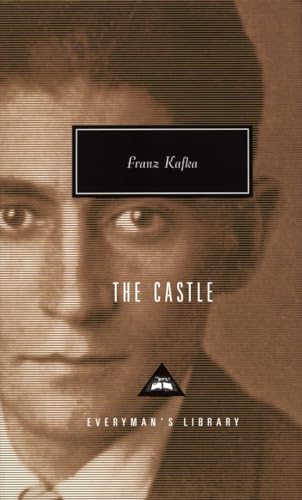
Inhaltsangabe
From the author of The Metamorphosis and The Trial, and one of the greatest writers of the twentieth century: Arriving in a village to take up the position of land surveyor for the mysterious lord of a castle, the character known as K. finds himself in a bitter and baffling struggle to contact his new employer and go about his duties.
As the villagers and the Castle officials block his efforts at every turn, K.'s consuming quest-quite possibly a self-imposed one-to penetrate the inaccessible heart of the Castle and take its measure is repeatedly frustrated. Kafka once suggested that the would-be surveyor in The Castle is driven by a wish "to get clear about ultimate things," an unrealizable desire that provided the driving force behind all of Kafka's dazzlingly uncanny fictions. Everyman's Library pursues the highest production standards, printing on acid-free cream-colored paper, with full-cloth cases with two-color foil stamping, decorative endpapers, silk ribbon markers, European-style half-round spines, and a full-color illustrated jacket. Contemporary Classics include an introduction, a select bibliography, and a chronology of the author's life and times.Die Inhaltsangabe kann sich auf eine andere Ausgabe dieses Titels beziehen.
Über die Autorin bzw. den Autor
The son of a well-to-do merchant, Franz Kafka was born in Prague in 1883 and died of tuberculosis in a sanitorium near Vienna in 1924. After earning a law degree in 1906, he worked most of his adult life at the Workers Accident Insurance Company for the Kingdom of Bohemia in Prague. Only a small portion of his writings were published during his lifetime; most of them, including the three unfinished novels, Amerika, The Trial, and The Castle, were published posthumously.
Mark Harman holds a Ph.D. from Yale University and has taught German and Irish literature at Oberlin and Dartmouth. In addition to writing scholarly essays on Kafka and other modern authors, he has edited and co-translated Robert Walser Rediscovered: Stories, Fairy-Tale Plays, and Critical Responses and has translated Soul of the Age: Selected Letters of Hermann Hesse, 1891-1962. He teaches literature at the University of Pennsylvania.Von der hinteren Coverseite
Introduction by Irving Howe; Translation by Willa and Edwin Muir
Auszug. © Genehmigter Nachdruck. Alle Rechte vorbehalten.
Arrival
It was late evening when K. arrived. The village lay under deep snow. There was no sign of the Castle hill, fog and darkness surrounded it, not even the faintest gleam of light suggested the large Castle. K. stood a long time on the wooden bridge that leads from the main road to the village, gazing upward into the seeming emptiness.
Then he went looking for a night's lodging; at the inn they were still awake; the landlord had no room available, but, extremely surprised and confused by the latecomer, he was willing to let K. sleep on a straw mattress in the taproom, K. agreed to this. A few peasants were still sitting over beer, but he did not want to talk to anyone, got himself a straw mattress from the attic and lay down by the stove. It was warm, the peasants were quiet, he examined them for a moment with tired eyes, then fell asleep.
Yet before long he was awakened. A young man in city clothes, with an actor's face, narrow eyes, thick eyebrows, stood beside him with the landlord. The peasants, too, were still there, a few had turned their chairs around to see and hear better. The young man apologized very politely for having awakened K., introduced himself as the son of the Castle steward and said: "This village is Castle property, anybody residing or spending the night here is effectively residing or spending the night at the Castle. Nobody may do so without permission from the Count. But you have no such permission or at least you haven't shown it yet."
K., who had half-risen and smoothed his hair, looked at the people from below and said: "What village have I wandered into? So there is a castle here?"
"Why, of course," the young man said slowly, while several peasants here and there shook their heads at K., "the Castle of Count Westwest."
"And one needs permission to spend the night here?" asked K., as though he wanted to persuade himself that he hadn't perhaps heard the previous statements in a dream.
"Permission is needed" was the reply, and this turned into crude mockery at K.'s expense when the young man, stretching out his arm, asked the landlord and the guests: "Or perhaps permission is not needed?"
"Then I must go and get myself permission," said K., yawning and pushing off the blanket, as though he intended to get up.
"Yes, but from whom?" asked the young man.
"From the Count," said K., "there doesn't seem to be any alternative."
"Get permission from the Count, now, at midnight?" cried the young man, stepping back a pace.
"Is that not possible?" K. asked calmly. "Then why did you wake me up?"
The young man now lost his composure, "The manners of a tramp!" he cried. "I demand respect for the Count's authorities. I awakened you to inform you that you must leave the Count's domain at once."
"Enough of this comedy," said K. in a remarkably soft voice as he lay down and pulled up the blanket: "You are going a little too far, young man, and I shall deal with your conduct tomorrow. The landlord and those gentlemen there will be my witnesses, should I even need witnesses. Besides, be advised that I am the land surveyor sent for by the Count. My assistants and the equipment are coming tomorrow by carriage. I didn't want to deprive myself of a long walk through the snow, but unfortunately lost my way a few times, which is why I arrived so late. That it was too late then to report to the Castle is something that was already apparent to me without the benefit of your instructions. That's also the reason why I decided to content myself with these lodgings, where you have been so impolite--to put it mildly--as to disturb me. I have nothing further to add to that statement. Good night, gentlemen." And K. turned toward the stove.
"Land surveyor?" he heard someone asking hesitantly behind his back, and then everyone was silent. But the young man soon regained his composure and said to the landlord, softly enough to suggest concern for K.'s sleep, yet loudly enough to be audible to him: "I shall inquire by telephone." So there was even a telephone in this village inn? They were certainly well equipped. True, certain details took K. by surprise, but on the whole everything was as expected. As it turned out, the telephone hung from the wall almost directly above his head, in his sleepiness he had overlooked it. If the young man had to use the telephone, then even with the best intentions he could not avoid disturbing K.'s sleep, it was simply a matter of deciding whether or not to let him use the telephone, K. decided to allow it. But then of course it no longer made sense to pretend he was asleep, so he turned over on his back again. He watched the peasants gathering timidly and conferring, the arrival of a land surveyor was no trifling matter. The door to the kitchen had opened; filling the doorway was the mighty figure of the landlady, the landlord approached her on tiptoes in order to report to her. Then the telephone conversation began. The steward was asleep, but a substeward, one of the substewards, a Mr. Fritz, was there. The young man, who introduced himself as Schwarzer, said that he had found K., a man in his thirties, rather shabby-looking, sleeping quietly on a straw mattress, with a tiny rucksack for a pillow and a knobby walking stick within reach. Well, he had of course suspected him, and since the landlord had obviously neglected his duty, it was his, Schwarzer's, duty to investigate the matter. K.'s response on being awakened, questioned, and duly threatened with expulsion from the Count's domain had been most ungracious but perhaps not unjustifiably so, as had finally become evident, for he claimed to be a land surveyor summoned by the Count. He was duty-bound to check this claim, if only as a formality, and so Schwarzer was asking Mr. Fritz to inquire at the central office whether a land surveyor of that sort was really expected and to telephone immediately with the answer.
Then there was silence, Fritz made his inquiries over there while everyone here waited for the answer, K. stayed where he was, did not even turn around, seemed completely indifferent, stared into space. With its mixture of malice and caution Schwarzer's story gave him a sense of the quasi-diplomatic training that even lowly people at the Castle such as Schwarzer could draw on so freely. Nor did they show any lack of diligence there, the central office had a night service. And obviously answered very quickly, for Fritz was already on the line again. Yet it seemed to be a brief message, since Schwarzer immediately threw down the receiver in a rage. "Just as I said," he shouted, "no trace of a land surveyor, only a liar and a common tramp, and probably worse still." For a moment K. thought that everybody, Schwarzer, the peasants, the landlord and landlady, was about to jump on him, and he crawled all the way under the blanket to escape at least the first assault, when--he was slowly stretching his head back out--the telephone rang again, especially loud, it seemed to K. Although it was unlikely that this call also concerned K., everyone froze,...
„Über diesen Titel“ kann sich auf eine andere Ausgabe dieses Titels beziehen.
Suchergebnisse für The Castle: Introduction by Irving Howe (Everyman's...

Beispielbild für diese ISBN
The Castle: Introduction by Irving Howe
Anbieter: ThriftBooks-Dallas, Dallas, TX, USA
Verkäuferbewertung 5 von 5 Sternen

Hardcover. Zustand: Very Good. No Jacket. Missing dust jacket; May have limited writing in cover pages. Pages are unmarked. ~ ThriftBooks: Read More, Spend Less. Artikel-Nr. G0679417354I4N01
Gebraucht kaufen
EUR 14,61
Versand gratis
Versand innerhalb von USA
Versand innerhalb von USA
Anzahl: 1 verfügbar
Beispielbild für diese ISBN
The Castle: Introduction by Irving Howe
Anbieter: ThriftBooks-Atlanta, AUSTELL, GA, USA
Verkäuferbewertung 5 von 5 Sternen
Hardcover. Zustand: Fair. No Jacket. Former library book; Readable copy. Pages may have considerable notes/highlighting. ~ ThriftBooks: Read More, Spend Less. Artikel-Nr. G0679417354I5N10
Gebraucht kaufen
EUR 14,61
Versand gratis
Versand innerhalb von USA
Versand innerhalb von USA
Anzahl: 1 verfügbar
Beispielbild für diese ISBN
The Castle : Introduction by Irving Howe
Verlag:
Knopf Doubleday Publishing Group, 1992
ISBN 10: 0679417354
ISBN 13: 9780679417354
Gebraucht
Hardcover
Anbieter: Better World Books: West, Reno, NV, USA
Verkäuferbewertung 5 von 5 Sternen
Zustand: Good. Former library copy. Pages intact with minimal writing/highlighting. The binding may be loose and creased. Dust jackets/supplements are not included. Includes library markings. Stock photo provided. Product includes identifying sticker. Better World Books: Buy Books. Do Good. Artikel-Nr. GRP102610310
Gebraucht kaufen
EUR 15,35
Versand gratis
Versand innerhalb von USA
Versand innerhalb von USA
Anzahl: 1 verfügbar
Beispielbild für diese ISBN
The Castle : Introduction by Irving Howe
Verlag:
Knopf Doubleday Publishing Group, 1992
ISBN 10: 0679417354
ISBN 13: 9780679417354
Gebraucht
Hardcover
Anbieter: Better World Books, Mishawaka, IN, USA
Verkäuferbewertung 5 von 5 Sternen
Zustand: Good. Former library copy. Pages intact with minimal writing/highlighting. The binding may be loose and creased. Dust jackets/supplements are not included. Includes library markings. Stock photo provided. Product includes identifying sticker. Better World Books: Buy Books. Do Good. Artikel-Nr. GRP102610310
Gebraucht kaufen
EUR 15,35
Versand gratis
Versand innerhalb von USA
Versand innerhalb von USA
Anzahl: 1 verfügbar
Beispielbild für diese ISBN
The Castle (Everyman's Library (Cloth))
Anbieter: Revaluation Books, Exeter, Vereinigtes Königreich
Verkäuferbewertung 5 von 5 Sternen
Hardcover. Zustand: Brand New. 416 pages. 8.50x5.25x1.25 inches. In Stock. Artikel-Nr. __0679417354
Neu kaufen
EUR 29,01
EUR 14,93 Versand
Versand von Vereinigtes Königreich nach USA
Versand von Vereinigtes Königreich nach USA
Anzahl: 1 verfügbar
Beispielbild für diese ISBN
The Castle: Introduction by Irving Howe
Anbieter: Kennys Bookstore, Olney, MD, USA
Verkäuferbewertung 5 von 5 Sternen
Zustand: New. Artikel-Nr. V9780679417354
Neu kaufen
EUR 37,77
EUR 9,37 Versand
Versand innerhalb von USA
Versand innerhalb von USA
Anzahl: 15 verfügbar
Beispielbild für diese ISBN
The Castle (Everyman's Library (Cloth))
Anbieter: Revaluation Books, Exeter, Vereinigtes Königreich
Verkäuferbewertung 5 von 5 Sternen
Hardcover. Zustand: Brand New. 416 pages. 8.50x5.25x1.25 inches. In Stock. Artikel-Nr. 0679417354
Neu kaufen
EUR 35,75
EUR 14,93 Versand
Versand von Vereinigtes Königreich nach USA
Versand von Vereinigtes Königreich nach USA
Anzahl: 1 verfügbar
Beispielbild für diese ISBN
The Castle (Everyman's Library (Cloth))
Anbieter: Revaluation Books, Exeter, Vereinigtes Königreich
Verkäuferbewertung 5 von 5 Sternen
Hardcover. Zustand: Brand New. 416 pages. 8.50x5.25x1.25 inches. In Stock. Artikel-Nr. xr0679417354
Neu kaufen
EUR 38,65
EUR 14,93 Versand
Versand von Vereinigtes Königreich nach USA
Versand von Vereinigtes Königreich nach USA
Anzahl: 1 verfügbar
Beispielbild für diese ISBN
THE CASTLE : Introduction by Irving Howe, Translated byWilla and Edwin Muir (Everyman's Library 127)
Verlag:
Everyman's Library: Alfred A. Knopf, 1992
ISBN 10: 0679417354
ISBN 13: 9780679417354
Gebraucht
Hardcover
Anbieter: Saul54, Lynn, MA, USA
Verkäuferbewertung 5 von 5 Sternen
Hardcover. Zustand: As New. Zustand des Schutzumschlags: As New. Everyman's Library: Alfred A. Knopf (1992). XXXVIII. 378 pages. New Hardcover and DJ. (Covered by a transparent plastic DJ made from 2 separate pieces applied for the front and back boards correspondingly). 8.25"x5.2"x1.1". be32. Artikel-Nr. ABE-1668146558652
Gebraucht kaufen
EUR 72,82
EUR 7,14 Versand
Versand innerhalb von USA
Versand innerhalb von USA
Anzahl: 1 verfügbar
Foto des Verkäufers
The Castle: Introduction by Irving Howe
Anbieter: moluna, Greven, Deutschland
Verkäuferbewertung 5 von 5 Sternen
Zustand: New. Über den AutorThe son of a well-to-do merchant, Franz Kafka was born in Prague in 1883 and died of tuberculosis in a sanitorium near Vienna in 1924. After earning a law degree in 1906, he worked most of his adult life at the Workers. Artikel-Nr. 898445254
Neu kaufen
EUR 32,13
EUR 48,99 Versand
Versand von Deutschland nach USA
Versand von Deutschland nach USA
Anzahl: 5 verfügbar