
Verwandte Artikel zu KEEPING A RENDEZVOUS
Rezensionen
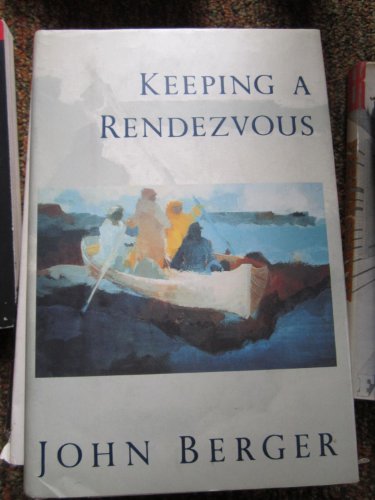
While each of Berger's essays originates from a single image or idea, the resulting train of thought is held to no predictable itinerary. A trip to a Swiss zoo segues into a meditation on apes, with whom we share 99% of our DNA genetic code, and then into thoughts on birth and death. Reflections on his obsessive childhood fear that his parents might die leads to a confession about how he became a writer. As an art critic, Berger ( The Sense of Sight ) constantly surprises. He fathoms Renoir's "sweet paintings of a terrible loss" in terms of the impressionist's fears of women and of reality. He analyzes Henry Moore's sculptures as erotic monuments to the mute, pre-verbal experiences of infants. In other pieces, Berger interprets today's resurgent nationalisms and such events as miners' strikes as protests against the marginalization of the spiritual. These 25 masterful, absorbing essays link the moral to the aesthetic, the personal to the political. Photos not seen by PW.
Copyright 1991 Reed Business Information, Inc.
Berger (The Sense of Sight, 1985, etc.) as art critic is a
maddening case. Most of the time his once-fashionable leftism
falls like a caul over the paintings and photographs that he
uses, literally, as pretexts for these short essays (most
reprinted from The Village Voice, Harper's, etc.). Ideology and
preconception will force up a fatuity like ``How then does the
cinema overcome this limitation to attain its special power? It
does so by celebrating what we have in common, what we share. The
cinema longs to go beyond individuality''; or one such as the
recommendation of love's ``cyclical time'' that opposes corporate
capitalism's ``unilinear'' view of it; or a celebration of
peasant ``interiority.'' Berger may write of the abattoir and
excrement here, but he is a Romantic at heart: Walter Benjamin
with a rucksack. The best art critics make you want to see more;
Berger wants you to feel more--and his wanting before images
sometimes distorts or even obscures them. On the other hand, he
can on occasion bring his eyes to bear on certain painters and
sculptors with private intimacy and intuition. About Pollock,
Henry Moore's sculptures (``Their notorious hollows and holes are
sites of a sensation of enclosure, cradling, nuzzling. Before
Moore's art, as before nobody else's, we are reminded that we are
mammals''), and Renoir, Berger is unusually stellar.
A too-mixed bag, unbalanced mostly by political deadweight. -- Copyright ©1991, Kirkus Associates, LP. All rights reserved.
„Über diesen Titel“ kann sich auf eine andere Ausgabe dieses Titels beziehen.
Suchergebnisse für KEEPING A RENDEZVOUS

Beispielbild für diese ISBN
Keeping a Rendezvous
Anbieter: ThriftBooks-Atlanta, AUSTELL, GA, USA
Verkäuferbewertung 5 von 5 Sternen

Hardcover. Zustand: Good. No Jacket. Pages can have notes/highlighting. Spine may show signs of wear. ~ ThriftBooks: Read More, Spend Less. Artikel-Nr. G0679406328I3N00
Gebraucht kaufen
EUR 16,18
Versand gratis
Versand innerhalb von USA
Versand innerhalb von USA
Anzahl: 1 verfügbar