
Verwandte Artikel zu The Body Project: An Intimate History of American Girls
Inhaltsangabe
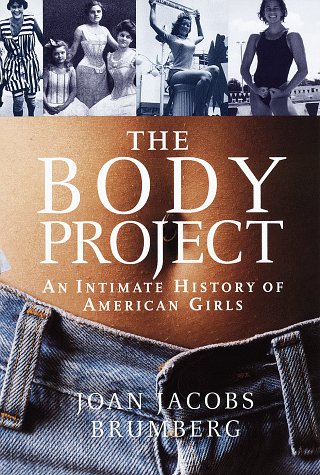
Based on candid journal entries and photographs, the author of Fasting Girls explains how growing up female has changed over the past century and argues that American girls have come to define themselves more and more through their bodies. 30,000 first printing. Tour.
Die Inhaltsangabe kann sich auf eine andere Ausgabe dieses Titels beziehen.
Über die Autorin bzw. den Autor
Joan Jacobs Brumberg is the award-winning author of Fasting Girls: The History of Anorexia Nervosa. She is a Stephen H. Weiss Professor at Cornell University, where she holds a unique appointment teaching in the fields of history, human development, and women's studies. Her research and sensitive writing about American women and girls have been recognized by the Guggenheim Foundation, the National Endowment for the Humanities, the Rockefeller Foundation, and the MacDowell Colony. She lives in Ithaca, New York.
"Brumberg writes beautifully: her generous use of direct quotes from girls' diaries makes this an interesting, lively, and moving account of girls' worries and obsessions about their bodies and their sexuality. The book is a call to arms; our girls are in trouble and Brumberg offers provo
Von der hinteren Coverseite
are in crisis--and this book shows why. Drawing on a vast array of lively historical sources, unpublished diaries by adolescent girls, and photographs that conjure up memories of the past, The Body Project chronicles how growing up in a female body has changed over the past century and why that experience is more difficult today than ever before.
Girls' bodies have certainly changed--they mature much earlier--but at the same time traditional social supports for girls' growth and development have collapsed. The media and popular culture exploit girls' normal sensitivity to their changing bodies, and many girls grow up believing that "good looks" --rather than "good works"--represent the highest form of female perfection. With an eye for the humor in as well as the pain of female adolescence, Joan Jacobs Brumberg shows how American girls came to define themselves increasingly through their appearance, so that today the body has become their primary project.
Aus dem Klappentext
are in crisis--and this book shows why. Drawing on a vast array of lively historical sources, unpublished diaries by adolescent girls, and photographs that conjure up memories of the past, The Body Project chronicles how growing up in a female body has changed over the past century and why that experience is more difficult today than ever before.
Girls' bodies have certainly changed--they mature much earlier--but at the same time traditional social supports for girls' growth and development have collapsed. The media and popular culture exploit girls' normal sensitivity to their changing bodies, and many girls grow up believing that "good looks" --rather than "good works"--represent the highest form of female perfection. With an eye for the humor in as well as the pain of female adolescence, Joan Jacobs Brumberg shows how American girls came to define themselves increasingly through their appearance, so that today the body has become their primary project.
Auszug. © Genehmigter Nachdruck. Alle Rechte vorbehalten.
The Body Project
: An Intimate History of American GirlsBy Joan Jacobs BrumbergRandom House
Copyright © 1997 Joan Jacobs BrumbergAll right reserved.
ISBN: 9780679402978
Chapter One
The Body as Evidence
At the close of the twentieth century, the female body poses an enormous problem for American girls, and it does so because of the culture in which we live. The process of sexual maturation is more difficult for girls today than it was a century ago because of a set of historical changes that have resulted in a peculiar mismatch between girls' biology and today's culture. Although girls now mature sexually earlier than ever before, contemporary American society provides fewer social protections for them, a situation that leaves them unsupported in their development and extremely vulnerable to the excesses of popular culture and to pressure from peer groups. But the current body problem is not just an external issue resulting from a lack of societal vigilance or adult support; it has also become an internal, psychological problem: girls today make the body into an all-consuming project in ways young women of the past did not.
A century ago, American women were lacing themselves into corsets and teaching their adolescent daughters to do the same; today's teens shop for thong bikinis on their own, and their middle-class mothers are likely to be uninvolved until the credit card bill arrives in the mail. These contrasting images might suggest a great deal of progress, but American girls at the end of the twentieth century actually suffer from body problems more pervasive and more dangerous than the constraints implied by the corset. Historical forces have made coming of age in a female body a different and more complex experience today than it was a century ago. Although sexual development-the onset of menstruation and the appearance of breasts-occurs in every generation, a girl's experience of these inevitable biological events is shaped by the world in which she lives, so much so, that each generation, at its own point in history, develops its own characteristic body problems and projects. Every girl suffers some kind of adolescent angst about her body; it is the historical moment that defines how she reacts to her changing flesh. From the perspective of history, adolescent self-consciousness is quite persistent, but its level is raised or lowered, like the water level in a pool, by the cultural and social setting.
Back in the 1830s, Victoria, the future queen of England, became intensely self-conscious about her body at the age of fifteen and sixteen, and although her first menstrual period was never announced officially, it was generally known that Victoria crossed the threshold into womanhood at about that time. At age eighteen, before she became queen, Victoria expressed general dissatisfaction with her looks. She mused over her hair, which was getting too dark; her hands, which she considered ugly; and her eyebrows, which she thought so inadequate that she considered shaving them off in order to encourage their growth. She also made awkward attempts to disguise her physical flaws: she tried covering up her stubby fingers with rings, but then found she had difficulty wearing gloves, which were obligatory for someone of her status. Some of Victoria's self-consciousness was a response to the attention she received as a future monarch. But it also had to do with the biological changes of adolescence, changes that breed both awkwardness and awe. The American poet Lucy Larcom, who tended looms in the textile mills of nineteenth-century New England, lived a life vastly different from Victoria's, but she, too, became "morbidly self-critical" in adolescence. When her body began to change visibly, her older sisters insisted that she lengthen her skirts and put up her hair-markers of sexual maturation in those days.
Almost a century later, in the 1920s, the feminist writer and philosopher Simone de Beauvoir ruminated about her changing body. At fifteen she thought she looked simply "awful." She had acne, her clothes no longer fit, and she had to wrap her breasts in bandages because her favorite beige silk party dress pulled so tightly across her new bosom that it looked "obscene." Later in life, de Beauvoir described adolescence as a "difficult patch."
Although Margaret Mead's 1928 classic Coming of Age in Samoa suggested that there are cultures where girls do not experience self-consciousness in adolescence or discomfort with their changing bodies, in the United States and in Western Europe they clearly have experienced both for at least a century. A matronly queen, a popular poet, and a mature feminist-each left indications that she felt self-conscious in adolescence, as most girls do.
In the nineteenth century, the "growing pains" of adolescence were diminished by society's emphasis on spiritual rather than physical matters. There were rigid standards of decorum that made discussion of the body "impolite." Yet among girls in the middle and upper classes, there was concern about the size of certain body parts, such as the hands, feet, and waist. To be too large or too robust was a sign of indelicacy that suggested lower-class origins and a rough way of life. Even the exalted Victoria and her mother, the Duchess of Kent, worried about body size. Victoria's feet were admirable because they were tiny; yet she was warned periodically by her mother against becoming too stout, and she was chided for eating too much. A future queen, after all, was not supposed to look like a husky milkmaid or mill girl, and her body must never imply that she did demanding physical labor.
Still, there is an important difference between the past and the present when it comes to the level of social support for the adolescent girl's preoccupation with her body. Beauty imperatives for girls in the nineteenth century were kept in check by consideration of moral character and by culturally mandated patterns of emotional denial and repression. Nineteenth-century girls often noted in their diaries when they acquired an exciting personal embellishment, such as a hair ribbon or a new dress, but these were not linked to self-worth or personhood in quite the ways they are today. In fact, girls who were preoccupied with their looks were likely to be accused of vanity or self-indulgence. Many parents tried to limit their daughters' interest in superficial things, such as hairdos, dresses, or the size of their waists, because character was considered more important than beauty by both parents and the community. And character was built on attention to self-control, service to others, and belief in God-not on attention to one's own, highly individualistic body project.
Good Works Versus Good Looks
The traditional emphasis on "good works" as opposed to "good looks" meant that the lives of young women in the nineteenth century had a very different orientation from those of girls today. This difference is reflected in the tone of their personal diaries, a source I use extensively to tell the story of how the American girl's relationship to her body has changed over the past century. Before World War I, girls rarely mentioned their bodies in terms of strategies for self-improvement or struggles for personal identity. Becoming a better person meant paying less attention to the self, giving more assistance to others, and putting more effort into instructive reading or lessons at school. When girls in the nineteenth century thought about ways to improve themselves, they almost always focused on their internal character and how it was reflected in outward behavior. In...
„Über diesen Titel“ kann sich auf eine andere Ausgabe dieses Titels beziehen.
Suchergebnisse für The Body Project: An Intimate History of American Girls

Beispielbild für diese ISBN
The Body Project:: An Intimate History of American Girls
Anbieter: World of Books (was SecondSale), Montgomery, IL, USA
Verkäuferbewertung 5 von 5 Sternen

Hardback. Zustand: Good. Timely and sympathetic . . . a work of impassioned advocacy. --People A hundred years ago, women were lacing themselves into corsets and teaching their daughters to do the same. The ideal of the day, however, was inner beauty: a focus on good deeds and a pure heart. Today American women have more social choices and personal freedom than ever before. But fifty-three percent of our girls are dissatisfied with their bodies by the age of thirteen, and many begin a pattern of weight obsession and dieting as early as eight or nine. Why? In The Body Project, historian Joan Jacobs Brumberg answers this question, drawing on diary excerpts and media images from 1830 to the present. Tracing girls' attitudes toward topics ranging from breast size and menstruation to hair, clothing, and cosmetics, she exposes the shift from the Victorian concern with inner beauty to our modern focus on outward appearance--in particular, the desire to be model-thin and sexy. Compassionate, insightful, and gracefully written, The Body Project explores the gains and losses adolescent girls have inherited since they shed the corset and the ideal of virginity for a new world of sexual freedom and consumerism--a world in which the body is their primary project. Joan Brumberg's book offers us an insightful and entertaining history behind the destructive mantra of the '90s--'I hate my body!' --Katie Couric. Artikel-Nr. 00104741392
Gebraucht kaufen
EUR 5,09
Versand gratis
Versand innerhalb von USA
Versand innerhalb von USA
Anzahl: 3 verfügbar
Beispielbild für diese ISBN
The Body Project:: An Intimate History of American Girls
Anbieter: World of Books (was SecondSale), Montgomery, IL, USA
Verkäuferbewertung 5 von 5 Sternen
Hardback. Zustand: Very Good. Timely and sympathetic . . . a work of impassioned advocacy. --People A hundred years ago, women were lacing themselves into corsets and teaching their daughters to do the same. The ideal of the day, however, was inner beauty: a focus on good deeds and a pure heart. Today American women have more social choices and personal freedom than ever before. But fifty-three percent of our girls are dissatisfied with their bodies by the age of thirteen, and many begin a pattern of weight obsession and dieting as early as eight or nine. Why? In The Body Project, historian Joan Jacobs Brumberg answers this question, drawing on diary excerpts and media images from 1830 to the present. Tracing girls' attitudes toward topics ranging from breast size and menstruation to hair, clothing, and cosmetics, she exposes the shift from the Victorian concern with inner beauty to our modern focus on outward appearance--in particular, the desire to be model-thin and sexy. Compassionate, insightful, and gracefully written, The Body Project explores the gains and losses adolescent girls have inherited since they shed the corset and the ideal of virginity for a new world of sexual freedom and consumerism--a world in which the body is their primary project. Joan Brumberg's book offers us an insightful and entertaining history behind the destructive mantra of the '90s--'I hate my body!' --Katie Couric. Artikel-Nr. 00105215166
Gebraucht kaufen
EUR 5,09
Versand gratis
Versand innerhalb von USA
Versand innerhalb von USA
Anzahl: 1 verfügbar
Beispielbild für diese ISBN
The Body Project: An Intimate History of American Girls
Anbieter: World of Books (was SecondSale), Montgomery, IL, USA
Verkäuferbewertung 5 von 5 Sternen
Zustand: Acceptable. Item in acceptable condition! Textbooks may not include supplemental items i.e. CDs, access codes etc. Artikel-Nr. 00105670365
Gebraucht kaufen
EUR 5,09
Versand gratis
Versand innerhalb von USA
Versand innerhalb von USA
Anzahl: 3 verfügbar
Beispielbild für diese ISBN
The Body Project: An Intimate History of American Girls
Verlag:
Random House (edition 1), 1997
ISBN 10: 0679402977
ISBN 13: 9780679402978
Gebraucht
Hardcover
Anbieter: BooksRun, Philadelphia, PA, USA
Verkäuferbewertung 5 von 5 Sternen
Hardcover. Zustand: Fair. 1. With dust jacket. The item might be beaten up but readable. May contain markings or highlighting, as well as stains, bent corners, or any other major defect, but the text is not obscured in any way. Artikel-Nr. 0679402977-7-1-29
Gebraucht kaufen
EUR 5,10
Versand gratis
Versand innerhalb von USA
Versand innerhalb von USA
Anzahl: 1 verfügbar
Beispielbild für diese ISBN
The Body Project: An Intimate History of American Girls
Anbieter: Wonder Book, Frederick, MD, USA
Verkäuferbewertung 5 von 5 Sternen
Zustand: Very Good. Signed Copy . Very Good dust jacket. Signed/Inscribed by author on half title page. Artikel-Nr. D14OS-00422
Gebraucht kaufen
EUR 6,42
Versand gratis
Versand innerhalb von USA
Versand innerhalb von USA
Anzahl: 1 verfügbar
Beispielbild für diese ISBN
The Body Project: An Intimate History of American Girls
Anbieter: Wonder Book, Frederick, MD, USA
Verkäuferbewertung 5 von 5 Sternen
Zustand: Very Good. Very Good condition. Very Good dust jacket. A copy that may have a few cosmetic defects. May also contain light spine creasing or a few markings such as an owner's name, short gifter's inscription or light stamp. Artikel-Nr. J11C-02022
Gebraucht kaufen
EUR 6,42
Versand gratis
Versand innerhalb von USA
Versand innerhalb von USA
Anzahl: 1 verfügbar
Beispielbild für diese ISBN
The Body Project : An Intimate History of American Girls
Verlag:
Random House Publishing Group, 1997
ISBN 10: 0679402977
ISBN 13: 9780679402978
Gebraucht
Hardcover
Erstausgabe
Anbieter: Better World Books, Mishawaka, IN, USA
Verkäuferbewertung 5 von 5 Sternen
Zustand: Good. 1st Edition. Pages intact with minimal writing/highlighting. The binding may be loose and creased. Dust jackets/supplements are not included. Stock photo provided. Product includes identifying sticker. Better World Books: Buy Books. Do Good. Artikel-Nr. 731392-6
Gebraucht kaufen
EUR 6,74
Versand gratis
Versand innerhalb von USA
Versand innerhalb von USA
Anzahl: 1 verfügbar
Beispielbild für diese ISBN
The Body Project : An Intimate History of American Girls
Verlag:
Random House Publishing Group, 1997
ISBN 10: 0679402977
ISBN 13: 9780679402978
Gebraucht
Hardcover
Erstausgabe
Anbieter: Better World Books, Mishawaka, IN, USA
Verkäuferbewertung 5 von 5 Sternen
Zustand: Very Good. 1st Edition. Former library copy. Pages intact with possible writing/highlighting. Binding strong with minor wear. Dust jackets/supplements may not be included. Includes library markings. Stock photo provided. Product includes identifying sticker. Better World Books: Buy Books. Do Good. Artikel-Nr. GRP84147093
Gebraucht kaufen
EUR 6,74
Versand gratis
Versand innerhalb von USA
Versand innerhalb von USA
Anzahl: 1 verfügbar
Beispielbild für diese ISBN
The Body Project : An Intimate History of American Girls
Verlag:
Random House Publishing Group, 1997
ISBN 10: 0679402977
ISBN 13: 9780679402978
Gebraucht
Hardcover
Erstausgabe
Anbieter: Better World Books, Mishawaka, IN, USA
Verkäuferbewertung 5 von 5 Sternen
Zustand: Good. 1st Edition. Former library copy. Pages intact with minimal writing/highlighting. The binding may be loose and creased. Dust jackets/supplements are not included. Includes library markings. Stock photo provided. Product includes identifying sticker. Better World Books: Buy Books. Do Good. Artikel-Nr. GRP71570166
Gebraucht kaufen
EUR 6,74
Versand gratis
Versand innerhalb von USA
Versand innerhalb von USA
Anzahl: 1 verfügbar
Beispielbild für diese ISBN
The Body Project: An Intimate History of American Girls
Anbieter: ThriftBooks-Dallas, Dallas, TX, USA
Verkäuferbewertung 5 von 5 Sternen
Hardcover. Zustand: Very Good. No Jacket. May have limited writing in cover pages. Pages are unmarked. ~ ThriftBooks: Read More, Spend Less. Artikel-Nr. G0679402977I4N00
Gebraucht kaufen
EUR 7,09
Versand gratis
Versand innerhalb von USA
Versand innerhalb von USA
Anzahl: 1 verfügbar