
Verwandte Artikel zu In the Realm of Hungry Ghosts: Close Encounters with...
Inhaltsangabe
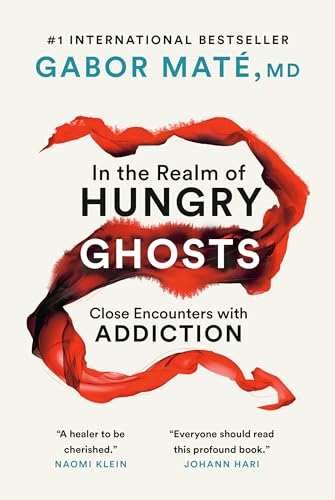
#1 NATIONAL BESTSELLER • From the author of When the Body Says No and The Myth of Normal—The definitive book for understanding the roots and behaviours of addiction.
Dr. Gabor Maté is one of the world’s most revered thinkers on the psychology of addiction. His radical findings—based on decades of work with patients challenged by catastrophic drug addiction and mental illness—has helped reframe how we view all human development. In this award-winning modern classic, through first-person accounts, riveting case studies, pioneering research and compassionate argument, Maté takes a panoramic yet highly intimate and compassionate look at this widespread and perplexing human ailment, whether it be addiction to alcohol, drugs, sex, money or anything self-destructive. He presents it not as a discrete phenomenon confined to a weak-willed few, but as a continuum that runs through (and even underpins) our society—not as a medical ‘condition’, but rather the result of a complex interplay of personal history, emotional development and brain chemistry.
Distilling cutting-edge research from around the world, In the Realm of Hungry Ghosts avoids glib self-help remedies, instead promoting self-understanding as the first key to healing and wellness. Blending personal stories and science with positive solutions, and written in spellbinding prose, it is a must-read that will change how you see yourself, others and the world.
Die Inhaltsangabe kann sich auf eine andere Ausgabe dieses Titels beziehen.
Über die Autorin bzw. den Autor
A renowned speaker, and bestselling author, DR. GABOR MATÉ is highly sought after for his expertise on a range of topics including addiction, stress and childhood development. Dr. Maté has written several bestselling books, including the award-winning In the Realm of Hungry Ghosts: Close Encounters With Addiction; When the Body Says No: The Cost of Hidden Stress, and Scattered Minds: The Origins and Healing of Attention Deficit Disorder, and co-authored Hold on to Your Kids: Why Parents Need To Matter More Than Peers. His works have been published internationally in nearly thirty languages.
Auszug. © Genehmigter Nachdruck. Alle Rechte vorbehalten.
The mandala, the Buddhist Wheel of Life, revolves through six realms. Each realm is populated by characters representing aspects of human existence–our various ways of being. In the Beast Realm we are driven by basic survival instincts and appetites such as physical hunger and sexuality, what Freud called the id. The denizens of the Hell Realm are trapped in states of unbearable rage and anxiety. In the God Realm we transcend our troubles and our egos through sensual, aesthetic or religious experience, but only temporarily and in ignorance of spiritual truth. Even this enviable state is tinged with loss and suffering.
The inhabitants of the Hungry Ghost Realm are depicted as creatures with scrawny necks, small mouths, emaciated limbs and large, bloated, empty bellies. This is the domain of addiction, where we constantly seek something outside ourselves to curb an insatiable yearning for relief or fulfillment. The aching emptiness is perpetual because the substances, objects or pursuits we hope will soothe it are not what we really need. We don’t know what we need, and so long as we stay in the hungry ghost mode, we’ll never know. We haunt our lives without being fully present.
Some people dwell much of their lives in one realm or another. Many of us move back and forth between them, perhaps through all of them in the course of a single day.
My medical work with drug addicts in Vancouver’s Downtown Eastside has given me a unique opportunity to know human beings who spend almost all their time as hungry ghosts. It’s their attempt, I believe, to escape the Hell Realm of overwhelming fear, rage and despair. The painful longing in their hearts reflects something of the emptiness that may also be experienced by people with apparently happier lives. Those whom we dismiss as “junkies” are not creatures from a different world, only men and women mired at the extreme end of a continuum on which, here or there, all of us might well locate ourselves. I can personally attest to that. “You slink around your life with a hungry look,” someone close once said to me. Facing the harmful compulsions of my patients, I have had to encounter my own.
No society can understand itself without looking at its shadow side. I believe there is one addiction process, whether it is manifested in the lethal substance dependencies of my Downtown Eastside patients; the frantic self-soothing of overeaters or shopaholics; the obsessions of gamblers, sexaholics and compulsive Internet users; or the socially acceptable and even admired behaviours of the workaholic. Drug addicts are often dismissed and discounted as unworthy of empathy and respect. In telling their stories my intent is twofold: to help their voices to be heard and to shed light on the origins and nature of their ill-fated struggle to overcome suffering through substance abuse. They have much in common with the society that ostracizes them. If they seem to have chosen a path to nowhere, they still have much to teach the rest of us. In the dark mirror of their lives, we can trace outlines of our own.
There is a host of questions to be considered. Among them:
• What are the causes of addictions?
• What is the nature of the addiction-prone personality?
• What happens physiologically in the brains of addicted people?
• How much choice does the addict really have?
• Why is the “War on Drugs” a failure and what might be a humane, evidence-based approach to the treatment of severe drug addiction?
• What are some of the paths for redeeming addicted minds not dependent on powerful substances–that is, how do we approach the healing of the many behaviour addictions fostered by our culture?
The narrative passages in this book are based on my experience as a medical doctor in Vancouver’s drug ghetto and on extensive interviews with my patients–more than I could cite. Many of them volunteered in the generous hope that their life histories might be of assistance to others who struggle with addiction problems or that they could help enlighten society regarding the experience of addiction. I also present information, reflections and insights distilled from many other sources, including my own addictive patterns. And finally, I provide a synthesis of what we can learn from the research literature on addiction and the development of the human brain and personality.
Although the closing chapters offer thoughts and suggestions concerning the healing of the addicted mind, this book is not a prescription. I can say only what I have learned as a person and describe what I have seen and understood as a physician. Not every story has a happy ending, as the reader will find out, but the discoveries of science, the teachings of the heart and the revelations of the soul all assure us that no human being is ever beyond redemption. The possibility of renewal exists so long as life exists. How to support that possibility in others and in ourselves is the ultimate question.
I dedicate this work to all my fellow hungry ghosts, be they inner-city street dwellers with HIV, inmates of prisons or their more fortunate counterparts with homes, families, jobs and successful careers. May we all find peace.
As I pass through the grated metal door into the sunshine, a setting from a Fellini film reveals itself. It is a scene both familiar and outlandish, dreamlike and authentic.
On the Hastings Street sidewalk Eva, in her thirties but still waif-like, with dark hair and olive complexion, taps out a bizarre cocaine flamenco. Jutting her hips, torso and pelvis this way and that, bending now at the waist and thrusting one or both arms in the air, she shifts her feet about in a clumsy but concerted pirouette. All the while she tracks me with her large, black eyes.
In the Downtown Eastside this piece of crack-driven improvisational ballet is known as “the Hastings shuffle,” and it’s a familiar sight. During my medical rounds in the neighbourhood one day, I saw a young woman perform it high above the Hastings traffic. She was balanced on the narrow edge of a neon sign two storeys up. A crowd had gathered to watch, the users among them more amused than horrified. The ballerina would turn about, her arms horizontal like a tightrope walker’s, or do deep knee bends–an aerial Cossack dancer, one leg kicked in front. Before the top of the firemen’s ladder could reach her cruising altitude, the stoned acrobat had ducked back inside her window.
Eva weaves her way among her companions, who crowd around me. Sometimes she disappears behind Randall–a wheelchair-bound, heavy-set, serious-looking fellow, whose unorthodox thought patterns do not mask a profound intelligence. He recites an ode of autistic praise to his indispensable motorized chariot. “Isn’t it amazing, Doc, isn’t it, that Napoleon’s cannon was pulled by horses and oxen in the Russian mud and snow. And now I have this!” With an innocent smile and earnest expression, Randall pours out a recursive stream of facts, historical data, memories, interpretations, loose associations, imaginings, and paranoia that almost sound sane–almost. “That’s the Napoleonic Code, Doc, which altered the transportational mediums of the lower rank and file, you know, in those days when such pleasant smorgasboredom was still well fathomed.” Poking her head above Randall’s left shoulder, Eva plays...
„Über diesen Titel“ kann sich auf eine andere Ausgabe dieses Titels beziehen.
Suchergebnisse für In the Realm of Hungry Ghosts: Close Encounters with...

Beispielbild für diese ISBN
In the Realm of Hungry Ghosts: Close Encounters with Addiction
Anbieter: World of Books (was SecondSale), Montgomery, IL, USA
Verkäuferbewertung 5 von 5 Sternen

Paperback. Zustand: Good. The definitive book for understanding addiction In this timely and profoundly original book, writer and physician Gabor Mat looks at the epidemic of various addictions in our society, tells us why we are so prone to them and outlines what is needed to liberate ourselves from their hold. Starting with a dramatically close view of Mat 's drug addicted patients, In the Realm of Hungry Ghosts weaves in stories of real people while providing a bold synthesis of clinical experience, insight and cutting-edge scientific findings. A haunting, compassionate and deeply personal examination of the nature of addiction. Artikel-Nr. CIN0676977413G
Gebraucht kaufen
EUR 10,45
Versand gratis
Versand innerhalb von USA
Versand innerhalb von USA
Anzahl: 1 verfügbar
Beispielbild für diese ISBN
In the Realm of Hungry Ghosts: Close Encounters with Addiction
Anbieter: World of Books (was SecondSale), Montgomery, IL, USA
Verkäuferbewertung 5 von 5 Sternen
Paperback. Zustand: Fair. The definitive book for understanding addiction In this timely and profoundly original book, writer and physician Gabor Mat looks at the epidemic of various addictions in our society, tells us why we are so prone to them and outlines what is needed to liberate ourselves from their hold. Starting with a dramatically close view of Mat 's drug addicted patients, In the Realm of Hungry Ghosts weaves in stories of real people while providing a bold synthesis of clinical experience, insight and cutting-edge scientific findings. A haunting, compassionate and deeply personal examination of the nature of addiction. Artikel-Nr. CIN0676977413A
Gebraucht kaufen
EUR 10,45
Versand gratis
Versand innerhalb von USA
Versand innerhalb von USA
Anzahl: 1 verfügbar
Beispielbild für diese ISBN
In the Realm of Hungry Ghosts : Close Encounters with Addiction
Anbieter: Better World Books, Mishawaka, IN, USA
Verkäuferbewertung 5 von 5 Sternen
Zustand: Very Good. Pages intact with possible writing/highlighting. Binding strong with minor wear. Dust jackets/supplements may not be included. Stock photo provided. Product includes identifying sticker. Better World Books: Buy Books. Do Good. Artikel-Nr. 4849759-6
Gebraucht kaufen
EUR 15,31
Versand gratis
Versand innerhalb von USA
Versand innerhalb von USA
Anzahl: 1 verfügbar
Beispielbild für diese ISBN
In the Realm of Hungry Ghosts: Close Encounters with Addiction
Verlag:
Random House Canada, Canada, Mississauga, 2009
ISBN 10: 0676977413
ISBN 13: 9780676977417
Gebraucht
Paperback
Anbieter: WorldofBooks, Goring-By-Sea, WS, Vereinigtes Königreich
Verkäuferbewertung 5 von 5 Sternen
Paperback. Zustand: Very Good. The book has been read, but is in excellent condition. Pages are intact and not marred by notes or highlighting. The spine remains undamaged. Artikel-Nr. GOR003950568
Gebraucht kaufen
EUR 20,73
EUR 6,63 Versand
Versand von Vereinigtes Königreich nach USA
Versand von Vereinigtes Königreich nach USA
Anzahl: 2 verfügbar
Beispielbild für diese ISBN
In the Realm of Hungry Ghosts: Close Encounters with Addiction
Anbieter: medimops, Berlin, Deutschland
Verkäuferbewertung 5 von 5 Sternen
Zustand: good. Befriedigend/Good: Durchschnittlich erhaltenes Buch bzw. Schutzumschlag mit Gebrauchsspuren, aber vollständigen Seiten. / Describes the average WORN book or dust jacket that has all the pages present. Artikel-Nr. M00676977413-G
Gebraucht kaufen
EUR 18,18
EUR 10,00 Versand
Versand von Deutschland nach USA
Versand von Deutschland nach USA
Anzahl: 2 verfügbar
Beispielbild für diese ISBN
In the Realm of Hungry Ghosts - Close Encounters with Addiction
Anbieter: Sammlerantiquariat, Krukow, Deutschland
Verkäuferbewertung 4 von 5 Sternen

Softcover. Zustand: Gut. Paperback Ausgabe guter Zustand - 2012 - Buch mit Abbildungen und 465 Seiten - Index: Englische Literatur. Artikel-Nr. 262355
Gebraucht kaufen
EUR 20,00
EUR 32,00 Versand
Versand von Deutschland nach USA
Versand von Deutschland nach USA
Anzahl: 1 verfügbar
Beispielbild für diese ISBN
In the Realm of Hungry Ghosts: Close Encounters with Addiction
Anbieter: Revaluation Books, Exeter, Vereinigtes Königreich
Verkäuferbewertung 5 von 5 Sternen
Paperback. Zustand: Brand New. 465 pages. 8.75x5.75x1.00 inches. In Stock. Artikel-Nr. 0676977413
Neu kaufen
EUR 58,75
EUR 14,80 Versand
Versand von Vereinigtes Königreich nach USA
Versand von Vereinigtes Königreich nach USA
Anzahl: 1 verfügbar