
Verwandte Artikel zu Works: Orations 1-5 (Loeb Classical Library)
Works: Orations 1-5 (Loeb Classical Library) - Hardcover
Buch 2 von 3: Loeb Classical Library: Julian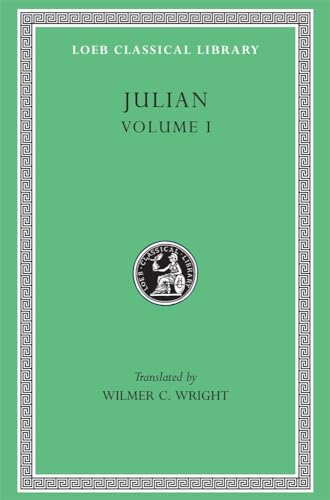
Inhaltsangabe
Julian (Flavius Claudius Iulianus) "the Apostate", Roman Emperor, lived 331 or 332 to 363 CE. Born and educated in Constantinople as a Christian, after a precarious childhood he devoted himself to literature and philosophy and became a pagan, studying in various Greek cities. In 355 his cousin Emperor Constantius called him from Athens to the court at Milan, entitled him "Caesar", and made him governor of Gaul. Julian restored Gaul to prosperity and good government after the ravages of the Alamanni (he overthrew them at the battle of Strassburg in 357) and other Germans. Between 357 and 361 Julian's own soldiers, refusing to serve in the East at Constantius's orders, nearly involved Julian in war with Constantius?who however died in 361 so that Julian became sole Emperor of the Roman world. He began many reforms and proclaimed universal toleration in religion but pressed for the restoration of the older pagan worships. In 362?363 he prepared at Constantinople and then at Antioch for his expedition against Persia ruled by Shapur II. He died of a wound received in desperate battle.
Julian's surviving works (lost are his Commentaries on his western campaigns), all in Greek, are given in the Loeb Classical Library in three volumes. The eight Orations (1-5 in Volume I, 6-8 in Volume II) include two in praise of Constantius, one praising Constantius's wife Eusebia, and two theosophical hymns (in prose) or declamations, of interest for studies in neo-Platonism, Mithraism, and the cult of the Magna Mater in the Roman world. The satirical Caesars and Misopogon, Beard-hater, are also in Volume II. The Letters (more than eighty, Volume III) include edicts or rescripts, mostly about Christians, encyclical or pastoral letters to priests, and private letters. Lastly in Volume III are the fragments of the work Against the Galilaeans (the Christians), written mainly to show that evidence for the idea of Christianity is lacking in the Old Testament.
Die Inhaltsangabe kann sich auf eine andere Ausgabe dieses Titels beziehen.
Über die Autorin bzw. den Autor
Wilmer Cave Wright (1868-1951) was Professor of Greek at Bryn Mawr College.
„Über diesen Titel“ kann sich auf eine andere Ausgabe dieses Titels beziehen.
Ihre gesetzlichen Garantierechte: Alle Verbraucher:innen in der EU profitieren von mindestens 2 Jahren gesetzlichem Garantieschutz für alle in der EU verkauften Konsumgüter. Mehr erfahren
Suchergebnisse für Works: Orations 1-5 (Loeb Classical Library)

Beispielbild für diese ISBN
THE WORKS OF THE EMPEROR JULIAN; Volume I
Verlag:
Harvard University Press & William Heinemann, 1913
ISBN 10: 0674990145
ISBN 13: 9780674990142
Gebraucht
Hardcover
Anbieter: Ancient World Books, Toronto, ON, Kanada
Verkäuferbewertung 5 von 5 Sternen

Hardcover. Zustand: Good+. Zustand des Schutzumschlags: No Dust Jacket. Scholar's name to ffep (A. R. Littlewood). Faint dampstain to lower corner of book. Small tear to base of spine (repaired with cellotape). Spine darkened. Endpapers browned.; Loeb Classical Library No. 29; 1; 511 pages; Julian (Flavius Claudius Iulianus) "the Apostate", Roman Emperor, lived 331 or 332 to 363 CE. Born and educated in Constantinople as a Christian, after a precarious childhood he devoted himself to literature and philosophy and became a pagan, studying in various Greek cities. In 355 his cousin Emperor Constantius called him from Athens to the court at Milan, entitled him "Caesar", and made him governor of Gaul. Julian restored Gaul to prosperity and good government after the ravages of the Alamanni (he overthrew them at the battle of Strassburg in 357) and other Germans. Between 357 and 361 Julian's own soldiers, refusing to serve in the East at Constantius's orders, nearly involved Julian in war with Constantius?who however died in 361 so that Julian became sole Emperor of the Roman world. He began many reforms and proclaimed universal toleration in religion but pressed for the restoration of the older pagan worships. In 362?363 he prepared at Constantinople and then at Antioch for his expedition against Persia ruled by Shapur II. He died of a wound received in desperate battle. Julian's surviving works (lost are his Commentaries on his western campaigns) , all in Greek, are given in the Loeb Classical Library in three volumes. The eight Orations (1-5 in Volume I, 6-8 in Volume II) include two in praise of Constantius, one praising Constantius's wife Eusebia, and two theosophical hymns (in prose) or declamations, of interest for studies in neo-Platonism, Mithraism, and the cult of the Magna Mater in the Roman world. The satirical Caesars and Misopogon, Beard-hater, are also in Volume II. The Letters (more than eighty, Volume III) include edicts or rescripts, mostly about Christians, encyclical or pastoral letters to priests, and private letters. Artikel-Nr. 45202
Gebraucht kaufen
EUR 21,60
EUR 6,84 Versand
Versand von Kanada nach USA
Versand von Kanada nach USA
Anzahl: 1 verfügbar
Foto des Verkäufers
Julian, Volume I
Anbieter: Rarewaves.com USA, London, LONDO, Vereinigtes Königreich
Verkäuferbewertung 5 von 5 Sternen
Hardback. Zustand: New. The emperor who renounced Christianity.Julian (Flavius Claudius Iulianus) "the Apostate," Roman Emperor, lived AD 331 or 332 to 363. Born and educated in Constantinople as a Christian, after a precarious childhood he devoted himself to literature and philosophy and became a pagan, studying in various Greek cities. In 355 his cousin Emperor Constantius called him from Athens to the court at Milan, entitled him "Caesar," and made him governor of Gaul. Julian restored Gaul to prosperity and good government after the ravages of the Alamanni (he overthrew them at the battle of Strassburg in 357) and other Germans. Between 357 and 361 Julian's own soldiers, refusing to serve in the East at Constantius' orders, nearly involved Julian in war with Constantius-who, however, died in 361, making Julian sole Emperor of the Roman world. He began many reforms and proclaimed universal toleration in religion but pressed for the restoration of the older pagan worships. In 362-363 he prepared at Constantinople and then at Antioch for his expedition against Persia ruled by Shapur II. He died of a wound received in desperate battle. Julian's surviving works (lost are his Commentaries on his western campaigns), all in Greek, are given in the Loeb Classical Library in three volumes. The eight Orations (1-5 in Volume I, 6-8 in Volume II) include two in praise of Constantius, one praising Constantius' wife Eusebia, and two theosophical hymns (in prose) or declamations, of interest for studies in neo-Platonism, Mithraism, and the cult of the Magna Mater in the Roman world. Misopogon ("Beard-hater"), in Volume II, assails the morals of people in Antioch; the Letters (more than eighty), in Volume III, include edicts or rescripts, mostly about Christians, encyclical or pastoral letters to priests, and private letters. Lastly in Volume III are the fragments of the work Against the Galilaeans (the Christians), written mainly to show that evidence for the idea of Christianity is lacking in the Old Testament. Artikel-Nr. LU-9780674990142
Neu kaufen
EUR 33,89
Versand gratis
Versand von Vereinigtes Königreich nach USA
Versand von Vereinigtes Königreich nach USA
Anzahl: 11 verfügbar
Beispielbild für diese ISBN
Julian, Volume I
Anbieter: PBShop.store US, Wood Dale, IL, USA
Verkäuferbewertung 5 von 5 Sternen
HRD. Zustand: New. New Book. Shipped from UK. Established seller since 2000. Artikel-Nr. WL-9780674990142
Beispielbild für diese ISBN
Julian, Volume I
Anbieter: PBShop.store UK, Fairford, GLOS, Vereinigtes Königreich
Verkäuferbewertung 5 von 5 Sternen
HRD. Zustand: New. New Book. Shipped from UK. Established seller since 2000. Artikel-Nr. WL-9780674990142
Neu kaufen
EUR 30,47
EUR 4,96 Versand
Versand von Vereinigtes Königreich nach USA
Versand von Vereinigtes Königreich nach USA
Anzahl: 15 verfügbar
Beispielbild für diese ISBN
001: Works: v. 1 (Loeb Classical Library)
Anbieter: Chiron Media, Wallingford, Vereinigtes Königreich
Verkäuferbewertung 5 von 5 Sternen
Hardcover. Zustand: New. Brand new book, sourced directly from publisher. Dispatch time is 24-48 hours from our warehouse. Book will be sent in robust, secure packaging to ensure it reaches you securely. Artikel-Nr. 6666-GRD-9780674990142
Neu kaufen
EUR 29,85
EUR 5,95 Versand
Versand von Vereinigtes Königreich nach USA
Versand von Vereinigtes Königreich nach USA
Anzahl: 2 verfügbar
Beispielbild für diese ISBN
Julian, Volume I: Orations 1?5 (eng)
Anbieter: Brook Bookstore On Demand, Napoli, NA, Italien
Verkäuferbewertung 5 von 5 Sternen
Zustand: new. Artikel-Nr. d85bd3146826cdeec8766c377338ce9f
Neu kaufen
EUR 32,95
EUR 5,50 Versand
Versand von Italien nach USA
Versand von Italien nach USA
Anzahl: 6 verfügbar
Foto des Verkäufers
Julian, Volume I
Anbieter: Rarewaves USA, HEBRON, KY, USA
Verkäuferbewertung 5 von 5 Sternen
Hardback. Zustand: New. The emperor who renounced Christianity.Julian (Flavius Claudius Iulianus) "the Apostate," Roman Emperor, lived AD 331 or 332 to 363. Born and educated in Constantinople as a Christian, after a precarious childhood he devoted himself to literature and philosophy and became a pagan, studying in various Greek cities. In 355 his cousin Emperor Constantius called him from Athens to the court at Milan, entitled him "Caesar," and made him governor of Gaul. Julian restored Gaul to prosperity and good government after the ravages of the Alamanni (he overthrew them at the battle of Strassburg in 357) and other Germans. Between 357 and 361 Julian's own soldiers, refusing to serve in the East at Constantius' orders, nearly involved Julian in war with Constantius-who, however, died in 361, making Julian sole Emperor of the Roman world. He began many reforms and proclaimed universal toleration in religion but pressed for the restoration of the older pagan worships. In 362-363 he prepared at Constantinople and then at Antioch for his expedition against Persia ruled by Shapur II. He died of a wound received in desperate battle. Julian's surviving works (lost are his Commentaries on his western campaigns), all in Greek, are given in the Loeb Classical Library in three volumes. The eight Orations (1-5 in Volume I, 6-8 in Volume II) include two in praise of Constantius, one praising Constantius' wife Eusebia, and two theosophical hymns (in prose) or declamations, of interest for studies in neo-Platonism, Mithraism, and the cult of the Magna Mater in the Roman world. Misopogon ("Beard-hater"), in Volume II, assails the morals of people in Antioch; the Letters (more than eighty), in Volume III, include edicts or rescripts, mostly about Christians, encyclical or pastoral letters to priests, and private letters. Lastly in Volume III are the fragments of the work Against the Galilaeans (the Christians), written mainly to show that evidence for the idea of Christianity is lacking in the Old Testament. Artikel-Nr. LU-9780674990142
Beispielbild für diese ISBN
Julian, Volume I. Orations 1-5 (Loeb Classical Library No. 13)
Anbieter: Kennys Bookshop and Art Galleries Ltd., Galway, GY, Irland
Verkäuferbewertung 5 von 5 Sternen
Zustand: New. 1913. Hardcover. . . . . . Artikel-Nr. V9780674990142
Neu kaufen
EUR 32,59
EUR 9,50 Versand
Versand von Irland nach USA
Versand von Irland nach USA
Anzahl: Mehr als 20 verfügbar
Beispielbild für diese ISBN
Orations 1-5
Anbieter: Majestic Books, Hounslow, Vereinigtes Königreich
Verkäuferbewertung 4 von 5 Sternen

Zustand: New. pp. 528. Artikel-Nr. 8071856
Neu kaufen
EUR 39,37
EUR 7,76 Versand
Versand von Vereinigtes Königreich nach USA
Versand von Vereinigtes Königreich nach USA
Anzahl: 3 verfügbar
Beispielbild für diese ISBN
Works of the Emperor Julian : Loeb 13
Anbieter: GreatBookPricesUK, Woodford Green, Vereinigtes Königreich
Verkäuferbewertung 5 von 5 Sternen
Zustand: New. Artikel-Nr. 623476-n
Neu kaufen
EUR 30,46
EUR 17,90 Versand
Versand von Vereinigtes Königreich nach USA
Versand von Vereinigtes Königreich nach USA
Anzahl: 1 verfügbar