
Verwandte Artikel zu Profiles in Cognitive Aging
Inhaltsangabe
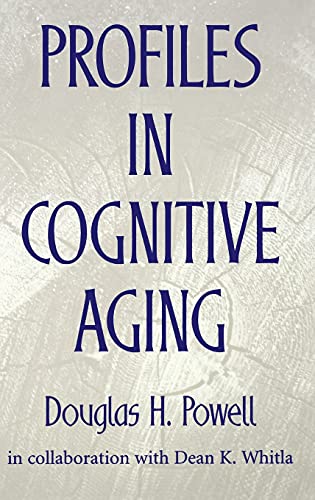
After the age of 40, we may notice occasional lapses—a forgotten phone number, a friend's name, or a word that was right on the tip of our tongue. By 60, we may find ourselves wondering who called this morning, why we came into the kitchen, where we parked the car. In an aging nation, where one citizen in seven will be 65 when the next century arrives, these little difficulties raise a larger question: What precisely happens to our thinking as we grow older? What is normal, what is not, and how are we to know the signs?
Douglas Powell offers a comprehensive account of cognitive aging, of how our mental functions change as we mature. Defining patterns of normal decline, as well as severe forms of cognitive impairment, this book will help us understand and address the needs of an aging population. Powell integrates the latest literature on aging with the findings of his recent study of 1,000 physicians and 600 other subjects ranging in age from 25 to 92. His work reveals patterns of cognitive aging throughout the life cycle, particularly the way in which variability among individuals outpaces the decline of overall ability. Tackling an issue of growing interest in the field of gerontology, he notes the effect of certain factors such as gender, diet, health, and physical and mental exercise on changes in cognitive functioning over time.
Along with the criteria for mild cognitive impairment and normal cognitive aging, this book addresses the question of optimal cognitive aging, identifying its characteristics and searching out their implications for the maintenance of intellectual abilities in the post-retirement years.
Die Inhaltsangabe kann sich auf eine andere Ausgabe dieses Titels beziehen.
Über die Autorin bzw. den Autor
Douglas H. Powell is Psychologist and Director of Research in Behavioral Science at the Harvard University Health Services.
Von der hinteren Coverseite
After the age of 40, we may notice occasional lapses - a forgotten phone number, a friend's name, or a word that was right on the tip of our tongue. By 60, we may find ourselves wondering who called this morning, why we came into the kitchen, where we parked the car. In an aging nation, where one citizen in seven will be 65 when the next century arrives, these little difficulties raise a larger question: what precisely happens to our thinking as we grow older? What is normal, what is not, and how are we to know the signs? Douglas Powell offers a comprehensive account of cognitive aging of how our mental functions change as we mature. Defining patterns of normal decline, as well as severe forms of cognitive impairment, this book will help us understand and address the needs of an aging population. Powell integrates the latest literature on aging with the findings of his recent study of 1,000 physicians and 600 other subjects ranging in age from 25 to 92. His work reveals patterns of cognitive aging throughout the life cycle, particularly the way in which variability among individuals outpaces the decline of overall ability. Tackling an issue of growing interest in the field of gerontology, he notes the effect of certain factors such as gender, diet, health, and physical and mental exercise on changes in cognitive functioning over time. Along with the criteria for mild cognitive impairment and normal cognitive aging, this book addresses the question of optimal cognitive aging, identifying its characteristics and searching out their implications for the maintenance of intellectual abilities in the post-retirement years.
„Über diesen Titel“ kann sich auf eine andere Ausgabe dieses Titels beziehen.
Suchergebnisse für Profiles in Cognitive Aging

Beispielbild für diese ISBN
Profiles in Cognitive Aging
Verlag:
Harvard University Press, 1994
ISBN 10: 0674713311
ISBN 13: 9780674713314
Gebraucht
Hardcover
Anbieter: ThriftBooks-Atlanta, AUSTELL, GA, USA
Verkäuferbewertung 5 von 5 Sternen

Hardcover. Zustand: As New. No Jacket. Pages are clean and are not marred by notes or folds of any kind. ~ ThriftBooks: Read More, Spend Less. Artikel-Nr. G0674713311I2N00
Gebraucht kaufen
EUR 8,55
Versand gratis
Versand innerhalb von USA
Versand innerhalb von USA
Anzahl: 1 verfügbar
Beispielbild für diese ISBN
Profiles in Cognitive Aging
Verlag:
Harvard University Press, 1994
ISBN 10: 0674713311
ISBN 13: 9780674713314
Gebraucht
Hardcover
Anbieter: Anybook.com, Lincoln, Vereinigtes Königreich
Verkäuferbewertung 5 von 5 Sternen
Zustand: Poor. This is an ex-library book and may have the usual library/used-book markings inside.This book has hardback covers. In poor condition, suitable as a reading copy. Pen and pencil inside book and marker on title page Please note the Image in this listing is a stock photo and may not match the covers of the actual item,650grams, ISBN:9780674713314. Artikel-Nr. 9134627
Gebraucht kaufen
EUR 3,08
EUR 15,57 Versand
Versand von Vereinigtes Königreich nach USA
Versand von Vereinigtes Königreich nach USA
Anzahl: 1 verfügbar
Beispielbild für diese ISBN
Profiles in Cognitive Aging
Anbieter: Revaluation Books, Exeter, Vereinigtes Königreich
Verkäuferbewertung 5 von 5 Sternen
Hardcover. Zustand: Brand New. 251 pages. 9.75x6.50x0.75 inches. In Stock. Artikel-Nr. x-0674713311
Neu kaufen
EUR 86,36
EUR 14,93 Versand
Versand von Vereinigtes Königreich nach USA
Versand von Vereinigtes Königreich nach USA
Anzahl: 2 verfügbar
Foto des Verkäufers
Powell, D: Profiles in Cognitive Aging
Anbieter: moluna, Greven, Deutschland
Verkäuferbewertung 5 von 5 Sternen
Gebunden. Zustand: New. Along with the criteria for mild cognitive impairment and normal cognitive ageing, this text addresses the question of optimal cognitive ageing, identifying its characteristics and searching out their implications for the maintenance of intellectual abiliti. Artikel-Nr. 594876488
Neu kaufen
EUR 65,57
EUR 48,99 Versand
Versand von Deutschland nach USA
Versand von Deutschland nach USA
Anzahl: Mehr als 20 verfügbar
Foto des Verkäufers
Profiles in Cognitive Aging
Verlag:
Harvard University Press Dez 1994, 1994
ISBN 10: 0674713311
ISBN 13: 9780674713314
Neu
Hardcover
Anbieter: AHA-BUCH GmbH, Einbeck, Deutschland
Verkäuferbewertung 5 von 5 Sternen
Buch. Zustand: Neu. Neuware - After the age of 40, we may notice occasional lapses - a forgotten phone number, a friend's name, or a word that was right on the tip of our tongue. By 60, we may find ourselves wondering who called this morning, why we came into the kitchen, where we parked the car. In an aging nation, where one citizen in seven will be 65 when the next century arrives, these little difficulties raise a larger question: what precisely happens to our thinking as we grow older What is normal, what is not, and how are we to know the signs Douglas Powell offers a comprehensive account of cognitive aging of how our mental functions change as we mature. Defining patterns of normal decline, as well as severe forms of cognitive impairment, this book will help us understand and address the needs of an aging population. Powell integrates the latest literature on aging with the findings of his recent study of 1,000 physicians and 600 other subjects ranging in age from 25 to 92. His work reveals patterns of cognitive aging throughout the life cycle, particularly the way in which variability among individuals outpaces the decline of overall ability. Tackling an issue of growing interest in the field of gerontology, he notes the effect of certain factors such as gender, diet, health, and physical and mental exercise on changes in cognitive functioning over time. Along with the criteria for mild cognitive impairment and normal cognitive aging, this book addresses the question of optimal cognitive aging, identifying its characteristics and searching out their implications for the maintenance of intellectual abilities in the post-retirement years. Artikel-Nr. 9780674713314
Neu kaufen
EUR 89,17
EUR 35,00 Versand
Versand von Deutschland nach USA
Versand von Deutschland nach USA
Anzahl: 2 verfügbar
Beispielbild für diese ISBN
Profiles in Cognitive Aging
Anbieter: Majestic Books, Hounslow, Vereinigtes Königreich
Verkäuferbewertung 4 von 5 Sternen

Zustand: New. Artikel-Nr. 4747176
Neu kaufen
EUR 117,47
EUR 7,76 Versand
Versand von Vereinigtes Königreich nach USA
Versand von Vereinigtes Königreich nach USA
Anzahl: 1 verfügbar