
Verwandte Artikel zu A Chosen Exile: A History of Racial Passing in American...
Inhaltsangabe
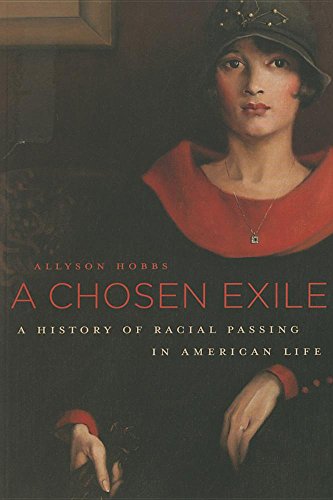
Between the eighteenth and mid-twentieth centuries, countless African Americans passed as white, leaving behind families and friends, roots and community. It was, as Allyson Hobbs writes, a chosen exile, a separation from one racial identity and the leap into another. This revelatory history of passing explores the possibilities and challenges that racial indeterminacy presented to men and women living in a country obsessed with racial distinctions. It also tells a tale of loss.
As racial relations in America have evolved so has the significance of passing. To pass as white in the antebellum South was to escape the shackles of slavery. After emancipation, many African Americans came to regard passing as a form of betrayal, a selling of one’s birthright. When the initially hopeful period of Reconstruction proved short-lived, passing became an opportunity to defy Jim Crow and strike out on one’s own.
Although black Americans who adopted white identities reaped benefits of expanded opportunity and mobility, Hobbs helps us to recognize and understand the grief, loneliness, and isolation that accompanied—and often outweighed—these rewards. By the dawning of the civil rights era, more and more racially mixed Americans felt the loss of kin and community was too much to bear, that it was time to “pass out” and embrace a black identity. Although recent decades have witnessed an increasingly multiracial society and a growing acceptance of hybridity, the problem of race and identity remains at the center of public debate and emotionally fraught personal decisions.
Die Inhaltsangabe kann sich auf eine andere Ausgabe dieses Titels beziehen.
Über die Autorin bzw. den Autor
Allyson Hobbs is Assistant Professor of History at Stanford University.
„Über diesen Titel“ kann sich auf eine andere Ausgabe dieses Titels beziehen.
Suchergebnisse für A Chosen Exile: A History of Racial Passing in American...

Beispielbild für diese ISBN
A Chosen Exile: A History of Racial Passing in American Life
Verlag:
Harvard University Press, 2016
ISBN 10: 0674659929
ISBN 13: 9780674659926
Gebraucht
Paperback
Anbieter: World of Books (was SecondSale), Montgomery, IL, USA
Verkäuferbewertung 5 von 5 Sternen

Paperback. Zustand: Good. Countless African Americans have passed as white, leaving behind families and friends, roots and communities. It was, as Allyson Hobbs writes, a chosen exile. This history of passing explores the possibilities, challenges, and losses that racial indeterminacy presented to men and women living in a country obsessed with racial distinctions. Artikel-Nr. 00109491991
Gebraucht kaufen
EUR 7,76
Versand gratis
Versand innerhalb von USA
Versand innerhalb von USA
Anzahl: 1 verfügbar
Beispielbild für diese ISBN
Chosen Exile : A History of Racial Passing in American Life
Verlag:
Harvard University Press, 2016
ISBN 10: 0674659929
ISBN 13: 9780674659926
Gebraucht
Softcover
Anbieter: Better World Books, Mishawaka, IN, USA
Verkäuferbewertung 5 von 5 Sternen
Zustand: Good. Pages intact with minimal writing/highlighting. The binding may be loose and creased. Dust jackets/supplements are not included. Stock photo provided. Product includes identifying sticker. Better World Books: Buy Books. Do Good. Artikel-Nr. 45153440-6
Gebraucht kaufen
EUR 8,32
Versand gratis
Versand innerhalb von USA
Versand innerhalb von USA
Anzahl: 3 verfügbar
Beispielbild für diese ISBN
Chosen Exile : A History of Racial Passing in American Life
Verlag:
Harvard University Press, 2016
ISBN 10: 0674659929
ISBN 13: 9780674659926
Gebraucht
Softcover
Anbieter: Better World Books, Mishawaka, IN, USA
Verkäuferbewertung 5 von 5 Sternen
Zustand: Fine. Used book that is in almost brand-new condition. May contain a remainder mark. Better World Books: Buy Books. Do Good. Artikel-Nr. 13850848-6
Gebraucht kaufen
EUR 8,32
Versand gratis
Versand innerhalb von USA
Versand innerhalb von USA
Anzahl: 1 verfügbar
Beispielbild für diese ISBN
A Chosen Exile: A History of Racial Passing in American Life
Verlag:
Harvard University Press, 2016
ISBN 10: 0674659929
ISBN 13: 9780674659926
Gebraucht
Soft cover
Anbieter: Twice Read Books, Napa, CA, USA
Verkäuferbewertung 5 von 5 Sternen
Soft cover. Zustand: Fine. Like new. Artikel-Nr. 001661
Gebraucht kaufen
EUR 10,96
Versand gratis
Versand innerhalb von USA
Versand innerhalb von USA
Anzahl: 1 verfügbar
Beispielbild für diese ISBN
A Chosen Exile: A History of Racial Passing in American Life
Anbieter: Books From California, Simi Valley, CA, USA
Verkäuferbewertung 4 von 5 Sternen

paperback. Zustand: Good. Artikel-Nr. mon0003998407
Gebraucht kaufen
EUR 7,28
EUR 4,44 Versand
Versand innerhalb von USA
Versand innerhalb von USA
Anzahl: 1 verfügbar
Foto des Verkäufers
A Chosen Exile: A History of Racial Passing in American Life
Verlag:
Harvard University Press, 2014
ISBN 10: 0674659929
ISBN 13: 9780674659926
Gebraucht
Paperback
Anbieter: The Haunted Bookshop, LLC, Iowa City, IA, USA
Verkäuferbewertung 5 von 5 Sternen
Paperback. Zustand: Near Fine. Crisp, clean pages; no owners' marks; square, uncreased spine; soft cover shows only light shelfwear at the bottom corners, otherwise excellent. 382pp. incl. index. Artikel-Nr. 00086258
Gebraucht kaufen
EUR 11,00
EUR 4,90 Versand
Versand innerhalb von USA
Versand innerhalb von USA
Anzahl: 1 verfügbar
Foto des Verkäufers
A Chosen Exile
Anbieter: Rarewaves.com USA, London, LONDO, Vereinigtes Königreich
Verkäuferbewertung 5 von 5 Sternen
Paperback. Zustand: New. Between the eighteenth and mid-twentieth centuries, countless African Americans passed as white, leaving behind families and friends, roots and community. It was, as Allyson Hobbs writes, a chosen exile, a separation from one racial identity and the leap into another. This revelatory history of passing explores the possibilities and challenges that racial indeterminacy presented to men and women living in a country obsessed with racial distinctions. It also tells a tale of loss.As racial relations in America have evolved so has the significance of passing. To pass as white in the antebellum South was to escape the shackles of slavery. After emancipation, many African Americans came to regard passing as a form of betrayal, a selling of one's birthright. When the initially hopeful period of Reconstruction proved short-lived, passing became an opportunity to defy Jim Crow and strike out on one's own.Although black Americans who adopted white identities reaped benefits of expanded opportunity and mobility, Hobbs helps us to recognize and understand the grief, loneliness, and isolation that accompanied-and often outweighed-these rewards. By the dawning of the civil rights era, more and more racially mixed Americans felt the loss of kin and community was too much to bear, that it was time to "pass out" and embrace a black identity. Although recent decades have witnessed an increasingly multiracial society and a growing acceptance of hybridity, the problem of race and identity remains at the center of public debate and emotionally fraught personal decisions. Artikel-Nr. LU-9780674659926
Neu kaufen
EUR 25,48
Versand gratis
Versand von Vereinigtes Königreich nach USA
Versand von Vereinigtes Königreich nach USA
Anzahl: 1 verfügbar
Beispielbild für diese ISBN
A Chosen Exile: A History of Racial Passing in American Life
Anbieter: WorldofBooks, Goring-By-Sea, WS, Vereinigtes Königreich
Verkäuferbewertung 5 von 5 Sternen
Paperback. Zustand: Very Good. The book has been read, but is in excellent condition. Pages are intact and not marred by notes or highlighting. The spine remains undamaged. Artikel-Nr. GOR012293523
Gebraucht kaufen
EUR 19,05
EUR 6,72 Versand
Versand von Vereinigtes Königreich nach USA
Versand von Vereinigtes Königreich nach USA
Anzahl: 1 verfügbar
Beispielbild für diese ISBN
A Chosen Exile
Anbieter: PBShop.store UK, Fairford, GLOS, Vereinigtes Königreich
Verkäuferbewertung 5 von 5 Sternen
PAP. Zustand: New. New Book. Shipped from UK. Established seller since 2000. Artikel-Nr. WH-9780674659926
Neu kaufen
EUR 20,91
EUR 4,99 Versand
Versand von Vereinigtes Königreich nach USA
Versand von Vereinigtes Königreich nach USA
Anzahl: 2 verfügbar
Beispielbild für diese ISBN
A Chosen Exile: A History of Racial Passing in American Life
Anbieter: Majestic Books, Hounslow, Vereinigtes Königreich
Verkäuferbewertung 4 von 5 Sternen
Zustand: New. pp. 400. Artikel-Nr. 373994682
Neu kaufen
EUR 21,43
EUR 7,80 Versand
Versand von Vereinigtes Königreich nach USA
Versand von Vereinigtes Königreich nach USA
Anzahl: 1 verfügbar