
Verwandte Artikel zu Disaster Drawn: Visual Witness, Comics, and Documentary...
Inhaltsangabe
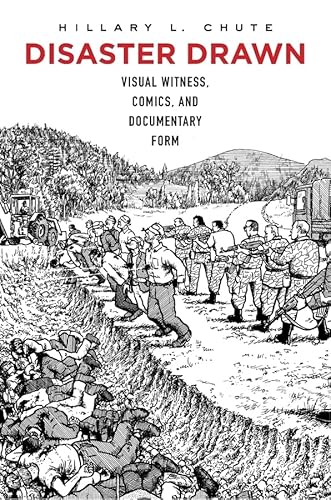
In hard-hitting accounts of Auschwitz, Bosnia, Palestine, and Hiroshima’s Ground Zero, comics display a stunning capacity to bear witness to trauma. Investigating how hand-drawn comics has come of age as a serious medium for engaging history, Disaster Drawn explores the ways graphic narratives by diverse artists, including Jacques Callot, Francisco Goya, Keiji Nakazawa, Art Spiegelman, and Joe Sacco, document the disasters of war.
Hillary L. Chute traces how comics inherited graphic print traditions and innovations from the seventeenth century and later, pointing out that at every turn new forms of visual-verbal representation have arisen in response to the turmoil of war. Modern nonfiction comics emerged from the shattering experience of World War II, developing in the 1970s with Art Spiegelman’s first “Maus” story about his immigrant family’s survival of Nazi death camps and with Hiroshima survivor Keiji Nakazawa’s inaugural work of “atomic bomb manga,” the comic book Ore Wa Mita (“I Saw It”)—a title that alludes to Goya’s famous Disasters of War etchings.
Chute explains how the form of comics—its collection of frames—lends itself to historical narrative. By interlacing multiple temporalities over the space of the page or panel, comics can place pressure on conventional notions of causality. Aggregating and accumulating frames of information, comics calls attention to itself as evidence. Disaster Drawn demonstrates why, even in the era of photography and film, people understand hand-drawn images to be among the most powerful forms of historical witness.
Die Inhaltsangabe kann sich auf eine andere Ausgabe dieses Titels beziehen.
Über die Autorin bzw. den Autor
Hillary L. Chute is Professor of English at Northeastern University.
Von der hinteren Coverseite
In hard-hitting accounts of Auschwitz, Bosnia, Palestine, and Hiroshima’s Ground Zero, comics have shown a stunning capacity to bear witness to trauma. Hillary Chute explores the ways graphic narratives by diverse artists, including Jacques Callot, Francisco Goya, Keiji Nakazawa, Art Spiegelman, and Joe Sacco, document the disasters of war.
„Über diesen Titel“ kann sich auf eine andere Ausgabe dieses Titels beziehen.
Ihre gesetzlichen Garantierechte: Alle Verbraucher:innen in der EU profitieren von mindestens 2 Jahren gesetzlichem Garantieschutz für alle in der EU verkauften Konsumgüter. Mehr erfahren
Suchergebnisse für Disaster Drawn: Visual Witness, Comics, and Documentary...

Beispielbild für diese ISBN
Disaster Drawn
Anbieter: PBShop.store US, Wood Dale, IL, USA
Verkäuferbewertung 5 von 5 Sternen

HRD. Zustand: New. New Book. Shipped from UK. Established seller since 2000. Artikel-Nr. DB-9780674504516
Foto des Verkäufers
Disaster Drawn
Anbieter: Rarewaves.com USA, London, LONDO, Vereinigtes Königreich
Verkäuferbewertung 5 von 5 Sternen
Hardback. Zustand: New. In hard-hitting accounts of Auschwitz, Bosnia, Palestine, and Hiroshima's Ground Zero, comics display a stunning capacity to bear witness to trauma. Investigating how hand-drawn comics has come of age as a serious medium for engaging history, Disaster Drawn explores the ways graphic narratives by diverse artists, including Jacques Callot, Francisco Goya, Keiji Nakazawa, Art Spiegelman, and Joe Sacco, document the disasters of war.Hillary L. Chute traces how comics inherited graphic print traditions and innovations from the seventeenth century and later, pointing out that at every turn new forms of visual-verbal representation have arisen in response to the turmoil of war. Modern nonfiction comics emerged from the shattering experience of World War II, developing in the 1970s with Art Spiegelman's first "Maus" story about his immigrant family's survival of Nazi death camps and with Hiroshima survivor Keiji Nakazawa's inaugural work of "atomic bomb manga," the comic book Ore Wa Mita ("I Saw It")-a title that alludes to Goya's famous Disasters of War etchings.Chute explains how the form of comics-its collection of frames-lends itself to historical narrative. By interlacing multiple temporalities over the space of the page or panel, comics can place pressure on conventional notions of causality. Aggregating and accumulating frames of information, comics calls attention to itself as evidence. Disaster Drawn demonstrates why, even in the era of photography and film, people understand hand-drawn images to be among the most powerful forms of historical witness. Artikel-Nr. LU-9780674504516
Neu kaufen
EUR 44,44
Versand gratis
Versand von Vereinigtes Königreich nach USA
Anzahl: 9 verfügbar
Beispielbild für diese ISBN
Disaster Drawn - Visual Witness, Comics, and Documentary Form (eng)
Verlag:
Belknap Press: An Imprint of Harvard University Press, 2016
ISBN 10: 0674504518
ISBN 13: 9780674504516
Neu
Hardcover
Anbieter: Brook Bookstore On Demand, Napoli, NA, Italien
Verkäuferbewertung 5 von 5 Sternen
Zustand: new. Artikel-Nr. 4849a0940aead3967d2fbcfea4e3dee0
Neu kaufen
EUR 37,26
EUR 8,00 Versand
Versand von Italien nach USA
Anzahl: 13 verfügbar
Beispielbild für diese ISBN
Disaster Drawn
Anbieter: PBShop.store UK, Fairford, GLOS, Vereinigtes Königreich
Verkäuferbewertung 5 von 5 Sternen
HRD. Zustand: New. New Book. Shipped from UK. Established seller since 2000. Artikel-Nr. WH-9780674504516
Neu kaufen
EUR 40,31
EUR 7,02 Versand
Versand von Vereinigtes Königreich nach USA
Anzahl: 15 verfügbar
Beispielbild für diese ISBN
Disaster Drawn
Anbieter: Kennys Bookshop and Art Galleries Ltd., Galway, GY, Irland
Verkäuferbewertung 5 von 5 Sternen
Zustand: New. In hard-hitting accounts of Auschwitz, Bosnia, Palestine, and Hiroshima s Ground Zero, comics have shown a stunning capacity to bear witness to trauma. Hillary Chute explores the ways graphic narratives by diverse artists, including Jacques Callot, Francisco Goya, Keiji Nakazawa, Art Spiegelman, and Joe Sacco, document the disasters of war." Num Pages: 336 pages. BIC Classification: AKLC; FZG; JW. Category: (G) General (US: Trade). . . 2016. Hardcover. . . . . Artikel-Nr. V9780674504516
Neu kaufen
EUR 38,21
EUR 9,50 Versand
Versand von Irland nach USA
Anzahl: 17 verfügbar
Beispielbild für diese ISBN
Disaster Drawn
Anbieter: Kennys Bookstore, Olney, MD, USA
Verkäuferbewertung 4 von 5 Sternen

Zustand: New. In hard-hitting accounts of Auschwitz, Bosnia, Palestine, and Hiroshima s Ground Zero, comics have shown a stunning capacity to bear witness to trauma. Hillary Chute explores the ways graphic narratives by diverse artists, including Jacques Callot, Francisco Goya, Keiji Nakazawa, Art Spiegelman, and Joe Sacco, document the disasters of war." Num Pages: 336 pages. BIC Classification: AKLC; FZG; JW. Category: (G) General (US: Trade). . . 2016. Hardcover. . . . . Books ship from the US and Ireland. Artikel-Nr. V9780674504516
Neu kaufen
EUR 47,47
EUR 9,58 Versand
Versand innerhalb von USA
Anzahl: 17 verfügbar
Beispielbild für diese ISBN
Disaster Drawn - Visual Witness, Comics, and Documentary Form
Verlag:
Belknap Press: An Imprint of Harvard University Press, 2016
ISBN 10: 0674504518
ISBN 13: 9780674504516
Neu
Hardcover
Anbieter: Majestic Books, Hounslow, Vereinigtes Königreich
Verkäuferbewertung 4 von 5 Sternen
Zustand: New. pp. 336. Artikel-Nr. 373589839
Neu kaufen
EUR 49,71
EUR 7,77 Versand
Versand von Vereinigtes Königreich nach USA
Anzahl: 3 verfügbar
Foto des Verkäufers
Disaster Drawn
Verlag:
Harvard University Press Jan 2016, 2016
ISBN 10: 0674504518
ISBN 13: 9780674504516
Neu
Hardcover
Anbieter: BuchWeltWeit Ludwig Meier e.K., Bergisch Gladbach, Deutschland
Verkäuferbewertung 5 von 5 Sternen
Buch. Zustand: Neu. Neuware -In hard-hitting accounts of Auschwitz, Bosnia, Palestine, and Hiroshima's Ground Zero, comics display a stunning capacity to bear witness to trauma. Investigating how hand-drawn comics has come of age as a serious medium for engaging history, Disaster Drawn explores the ways graphic narratives by diverse artists, including Jacques Callot, Francisco Goya, Keiji Nakazawa, Art Spiegelman, and Joe Sacco, document the disasters of war.Hillary L. Chute traces how comics inherited graphic print traditions and innovations from the seventeenth century and later, pointing out that at every turn new forms of visual-verbal representation have arisen in response to the turmoil of war. Modern nonfiction comics emerged from the shattering experience of World War II, developing in the 1970s with Art Spiegelman's first 'Maus' story about his immigrant family's survival of Nazi death camps and with Hiroshima survivor Keiji Nakazawa's inaugural work of 'atomic bomb manga,' the comic book Ore Wa Mita ('I Saw It')-a title that alludes to Goya's famous Disasters of War etchings.Chute explains how the form of comics-its collection of frames-lends itself to historical narrative. By interlacing multiple temporalities over the space of the page or panel, comics can place pressure on conventional notions of causality. Aggregating and accumulating frames of information, comics calls attention to itself as evidence. Disaster Drawn demonstrates why, even in the era of photography and film, people understand hand-drawn images to be among the most powerful forms of historical witness. 376 pp. Englisch. Artikel-Nr. 9780674504516
Neu kaufen
EUR 35,00
EUR 23,00 Versand
Versand von Deutschland nach USA
Anzahl: 1 verfügbar
Foto des Verkäufers
Disaster Drawn
Verlag:
Harvard University Press Jan 2016, 2016
ISBN 10: 0674504518
ISBN 13: 9780674504516
Neu
Hardcover
Anbieter: Rheinberg-Buch Andreas Meier eK, Bergisch Gladbach, Deutschland
Verkäuferbewertung 5 von 5 Sternen
Buch. Zustand: Neu. Neuware -In hard-hitting accounts of Auschwitz, Bosnia, Palestine, and Hiroshima's Ground Zero, comics display a stunning capacity to bear witness to trauma. Investigating how hand-drawn comics has come of age as a serious medium for engaging history, Disaster Drawn explores the ways graphic narratives by diverse artists, including Jacques Callot, Francisco Goya, Keiji Nakazawa, Art Spiegelman, and Joe Sacco, document the disasters of war.Hillary L. Chute traces how comics inherited graphic print traditions and innovations from the seventeenth century and later, pointing out that at every turn new forms of visual-verbal representation have arisen in response to the turmoil of war. Modern nonfiction comics emerged from the shattering experience of World War II, developing in the 1970s with Art Spiegelman's first 'Maus' story about his immigrant family's survival of Nazi death camps and with Hiroshima survivor Keiji Nakazawa's inaugural work of 'atomic bomb manga,' the comic book Ore Wa Mita ('I Saw It')-a title that alludes to Goya's famous Disasters of War etchings.Chute explains how the form of comics-its collection of frames-lends itself to historical narrative. By interlacing multiple temporalities over the space of the page or panel, comics can place pressure on conventional notions of causality. Aggregating and accumulating frames of information, comics calls attention to itself as evidence. Disaster Drawn demonstrates why, even in the era of photography and film, people understand hand-drawn images to be among the most powerful forms of historical witness. 376 pp. Englisch. Artikel-Nr. 9780674504516
Neu kaufen
EUR 35,00
EUR 23,00 Versand
Versand von Deutschland nach USA
Anzahl: 1 verfügbar
Foto des Verkäufers
Disaster Drawn
Verlag:
Harvard University Press Jan 2016, 2016
ISBN 10: 0674504518
ISBN 13: 9780674504516
Neu
Hardcover
Anbieter: Wegmann1855, Zwiesel, Deutschland
Verkäuferbewertung 5 von 5 Sternen
Buch. Zustand: Neu. Neuware -In hard-hitting accounts of Auschwitz, Bosnia, Palestine, and Hiroshima's Ground Zero, comics display a stunning capacity to bear witness to trauma. Investigating how hand-drawn comics has come of age as a serious medium for engaging history, Disaster Drawn explores the ways graphic narratives by diverse artists, including Jacques Callot, Francisco Goya, Keiji Nakazawa, Art Spiegelman, and Joe Sacco, document the disasters of war.Hillary L. Chute traces how comics inherited graphic print traditions and innovations from the seventeenth century and later, pointing out that at every turn new forms of visual-verbal representation have arisen in response to the turmoil of war. Modern nonfiction comics emerged from the shattering experience of World War II, developing in the 1970s with Art Spiegelman's first 'Maus' story about his immigrant family's survival of Nazi death camps and with Hiroshima survivor Keiji Nakazawa's inaugural work of 'atomic bomb manga,' the comic book Ore Wa Mita ('I Saw It')-a title that alludes to Goya's famous Disasters of War etchings.Chute explains how the form of comics-its collection of frames-lends itself to historical narrative. By interlacing multiple temporalities over the space of the page or panel, comics can place pressure on conventional notions of causality. Aggregating and accumulating frames of information, comics calls attention to itself as evidence. Disaster Drawn demonstrates why, even in the era of photography and film, people understand hand-drawn images to be among the most powerful forms of historical witness. Artikel-Nr. 9780674504516
Neu kaufen
EUR 35,00
EUR 25,95 Versand
Versand von Deutschland nach USA
Anzahl: 1 verfügbar