
Verwandte Artikel zu Minding the Climate: How Neuroscience Can Help Solve...
Inhaltsangabe
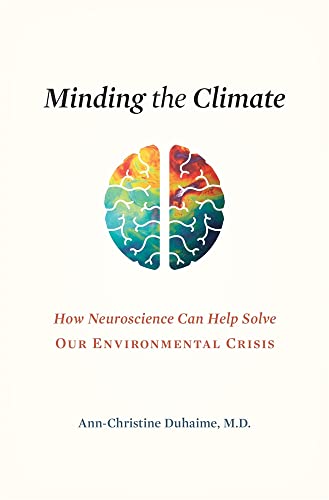
A neurosurgeon explores how our tendency to prioritize short-term consumer pleasures spurs climate change, but also how the brain's amazing capacity for flexibility can-and likely will-enable us to prioritize the long-term survival of humanity.
Increasingly politicians, activists, media figures, and the public at large agree that climate change is an urgent problem. Yet that sense of urgency rarely translates into serious remedies. If we believe the climate crisis is real, why is it so difficult to change our behavior and our consumer tendencies?
Minding the Climate investigates this problem in the neuroscience of decision-making. In particular, Ann-Christine Duhaime, MD, points to the evolution of the human brain during eons of resource scarcity. Understandably, the brain adapted to prioritize short-term survival over more uncertain long-term outcomes. But the resulting behavioral architecture is poorly suited to the present, when scarcity is a lesser concern and slow-moving, novel challenges like environmental issues present the greatest danger. Duhaime details how even our acknowledged best interests are thwarted by the brain's reward system: if a behavior isn't perceived as immediately beneficial, we probably won't do it-never mind that we "know" we should. This is what happens when we lament climate change while indulging the short-term consumer satisfactions that ensure the disaster will continue.
Luckily, we can sway our brains, and those of others, to alter our behaviors. Duhaime describes concrete, achievable interventions that have been shown to encourage our neurological circuits to embrace new rewards. Such small, incremental steps that individuals take, whether in their roles as consumers, in the workplace, or in leadership positions, are necessary to mitigate climate change. The more we understand how our tendencies can be overridden by our brain's capacity to adapt, Duhaime argues, the more likely we are to have a future.
Die Inhaltsangabe kann sich auf eine andere Ausgabe dieses Titels beziehen.
Über die Autorin bzw. den Autor
Ann-Christine Duhaime, MD
„Über diesen Titel“ kann sich auf eine andere Ausgabe dieses Titels beziehen.
Suchergebnisse für Minding the Climate: How Neuroscience Can Help Solve...

Beispielbild für diese ISBN
Minding the Climate: How Neuroscience Can Help Solve Our Environmental Crisis
Verlag:
Harvard University Press, 2022
ISBN 10: 0674247728
ISBN 13: 9780674247727
Gebraucht
Hardcover
Anbieter: ThriftBooks-Atlanta, AUSTELL, GA, USA
Verkäuferbewertung 5 von 5 Sternen

Hardcover. Zustand: Good. No Jacket. Former library book; Pages can have notes/highlighting. Spine may show signs of wear. ~ ThriftBooks: Read More, Spend Less. Artikel-Nr. G0674247728I3N10
Gebraucht kaufen
EUR 7,06
Versand gratis
Versand innerhalb von USA
Versand innerhalb von USA
Anzahl: 1 verfügbar
Beispielbild für diese ISBN
Minding the Climate : How Neuroscience Can Help Solve Our Environmental Crisis
Verlag:
Harvard University Press, 2022
ISBN 10: 0674247728
ISBN 13: 9780674247727
Gebraucht
Hardcover
Anbieter: Better World Books, Mishawaka, IN, USA
Verkäuferbewertung 5 von 5 Sternen
Zustand: Very Good. Former library copy. Pages intact with possible writing/highlighting. Binding strong with minor wear. Dust jackets/supplements may not be included. Includes library markings. Stock photo provided. Product includes identifying sticker. Better World Books: Buy Books. Do Good. Artikel-Nr. 50263531-6
Gebraucht kaufen
EUR 8,36
Versand gratis
Versand innerhalb von USA
Versand innerhalb von USA
Anzahl: 1 verfügbar
Beispielbild für diese ISBN
Minding the Climate
Anbieter: PBShop.store UK, Fairford, GLOS, Vereinigtes Königreich
Verkäuferbewertung 5 von 5 Sternen
HRD. Zustand: New. New Book. Shipped from UK. Established seller since 2000. Artikel-Nr. DB-9780674247727
Neu kaufen
EUR 29,67
EUR 6,85 Versand
Versand von Vereinigtes Königreich nach USA
Versand von Vereinigtes Königreich nach USA
Anzahl: 1 verfügbar
Beispielbild für diese ISBN
Minding the Climate: How Neuroscience Can Help Solve Our Environmental Crisis
Anbieter: Majestic Books, Hounslow, Vereinigtes Königreich
Verkäuferbewertung 4 von 5 Sternen

Zustand: New. Artikel-Nr. 402252139
Neu kaufen
EUR 34,74
EUR 7,58 Versand
Versand von Vereinigtes Königreich nach USA
Versand von Vereinigtes Königreich nach USA
Anzahl: 1 verfügbar
Beispielbild für diese ISBN
Minding the Climate: How Neuroscience Can Help Solve Our Environmental Crisis
Anbieter: Ria Christie Collections, Uxbridge, Vereinigtes Königreich
Verkäuferbewertung 5 von 5 Sternen
Zustand: New. In English. Artikel-Nr. ria9780674247727_new
Neu kaufen
EUR 42,52
EUR 13,17 Versand
Versand von Vereinigtes Königreich nach USA
Versand von Vereinigtes Königreich nach USA
Anzahl: Mehr als 20 verfügbar
Beispielbild für diese ISBN
Minding the Climate: How Neuroscience Can Help Solve Our Environmental Crisis
Anbieter: Kennys Bookstore, Olney, MD, USA
Verkäuferbewertung 5 von 5 Sternen
Zustand: New. 2022. Hardcover. . . . . . Books ship from the US and Ireland. Artikel-Nr. V9780674247727
Neu kaufen
EUR 47,43
EUR 9,14 Versand
Versand innerhalb von USA
Versand innerhalb von USA
Anzahl: Mehr als 20 verfügbar
Beispielbild für diese ISBN
Minding the Climate How Neuroscience Can Help Solve Our Environmental Crisis
Anbieter: Revaluation Books, Exeter, Vereinigtes Königreich
Verkäuferbewertung 5 von 5 Sternen
Hardcover. Zustand: Brand New. 313 pages. 9.50x6.50x1.00 inches. In Stock. Artikel-Nr. __0674247728
Neu kaufen
EUR 45,26
EUR 14,58 Versand
Versand von Vereinigtes Königreich nach USA
Versand von Vereinigtes Königreich nach USA
Anzahl: 2 verfügbar
Foto des Verkäufers
Minding the Climate : How Neuroscience Can Help Solve Our Environmental Crisis
Verlag:
Harvard University Press Okt 2022, 2022
ISBN 10: 0674247728
ISBN 13: 9780674247727
Neu
Hardcover
Anbieter: AHA-BUCH GmbH, Einbeck, Deutschland
Verkäuferbewertung 5 von 5 Sternen
Buch. Zustand: Neu. Neuware - A neurosurgeon explores how our tendency to prioritize short-term consumer pleasures spurs climate change, but also how the brain's amazing capacity for flexibility can-and likely will-enable us to prioritize the long-term survival of humanity.Increasingly politicians, activists, media figures, and the public at large agree that climate change is an urgent problem. Yet that sense of urgency rarely translates into serious remedies. If we believe the climate crisis is real, why is it so difficult to change our behavior and our consumer tendencies Minding the Climate investigates this problem in the neuroscience of decision-making. In particular, Ann-Christine Duhaime, MD, points to the evolution of the human brain during eons of resource scarcity. Understandably, the brain adapted to prioritize short-term survival over more uncertain long-term outcomes. But the resulting behavioral architecture is poorly suited to the present, when scarcity is a lesser concern and slow-moving, novel challenges like environmental issues present the greatest danger. Duhaime details how even our acknowledged best interests are thwarted by the brain's reward system: if a behavior isn't perceived as immediately beneficial, we probably won't do it-never mind that we 'know' we should. This is what happens when we lament climate change while indulging the short-term consumer satisfactions that ensure the disaster will continue.Luckily, we can sway our brains, and those of others, to alter our behaviors. Duhaime describes concrete, achievable interventions that have been shown to encourage our neurological circuits to embrace new rewards. Such small, incremental steps that individuals take, whether in their roles as consumers, in the workplace, or in leadership positions, are necessary to mitigate climate change. The more we understand how our tendencies can be overridden by our brain's capacity to adapt, Duhaime argues, the more likely we are to have a future. Artikel-Nr. 9780674247727
Neu kaufen
EUR 50,81
EUR 30,50 Versand
Versand von Deutschland nach USA
Versand von Deutschland nach USA
Anzahl: 1 verfügbar
Foto des Verkäufers
Minding the Climate | How Neuroscience Can Help Solve Our Environmental Crisis
Anbieter: preigu, Osnabrück, Deutschland
Verkäuferbewertung 5 von 5 Sternen
Buch. Zustand: Neu. Minding the Climate | How Neuroscience Can Help Solve Our Environmental Crisis | Ann-Christine Duhaime | Buch | Englisch | 2022 | Harvard University Press | EAN 9780674247727 | Verantwortliche Person für die EU: Libri GmbH, Europaallee 1, 36244 Bad Hersfeld, gpsr[at]libri[dot]de | Anbieter: preigu. Artikel-Nr. 121360126
Neu kaufen
EUR 25,15
EUR 70,00 Versand
Versand von Deutschland nach USA
Versand von Deutschland nach USA
Anzahl: 1 verfügbar