
Verwandte Artikel zu Modernization from the Other Shore: American Intellectuals...
Modernization from the Other Shore: American Intellectuals and the Romance of Russian Development - Hardcover
Inhaltsangabe
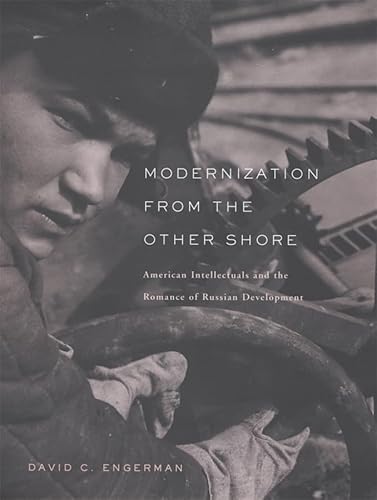
From the late nineteenth century to the eve of World War II, America's experts on Russia watched as Russia and the Soviet Union embarked on a course of rapid industrialization. Captivated by the idea of modernization, diplomats, journalists, and scholars across the political spectrum rationalized the enormous human cost of this path to progress. In a fascinating examination of this crucial era, David Engerman underscores the key role economic development played in America's understanding of Russia and explores its profound effects on U.S. policy.
American intellectuals from George Kennan to Samuel Harper to Calvin Hoover understood Russian events in terms of national character. Many of them used stereotypes of Russian passivity, backwardness, and fatalism to explain the need for--and the costs of--Soviet economic development. These costs included devastating famines that left millions starving while the government still exported grain.
This book is a stellar example of the new international history that seamlessly blends cultural and intellectual currents with policymaking and foreign relations. It offers valuable insights into the role of cultural differences and the shaping of economic policy for developing nations even today.
Die Inhaltsangabe kann sich auf eine andere Ausgabe dieses Titels beziehen.
Über die Autorin bzw. den Autor
David C. Engerman is Assistant Professor of History at Brandeis University.
„Über diesen Titel“ kann sich auf eine andere Ausgabe dieses Titels beziehen.
Suchergebnisse für Modernization from the Other Shore: American Intellectuals...

Beispielbild für diese ISBN
MODERNIZATION FROM THE OTHER SHORE: AMERICAN INTELLECTUALS AND THE ROMANCE OF RUSSIAN DEVELOPMENT
Verlag:
Harvard University Press, Cambridge and London, 2003
ISBN 10: 0674011511
ISBN 13: 9780674011519
Gebraucht
Hardcover
Anbieter: Second Story Books, ABAA, Rockville, MD, USA
Verkäuferbewertung 4 von 5 Sternen

Hardcover. Octavo, vi, vii, 399 pages. In Very Good condition with a Very Good minus dust jacket. Spine pictorial black and white with white lettering. Exterior has slight wear including light soiling, some scratches and minimal edge wear. Boards have extremely light wear. Mild tilt to the spine. Text block has slight wear including slight age toning and faint finger marks to the edges. Gift inscription to the front free end paper. Illustrated. NOTE: Shelved in Netdesk Column Q, ND-Q. 1397046. FP New Rockville Stock. Artikel-Nr. 1397046
Gebraucht kaufen
EUR 34,62
EUR 6,27 Versand
Versand innerhalb von USA
Versand innerhalb von USA
Anzahl: 1 verfügbar
Beispielbild für diese ISBN
Modernization from the Other Shore : American Intellectuals and the Romance of Russian Development
Verlag:
Harvard University Press, 2004
ISBN 10: 0674011511
ISBN 13: 9780674011519
Gebraucht
Hardcover
Anbieter: Better World Books: West, Reno, NV, USA
Verkäuferbewertung 5 von 5 Sternen

Zustand: Very Good. Former library copy. Pages intact with possible writing/highlighting. Binding strong with minor wear. Dust jackets/supplements may not be included. Includes library markings. Stock photo provided. Product includes identifying sticker. Better World Books: Buy Books. Do Good. Artikel-Nr. 726130-6
Gebraucht kaufen
EUR 49,80
Versand gratis
Versand innerhalb von USA
Versand innerhalb von USA
Anzahl: 1 verfügbar
Beispielbild für diese ISBN
Modernization from the Other Shore : American Intellectuals and the Romance of Russian Development
Verlag:
Harvard University Press, 2004
ISBN 10: 0674011511
ISBN 13: 9780674011519
Gebraucht
Hardcover
Anbieter: Better World Books, Mishawaka, IN, USA
Verkäuferbewertung 5 von 5 Sternen
Zustand: Very Good. Pages intact with possible writing/highlighting. Binding strong with minor wear. Dust jackets/supplements may not be included. Stock photo provided. Product includes identifying sticker. Better World Books: Buy Books. Do Good. Artikel-Nr. 4838442-6
Gebraucht kaufen
EUR 49,80
Versand gratis
Versand innerhalb von USA
Versand innerhalb von USA
Anzahl: 2 verfügbar
Beispielbild für diese ISBN
Modernization from the Other Shore : American Intellectuals and the Romance of Russian Development
Verlag:
Harvard University Press, 2004
ISBN 10: 0674011511
ISBN 13: 9780674011519
Gebraucht
Hardcover
Anbieter: Better World Books: West, Reno, NV, USA
Verkäuferbewertung 5 von 5 Sternen
Zustand: Good. Former library copy. Pages intact with minimal writing/highlighting. The binding may be loose and creased. Dust jackets/supplements are not included. Includes library markings. Stock photo provided. Product includes identifying sticker. Better World Books: Buy Books. Do Good. Artikel-Nr. 10988804-6
Gebraucht kaufen
EUR 49,80
Versand gratis
Versand innerhalb von USA
Versand innerhalb von USA
Anzahl: 1 verfügbar
Foto des Verkäufers
Engerman, D: Modernization from the Other Shore - American I
Anbieter: moluna, Greven, Deutschland
Verkäuferbewertung 5 von 5 Sternen
Zustand: New. From the late 19th century to the eve of World War II, America s experts on Russia watched as Russia and the USSR embarked on a course of rapid industrialization. In his examination of this era, Engerman underscores the key role economic development played . Artikel-Nr. 594870531
Neu kaufen
EUR 114,59
EUR 48,99 Versand
Versand von Deutschland nach USA
Versand von Deutschland nach USA
Anzahl: Mehr als 20 verfügbar
Beispielbild für diese ISBN
Modernization from the Other Shore American Intellectuals and the Romance of Russian Development
Anbieter: Revaluation Books, Exeter, Vereinigtes Königreich
Verkäuferbewertung 5 von 5 Sternen
Hardcover. Zustand: Brand New. 399 pages. 9.50x6.50x1.25 inches. In Stock. Artikel-Nr. x-0674011511
Neu kaufen
EUR 155,94
EUR 14,80 Versand
Versand von Vereinigtes Königreich nach USA
Versand von Vereinigtes Königreich nach USA
Anzahl: 2 verfügbar
Foto des Verkäufers
Modernization from the Other Shore : American Intellectuals and the Romance of Russian Development
Verlag:
Harvard University Press Jan 2004, 2004
ISBN 10: 0674011511
ISBN 13: 9780674011519
Neu
Hardcover
Anbieter: AHA-BUCH GmbH, Einbeck, Deutschland
Verkäuferbewertung 5 von 5 Sternen
Buch. Zustand: Neu. Neuware - From the late nineteenth century to the eve of World War II, America's experts on Russia watched as Russia and the Soviet Union embarked on a course of rapid industrialization. Captivated by the idea of modernization, diplomats, journalists, and scholars across the political spectrum rationalized the enormous human cost of this path to progress. In a fascinating examination of this crucial era, David Engerman underscores the key role economic development played in America's understanding of Russia and explores its profound effects on U.S. policy.American intellectuals from George Kennan to Samuel Harper to Calvin Hoover understood Russian events in terms of national character. Many of them used stereotypes of Russian passivity, backwardness, and fatalism to explain the need for--and the costs of--Soviet economic development. These costs included devastating famines that left millions starving while the government still exported grain.This book is a stellar example of the new international history that seamlessly blends cultural and intellectual currents with policymaking and foreign relations. It offers valuable insights into the role of cultural differences and the shaping of economic policy for developing nations even today. Artikel-Nr. 9780674011519
Neu kaufen
EUR 157,87
EUR 35,00 Versand
Versand von Deutschland nach USA
Versand von Deutschland nach USA
Anzahl: 1 verfügbar