
Verwandte Artikel zu Sacred Country: A Novel
Inhaltsangabe
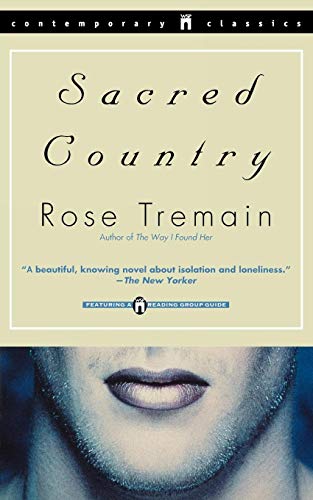
I have a secret to tell you, dear, and this is it: I am not Mary. That is a mistake. I am not a girl. I'm a boy. Mary's fight to become Martin, her claustrophobic small town, and her troubled family make up the core of this remarkable and intimate, emotional yet unsentimental novel. As daring as Virginia Woolf's Orlando, Sacred Country inspires us to reconsider the essence of gender, and proposes new insights in the unraveling of that timeless malady known as the human condition. As Mary's mother, Estelle, observes, "There are no whole truths, just as there is no heart of the onion. There are only the dreams of the individual mind."
Sweeping us through three decades, from the repressive English countryside of the fifties to the swinging London of the sixties to the rhinestone tackiness of seventies America, Rose Tremain unmasks the "sacred country" within us all.
Die Inhaltsangabe kann sich auf eine andere Ausgabe dieses Titels beziehen.
Über die Autorin bzw. den Autor
Rose Tremain is the author of seven novels, including the bestselling Restoration, which received the Sunday Express Book of the Year Award in 1989, was shortlisted for the Booker Prize, and was made into an Academy Award®-winning film in 1995. Sacred Country won both the James Tait Memorial Prize and the Prix Femina Etranger in France. Ms. Tremain lives in London and Norwich, England.
Von der hinteren Coverseite
"I have a secret to tell you, dear, and this is it: I am not Mary. That is a mistake. I am not a girl. I'm a boy". Mary's fight to become Martin, her claustrophobic small town, and her troubled family make up the core of this remarkable and intimate, emotional yet unsentimental novel. As daring as Virginia Woolf's Orlando, SACRED COUNTRY inspires us to reconsider the essence of gender, and proposes new insights in the unraveling of that timeless malady known as the human condition. As Mary's mother, Estelle, observes, "There are no whole truths, just as there is no heart of the onion. There are only the dreams of the individual mind".
Sweeping us through three decades, from the repressive English countryside of the fifties to the swinging London of the sixties to the rhinestone tackiness of seventies America, Rose Tremain unmasks the "sacred country" within us all.
Auszug. © Genehmigter Nachdruck. Alle Rechte vorbehalten.
CHAPTER ONE: 1952
THE TWO-MINUTE SILENCE
On February 15th, 1952, at two o'clock in the afternoon, the nation fell silent for two minutes in honour of the dead king. It was the day of his burial.
Traffic halted. Telephones did not ring. Along the radio airwaves came only hushed white noise. In the street markets, the selling of nylons paused. In the Ritz, the serving of luncheon was temporarily suspended. The waiters stood to attention with napkins folded over their arms.
To some, caught on a stationary bus, at a loom gone suddenly still, or at a brass band rehearsal momentarily soundless, the silence was heavy with eternity. Many people wept and they wept not merely for the king but for themselves and for England: for the long, ghastly passing of time.
On the Suffolk farms, a light wet snow began to fall like salt.
The Ward family stood in a field close together. Sonny Ward had not known -- because the minute hand had fallen off his watch -- at what precise moment to begin the silence. His wife, Estelle, hadn't wanted them to stand round like this out in the grey cold. She'd suggested they stay indoors with a fire to cheer them and the wireless to tell them what to do, but Sonny had said no, they should be out under the sky, to give their prayers an easier route upwards. He said the people of England owed it to the wretched king to speak out for him so that at least he wouldn't stammer in Heaven.
So there they were, gathered round in a potato field: Sonny and Estelle, their daughter, Mary, and their little son, Tim. Pathetic, Sonny thought they looked, pathetic and poor. And the suspicion that his family's silence was not properly synchronised with that of the nation as a whole annoyed Sonny for a long time afterwards. He'd asked his neighbour, Ernie Loomis, to tell him when to begin it, but Loomis had forgotten. Sonny had wondered whether there wouldn't be some sign -- a piece of sky writing or a siren from Lowestoft -- to give him the order, but none came, so when the hour hand of his watch covered the two, he put down his hoe and said: "Right. We'll have the silence now."
They began it.
The salt snow fell on their shoulders.
It was a silence within a silence already there, but nobody except Mary knew that its memory would last a lifetime.
Mary Ward was six years old. She had small feet and hands and a flat, round face that reminded her mother of a sunflower. Her straight brown hair was held back from her forehead by a tortoiseshell slide. She wore round glasses to correct her faulty vision. The arms of these spectacles pinched the backs of her ears. On the day of the silence she was wearing a tweed coat too short for her, purple mittens, Wellingtons and a woollen head scarf patterned with windmills and blue Dutchmen. Her father, glancing at her blinking vacantly in the sleet, thought her a sad sight.
She had been told to think about King George and pray for him. All she could remember of the king was his head, cut off at the neck on the twopenny stamp, so she started to pray for the stamp, but these prayers got dull and flew away and she turned her head this way and that, wondering if she wasn't going to see, at the edge of her hopeless vision, her pet guineafowl, Marguerite, pecking her dainty way over the ploughed earth.
Estelle, that very morning, had inadvertently sewn a hunk of her thick black hair to some parachute silk with her sewing machine. She had screamed when she saw what she'd done. It was grotesque. It was like a crime against herself. And though now, in the silence, Estelle made herself be quiet, she could still hear her voice screaming somewhere far away. Her head was bowed, but she saw Sonny look up, first at Mary and then at her. And so instead of seeing the dead king lying smart in his naval uniform, she saw herself as she was at that precise moment, big in the flat landscape, beautiful in spite of her hacked hair, a mystery, a woman failing and failing through time and the fall endless and icy. She put her palms together, seeking calm. "At teatime," she whispered, "I shall do that new recipe for flapjacks." She believed her whispering was soundless, but it was not. Estelle's mind often had difficulty distinguishing between thoughts and words said aloud.
Sonny banged his worn flat cap against his thigh. He began to cough. "Shut you up, Estelle!" he said through the cough. "Or else we'll have to start the silence again."
Estelle put her hands against her lips and closed her eyes. When Sonny's cough subsided, he looked down at Tim. Tim, his treasure. Timmy, his boy. The child had sat down on a furrow and was trying to unlace his little boots. Sonny watched as one boot was tugged off, pulling with it a grey sock and revealing Timmy's foot. To Sonny, the soft foot looked boneless. Tim stuck it into the mud, throwing the boot away like a toy.
"Tim!" hissed Mary. "Don't be bad!"
"Shut you up, girl!" said Sonny.
"I can't hear any silence at all," said Estelle.
"Begin it again," ordered Sonny.
So Mary thought, how many minutes is it going to be? Will it get dark with us still standing here?
And then the idea of them waiting there in the field, the snow little by little settling on them and whitening them over, gave Mary a strange feeling of exaltation, as if something were about to happen to her that had never happened to anybody in the history of Suffolk or the world.
She tried another prayer for the king, but the words blew away like paper. She wiped the sleet from her glasses with the back of her mittened hand. She stared at her family, took them in, one, two, three of them, quiet at last but not as still as they were meant to be, not still like the plumed men guarding the king's coffin, not still like bulrushes in a lake. And then, hearing the familiar screech of her guineafowl coming from near the farmhouse, she thought, I have some news for you, Marguerite, I have a secret to tell you, dear, and this is it; I am not Mary. That is a mistake. I am not a girl. I'm a boy.
This was how and when it began, the long journey of Mary Ward.
It began in an unsynchronised silence the duration of which no one could determine, for just as Sonny hadn't known when to begin it, so he couldn't tell when to end it. He just let his family stand out there in the sleet, waiting, and the waiting felt like a long time.
THE BEAUTIFUL BABY CONTEST
In April that year, Sonny lost eleven lambs to freezing weather. Anger always made him deaf. The more angry he grew, the louder he shouted.
Part of his left ear had been shot off in the war. He'd seen a small piece of himself floating away on the waters of the Rhine. What remained was a branching bit of cartilage, like soft coral. In his deaf rages, Sonny would gouge at the coral with his thumb, making blood run down his neck.
Sonny took the frozen lambs to his neighbour, Ernie Loomis, to be butchered and stored in his cold room. On Sonny's farm nothing was allowed to go to waste. And he couldn't bear the way Estelle was becoming careless with things in the house, so absent-minded about everything that sometimes she forgot what she was holding in her hands. He wanted to hit her when this happened, hit her head to wake her thoughts up. That day when she'd sewn her hair to the piece of silk, he'd made her unpick the seam, stitch by stitch with a razor blade, until all the hair was out.
In a silver frame on the kitchen mantelpiece Estelle kept a photograph of her mother. She had been a piano teacher. The photograph showed her as she'd been in 1935, a year before her sudden death in a glider. She had belonged to the Women's League of Health and Beauty and this was how she remained in Estelle's mind -- healthy, with her hair wavy and gleaming, beautiful with a gentle smile. "Gliders, you know," Estelle had once told Mary in the whispery voice she used when she talked about her mother, "are also, in fact, very...
„Über diesen Titel“ kann sich auf eine andere Ausgabe dieses Titels beziehen.
Suchergebnisse für Sacred Country: A Novel

Beispielbild für diese ISBN
Sacred Country
Verlag:
Atria Books (edition Reprint), 1995
ISBN 10: 0671886096
ISBN 13: 9780671886097
Gebraucht
Paperback
Anbieter: BooksRun, Philadelphia, PA, USA
Verkäuferbewertung 5 von 5 Sternen

Paperback. Zustand: Fair. Reprint. The item might be beaten up but readable. May contain markings or highlighting, as well as stains, bent corners, or any other major defect, but the text is not obscured in any way. Artikel-Nr. 0671886096-7-1
Gebraucht kaufen
EUR 4,75
Versand gratis
Versand innerhalb von USA
Versand innerhalb von USA
Anzahl: 1 verfügbar
Beispielbild für diese ISBN
Sacred Country
Anbieter: World of Books (was SecondSale), Montgomery, IL, USA
Verkäuferbewertung 5 von 5 Sternen
Zustand: Good. Item in good condition. Textbooks may not include supplemental items i.e. CDs, access codes etc. Artikel-Nr. 00095440567
Gebraucht kaufen
EUR 4,90
Versand gratis
Versand innerhalb von USA
Versand innerhalb von USA
Anzahl: 2 verfügbar
Beispielbild für diese ISBN
Sacred Country
Verlag:
Washington Square Press, 1995
ISBN 10: 0671886096
ISBN 13: 9780671886097
Gebraucht
Softcover
Anbieter: Better World Books, Mishawaka, IN, USA
Verkäuferbewertung 5 von 5 Sternen
Zustand: Good. Reprint. Pages intact with minimal writing/highlighting. The binding may be loose and creased. Dust jackets/supplements are not included. Stock photo provided. Product includes identifying sticker. Better World Books: Buy Books. Do Good. Artikel-Nr. 4047059-6
Gebraucht kaufen
EUR 6,35
Versand gratis
Versand innerhalb von USA
Versand innerhalb von USA
Anzahl: 1 verfügbar
Beispielbild für diese ISBN
Sacred Country
Verlag:
Washington Square Press, 1995
ISBN 10: 0671886096
ISBN 13: 9780671886097
Gebraucht
Softcover
Anbieter: Better World Books, Mishawaka, IN, USA
Verkäuferbewertung 5 von 5 Sternen
Zustand: Very Good. Reprint. Pages intact with possible writing/highlighting. Binding strong with minor wear. Dust jackets/supplements may not be included. Stock photo provided. Product includes identifying sticker. Better World Books: Buy Books. Do Good. Artikel-Nr. 3975507-6
Gebraucht kaufen
EUR 6,35
Versand gratis
Versand innerhalb von USA
Versand innerhalb von USA
Anzahl: 1 verfügbar
Beispielbild für diese ISBN
Sacred Country
Anbieter: ThriftBooks-Atlanta, AUSTELL, GA, USA
Verkäuferbewertung 5 von 5 Sternen
Paperback. Zustand: Fair. No Jacket. Readable copy. Pages may have considerable notes/highlighting. ~ ThriftBooks: Read More, Spend Less. Artikel-Nr. G0671886096I5N00
Gebraucht kaufen
EUR 6,70
Versand gratis
Versand innerhalb von USA
Versand innerhalb von USA
Anzahl: 1 verfügbar
Beispielbild für diese ISBN
Sacred Country
Anbieter: ThriftBooks-Phoenix, Phoenix, AZ, USA
Verkäuferbewertung 5 von 5 Sternen
Paperback. Zustand: Fair. No Jacket. Readable copy. Pages may have considerable notes/highlighting. ~ ThriftBooks: Read More, Spend Less. Artikel-Nr. G0671886096I5N00
Gebraucht kaufen
EUR 6,70
Versand gratis
Versand innerhalb von USA
Versand innerhalb von USA
Anzahl: 1 verfügbar
Beispielbild für diese ISBN
Sacred Country
Anbieter: ThriftBooks-Reno, Reno, NV, USA
Verkäuferbewertung 5 von 5 Sternen
Paperback. Zustand: Fair. No Jacket. Readable copy. Pages may have considerable notes/highlighting. ~ ThriftBooks: Read More, Spend Less. Artikel-Nr. G0671886096I5N00
Gebraucht kaufen
EUR 6,70
Versand gratis
Versand innerhalb von USA
Versand innerhalb von USA
Anzahl: 1 verfügbar
Beispielbild für diese ISBN
Sacred Country
Anbieter: ThriftBooks-Dallas, Dallas, TX, USA
Verkäuferbewertung 5 von 5 Sternen
Paperback. Zustand: Fair. No Jacket. Readable copy. Pages may have considerable notes/highlighting. ~ ThriftBooks: Read More, Spend Less. Artikel-Nr. G0671886096I5N00
Gebraucht kaufen
EUR 6,70
Versand gratis
Versand innerhalb von USA
Versand innerhalb von USA
Anzahl: 2 verfügbar
Beispielbild für diese ISBN
Sacred Country
Anbieter: ThriftBooks-Dallas, Dallas, TX, USA
Verkäuferbewertung 5 von 5 Sternen
Paperback. Zustand: Very Good. No Jacket. May have limited writing in cover pages. Pages are unmarked. ~ ThriftBooks: Read More, Spend Less. Artikel-Nr. G0671886096I4N00
Gebraucht kaufen
EUR 6,72
Versand gratis
Versand innerhalb von USA
Versand innerhalb von USA
Anzahl: 1 verfügbar
Beispielbild für diese ISBN
Sacred Country: A Novel
Verlag:
Washington Square Press, 1995
ISBN 10: 0671886096
ISBN 13: 9780671886097
Gebraucht
Paperback
Anbieter: Robinson Street Books, IOBA, Binghamton, NY, USA
Verkäuferbewertung 4 von 5 Sternen

Paperback. Zustand: Very Good. Prompt Shipment, shipped in Boxes, Tracking PROVIDEDCrime & Thriller. 2nd printing. Very good. Artikel-Nr. bing91716423
Gebraucht kaufen
EUR 12,01
EUR 8,20 Versand
Versand innerhalb von USA
Versand innerhalb von USA
Anzahl: 1 verfügbar