
Inhaltsangabe
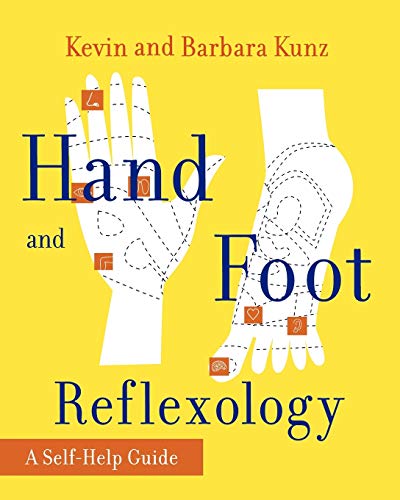
Here's a revolutionary way to fine-tune your relationship with your body, reduce stress, and feel better all over: Stimulate the reflexes in your hands and feet!
It's all in this hands-on encyclopedia of personal reflexology information. Here, Kevin and Barbara Kunz (authors of The Complete Guide to Foot Reflexology) bring you their unique self-health approach to wellness. Through reflexology, they teach you how to free and channel your pent-up energy -- and to prevent and correct common health problems.
With more than 500 detailed instructions, this book includes:
* Why your feet and hands are "important sensory organs," and their "special relationship" with your whole body.
* Why reflexology works.
* Specially designed pressure and movement techniques that reduce stress and actually alter the body's tension level. Fully illustrated, with step-by-step procedures, for quick and easy application!
* Treatment plans for specific aliments, from acne to whiplash.
* Stride Replication, the Kunzes' latest program of foot and hand relaxation.
* A more in-depth look at body parts and their corresponding areas in the hands and feet -- all conveniently indexed.
Whether you are using it as a quick reference or as the basis for further study. Hand and Foot Reflexology: A Self-Help Guide tells you what you need to know about the simple but potent experience of eflexology -- by yourself and for yourself.
Die Inhaltsangabe kann sich auf eine andere Ausgabe dieses Titels beziehen.
Über die Autorin bzw. den Autor
Kevin and Barbara Kunz are researchers, authors, practitioners, and consultants in the field of reflexology. Kevin and Barbara are innovators of illustrative, descriptive information on reflexology.
Their further work in reflexology includes that of co-directors of Reflexology Research Project, researching and developing information on reflexology. In addition, Barbara and Kevin are the authors and editors of Reflexions, a quarterly journal.
Von der hinteren Coverseite
Whether you are using it as a quick reference or as the basis for further study, Hand and Foot Reflexology: A Self-Help Guide tells you what you need to know about the simple but potent experience of reflexology - by yourself and for yourself.
Auszug. © Genehmigter Nachdruck. Alle Rechte vorbehalten.
THEORY AND PRINCIPLES
THE FEET, HANDS AND BODY: A Special Relationship
To the body, the feet and hands are special. No other sensory organ reaches out to touch the world around us, to travel through it and to manipulate it. The feet and hands sense what is underfoot and what is in hand.
The task is no small accomplishment. The infant struggles to stand and begins a life-long, two-legged, weight-bearing activity commonly referred to as walking. While it is not the fastest way to move about, walking on two legs provides a mobile platform from which the hands are able to interact with the world.
The demands of staying upright on two feet require a special communication between the feet, the hands and the rest of the body. The "language" the body uses to accomplish this is actually a combination of the stretch of muscles, angulation of joints and deep pressure to the bottom of the feet. This form of communication is indeed a silent one but it is most vital for it determines our very survival.
The feet and hands not only allow us to react to danger but they themselves also consume energy to meet the ordinary demands of the day. Survival and the energy necessary for survival link the hands and feet into a special relationship with the body. In case of danger, both feet and hands participate in the overall body reaction to ensure survival. This reaction is familiarly known as "fight or flight" because the body gears its internal structures to provide the fuel for either eventuality. The feet and hands must be ready to do their part. The hands are readied to reach for a weapon while the feet are prepared to find firm footing or flee.
The inextricable link between hand, foot and body is thus forged. The hands and feet provide the necessary moves while the internal organs provide the fuel. A special communication and relationship is required for such a system.
The system is also a participant in more mundane daily activities. For example, upon waking, the body not only assesses internal organ measurements but it also requests body position information. The feet are polled in this positioning process. The rest of the day is spent in silent dialogue between internal organs and the organs of movement. Every move made, whether to walk, sit, stand, jump, run or skip, requires up-dated information and continual communication. Every move made requires an allocation of the body's energy.
Thus the feet and hands are a part of day-to-day energy consuming activities. This demand forms the basis of very strong links within the body's communication system. To ensure continuity from day to day, the body learns a communication operating pattern. In locomotion, continuity is all important; any interruption in the communication or energy systems could be catastrophic, resulting in, for example, a fall. Therefore the signals of locomotion have major impact on the energy system, the sensory system and the overall tension level of the body. Tension is a state of readiness occurring throughout the body. A footstep requires a great deal of tension to be successful.
This high degree of muscular readiness not only consumes a great deal of energy but it also must be matched by the readiness of the internal environment. The readiness of the body to respond to any eventuality exists as a level of tone or tension throughout the body. Tone describes the constant communication with all parts of the body which provides the capability to move and to survive. This calls for knowledge of the position of every muscle, joint and tendon. The ability to survive requires a perception of the internal and external environments. The pooling of the information about both provides an opportunity of interaction for the parts of the body we cannot reach in and touch. As active perceivers of the external environment, the feet and hands thus communicate with the internal environment.
Any sensory information gathered must be evaluated as a potential threat. For this reason, any sensory signal can be viewed as a stressor, demanding interaction with the body's tone. Thus, as a sensory organ, the feet and hands contribute to the body's tone. The contribution is made in the body's language of proprioception. Gathering information about movement are some very sophisticated gauges, such as deep pressure to the bottoms of the feet, the angulation of joints and the stretch of muscles and tendons.
In summary, because the hands and feet are sensory organs of locomotion, they have a special relationship with the body. Furthermore, because of the special relationship, they can serve as a means of interaction with the state of tension and energy consumption throughout the body.
THE BODY MANAGER: TAKING ADVANTAGE OF THE WAY THE BODY WORKS
For every individual an opportunity exists to communicate with the whole body through the hands and feet. The special relationship between the feet, hands and body can be used for the purposes of:
* stress reduction
* energy savings
* building greater body awareness
The possibility for interaction becomes an opportunity for management when sensory experience is applied on a frequent and consistent basis. The body manager is one who deliberately interacts with a part of his or her body, in this case hands and feet, to influence the whole body. Such interaction allows one to manage the body's resources more efficiently and is at the very heart of the concept of "self help".
Energy
Energy is a body resource, a basis for the body economy. It exists always in limited supply, but there is a potential for regulation and an opportunity for conservation.
A certain amount of energy is required to move a certain distance. Each footstep can be seen as a unit of energy expended. Small savings on each footstep can add up to large gains. When one provides sensory experience to the hands and feet with this program, it helps break up the patterns of stress and allows one to begin to accrue savings and it makes it possible to apply these as investments in the body's total energy reserves. Energy-saving techniques for everyday activities may be applied to form a practical conservation program. So energy expended for tone or overall body communication may be influenced by applied sensory information.
Sensory Signals
Sensory signals provide a link of communication with the outside world and "local reporting" of information from the sensory organs which affects the body's economy. The sensing of the ground underfoot, such as in walking through sand, creates a demand on the whole body's economy and participates in the expenditure of the body's resources.
The application of consistent, frequent sensory stimulus creates a variety of signals which re-sets the body's tension level. In any learning situation, the more time a body spends "practicing" an event, the more proficient it becomes at it. The practice of variety lessens the demand on any one part of the body.
Locomotion
Locomotion is
r* the expenditure of energy
* a sensory signal
* a participant in the body's readiness system
Tone
In terms of the body's economy, it is a major consumer of the body's resources. The possibility for interaction and for taking advantage of the way the body works exists because locomotion demands organization. The hands and feet are a part of the organization, the body's economy. They are a part of the body's
(1) energy consumption
(2) tension/tone level, and
(3) body awareness.
Tone budgets the expenditure of energy, taking into account past expenditures, present demands and future concerns. It is the active decision-making process involving these expenditures that is necessary to maintain readiness. Sleeping, for example, requires a...
„Über diesen Titel“ kann sich auf eine andere Ausgabe dieses Titels beziehen.
Weitere beliebte Ausgaben desselben Titels

Suchergebnisse für Hand and Foot Reflexology

Beispielbild für diese ISBN
Hand and Foot Reflexology
Anbieter: World of Books (was SecondSale), Montgomery, IL, USA
Verkäuferbewertung 5 von 5 Sternen

Zustand: Good. Item in good condition. Textbooks may not include supplemental items i.e. CDs, access codes etc. Artikel-Nr. 00062528561
Gebraucht kaufen
EUR 3,99
Versand gratis
Versand innerhalb von USA
Versand innerhalb von USA
Anzahl: 10 verfügbar
Beispielbild für diese ISBN
Hand and Foot Reflexology
Anbieter: BooksRun, Philadelphia, PA, USA
Verkäuferbewertung 5 von 5 Sternen
Paperback. Zustand: Very Good. It's a well-cared-for item that has seen limited use. The item may show minor signs of wear. All the text is legible, with all pages included. It may have slight markings and/or highlighting. Artikel-Nr. 0671763199-11-1
Gebraucht kaufen
EUR 5,36
Versand gratis
Versand innerhalb von USA
Versand innerhalb von USA
Anzahl: 1 verfügbar
Beispielbild für diese ISBN
Hand and Foot Reflexology
Anbieter: ThriftBooks-Phoenix, Phoenix, AZ, USA
Verkäuferbewertung 5 von 5 Sternen
Paperback. Zustand: Very Good. No Jacket. May have limited writing in cover pages. Pages are unmarked. ~ ThriftBooks: Read More, Spend Less. Artikel-Nr. G0671763199I4N00
Gebraucht kaufen
EUR 6,21
Versand gratis
Versand innerhalb von USA
Versand innerhalb von USA
Anzahl: 1 verfügbar
Beispielbild für diese ISBN
Hand and Foot Reflexology
Anbieter: ThriftBooks-Atlanta, AUSTELL, GA, USA
Verkäuferbewertung 5 von 5 Sternen
Paperback. Zustand: Very Good. No Jacket. May have limited writing in cover pages. Pages are unmarked. ~ ThriftBooks: Read More, Spend Less. Artikel-Nr. G0671763199I4N00
Gebraucht kaufen
EUR 6,21
Versand gratis
Versand innerhalb von USA
Versand innerhalb von USA
Anzahl: 1 verfügbar
Beispielbild für diese ISBN
Hand and Foot Reflexology
Anbieter: ThriftBooks-Atlanta, AUSTELL, GA, USA
Verkäuferbewertung 5 von 5 Sternen
Paperback. Zustand: Good. No Jacket. Pages can have notes/highlighting. Spine may show signs of wear. ~ ThriftBooks: Read More, Spend Less. Artikel-Nr. G0671763199I3N00
Gebraucht kaufen
EUR 6,21
Versand gratis
Versand innerhalb von USA
Versand innerhalb von USA
Anzahl: 1 verfügbar
Beispielbild für diese ISBN
Hand and Foot Reflexology
Anbieter: ThriftBooks-Dallas, Dallas, TX, USA
Verkäuferbewertung 5 von 5 Sternen
Paperback. Zustand: Very Good. No Jacket. May have limited writing in cover pages. Pages are unmarked. ~ ThriftBooks: Read More, Spend Less. Artikel-Nr. G0671763199I4N00
Gebraucht kaufen
EUR 6,21
Versand gratis
Versand innerhalb von USA
Versand innerhalb von USA
Anzahl: 1 verfügbar
Beispielbild für diese ISBN
Hand and Foot Reflexology
Anbieter: Wonder Book, Frederick, MD, USA
Verkäuferbewertung 5 von 5 Sternen
Zustand: Very Good. Very Good condition. A copy that may have a few cosmetic defects. May also contain light spine creasing or a few markings such as an owner's name, short gifter's inscription or light stamp. Artikel-Nr. Q12H-00302
Gebraucht kaufen
EUR 6,33
Versand gratis
Versand innerhalb von USA
Versand innerhalb von USA
Anzahl: 2 verfügbar
Beispielbild für diese ISBN
Hand and Foot Reflexology
Anbieter: Better World Books, Mishawaka, IN, USA
Verkäuferbewertung 5 von 5 Sternen
Zustand: Good. Pages intact with minimal writing/highlighting. The binding may be loose and creased. Dust jackets/supplements are not included. Stock photo provided. Product includes identifying sticker. Better World Books: Buy Books. Do Good. Artikel-Nr. 4938466-6
Gebraucht kaufen
EUR 6,65
Versand gratis
Versand innerhalb von USA
Versand innerhalb von USA
Anzahl: 2 verfügbar
Beispielbild für diese ISBN
Hand and Foot Reflexology
Anbieter: AwesomeBooks, Wallingford, Vereinigtes Königreich
Verkäuferbewertung 5 von 5 Sternen
Paperback. Zustand: Very Good. Hand and Foot Reflexology This book is in very good condition and will be shipped within 24 hours of ordering. The cover may have some limited signs of wear but the pages are clean, intact and the spine remains undamaged. This book has clearly been well maintained and looked after thus far. Money back guarantee if you are not satisfied. See all our books here, order more than 1 book and get discounted shipping. Artikel-Nr. 7719-9780671763190
Gebraucht kaufen
EUR 3,60
EUR 4,83 Versand
Versand von Vereinigtes Königreich nach USA
Versand von Vereinigtes Königreich nach USA
Anzahl: 2 verfügbar
Beispielbild für diese ISBN
Hand and Foot Reflexology
Anbieter: Bahamut Media, Reading, Vereinigtes Königreich
Verkäuferbewertung 5 von 5 Sternen
Paperback. Zustand: Very Good. This book is in very good condition and will be shipped within 24 hours of ordering. The cover may have some limited signs of wear but the pages are clean, intact and the spine remains undamaged. This book has clearly been well maintained and looked after thus far. Money back guarantee if you are not satisfied. See all our books here, order more than 1 book and get discounted shipping. Artikel-Nr. 6545-9780671763190
Gebraucht kaufen
EUR 3,98
EUR 8,17 Versand
Versand von Vereinigtes Königreich nach USA
Versand von Vereinigtes Königreich nach USA
Anzahl: 2 verfügbar