
Verwandte Artikel zu Shepherds Abiding: A Mitford Christmas Story
Inhaltsangabe
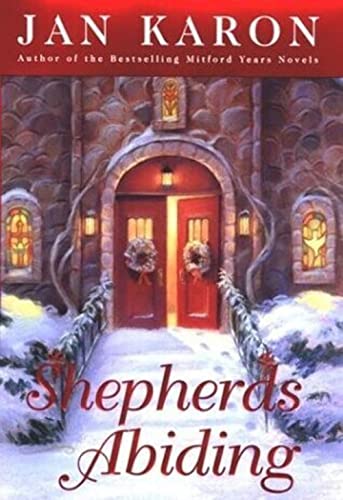
Since he was a boy growing up in Missisippi, Father Tim has lived what he calls “the life of the mind.” Except for cooking and gardening and washing his dog, he never learned to savor the work of his hands. And then he finds a derelict nativity scene—twenty figures, including a flock of sheep, that have suffered the indignities of time and neglect. Could he give the small company new life? Restore the camel’s ear, repaint every piece, replace a missing nose on a wise man? “You can’t teach an old dog new tricks!” he reminds himself. It’s when he imagines the excitement in Cynthia’s eyes that he steps up to the plate—and begins a small journey of faith that touches everyone around him. The eighth novel in the bestselling Mitford Years series is a meditation on the best of all presents—the gift of one’s heart. Lovingly written and beautifully illustrated, it seeks to restore the true Christmas spirit and give everyone a seat at Mitford’s holiday table.
Die Inhaltsangabe kann sich auf eine andere Ausgabe dieses Titels beziehen.
Über die Autorinnen und Autoren
Jan Karon, born Janice Meredith Wilson in the foothills of North Carolina, was named after the title of a popular novel, Janice Meredith.
Jan wrote her first novel at the age of ten. "The manuscript was written on Blue Horse notebook paper, and was, for good reason, kept hidden from my sister. When she found it, she discovered the one curse word I had, with pounding heart, included in someone's speech. For Pete's sake, hadn't Rhett Butler used that very same word and gotten away with it? After my grandmother's exceedingly focused reproof, I've written books without cussin' ever since."
Several years ago, Karon left a successful career in advertising to move to the mountain village of Blowing Rock, North Carolina, and write books. "I stepped out on faith to follow my lifelong dream of being an author," she says. "I made real sacrifices and took big risks. But living, it seems to me, is largely about risk."
Enthusiastic booksellers across the country have introduced readers of all ages to Karon's heartwarming books. At Home in Mitford, Karon's first book in the Mitford series, was nominated for an ABBY by the American Booksellers Association in 1996 and again in 1997. Bookstore owner, Shirley Sprinkle, says, "The Mitford Books have been our all-time fiction bestsellers since we went in business twenty-five years ago. We've sold 10,000 of Jan's books and don't see any end to the Mitford phenomenon."
Jan Karon, born Janice Meredith Wilson in the foothills of North Carolina, was named after the title of a popular novel, Janice Meredith.
Jan wrote her first novel at the age of ten. "The manuscript was written on Blue Horse notebook paper, and was, for good reason, kept hidden from my sister. When she found it, she discovered the one curse word I had, with pounding heart, included in someone's speech. For Pete's sake, hadn't Rhett Butler used that very same word and gotten away with it? After my grandmother's exceedingly focused reproof, I've written books without cussin' ever since."
Several years ago, Karon left a successful career in advertising to move to the mountain village of Blowing Rock, North Carolina, and write books. "I stepped out on faith to follow my lifelong dream of being an author," she says. "I made real sacrifices and took big risks. But living, it seems to me, is largely about risk."
Enthusiastic booksellers across the country have introduced readers of all ages to Karon's heartwarming books.At Home in Mitford, Karon's first book in the Mitford series, was nominated for an ABBY by the American Booksellers Association in 1996 and again in 1997. Bookstore owner, Shirley Sprinkle, says, "The Mitford Books have been our all-time fiction bestsellers since we went in business twenty-five years ago. We've sold 10,000 of Jan's books and don't see any end to the Mitford phenomenon."
Auszug. © Genehmigter Nachdruck. Alle Rechte vorbehalten.
One
The rain began punctually at five ofclock, though few were awake to hear it. It was a gentle rain, rather like a summer shower that had escaped the grip of time or season and wandered into Mitford several months late.
By six ofclock, when much of the population of 1,074 was leaving for work in Wesley or Holding or across the Tennessee line, the drops had grown large and heavy, as if weighted with mercury, and those running to their cars or trucks without umbrellas could feel the distinct smack of each drop.
Dashing to a truck outfitted with painterfs ladders, someone on Lilac Road shouted 8Yeehaw!,e an act that precipitated a spree of barking among the neighborhood dogs.
Here and there, as seemingly random as the appearance of stars at twilight, lamps came on in houses throughout the village, and radio and television voices prophesied that the front passing over the East Coast would be firmly lodged there for two days.
More than a few were fortunate to lie in bed and listen to the rain drumming on the roof, relieved to have no reason to get up until they were plenty good and ready.
Others thanked God for the time that remained to lie in a warm, safe place unmolested by worldly cares, while some began at once to fret about what the day might bring.
Father Timothy Kavanagh, one of the earliest risers in Mitford, did not rise so early this morning. Instead, he lay in his bed in the yellow house on Wisteria Lane and listened to the aria of his wifefs whiffling snore, mingled with the sound of rain churning through the gutters.
Had he exchanged wedding vows before the age of sixty-two, he might have taken the marriage bed for granted after these seven years. Instead, he seldom awakened next to the warm sentience of his wife without being mildly astonished by her presence, and boundlessly grateful. Cynthia was his best friend and boon companion, dropped from the very heavens into his life, which, forthwith, she had changed utterly.
He would get up soon enough and go about his day, first hying with his good dog, Barnabas, into the pouring rain, and then, while the coffee brewed, reading the Morning Office, as hefd done for more than four decades as both a working and a now-retired priest.
Feeling a light chill in the room, he scooted over to his sleeping wife and put his arm around her and held her close, comforted, as ever, by the faint and familiar scent of wisteria.
a
Lew Boyd, who liked to rise with the sun every morning, and who always wore his watch to bed, gazed at the luminous face of his Timex and saw that it was the first day of October.
October! He had no idea at all where the time had gone. Yesterday was July, today was October. As a matter of fact, where had his life gone?
He stared at the bedroom ceiling and pondered a question that hefd never been fond of messing with, though now seemed a good time to do it and get it over with.
One day, hefd been a green kid without a care in the world. Then, before you could say Jack Robinson, hefd looked up and found he was an old codger with a new and secret wife living way off in Tennessee with her mama, and him lying here in this cold, lonesome bed just as hefd been doing all those years as a widower.
He tried to recall what, exactly, had happened between his youth and old age, but without a cup of coffee at the very least, he was drawing a blank.
Though hefd worked hard and saved his money and honored his dead wifefs memory by looking at her picture on Sunday and paying to have her grave weed-eated, he didnft know whether hefd made a go of it with the Good Lord or not.
For the few times hefd cheated somebody down at his Exxon station, hefd asked forgiveness, even though hefd cheated them only a few bucks. Hefd also asked forgiveness for the times hefd bitten Juanitafs head off without good reason, and for a few other things he didnft want to think about ever again.
To top that off, hefd quit smoking twelve years ago, cut out the peach brandy hefd fooled with after Juanita passed, and increased what he put in the plate on the occasional Sundays he showed up at First Baptist.
But the thing was, it seemed like all of it=good and bad, up and down, sweet and sour=had blown by him like Dale Earnhardt Jr. at Talladega.
He sighed deeply, hauled himself out of bed, and slid his cold feet into the unlaced, brown and white spectators he wore around the house. If Juanita was alive, or if Earlene was here, hefd probably turn on the furnace out of common decency. But as long as he was boss of the thermostat, hefd operate on the fact that an oil furnace was money down the drain and wait ftil the first hard freeze to make himself toasty.
Sitting on the side of the bed and covering his bare legs with the blanket, he scratched his head and yawned, then reached for the cordless and punched redial.
When his wife, living with her dying mama in a frame house on the southern edge of Knoxville, answered the phone, he said, 8Good morninf, dumplin.fe
8Good morninf yourself, baby. Howfre you feelinf this morninf?e
8Great!e he said. 8Just great!e
He thought for a split second he was telling a bald-faced lie, then realized he was telling the lawful truth. It was the sound of Earlenefs cheerful voice that had changed him from an old man waking up in a cold bed to a young buck who just remembered he was driving to Tennessee in his new Dodge truck, tonight.
a
At six-thirty, Hope Winchester dashed along Main Street under a red umbrella. Rain gurgled from the downspouts of the buildings she fled past and flowed along the curb in a bold and lively stream.
To the driver of a station wagon heading down the mountain, the figure hurrying past the Main Street Grill was but a splash of red on the canvas of a sullen, gray morning. Nonetheless, it was a splash that momentarily cheered the driver.
Hope dodged a billow of water from the wheels of the station wagon and clutched even tighter the pocketbook containing three envelopes whose contents could change her life forever. She would line them up on her desk in the back room of the bookstore and prayerfully examine each of these wonders again and again. Then she would put them in her purse at the end of the day and take them home and line them up on her kitchen table so she might do the same thing once more.
UPS had come hours late yesterday with the books to be used in this monthfs promotion, which meant shefd lost precious time finishing the front window and must get at it this morning before the bookstore opened at ten. It was, after all, October first=time for a whole new window display, and the annual Big O sale.
All titles beginning with the letter O would be twenty percent off, which would get Wesleyfs students and faculty hopping! Indeed, Septemberfs Big S sale had increased their bottom line by twelve percent over last year, and all because she, the usually reticent Hope Winchester, had urged the owner to give a percentage off that really 8counted for something.e It was a Books-A-Million, B&N, Samfs Club kind of world, Hope insisted, and a five-percent dribble here and there wouldnft work anymore, not even in Mitford, which wasnft as sleepy and innocuous as some people liked to think.
She dashed under the awning, set her streaming umbrella down, and jiggled the key in the door of Willard Porterfs old pharmacy, now known as Happy Endings Books.
The lock had the cunning possessed only by a lock manufactured in 1927. Helen, the owner, had refused to replace it, insisting that a burglar couldnft possibly outwit its boundless vagaries.
Jiggling diligently, Hope realized that her feet were cold and soaking wet. She supposed thatfs what she deserved by wearing sandals past Labor Day, something her mother had often...
„Über diesen Titel“ kann sich auf eine andere Ausgabe dieses Titels beziehen.
Suchergebnisse für Shepherds Abiding: A Mitford Christmas Story

Beispielbild für diese ISBN
Shepherds Abiding
Anbieter: World of Books (was SecondSale), Montgomery, IL, USA
Verkäuferbewertung 5 von 5 Sternen

Hardback. Zustand: Very Good. Experience the joy of Christmas in Mitford in the eighth novel in the beloved series from the #1 New York Times bestselling author of To Be Where You Are. Millions of Americans have found Mitford to be a favorite home-away-from-home, and countless readers have long wondered what Christmas in Mitford would be like. The eighth Mitford novel provides a glimpse, offering a meditation on the best of all presents: the gift of one's heart.Since he was a boy, Father Tim has lived what he calls the life of the mind and has never really learned to savor the work of his hands. When he finds a derelict nativity scene that has suffered the indignities of time and neglect, he imagines the excitement in the eyes of his wife, Cynthia, and decides to undertake the daunting task of restoring it. As Father Tim begins his journey, readers are given a seat at Mitford's holiday table and treated to a magical tale about the true Christmas spirit. Artikel-Nr. 00108247879
Gebraucht kaufen
EUR 3,46
Versand gratis
Versand innerhalb von USA
Versand innerhalb von USA
Anzahl: 7 verfügbar
Beispielbild für diese ISBN
Shepherds Abiding: A Mitford Christmas Story
Verlag:
Viking Penguin (edition First Edition), 2003
ISBN 10: 0670031208
ISBN 13: 9780670031207
Gebraucht
Hardcover
Erstausgabe
Anbieter: BooksRun, Philadelphia, PA, USA
Verkäuferbewertung 5 von 5 Sternen
Hardcover. Zustand: Very Good. First Edition. With dust jacket. It's a well-cared-for item that has seen limited use. The item may show minor signs of wear. All the text is legible, with all pages included. It may have slight markings and/or highlighting. Artikel-Nr. 0670031208-11-18-29
Gebraucht kaufen
EUR 5,38
Versand gratis
Versand innerhalb von USA
Versand innerhalb von USA
Anzahl: 1 verfügbar
Beispielbild für diese ISBN
Shepherds Abiding
Anbieter: World of Books (was SecondSale), Montgomery, IL, USA
Verkäuferbewertung 5 von 5 Sternen
Hardback. Zustand: Fair. Experience the joy of Christmas in Mitford in the eighth novel in the beloved series from the #1 New York Times bestselling author of To Be Where You Are. Millions of Americans have found Mitford to be a favorite home-away-from-home, and countless readers have long wondered what Christmas in Mitford would be like. The eighth Mitford novel provides a glimpse, offering a meditation on the best of all presents: the gift of one's heart.Since he was a boy, Father Tim has lived what he calls the life of the mind and has never really learned to savor the work of his hands. When he finds a derelict nativity scene that has suffered the indignities of time and neglect, he imagines the excitement in the eyes of his wife, Cynthia, and decides to undertake the daunting task of restoring it. As Father Tim begins his journey, readers are given a seat at Mitford's holiday table and treated to a magical tale about the true Christmas spirit. Artikel-Nr. 00087707588
Gebraucht kaufen
EUR 5,49
Versand gratis
Versand innerhalb von USA
Versand innerhalb von USA
Anzahl: 6 verfügbar
Beispielbild für diese ISBN
Shepherds Abiding
Anbieter: World of Books (was SecondSale), Montgomery, IL, USA
Verkäuferbewertung 5 von 5 Sternen
Hardback. Zustand: Good. Experience the joy of Christmas in Mitford in the eighth novel in the beloved series from the #1 New York Times bestselling author of To Be Where You Are. Millions of Americans have found Mitford to be a favorite home-away-from-home, and countless readers have long wondered what Christmas in Mitford would be like. The eighth Mitford novel provides a glimpse, offering a meditation on the best of all presents: the gift of one's heart.Since he was a boy, Father Tim has lived what he calls the life of the mind and has never really learned to savor the work of his hands. When he finds a derelict nativity scene that has suffered the indignities of time and neglect, he imagines the excitement in the eyes of his wife, Cynthia, and decides to undertake the daunting task of restoring it. As Father Tim begins his journey, readers are given a seat at Mitford's holiday table and treated to a magical tale about the true Christmas spirit. Artikel-Nr. 00083142111
Gebraucht kaufen
EUR 5,49
Versand gratis
Versand innerhalb von USA
Versand innerhalb von USA
Anzahl: Mehr als 20 verfügbar
Beispielbild für diese ISBN
Shepherds Abiding: A Mitford Christmas Story
Verlag:
Viking Penguin (edition First Edition), 2003
ISBN 10: 0670031208
ISBN 13: 9780670031207
Gebraucht
Hardcover
Erstausgabe
Anbieter: BooksRun, Philadelphia, PA, USA
Verkäuferbewertung 5 von 5 Sternen
Hardcover. Zustand: Very Good. First Edition. With dust jacket. It's a well-cared-for item that has seen limited use. The item may show minor signs of wear. All the text is legible, with all pages included. It may have slight markings and/or highlighting. Artikel-Nr. 0670031208-8-18-29
Gebraucht kaufen
EUR 5,88
Versand gratis
Versand innerhalb von USA
Versand innerhalb von USA
Anzahl: 2 verfügbar
Beispielbild für diese ISBN
Shepherds Abiding: A Mitford Christmas Story
Anbieter: ThriftBooks-Atlanta, AUSTELL, GA, USA
Verkäuferbewertung 5 von 5 Sternen
Hardcover. Zustand: As New. No Jacket. Pages are clean and are not marred by notes or folds of any kind. ~ ThriftBooks: Read More, Spend Less. Artikel-Nr. G0670031208I2N00
Gebraucht kaufen
EUR 5,94
Versand gratis
Versand innerhalb von USA
Versand innerhalb von USA
Anzahl: 1 verfügbar
Beispielbild für diese ISBN
Shepherds Abiding: A Mitford Christmas Story
Anbieter: ThriftBooks-Phoenix, Phoenix, AZ, USA
Verkäuferbewertung 5 von 5 Sternen
Hardcover. Zustand: Very Good. No Jacket. May have limited writing in cover pages. Pages are unmarked. ~ ThriftBooks: Read More, Spend Less. Artikel-Nr. G0670031208I4N00
Gebraucht kaufen
EUR 5,94
Versand gratis
Versand innerhalb von USA
Versand innerhalb von USA
Anzahl: 3 verfügbar
Beispielbild für diese ISBN
Shepherds Abiding: A Mitford Christmas Story
Anbieter: ThriftBooks-Atlanta, AUSTELL, GA, USA
Verkäuferbewertung 5 von 5 Sternen
Hardcover. Zustand: Very Good. No Jacket. May have limited writing in cover pages. Pages are unmarked. ~ ThriftBooks: Read More, Spend Less. Artikel-Nr. G0670031208I4N00
Gebraucht kaufen
EUR 5,94
Versand gratis
Versand innerhalb von USA
Versand innerhalb von USA
Anzahl: 4 verfügbar
Beispielbild für diese ISBN
Shepherds Abiding: A Mitford Christmas Story
Anbieter: ThriftBooks-Reno, Reno, NV, USA
Verkäuferbewertung 5 von 5 Sternen
Hardcover. Zustand: Very Good. No Jacket. May have limited writing in cover pages. Pages are unmarked. ~ ThriftBooks: Read More, Spend Less. Artikel-Nr. G0670031208I4N00
Gebraucht kaufen
EUR 5,94
Versand gratis
Versand innerhalb von USA
Versand innerhalb von USA
Anzahl: 3 verfügbar
Beispielbild für diese ISBN
Shepherds Abiding: A Mitford Christmas Story
Anbieter: ThriftBooks-Dallas, Dallas, TX, USA
Verkäuferbewertung 5 von 5 Sternen
Hardcover. Zustand: Very Good. No Jacket. Former library book; May have limited writing in cover pages. Pages are unmarked. ~ ThriftBooks: Read More, Spend Less. Artikel-Nr. G0670031208I4N10
Gebraucht kaufen
EUR 5,94
Versand gratis
Versand innerhalb von USA
Versand innerhalb von USA
Anzahl: 1 verfügbar