
Verwandte Artikel zu Collision 2012: Obama vs. Romney and the Future of...
Inhaltsangabe
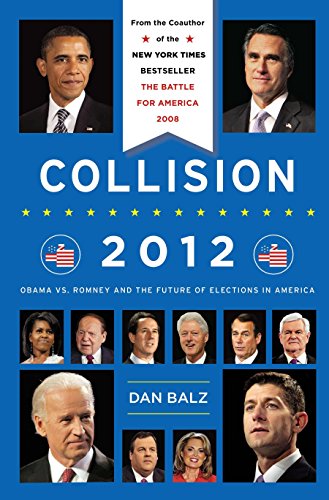
From the bestselling author of The Battle for America 2008 and longtime Washington Post correspondent, an inside view and analysis of the Obama-Romney presidential race
Four years ago, a bright young presidential candidate named Barack Obama campaigned on a theme of hope and change, and made history. Today, he finds himself in another bitter, divisive presidential race but without the buzzwords. Instead, an embattled president struggles with a dysfunctionally divided Congress, the controversial healthcare bill, a decade-long war, and a stagnant economy.
Obama’s Republican challenger, Mitt Romney, former corporate tycoon and former governor of Massachusetts, faces his own controversies in the form of vague policies, fluctuating positions, and questions about his business practices in the private sector. Romney’s personal fortune and business background seemed at odds with the Republican base until he named Wisconsin congressman, Tea Party darling and fiscal conservative Paul Ryan as his running mate.
Using sources deep inside both campaigns and on the campaign trail through primary and battleground states, Washington Post correspondent Dan Balz writes with a keen political mind and a seasoned reporter’s ear. He traces the highs and lows of the Obama presidency as well as the ruthless Republican primary as both laid the groundwork for one of the most crucial, contentious elections of our time. Collision 2012 puts the race for the White House in context and explores just what the election means for the future of the democratic process and America.
Four years ago, a bright young presidential candidate named Barack Obama campaigned on a theme of hope and change, and made history. Today, he finds himself in another bitter, divisive presidential race but without the buzzwords. Instead, an embattled president struggles with a dysfunctionally divided Congress, the controversial healthcare bill, a decade-long war, and a stagnant economy.
Obama’s Republican challenger, Mitt Romney, former corporate tycoon and former governor of Massachusetts, faces his own controversies in the form of vague policies, fluctuating positions, and questions about his business practices in the private sector. Romney’s personal fortune and business background seemed at odds with the Republican base until he named Wisconsin congressman, Tea Party darling and fiscal conservative Paul Ryan as his running mate.
Using sources deep inside both campaigns and on the campaign trail through primary and battleground states, Washington Post correspondent Dan Balz writes with a keen political mind and a seasoned reporter’s ear. He traces the highs and lows of the Obama presidency as well as the ruthless Republican primary as both laid the groundwork for one of the most crucial, contentious elections of our time. Collision 2012 puts the race for the White House in context and explores just what the election means for the future of the democratic process and America.
Die Inhaltsangabe kann sich auf eine andere Ausgabe dieses Titels beziehen.
Über die Autorinnen und Autoren
Dan Balz is the chief correspondent at The Washington Post and its former national editor, political editor, White House correspondent, and Southwest correspondent. He is the coauthor of two books, the New York Times bestseller The Battle for America 2008 and Storming the Gates. He is a regular panelist on PBS's Washington Week and MSNBC's The Daily Rundown.
Dan Balz is the chief correspondent at The Washington Post and its former national editor, political editor, White House correspondent, and Southwest correspondent. He is the coauthor of two books, theNew York Times bestseller The Battle for America 2008 and Storming the Gates. He is a regular panelist on PBS'sWashington Week and MSNBC's The Daily Rundown.
Auszug. © Genehmigter Nachdruck. Alle Rechte vorbehalten.
On the Cusp of History
It ended where it began. On the evening of November 5, 2012, twenty thousand people lined the streets of the East Village section of downtown Des Moines. The golden dome atop the Iowa Capitol building stood in the background, brilliantly illuminated against the black sky. From the Capitol to the Des Moines River, the streets were cordoned off and had been for days, awaiting the president’s arrival. Behind the stage sat the old headquarters from the first campaign—a squat one-story building that was now a church. For many in the traveling party, including the president, it was still familiar ground. Some of them could recall exactly where people sat four years earlier as they made the final phone calls to supporters during the caucuses in 2008. They remembered too their nervousness as they awaited the returns from precincts across the state and their elation when finally he had won on that frigid January night. It had all happened so fast, and now, even more quickly, they were at the end. The verdict would come the next day from the voters.
The whole team was there: David Axelrod, David Plouffe, and Robert Gibbs, the trio of advisers who led the first campaign; speechwriter Jon Favreau and his 2008 writing partner Ben Rhodes, now deputy national security adviser. Friends Marty Nesbitt and Mike Ramos were along for the ride. So too was Valerie Jarrett, the president’s White House confidante and one of his and the First Lady’s closest friends. Reggie Love, the president’s irrepressible body man who was now off on other pursuits, had come back too. Jen Psaki, who had logged almost every mile with Obama in 2008 and spent time in the White House, was back as traveling campaign spokeswoman. Jay Carney had seen the 2008 campaign from the outside as Time’s Washington bureau chief. Now he too was in the staff cabin on Air Force One as White House press secretary. Trip director Marvin Nicholson, who was also the president’s golfing buddy, tried to keep the operation moving to schedule. It was like the end of a long-running television series in which all the characters from previous seasons had come back to make cameo appearances, Axelrod said. The whole family was back together one last time.
It was easy to forget how far Obama had come in such a short time, and how dramatic the ascent had been. He had been on the national stage barely eight years, beginning with that night in Boston in 2004 when as a little-known Illinois state senator he gave a keynote address that electrified the Democratic convention of John Kerry. Soon he became a vessel for the hopes and dreams of millions of Americans, who had rallied behind him as he began an improbable quest for the White House. That first election made history and brought almost two million people to the Washington Mall for his historic inauguration day. He came to office amid great expectations and facing enormous problems. His presidency had been rocky—his aides called it a roller-coaster ride, which was a charitable way to put it—as he dealt with the deepest recession since the Great Depression, battled a Republican Party unified in its opposition to almost everything he proposed, and suffered a historic midterm election defeat just two years after he stood in Chicago’s Grant Park to claim the presidency. He was confident as he approached election day 2012—he was never one to lack for self-confidence about anything. But those around him could also sense the weight of the moment bearing down on him. He had told someone that he believed that everything—everything—about his presidency was on the line with this election: how he would be viewed by history, his legacy, his accomplishments, and the future of the country. He wasn’t nervous so much as he was clear-eyed about the enormity of the moment and the consequences of defeat.
The final swing had begun on Sunday, November 4, when he left the White House for a flight to New Hampshire. Bill Clinton joined him. The president and former president, tense rivals during those 2008 primaries between Obama and Hillary Rodham Clinton, were now allies. They had campaigned together the night before in Virginia and were to do one last joint rally before splitting off in separate directions for the final day and a half of campaigning. On the half-hour ride from the Manchester airport to Concord, Plouffe and Axelrod joined them in the president’s limousine. Clinton was delighted to be back in the state that had saved his candidacy during the primaries in 1992 and resurrected his wife’s ultimately failed candidacy in 2008. “I love New Hampshire,” he exclaimed. New Hampshire summoned different memories for Obama’s team. They all remembered the pain of losing the primary there to Hillary Clinton when everyone believed Obama was a sure winner. Plouffe wouldn’t say he exactly hated the state, so he said, “We like New Hampshire, but we like Iowa a little bit more.” From New Hampshire, Obama had flown south to Florida and then back to the most contested of all the battlegrounds, Ohio, for an evening rally with Stevie Wonder at the University of Cincinnati. Hecklers interrupted him, one of them an anti-abortion demonstrator who gripped the railing of the balcony as police took him away. After the rally, the traveling press corps broke off from the presidential party and flew on to Madison, Wisconsin. But Obama had one more stop, a late-night rally in Aurora, Colorado. By the time he got to his hotel in Madison, it was after 3 a.m.
If Sunday was a grueling march across the country and back, Monday was a day of nostalgia and emotions, for the president and all those with him. Racing through the president’s mind, Axelrod believed, was the improbable journey he had been on and the finality of knowing that whatever came the next day, this chapter was ending. On one flight during the day, Obama said to Axelrod, Plouffe, and Gibbs, Listen, I remember the night of [the 2008 primary in] New Hampshire, you three knocking on my door and pulling me out of dinner with my wife to tell me that we had lost. If you show up at my door tomorrow night, just remember I’m still going to be president for two more months. Everybody had a good laugh at that, and Axelrod said, “No problem, Mr. President, we already talked about this. If someone is knocking, it’s going to be [campaign manager Jim] Messina.”
Bruce Springsteen was also with him that day. On the trip from Madison to the president’s second stop of the day in Columbus, Ohio, Springsteen rode on Air Force One. During the flight, the president placed a call to New Jersey’s Chris Christie. The Republican governor and the Democratic president had bonded in the wake of Hurricane Sandy, the storm that had devastated parts of the East Coast a week earlier. Republicans were dismayed by what they saw as Christie’s excessive praise for the president, given the closeness of the election. Christie was a huge fan of Springsteen, but it was an unrequited love. Obama decided to have some fun with his new friend the governor. Aboard Air Force One, Obama’s companions thought Christie didn’t recognize Springsteen’s voice. Nonsense, Christie said later—he instantly knew who Obama had on the line. “[Obama] says to me, ‘You know, in a crisis like we’re going through, you know the only thing that’s better than one guy from Jersey?’ I said, ‘No.’ He goes, ‘Two guys from Jersey.’ Then I hear, ‘Hey, Gov, we meet in the wildest places, don’t we?’ I said to him, ‘Are you on Air Force One?’ He said to me, ‘It is unbelievable, it is unbelievable, yes, I’m on Air Force One,’ and you could just tell that...
„Über diesen Titel“ kann sich auf eine andere Ausgabe dieses Titels beziehen.
Suchergebnisse für Collision 2012: Obama vs. Romney and the Future of...

Beispielbild für diese ISBN
Collision 2012: Obama vs. Romney and the Future of Elections in America
Anbieter: World of Books (was SecondSale), Montgomery, IL, USA
Verkäuferbewertung 5 von 5 Sternen

Hardback. Zustand: Good. Four years ago, a bright young presidential candidate named Barack Obama campaigned on a theme of hope and change, and made history. Today, he finds himself in another bitter, divisive presidential race but without the buzzwords. Instead, an embattled president struggles with a dysfunctionally divided Congress, a controversial healthcare bill, a decade-long war, and a stagnant economy. Obama's Republican challenger, Mitt Romney, former corporate tycoon and former governor of Massachusetts, faces his own controversies in the form of vague policies, fluctuating positions, and questions about his business practices in the private sector. Romney's personal fortune and business background seemed at odds with the Republican base until he named Wisconsin congressman, Tea Party darling, and fiscal conservative Paul Ryan as his running mate. Using sources deep inside both campaigns and on the campaign trail through primary and battleground states, Washington Post correspondent Dan Balz writes with a keen political mind and a seasoned reporter's ear. He traces the highs and lows of the Obama presidency as well as the ruthless Republican primary as both laid the groundwork for one of the most crucial, contentious elections of our time. Collision 2012 puts the race for the White House in context and explores just what the election means for the future of the democratic process and America. Artikel-Nr. 00106728330
Gebraucht kaufen
EUR 4,47
Versand gratis
Versand innerhalb von USA
Versand innerhalb von USA
Anzahl: 2 verfügbar
Beispielbild für diese ISBN
Collision 2012: Obama vs. Romney and the Future of Elections in America
Anbieter: World of Books (was SecondSale), Montgomery, IL, USA
Verkäuferbewertung 5 von 5 Sternen
Hardback. Zustand: Very Good. Four years ago, a bright young presidential candidate named Barack Obama campaigned on a theme of hope and change, and made history. Today, he finds himself in another bitter, divisive presidential race but without the buzzwords. Instead, an embattled president struggles with a dysfunctionally divided Congress, a controversial healthcare bill, a decade-long war, and a stagnant economy. Obama's Republican challenger, Mitt Romney, former corporate tycoon and former governor of Massachusetts, faces his own controversies in the form of vague policies, fluctuating positions, and questions about his business practices in the private sector. Romney's personal fortune and business background seemed at odds with the Republican base until he named Wisconsin congressman, Tea Party darling, and fiscal conservative Paul Ryan as his running mate. Using sources deep inside both campaigns and on the campaign trail through primary and battleground states, Washington Post correspondent Dan Balz writes with a keen political mind and a seasoned reporter's ear. He traces the highs and lows of the Obama presidency as well as the ruthless Republican primary as both laid the groundwork for one of the most crucial, contentious elections of our time. Collision 2012 puts the race for the White House in context and explores just what the election means for the future of the democratic process and America. Artikel-Nr. 00096062291
Gebraucht kaufen
EUR 4,47
Versand gratis
Versand innerhalb von USA
Versand innerhalb von USA
Anzahl: 2 verfügbar
Beispielbild für diese ISBN
Collision 2012: Obama vs. Romney and the Future of Elections in America
Verlag:
Viking (edition First Edition), 2013
ISBN 10: 0670025941
ISBN 13: 9780670025947
Gebraucht
Hardcover
Erstausgabe
Anbieter: BooksRun, Philadelphia, PA, USA
Verkäuferbewertung 5 von 5 Sternen
Hardcover. Zustand: Very Good. First Edition. It's a well-cared-for item that has seen limited use. The item may show minor signs of wear. All the text is legible, with all pages included. It may have slight markings and/or highlighting. Artikel-Nr. 0670025941-11-1
Gebraucht kaufen
EUR 5,91
Versand gratis
Versand innerhalb von USA
Versand innerhalb von USA
Anzahl: 1 verfügbar
Beispielbild für diese ISBN
Collision 2012: Obama vs. Romney and the Future of Elections in America
Anbieter: ThriftBooks-Dallas, Dallas, TX, USA
Verkäuferbewertung 5 von 5 Sternen
Hardcover. Zustand: As New. No Jacket. Pages are clean and are not marred by notes or folds of any kind. ~ ThriftBooks: Read More, Spend Less. Artikel-Nr. G0670025941I2N00
Gebraucht kaufen
EUR 6,26
Versand gratis
Versand innerhalb von USA
Versand innerhalb von USA
Anzahl: 1 verfügbar
Beispielbild für diese ISBN
Collision 2012: Obama vs. Romney and the Future of Elections in America
Anbieter: ThriftBooks-Atlanta, AUSTELL, GA, USA
Verkäuferbewertung 5 von 5 Sternen
Hardcover. Zustand: Very Good. No Jacket. May have limited writing in cover pages. Pages are unmarked. ~ ThriftBooks: Read More, Spend Less. Artikel-Nr. G0670025941I4N00
Gebraucht kaufen
EUR 6,26
Versand gratis
Versand innerhalb von USA
Versand innerhalb von USA
Anzahl: 1 verfügbar
Beispielbild für diese ISBN
Collision 2012: Obama vs. Romney and the Future of Elections in America
Anbieter: ThriftBooks-Atlanta, AUSTELL, GA, USA
Verkäuferbewertung 5 von 5 Sternen
Hardcover. Zustand: As New. No Jacket. Pages are clean and are not marred by notes or folds of any kind. ~ ThriftBooks: Read More, Spend Less. Artikel-Nr. G0670025941I2N00
Gebraucht kaufen
EUR 6,26
Versand gratis
Versand innerhalb von USA
Versand innerhalb von USA
Anzahl: 1 verfügbar
Beispielbild für diese ISBN
Collision 2012 : Obama vs. Romney and the Future of Elections in America
Verlag:
Penguin Publishing Group, 2013
ISBN 10: 0670025941
ISBN 13: 9780670025947
Gebraucht
Hardcover
Erstausgabe
Anbieter: Better World Books, Mishawaka, IN, USA
Verkäuferbewertung 5 von 5 Sternen
Zustand: Very Good. First Edition. Pages intact with possible writing/highlighting. Binding strong with minor wear. Dust jackets/supplements may not be included. Stock photo provided. Product includes identifying sticker. Better World Books: Buy Books. Do Good. Artikel-Nr. 709535-75
Gebraucht kaufen
EUR 6,34
Versand gratis
Versand innerhalb von USA
Versand innerhalb von USA
Anzahl: 1 verfügbar
Beispielbild für diese ISBN
Collision 2012 : Obama vs. Romney and the Future of Elections in America
Verlag:
Penguin Publishing Group, 2013
ISBN 10: 0670025941
ISBN 13: 9780670025947
Gebraucht
Hardcover
Erstausgabe
Anbieter: Better World Books, Mishawaka, IN, USA
Verkäuferbewertung 5 von 5 Sternen
Zustand: Good. First Edition. Pages intact with minimal writing/highlighting. The binding may be loose and creased. Dust jackets/supplements are not included. Stock photo provided. Product includes identifying sticker. Better World Books: Buy Books. Do Good. Artikel-Nr. 709533-6
Gebraucht kaufen
EUR 6,34
Versand gratis
Versand innerhalb von USA
Versand innerhalb von USA
Anzahl: 2 verfügbar
Beispielbild für diese ISBN
Collision 2012: Obama vs. Romney and the Future of Elections in America
Anbieter: Wonder Book, Frederick, MD, USA
Verkäuferbewertung 5 von 5 Sternen
Zustand: Very Good. Very Good condition. Very Good dust jacket. A copy that may have a few cosmetic defects. May also contain light spine creasing or a few markings such as an owner's name, short gifter's inscription or light stamp. Artikel-Nr. P09Q-01089
Gebraucht kaufen
EUR 6,41
Versand gratis
Versand innerhalb von USA
Versand innerhalb von USA
Anzahl: 3 verfügbar
Beispielbild für diese ISBN
Collision 2012: Obama vs. Romney and the Future of Elections in America
Anbieter: Wonder Book, Frederick, MD, USA
Verkäuferbewertung 5 von 5 Sternen
Zustand: Good. Good condition. Very Good dust jacket. A copy that has been read but remains intact. May contain markings such as bookplates, stamps, limited notes and highlighting, or a few light stains. Artikel-Nr. L11C-02559
Gebraucht kaufen
EUR 6,41
Versand gratis
Versand innerhalb von USA
Versand innerhalb von USA
Anzahl: 1 verfügbar