
Verwandte Artikel zu Eliot Ness: The Rise and Fall of an American Hero
Inhaltsangabe
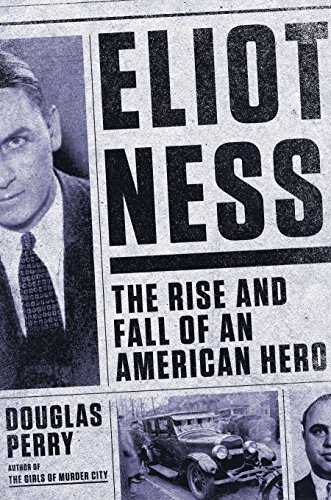
The true story of Eliot Ness, the legendary lawman who led the Untouchables, took on Al Capone, and saved a city’s soul
Eliot Ness is famous for leading the Untouchables against the notorious mobster Al Capone. But it turns out that the legendary Prohibition Bureau squad’s daring raids were only the beginning. Ness’s true legacy reaches far beyond Big
Al and Chicago.
Eliot Ness follows the lawman through his days in Chicago and into his forgotten second act. As the public safety director of Cleveland, he achieved his greatest success: purging the city of corruption so deep that the mob and the police were often one and the same. And it was here, too, that he faced one of his greatest challenges: a brutal, serial killer known as the Torso Murderer, who terrorized the city for years.
Eliot Ness presents the first complete picture of the real Eliot Ness. Both fearless and shockingly shy, he inspired courage and loyalty in men twice his age, forged law-enforcement innovations that are still with us today, and earned acclaim and scandal from both his professional and personal lives. Through it all, he believed unwaveringly in the integrity of law and the basic goodness of his fellow Americans.
Eliot Ness is famous for leading the Untouchables against the notorious mobster Al Capone. But it turns out that the legendary Prohibition Bureau squad’s daring raids were only the beginning. Ness’s true legacy reaches far beyond Big
Al and Chicago.
Eliot Ness follows the lawman through his days in Chicago and into his forgotten second act. As the public safety director of Cleveland, he achieved his greatest success: purging the city of corruption so deep that the mob and the police were often one and the same. And it was here, too, that he faced one of his greatest challenges: a brutal, serial killer known as the Torso Murderer, who terrorized the city for years.
Eliot Ness presents the first complete picture of the real Eliot Ness. Both fearless and shockingly shy, he inspired courage and loyalty in men twice his age, forged law-enforcement innovations that are still with us today, and earned acclaim and scandal from both his professional and personal lives. Through it all, he believed unwaveringly in the integrity of law and the basic goodness of his fellow Americans.
Die Inhaltsangabe kann sich auf eine andere Ausgabe dieses Titels beziehen.
Über die Autorinnen und Autoren
Douglas Perry is the author of The Girls of Murder City: Fame, Lust, and the Beautiful Killers Who Inspired Chicago. Percy’s an award-winning writer and editor whose work has appeared in theChicago Tribune, The San Jose Mercury News, The Oregonian, Tennis, and many other publications. He lives in Portland, Oregon.
Douglas Perry is the author of The Girls of Murder City: Fame, Lust, and the Beautiful Killers Who Inspired Chicago. Percy’s an award-winning writer and editor whose work has appeared in theChicago Tribune, The San Jose Mercury News, The Oregonian, Tennis, and many other publications. He lives in Portland, Oregon.
Auszug. © Genehmigter Nachdruck. Alle Rechte vorbehalten.
Praise for Eliot Ness
“Perry paints a riveting portrait of the real man behind the Untouchables icon. . . . It’s a tragic true story more engrossing than the myth.”
—Parade
“[A] new and invaluable biography . . . [Perry] does justice to his subject, a complicated and self-destructive human being, but one who was also admired by many. He is a tragic rather than heroic figure, and Perry nails him with style and compassion.”
—Chicago Tribune
“Perry takes plenty of detours beyond Ness’s work history, exploring fascinating topics like an infamous Cleveland serial killer case, the evolution of law-enforcement tactics, and the ever-present enticements wooing less-than-holy Chicago-area cops. But he doesn’t need to wander afield when it comes to the dangerous missions by the Untouchables squad in Chicago: The action scenes are positively cinematic. . . . Smart, authoritative, and bristling with challenges to the status quo: Eliot Ness has more than a little in common with its remarkable subject.”
—The Christian Science Monitor
“[Perry] hauntingly depicts the grimness of the Depression years. . . . Ness lived in interesting times, and the manner in which he cleaned up Cleveland’s corrupt culture was brave and remarkable. As Perry keenly notes, his successes seemed to give him a high that was nothing short of addictive.”
—The Cleveland Plain Dealer
“With a shrewd mix of drama, insight, and objectivity, Perry artfully chronicles the life of the leader of the Untouchables squad and illuminates his subject’s complicated worldview, passions, and faults.”
—Publishers Weekly (starred review)
“Perry has spun a riveting tale.”
—The Washington Post
“Don’t believe what you’ve seen in the movies. The true story of Eliot Ness is better than the Hollywood version, and Douglas Perry tells it brilliantly, with hard-nosed reporting and graceful prose. This book is so good even Al Capone would have enjoyed it, though perhaps grudgingly.”
—Jonathan Eig, author of Get Capone: The Secret Plot That Captured America’s Most Wanted Gangster
“Douglas Perry is telling three stories here, those of Eliot Ness, of criminal empires, and of America, each done with equal grace and skill. His superb research is matched by his understanding of Ness as a microcosm of these larger tales, and he re-creates a man and a slice of American history with marvelous results. A truly remarkable book.”
—Michael Koryta, New York Times bestselling author of The Prophet
“There’s so much more to the complex life and career of Eliot Ness than the Untouchables and Al Capone, and now we finally have the whole fascinating story. Douglas Perry proves that well-researched truth always trumps one-dimensional mythology, especially when presented by a gifted storyteller. Eliot Ness is that rarity—an authentic page-turner.”
—Jeff Guinn, author of Manson: The Life and Times of Charles Manson
“Finally, you can forget the overdramatized accounts and Hollywood-hyped film portrayals of the past and read Douglas Perry’s masterfully researched and honest tale of the crime-fighting life and personal struggles of the famed Eliot Ness. This is storytelling at its finest.”
—Carlton Stowers, two-time Edgar Award winner
“Over time—thanks in great part to Hollywood, television, and even comic books—Ness’s remarkable crime-fighting career has been reduced to his famous struggle against mobster Al Capone. At last here is Ness in his first, second, and final acts. A true account of his life that makes for a better story than Hollywood could have ever concocted.”
—James McGrath Morris, author of The Rose Man of Sing Sing
PENGUIN BOOKS
ELIOT NESS
Douglas Perry is the author of The Girls of Murder City: Fame, Lust, and the Beautiful Killers Who Inspired Chicago, which The Wall Street Journal hailed as “a sexy, swaggering historical tale.” He is an award-winning writer and editor whose work has appeared in the Chicago Tribune, The Oregonian, the Faster Times, Tennis, and many other publications. He lives in Portland, Oregon.
INTRODUCTION
The Real Eliot Ness
When Walter Taylor arrived, Betty was still in the kitchen, standing over her husband’s body. She was sobbing fitfully, in a daze. Her ten-year-old son stood nearby, paralyzed by fear. A doctor was there, too, and someone else, a business partner of the man sprawled on the floor.
Taylor had witnessed this ghastly tableau many times over the years. He was the town’s deputy coroner and the editor of the local newspaper. But this time was different.
The dead man was lying on his back, his white shirt twisted across his bulk. In the sink basin, smashed glass sparkled in the dissipating light. He’d been getting a drink of water when the coronary hit. Betty had come in from the garden and turned the faucet off before she saw her husband there on the floor. She screamed, high and long and loud—loud enough to bring their son running from the neighbor’s yard. She continued to sob now, a guttural sound, too deep and raw for such a pretty woman. “It will be all right, Betty,” someone said, and that was as much as she could take. She started to collapse. The business partner grabbed her before she fell.
Taylor turned away. He’d seen enough. He walked out of the kitchen, past the soot-stained mantel in the living room with the cherubic white angel suspended above it. The angel, its wings aflutter, gazed toward the trauma unfolding in the kitchen. Betty had made the piece. Someone had once told Taylor that she had been a student of a famous sculptor. Outside, Taylor found the neighbors milling about. The poor man had been sweating when he came up the walk, one of them said. He looked like he was in pain, another offered. Taylor moved away from the bystanders and picked up his pace. It was a warm, humid evening, and he was wearing a suit, but he ran all the way back to the office. He was a newsman. He had to let the world know it had just lost Eliot Ness.
***
The world didn’t much care. Taylor’s report went out on the Associated Press wire on that balmy spring day in 1957, but few newspapers bothered publishing an obituary. The New York Times, America’s paper of record, did not take note of Ness’s death. In Chicago, the place of his birth and where he raised the once-famous “Untouchables” squad, the Tribune gave his life barely one hundred words. It got his age wrong. Arnold Sagalyn, despite being a newspaper executive in the Washington, DC, area, heard about Ness’s death only because Betty called him a few days later. Sagalyn made a small noise, a kind of pained grunt, when Ness’s widow gave him the news. He thought of Eliot like a big brother. Ness had taught Sagalyn how to carry a gun, how to unnerve a suspect, how to mix a drink. The call couldn’t have been easy for Betty, either. The reality of her husband’s death had settled on her by then, but she didn’t know Sagalyn well. He’d worked with Ness before she came on the scene. He’d been close with Eliot’s previous wife, Evaline. Betty called him because she had nowhere else to turn. Her husband had left her nothing but debts and dreams. Sagalyn sent her some money.
Not everyone was so sympathetic. David Cowles, the...
„Über diesen Titel“ kann sich auf eine andere Ausgabe dieses Titels beziehen.
Suchergebnisse für Eliot Ness: The Rise and Fall of an American Hero

Beispielbild für diese ISBN
Eliot Ness: The Rise and Fall of an American Hero
Anbieter: World of Books (was SecondSale), Montgomery, IL, USA
Verkäuferbewertung 5 von 5 Sternen

Zustand: Good. Good condition ex-library book with usual library markings and stickers. Artikel-Nr. 00108501723
Gebraucht kaufen
EUR 4,93
Versand gratis
Versand innerhalb von USA
Versand innerhalb von USA
Anzahl: 1 verfügbar
Beispielbild für diese ISBN
Eliot Ness: The Rise and Fall of an American Hero
Anbieter: World of Books (was SecondSale), Montgomery, IL, USA
Verkäuferbewertung 5 von 5 Sternen
Zustand: Good. Item in good condition. Textbooks may not include supplemental items i.e. CDs, access codes etc. Artikel-Nr. 00105368546
Gebraucht kaufen
EUR 4,93
Versand gratis
Versand innerhalb von USA
Versand innerhalb von USA
Anzahl: 1 verfügbar
Beispielbild für diese ISBN
Eliot Ness: The Rise and Fall of an American Hero
Anbieter: World of Books (was SecondSale), Montgomery, IL, USA
Verkäuferbewertung 5 von 5 Sternen
Zustand: Very Good. Item in very good condition! Textbooks may not include supplemental items i.e. CDs, access codes etc. Artikel-Nr. 00102488683
Gebraucht kaufen
EUR 4,93
Versand gratis
Versand innerhalb von USA
Versand innerhalb von USA
Anzahl: 3 verfügbar
Beispielbild für diese ISBN
Eliot Ness: The Rise and Fall of an American Hero
Verlag:
Viking (edition First Edition), 2014
ISBN 10: 0670025887
ISBN 13: 9780670025886
Gebraucht
Hardcover
Erstausgabe
Anbieter: BooksRun, Philadelphia, PA, USA
Verkäuferbewertung 5 von 5 Sternen
Hardcover. Zustand: Very Good. First Edition. With dust jacket. It's a well-cared-for item that has seen limited use. The item may show minor signs of wear. All the text is legible, with all pages included. It may have slight markings and/or highlighting. Artikel-Nr. 0670025887-11-1-29
Gebraucht kaufen
EUR 5,93
Versand gratis
Versand innerhalb von USA
Versand innerhalb von USA
Anzahl: 1 verfügbar
Beispielbild für diese ISBN
Eliot Ness : The Rise and Fall of an American Hero
Verlag:
Penguin Publishing Group, 2014
ISBN 10: 0670025887
ISBN 13: 9780670025886
Gebraucht
Hardcover
Erstausgabe
Anbieter: Better World Books, Mishawaka, IN, USA
Verkäuferbewertung 5 von 5 Sternen
Zustand: Good. 1St Edition. Former library copy. Pages intact with minimal writing/highlighting. The binding may be loose and creased. Dust jackets/supplements are not included. Includes library markings. Stock photo provided. Product includes identifying sticker. Better World Books: Buy Books. Do Good. Artikel-Nr. 709407-20
Gebraucht kaufen
EUR 6,59
Versand gratis
Versand innerhalb von USA
Versand innerhalb von USA
Anzahl: 2 verfügbar
Beispielbild für diese ISBN
Eliot Ness : The Rise and Fall of an American Hero
Verlag:
Penguin Publishing Group, 2014
ISBN 10: 0670025887
ISBN 13: 9780670025886
Gebraucht
Hardcover
Erstausgabe
Anbieter: Better World Books: West, Reno, NV, USA
Verkäuferbewertung 5 von 5 Sternen
Zustand: Good. 1St Edition. Former library copy. Pages intact with minimal writing/highlighting. The binding may be loose and creased. Dust jackets/supplements are not included. Includes library markings. Stock photo provided. Product includes identifying sticker. Better World Books: Buy Books. Do Good. Artikel-Nr. 709407-20
Gebraucht kaufen
EUR 6,59
Versand gratis
Versand innerhalb von USA
Versand innerhalb von USA
Anzahl: 2 verfügbar
Beispielbild für diese ISBN
Eliot Ness: The Rise and Fall of an American Hero
Anbieter: ThriftBooks-Dallas, Dallas, TX, USA
Verkäuferbewertung 5 von 5 Sternen
Hardcover. Zustand: Good. No Jacket. Former library book; Missing dust jacket; Pages can have notes/highlighting. Spine may show signs of wear. ~ ThriftBooks: Read More, Spend Less. Artikel-Nr. G0670025887I3N11
Gebraucht kaufen
EUR 7,89
Versand gratis
Versand innerhalb von USA
Versand innerhalb von USA
Anzahl: 1 verfügbar
Beispielbild für diese ISBN
Eliot Ness: The Rise and Fall of an American Hero
Anbieter: ThriftBooks-Atlanta, AUSTELL, GA, USA
Verkäuferbewertung 5 von 5 Sternen
Hardcover. Zustand: Very Good. No Jacket. Former library book; May have limited writing in cover pages. Pages are unmarked. ~ ThriftBooks: Read More, Spend Less. Artikel-Nr. G0670025887I4N10
Gebraucht kaufen
EUR 7,89
Versand gratis
Versand innerhalb von USA
Versand innerhalb von USA
Anzahl: 1 verfügbar
Beispielbild für diese ISBN
Eliot Ness: The Rise and Fall of an American Hero
Anbieter: ThriftBooks-Atlanta, AUSTELL, GA, USA
Verkäuferbewertung 5 von 5 Sternen
Hardcover. Zustand: As New. No Jacket. Pages are clean and are not marred by notes or folds of any kind. ~ ThriftBooks: Read More, Spend Less. Artikel-Nr. G0670025887I2N00
Gebraucht kaufen
EUR 7,89
Versand gratis
Versand innerhalb von USA
Versand innerhalb von USA
Anzahl: 1 verfügbar
Beispielbild für diese ISBN
Eliot Ness: The Rise and Fall of an American Hero
Anbieter: ThriftBooks-Atlanta, AUSTELL, GA, USA
Verkäuferbewertung 5 von 5 Sternen
Hardcover. Zustand: Very Good. No Jacket. May have limited writing in cover pages. Pages are unmarked. ~ ThriftBooks: Read More, Spend Less. Artikel-Nr. G0670025887I4N00
Gebraucht kaufen
EUR 7,89
Versand gratis
Versand innerhalb von USA
Versand innerhalb von USA
Anzahl: 1 verfügbar