
Verwandte Artikel zu The Better Angels of Our Nature: Why Violence Has Declined
Inhaltsangabe
Selected by The New York Times Book Review as a Notable Book of the Year
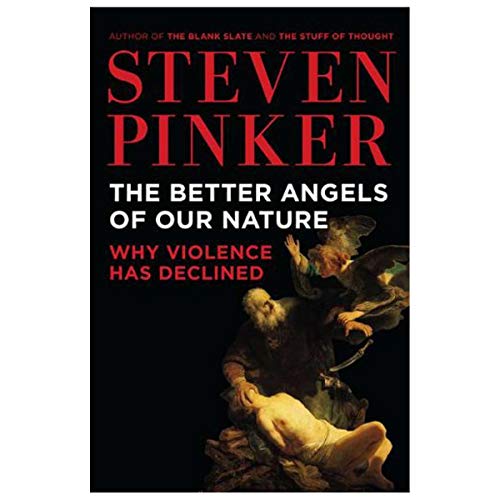
The author of The New York Times bestseller The Stuff of Thought offers a controversial history of violence.
Faced with the ceaseless stream of news about war, crime, and terrorism, one could easily think we live in the most violent age ever seen. Yet as New York Times bestselling author Steven Pinker shows in this startling and engaging new work, just the opposite is true: violence has been diminishing for millennia and we may be living in the most peaceful time in our species's existence. For most of history, war, slavery, infanticide, child abuse, assassinations, pogroms, gruesome punishments, deadly quarrels, and genocide were ordinary features of life. But today, Pinker shows (with the help of more than a hundred graphs and maps) all these forms of violence have dwindled and are widely condemned. How has this happened?
This groundbreaking book continues Pinker's exploration of the essence of human nature, mixing psychology and history to provide a remarkable picture of an increasingly nonviolent world. The key, he explains, is to understand our intrinsic motives- the inner demons that incline us toward violence and the better angels that steer us away-and how changing circumstances have allowed our better angels to prevail. Exploding fatalist myths about humankind's inherent violence and the curse of modernity, this ambitious and provocative book is sure to be hotly debated in living rooms and the Pentagon alike, and will challenge and change the way we think about our society.
Die Inhaltsangabe kann sich auf eine andere Ausgabe dieses Titels beziehen.
Über die Autorin bzw. den Autor
Steven Pinker is the Harvard College Professor of Psychology at Harvard University. A two-time Pulitzer Prize finalist and the winner of many awards for his research, teaching, and books, he has been named one ofTime's 100 Most Influential People in the World Today and Foreign Policy's 100 Global Thinkers.
Auszug. © Genehmigter Nachdruck. Alle Rechte vorbehalten.
Praise for Steven Pinker’s The Better Angels of Our Nature
A New York Times Notable Book
A Library Journal Best Book of the Year
One of Amazon’s 100 Best Books of the Year
A NetGalley Best of 2011
“For anyone interested in human nature, the material is engrossing, and when the going gets heavy, Pinker knows how to lighten it with ironic comments and a touch of humor. . . . A supremely important book. To have command of so much research, spread across so many different fields, is a masterly achievement.”
—The New York Times Book Review
“An extraordinary range of research . . . a masterly effort.”
—The Wall Street Journal
“It is quite a story, and Pinker tells it ably. There are stimulating thoughts on nearly every page.”
—New York
“Better Angels is a monumental achievement. His book should make it much harder for pessimists to cling to their gloomy vision of the future. Whether war is an ancient adaptation or a pernicious cultural infection, we are learning how to overcome it.”
—Slate.com
“Classic Pinker, jammed with facts, figures, and points of speculative departure; a big, complex book, well worth the effort for the good news that it delivers.”
—Kirkus Reviews
“This long, well-researched, comprehensive tour de force provides a helpful look at the human condition.”
—Booklist
“A hugely important work and major contribution to historiography.”
—Niall Ferguson, professor of history, Harvard University, and
author of Civilization: The West and the Rest
PENGUIN BOOKS
THE BETTER ANGELS OF OUR NATURE
Table of Contents
Praise for Steven Pinker’s THE BETTER ANGELS OF OUR NATURE
About the Author
Also by Steven Pinker
Title Page
Copyright Page
Dedication
Epigraph
Preface
Chapter 1 - A FOREIGN COUNTRY
Chapter 2 - THE PACIFICATION PROCESS
Chapter 3 - THE CIVILIZING PROCESS
Chapter 4 - THE HUMANITARIAN REVOLUTION
Chapter 5 - THE LONG PEACE
Chapter 6 - THE NEW PEACE
Chapter 7 - THE RIGHTS REVOLUTIONS
Chapter 8 - INNER DEMONS
Chapter 9 - BETTER ANGELS
Chapter 10 - ON ANGELS’ WINGS
NOTES
REFERENCES
INDEX
TO
Eva, Carl, and Eric
Jack and David
Yael and Danielle
and the world they will inherit
What a chimera then is man! What a novelty, what a monster, what a chaos, what a contradiction, what a prodigy! Judge of all things, feeble earthworm, repository of truth, sewer of uncertainty and error, the glory and the scum of the universe.
—Blaise Pascal
LIST OF FIGURES
Figure
1–1 Everyday violence in a bodybuilding ad, 1940s
1–2 Domestic violence in a coffee ad, 1952
2–1 The violence triangle
2–2 Percentage of deaths in warfare in nonstate and state societies
2–3 Rate of death in warfare in nonstate and state societies
2–4 Homicide rates in the least violent nonstate societies compared to state societies
3–1 Homicide rates in England, 1200–2000: Gurr’s 1981 estimates
3–2 Homicide rates in England, 1200–2000
3–3 Homicide rates in five Western European regions, 1300–2000
3–4 Homicide rates in Western Europe, 1300–2000, and in nonstate societies
3–5 Detail from “Saturn,” Das Mittelalterliche Hausbuch (The Medieval Housebook, 1475–80)
3–6 Detail from “Mars,” Das Mittelalterliche Hausbuch (The Medieval Housebook, 1475–80)
3–7 Percentage of deaths of English male aristocrats from violence, 1330–1829
3–8 Geography of homicide in Europe, late 19th and early 21st centuries
3–9 Geography of homicide in the world, 2004
3–10 Homicide rates in the United States and England, 1900–2000
3–11 Geography of homicide in the United States, 2007
3–12 Homicide rates in England, 1300–1925, and New England, 1630–1914
3–13 Homicide rates in the northeastern United States, 1636–1900
3–14 Homicide rates among blacks and whites in New York and Philadelphia, 1797–1952
3–15 Homicide rates in the southeastern United States, 1620–1900
3–16 Homicide rates in the southwestern United States and California, 1830–1914
3–17 Flouting conventions of cleanliness and propriety in the 1960s
3–18 Homicide rates in the United States, 1950–2010, and Canada, 1961–2009
3–19 Homicide rates in five Western European countries, 1900–2009
4–1 Torture in medieval and early modern Europe
4–2 Time line for the abolition of judicial torture
4–3 Time line for the abolition of capital punishment in Europe
4–4 Execution rate in the United States, 1640–2010
4–5 Executions for crimes other than homicide in the United States, 1650–2002
4–6 Time line for the abolition of slavery
4–7 Real income per person in England, 1200–2000
4–8 Efficiency in book production in England, 1470–1860s
4–9 Number of books in English published per decade, 1475–1800
4–10 Literacy rate in England, 1625–1925
5–1 Two pessimistic possibilities for historical trends in war
5–2 Two less pessimistic possibilities for historical trends in war
5–3 100 worst wars and atrocities in human history
5–4 Historical myopia: Centimeters of text per century in a historical almanac
5–5 Random and nonrandom patterns
5–6 Richardson’s data
5–7 Number of deadly quarrels of different magnitudes, 1820–1952
5–8 Probabilities of wars of different magnitudes, 1820–1997
5–9 Heights of males (a normal or bell-curve distribution)
5–10 Populations of cities (a power-law distribution), plotted on linear and log scales
5–11 Total deaths from quarrels of different magnitudes
5–12 Percentage of years in which the great powers fought one another, 1500–2000
5–13 Frequency of wars involving the great powers, 1500–2000
5–14 Duration of wars involving the great powers, 1500–2000
5–15 Deaths in wars involving the great powers, 1500–2000
5–16 Concentration of deaths in wars involving the great powers, 1500–2000
5–17 Conflicts per year in greater Europe, 1400–2000
5–18 Rate of death in conflicts in greater...
„Über diesen Titel“ kann sich auf eine andere Ausgabe dieses Titels beziehen.
Suchergebnisse für The Better Angels of Our Nature: Why Violence Has Declined

Beispielbild für diese ISBN
The Better Angels of Our Nature: Why Violence Has Declined
Anbieter: World of Books (was SecondSale), Montgomery, IL, USA
Verkäuferbewertung 5 von 5 Sternen

Hardback. Zustand: Good. If I could give each of you a graduation present, it would be this--the most inspiring book I've ever read. --Bill Gates A provocative history of violence--from the New York Times bestselling author of The Stuff of Thought, The Blank Slate, and Enlightenment Now.Believe it or not, today we may be living in the most peaceful moment in our species' existence. In his gripping and controversial new work, New York Times bestselling author Steven Pinker shows that despite the ceaseless news about war, crime, and terrorism, violence has actually been in decline over long stretches of history. Exploding myths about humankind's inherent violence and the curse of modernity, this ambitious book continues Pinker's exploration of the essence of human nature, mixing psychology and history to provide a remarkable picture of an increasingly enlightened world. Artikel-Nr. 00102468541
Gebraucht kaufen
EUR 5,61
Versand gratis
Versand innerhalb von USA
Versand innerhalb von USA
Anzahl: 11 verfügbar
Beispielbild für diese ISBN
The Better Angels of Our Nature: Why Violence Has Declined
Anbieter: World of Books (was SecondSale), Montgomery, IL, USA
Verkäuferbewertung 5 von 5 Sternen
Zustand: Acceptable. Item in acceptable condition! Textbooks may not include supplemental items i.e. CDs, access codes etc. Artikel-Nr. 00104586466
Gebraucht kaufen
EUR 5,61
Versand gratis
Versand innerhalb von USA
Versand innerhalb von USA
Anzahl: 2 verfügbar
Beispielbild für diese ISBN
BETTER ANGELS OF OUR NATURE
Anbieter: BooksRun, Philadelphia, PA, USA
Verkäuferbewertung 5 von 5 Sternen
Zustand: Fair. With dust jacket. The item might be beaten up but readable. May contain markings or highlighting, as well as stains, bent corners, or any other major defect, but the text is not obscured in any way. Artikel-Nr. 0670022950-7-1-29
Gebraucht kaufen
EUR 5,62
Versand gratis
Versand innerhalb von USA
Versand innerhalb von USA
Anzahl: 1 verfügbar
Beispielbild für diese ISBN
The Better Angels of Our Nature
Verlag:
Penguin Publishing Group, 2011
ISBN 10: 0670022950
ISBN 13: 9780670022953
Gebraucht
Hardcover
Erstausgabe
Anbieter: Better World Books: West, Reno, NV, USA
Verkäuferbewertung 5 von 5 Sternen
Zustand: Good. First Edition. Former library copy. Pages intact with minimal writing/highlighting. The binding may be loose and creased. Dust jackets/supplements are not included. Includes library markings. Stock photo provided. Product includes identifying sticker. Better World Books: Buy Books. Do Good. Artikel-Nr. 709261-6
Gebraucht kaufen
EUR 6,81
Versand gratis
Versand innerhalb von USA
Versand innerhalb von USA
Anzahl: 2 verfügbar
Beispielbild für diese ISBN
The Better Angels of Our Nature
Verlag:
Penguin Publishing Group, 2011
ISBN 10: 0670022950
ISBN 13: 9780670022953
Gebraucht
Hardcover
Erstausgabe
Anbieter: Better World Books, Mishawaka, IN, USA
Verkäuferbewertung 5 von 5 Sternen
Zustand: Good. First Edition. Pages intact with minimal writing/highlighting. The binding may be loose and creased. Dust jackets/supplements are not included. Stock photo provided. Product includes identifying sticker. Better World Books: Buy Books. Do Good. Artikel-Nr. 5271493-6
Gebraucht kaufen
EUR 6,81
Versand gratis
Versand innerhalb von USA
Versand innerhalb von USA
Anzahl: 14 verfügbar
Beispielbild für diese ISBN
The Better Angels of Our Nature
Verlag:
Penguin Publishing Group, 2011
ISBN 10: 0670022950
ISBN 13: 9780670022953
Gebraucht
Hardcover
Erstausgabe
Anbieter: Better World Books: West, Reno, NV, USA
Verkäuferbewertung 5 von 5 Sternen
Zustand: Very Good. First Edition. Pages intact with possible writing/highlighting. Binding strong with minor wear. Dust jackets/supplements may not be included. Stock photo provided. Product includes identifying sticker. Better World Books: Buy Books. Do Good. Artikel-Nr. 4744652-6
Gebraucht kaufen
EUR 6,81
Versand gratis
Versand innerhalb von USA
Versand innerhalb von USA
Anzahl: 2 verfügbar
Beispielbild für diese ISBN
The Better Angels of Our Nature
Verlag:
Penguin Publishing Group, 2011
ISBN 10: 0670022950
ISBN 13: 9780670022953
Gebraucht
Hardcover
Erstausgabe
Anbieter: Better World Books, Mishawaka, IN, USA
Verkäuferbewertung 5 von 5 Sternen
Zustand: Good. First Edition. Former library copy. Pages intact with minimal writing/highlighting. The binding may be loose and creased. Dust jackets/supplements are not included. Includes library markings. Stock photo provided. Product includes identifying sticker. Better World Books: Buy Books. Do Good. Artikel-Nr. 709261-6
Gebraucht kaufen
EUR 6,81
Versand gratis
Versand innerhalb von USA
Versand innerhalb von USA
Anzahl: 19 verfügbar
Beispielbild für diese ISBN
The Better Angels of Our Nature
Verlag:
Penguin Publishing Group, 2011
ISBN 10: 0670022950
ISBN 13: 9780670022953
Gebraucht
Hardcover
Erstausgabe
Anbieter: Better World Books, Mishawaka, IN, USA
Verkäuferbewertung 5 von 5 Sternen
Zustand: Very Good. First Edition. Pages intact with possible writing/highlighting. Binding strong with minor wear. Dust jackets/supplements may not be included. Stock photo provided. Product includes identifying sticker. Better World Books: Buy Books. Do Good. Artikel-Nr. 4744652-6
Gebraucht kaufen
EUR 6,81
Versand gratis
Versand innerhalb von USA
Versand innerhalb von USA
Anzahl: 1 verfügbar
Beispielbild für diese ISBN
The Better Angels of Our Nature
Verlag:
Penguin Publishing Group, 2011
ISBN 10: 0670022950
ISBN 13: 9780670022953
Gebraucht
Hardcover
Erstausgabe
Anbieter: Better World Books: West, Reno, NV, USA
Verkäuferbewertung 5 von 5 Sternen
Zustand: Good. First Edition. Pages intact with minimal writing/highlighting. The binding may be loose and creased. Dust jackets/supplements are not included. Stock photo provided. Product includes identifying sticker. Better World Books: Buy Books. Do Good. Artikel-Nr. 5271493-6
Gebraucht kaufen
EUR 6,81
Versand gratis
Versand innerhalb von USA
Versand innerhalb von USA
Anzahl: 4 verfügbar
Beispielbild für diese ISBN
The Better Angels of Our Nature: Why Violence Has Declined
Anbieter: ThriftBooks-Reno, Reno, NV, USA
Verkäuferbewertung 5 von 5 Sternen
Hardcover. Zustand: Good. No Jacket. Pages can have notes/highlighting. Spine may show signs of wear. ~ ThriftBooks: Read More, Spend Less. Artikel-Nr. G0670022950I3N00
Gebraucht kaufen
EUR 7,00
Versand gratis
Versand innerhalb von USA
Versand innerhalb von USA
Anzahl: 2 verfügbar