
Verwandte Artikel zu The God Delusion: A Study of Religious Belief and Skepticism
Inhaltsangabe
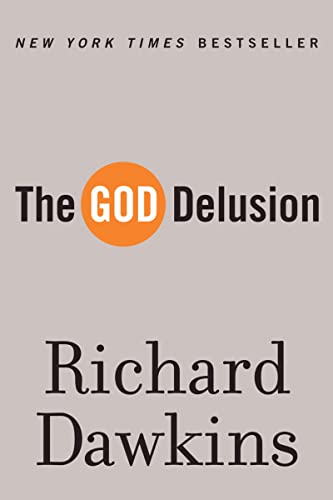
A preeminent scientist -- and the world's most prominent atheist -- asserts the irrationality of belief in God and the grievous harm religion has inflicted on society, from the Crusades to 9/11.
With rigor and wit, Dawkins examines God in all his forms, from the sex-obsessed tyrant of the Old Testament to the more benign (but still illogical) Celestial Watchmaker favored by some Enlightenment thinkers. He eviscerates the major arguments for religion and demonstrates the supreme improbability of a supreme being. He shows how religion fuels war, foments bigotry, and abuses children, buttressing his points with historical and contemporary evidence. The God Delusion makes a compelling case that belief in God is not just wrong but potentially deadly. It also offers exhilarating insight into the advantages of atheism to the individual and society, not the least of which is a clearer, truer appreciation of the universe's wonders than any faith could ever muster.
With rigor and wit, Dawkins examines God in all his forms, from the sex-obsessed tyrant of the Old Testament to the more benign (but still illogical) Celestial Watchmaker favored by some Enlightenment thinkers. He eviscerates the major arguments for religion and demonstrates the supreme improbability of a supreme being. He shows how religion fuels war, foments bigotry, and abuses children, buttressing his points with historical and contemporary evidence. The God Delusion makes a compelling case that belief in God is not just wrong but potentially deadly. It also offers exhilarating insight into the advantages of atheism to the individual and society, not the least of which is a clearer, truer appreciation of the universe's wonders than any faith could ever muster.
Die Inhaltsangabe kann sich auf eine andere Ausgabe dieses Titels beziehen.
Über die Autorin bzw. den Autor
RICHARD DAWKINS is an emeritus fellow of New College, Oxford and was the University of Oxford's Professor for Public Understanding of Science from 1995 until 2008. He is the author of 15 books includingUnweaving the Rainbow, A Devil’s Chaplain, and The God Delusion.Dawkins lives in Oxford.,
Auszug. © Genehmigter Nachdruck. Alle Rechte vorbehalten.
1 A DEEPLY RELIGIOUS NON-BELIEVER
I don't try to imagine a personal God; it suffices to stand in awe at the
structure of the world, insofar as it allows our inadequate senses to
appreciate it.
—Albert Einstein
DESERVED RESPECT
The boy lay prone in the grass, his chin resting on his hands. He suddenly
found himself overwhelmed by a heightened awareness of the tangled stems
and roots, a forest in microcosm, a transfigured world of ants and beetles and
even – though he wouldn't have known the details at the time – of soil
bacteria by the billions, silently and invisibly shoring up the economy of the
micro-world. Suddenly the micro-forest of the turf seemed to swell and
become one with the universe, and with the rapt mind of the boy
contemplating it. He interpreted the experience in religious terms and it led
him eventually to the priesthood. He was ordained an Anglican priest and
became a chaplain at my school, a teacher of whom I was fond. It is thanks
to decent liberal clergymen like him that nobody could ever claim that I had
religion forced down my throat.*
In another time and place, that boy could have been me under the
stars, dazzled by Orion, Cassiopeia and Ursa Major, tearful with the unheard
music of the Milky Way, heady with the night scents of frangipani and
trumpet flowers in an African garden. Why the same emotion should have led
my chaplain in one direction and me in the other is not an easy question to
answer. A quasi-mystical response to nature and the universe is common
among scientists and rationalists. It has no connection with supernatural
belief. In his boyhood at least, my chaplain was presumably not aware (nor
was I) of the closing lines of The Origin of Species – the famous 'entangled
bank' passage, 'with birds singing on the bushes, with various insects flitting
about, and with worms crawling through the damp earth'. Had he been, he
would certainly have identified with it and, instead of the priesthood, might
have been led to Darwin's view that all was 'produced by laws acting around
us':
Thus, from the war of nature, from famine and death, the most exalted object
which we are capable of conceiving, namely, the production of the higher
animals, directly follows. There is grandeur in this view of life, with its several
powers, having been originally breathed into a few forms or into one; and that,
whilst this planet has gone cycling on according to the fixed law of gravity,
from so simple a beginning endless forms most beautiful and most wonderful
have been, and are being, evolved.
Carl Sagan, in Pale Blue Dot, wrote:
How is it that hardly any major religion has looked at science and
concluded, 'This is better than we thought! The Universe is much bigger than
our prophets said, grander, more subtle, more elegant'? Instead they
say, 'No, no, no! My god is a little god, and I want him to stay that way.' A
religion, old or new, that stressed the magnificence of the Universe as
revealed by modern science might be able to draw forth reserves of reverence
and awe hardly tapped by the conventional faiths.
All Sagan's books touch the nerve-endings of transcendent wonder that
religion monopolized in past centuries. My own books have the same
aspiration. Consequently I hear myself often described as a deeply religious
man. An American student wrote to me that she had asked her professor
whether he had a view about me. 'Sure,' he replied. 'He's positive science is
incompatible with religion, but he waxes ecstatic about nature and the
universe. To me, that is religion!' But is 'religion' the right word? I don't think
so. The Nobel Prize-winning physicist (and atheist) Steven Weinberg made
the point as well as anybody, in Dreams of a Final Theory:
Some people have views of God that are so broad and flexible that it is
inevitable that they will find God wherever they look for him. One hears it said
that 'God is the ultimate' or 'God is our better nature' or 'God is the universe.'
Of course, like any other word, the word 'God' can be given any meaning we
like. If you want to say that 'God is energy,' then you can find God in a lump
of coal.
Weinberg is surely right that, if the word God is not to become completely
useless, it should be used in the way people have generally understood it: to
denote a supernatural creator that is 'appropriate for us to worship'.
Much unfortunate confusion is caused by failure to distinguish
what can be called Einsteinian religion from supernatural religion. Einstein
sometimes invoked the name of God (and he is not the only atheistic
scientist to do so), inviting misunderstanding by supernaturalists eager to
misunderstand and claim so illustrious a thinker as their own. The dramatic
(or was it mischievous?) ending of Stephen Hawking's A Brief History of
Time, 'For then we should know the mind of God', is notoriously
misconstrued. It has led people to believe, mistakenly of course, that
Hawking is a religious man. The cell biologist Ursula Goodenough, in The
Sacred Depths of Nature, sounds more religious than Hawking or Einstein.
She loves churches, mosques and temples, and numerous passages in her
book fairly beg to be taken out of context and used as ammunition for
supernatural religion. She goes so far as to call herself a 'Religious
Naturalist'. Yet a careful reading of her book shows that she is really as
staunch an atheist as I am.
'Naturalist' is an ambiguous word. For me it conjures my
childhood hero, Hugh Lofting's Doctor Dolittle (who, by the way, had more
than a touch of the 'philosopher' naturalist of HMS Beagle about him). In the
eighteenth and nineteenth centuries, naturalist meant what it still means for
most of us today: a student of the natural world. Naturalists in this sense,
from Gilbert White on, have often been clergymen. Darwin himself was
destined for the Church as a young man, hoping that the leisurely life of a
country parson would enable him to pursue his passion for beetles. But
philosophers use 'naturalist' in a very different sense, as the opposite of
supernaturalist. Julian Baggini explains in Atheism: A Very Short Introduction
the meaning of an atheist's commitment to naturalism: 'What most atheists
do believe is that although there is only one kind of stuff in the universe and it
is physical, out of this stuff come minds, beauty, emotions, moral values – in
short the full gamut of phenomena that gives richness to human life.'
Human thoughts and emotions emerge from exceedingly complex
interconnections of physical entities within the brain. An atheist in this sense
of philosophical naturalist is somebody who believes there is nothing beyond
the natural, physical world, no supernatural creative intelligence lurking
behind the observable universe, no soul that outlasts the body and no
miracles – except in the sense of natural phenomena that we don't yet
understand. If there is something that appears to lie beyond the natural world
as it is now imperfectly understood, we hope eventually to understand it and
embrace it within the natural. As ever when we unweave a rainbow, it will not
become less wonderful.
Great scientists of our time who sound religious usually turn out
not to be so when you examine their beliefs more deeply. This is certainly
true of Einstein and Hawking. The present Astronomer Royal and President
of the Royal Society, Martin Rees, told me that he goes to church as
an 'unbelieving Anglican . . . out of loyalty to the tribe'. He has no theistic
beliefs, but shares the...
„Über diesen Titel“ kann sich auf eine andere Ausgabe dieses Titels beziehen.
Weitere beliebte Ausgaben desselben Titels

Suchergebnisse für The God Delusion: A Study of Religious Belief and Skepticism

Beispielbild für diese ISBN
The God Delusion
Anbieter: World of Books (was SecondSale), Montgomery, IL, USA
Verkäuferbewertung 5 von 5 Sternen

Zustand: Good. Item in good condition. Textbooks may not include supplemental items i.e. CDs, access codes etc. Artikel-Nr. 00104310734
Gebraucht kaufen
EUR 3,70
Versand gratis
Versand innerhalb von USA
Versand innerhalb von USA
Anzahl: Mehr als 20 verfügbar
Beispielbild für diese ISBN
The God Delusion
Anbieter: World of Books (was SecondSale), Montgomery, IL, USA
Verkäuferbewertung 5 von 5 Sternen
Zustand: Acceptable. Item in acceptable condition! Textbooks may not include supplemental items i.e. CDs, access codes etc. Artikel-Nr. 00079598242
Gebraucht kaufen
EUR 3,70
Versand gratis
Versand innerhalb von USA
Versand innerhalb von USA
Anzahl: Mehr als 20 verfügbar
Beispielbild für diese ISBN
The God Delusion
Anbieter: World of Books (was SecondSale), Montgomery, IL, USA
Verkäuferbewertung 5 von 5 Sternen
Zustand: Good. Item in good condition. Textbooks may not include supplemental items i.e. CDs, access codes etc. Artikel-Nr. 00090863308
Gebraucht kaufen
EUR 3,73
Versand gratis
Versand innerhalb von USA
Versand innerhalb von USA
Anzahl: Mehr als 20 verfügbar
Foto des Verkäufers
The God Delusion: A Study of Religious Belief and Skepticism
Anbieter: Dream Books Co., Denver, CO, USA
Verkäuferbewertung 5 von 5 Sternen
Zustand: acceptable. This copy has clearly been enjoyedâ"expect noticeable shelf wear and some minor creases to the cover. Binding is strong, and all pages are legible. May contain previous library markings or stamps. Artikel-Nr. DBV.0618918248.A
Gebraucht kaufen
EUR 3,76
Versand gratis
Versand innerhalb von USA
Versand innerhalb von USA
Anzahl: 1 verfügbar
Beispielbild für diese ISBN
The God Delusion
Anbieter: ThriftBooks-Reno, Reno, NV, USA
Verkäuferbewertung 5 von 5 Sternen
Paperback. Zustand: Good. No Jacket. Former library book; Pages can have notes/highlighting. Spine may show signs of wear. ~ ThriftBooks: Read More, Spend Less. Artikel-Nr. G0618918248I3N10
Gebraucht kaufen
EUR 5,77
Versand gratis
Versand innerhalb von USA
Versand innerhalb von USA
Anzahl: 1 verfügbar
Beispielbild für diese ISBN
The God Delusion
Anbieter: ThriftBooks-Phoenix, Phoenix, AZ, USA
Verkäuferbewertung 5 von 5 Sternen
Paperback. Zustand: Good. No Jacket. Former library book; Pages can have notes/highlighting. Spine may show signs of wear. ~ ThriftBooks: Read More, Spend Less. Artikel-Nr. G0618918248I3N10
Gebraucht kaufen
EUR 5,77
Versand gratis
Versand innerhalb von USA
Versand innerhalb von USA
Anzahl: 1 verfügbar
Beispielbild für diese ISBN
The God Delusion
Anbieter: ThriftBooks-Atlanta, AUSTELL, GA, USA
Verkäuferbewertung 5 von 5 Sternen
Paperback. Zustand: Good. No Jacket. Former library book; Pages can have notes/highlighting. Spine may show signs of wear. ~ ThriftBooks: Read More, Spend Less. Artikel-Nr. G0618918248I3N10
Gebraucht kaufen
EUR 5,77
Versand gratis
Versand innerhalb von USA
Versand innerhalb von USA
Anzahl: 1 verfügbar
Beispielbild für diese ISBN
The God Delusion
Anbieter: ThriftBooks-Reno, Reno, NV, USA
Verkäuferbewertung 5 von 5 Sternen
Paperback. Zustand: Good. No Jacket. Pages can have notes/highlighting. Spine may show signs of wear. ~ ThriftBooks: Read More, Spend Less. Artikel-Nr. G0618918248I3N00
Gebraucht kaufen
EUR 5,77
Versand gratis
Versand innerhalb von USA
Versand innerhalb von USA
Anzahl: 15 verfügbar
Beispielbild für diese ISBN
The God Delusion
Anbieter: ThriftBooks-Dallas, Dallas, TX, USA
Verkäuferbewertung 5 von 5 Sternen
Paperback. Zustand: Good. No Jacket. Former library book; Pages can have notes/highlighting. Spine may show signs of wear. ~ ThriftBooks: Read More, Spend Less. Artikel-Nr. G0618918248I3N10
Gebraucht kaufen
EUR 5,77
Versand gratis
Versand innerhalb von USA
Versand innerhalb von USA
Anzahl: 1 verfügbar
Beispielbild für diese ISBN
The God Delusion
Anbieter: ThriftBooks-Dallas, Dallas, TX, USA
Verkäuferbewertung 5 von 5 Sternen
Paperback. Zustand: Good. No Jacket. Pages can have notes/highlighting. Spine may show signs of wear. ~ ThriftBooks: Read More, Spend Less. Artikel-Nr. G0618918248I3N00
Gebraucht kaufen
EUR 5,77
Versand gratis
Versand innerhalb von USA
Versand innerhalb von USA
Anzahl: 15 verfügbar