
Verwandte Artikel zu Step-Ball-Change
Inhaltsangabe
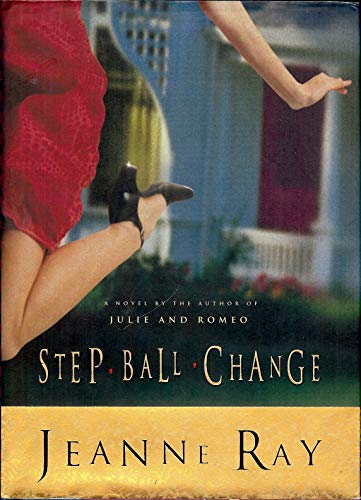
The best-selling author of Julie and Romeo explores the unpredictable complications of love as Caroline and her husband Tom deal with the romantic ups-and-downs of their daughter Kay, who has become engaged to the richest bachelor in Raleigh, and Caroline's sister Taffy, who is getting a divorce from the wealthiest man in Atlanta. 75,000 first printing.
Die Inhaltsangabe kann sich auf eine andere Ausgabe dieses Titels beziehen.
Über die Autorin bzw. den Autor
Jeanne Ray is a nurse living in Nashville, Tennessee, and the author of the<i> New York Times</i> bestselling novel Julie and Romeo.
Aus dem Klappentext
ng phone, Jeanne Ray’s charming and amusing new novel gets off to a rollicking start that never lets up. Not for a minute. On the other end of the phone is Caroline’s daughter, Kay, a public defender like her father, sobbing at the improbably good news that the richest, most eligible boy in Raleigh, North Carolina, has asked her to marry him. While Caroline and Tom are trying to digest this, the other phone, the “children’s line,” rings; it is Caroline’s sister, Taffy, hysterical over her husband’s decision to leave her for a woman two years younger than her daughter. <br><br>Soon Taffy is wending her way up from Atlanta to seek solace in her sister’s home, even though the two have been separated by more than just geography for the past forty years. With her is her little dog, Stamp, who has a penchant for biting ankles and stealing hearts. Tom and Caroline quickly realize that the wedding their future son-in-law’s family is envisioning for n
Auszug. © Genehmigter Nachdruck. Alle Rechte vorbehalten.
Chapter one
It all started on Tuesday night. Tom and I were having dinner when the phone rang.
Let me stop here for a minute. I want to revel in that sentence. Tom and I were having dinner. It almost sounds like this was something that happened regularly. In fact, my husband, who is a public defender, had made a career of eating peanut-butter-cheese crackers from the vending machine in the Raleigh courthouse while he went over the testimony of guys named Spit one more time. I had been teaching adult tap classes in the evenings to young women who didn't have a date after work and were trying to improve themselves. That was not to say I was never home or Tom was never home, but it was hard to make it home simultaneously, and it was nearly impossible to be home alone. Our two oldest sons, Henry and Charlie, were married and gone, but George, our youngest, was still down the hall while he went to law school. Kay, our daughter, found her way over most nights to review cases with her father. And if none of the children were here, you could count on the fact that Woodrow, our contractor, and a couple of the plaster guys who worked for him would be sitting on the back porch having some fast food in the evening. Originally, Woodrow had come to build a glassed-in porch on the house, what we called a Florida room, but halfway through the project he discovered that our foundation had shifted, and suddenly the cracks that were deep below the ground were spreading across our walls like ambitious ivy. The Florida room was abandoned in favor of the more pressing problems, and now stood as a naked frame of skinny poles on the side of our house. We had been under construction for six weeks, and I had come to think of the workmen as distant relatives who wanted to leave but had no place else to go.
But tonight the house was dark. When Tom and I called out no one answered back. Woodrow was gone and George was gone and the drop cloths were neatly folded and stacked. To further raise the odds on the rarity of this evening, I had actually bought the ingredients to make a pasta dish with olives and real tuna that I had seen in a magazine. So when I say, "Tom and I were having dinner," I mean it was hot food, and we were alone together. Tom had been so hopeful as to put on a Stan Getz record, and "Girl from Ipanema" laced the air. The whole evening was a kind of far-fetched coincidence. There was potential-for-romance written all over it.
But there was a second half to that sentence: The phone rang.
Tom answered it and for a while after hello, he said nothing. He just listened with a puzzled expression that could mean he'd been snagged either by someone who wanted to steam-clean our carpets or by a very distant cousin whose kid was in jail. Public defenders were modern-day priests in a sense: If someone had done something wrong, they were quick to call Tom and confess. Then he started to say, "Kay? Kay?" and then listened again. He said, "Honey, are you all right? Take a breath. Try to take a breath. Are you all right?"
Words to make any mother put down her fork and jump to her feet. I gestured for him to give me the phone.
"Kay?" Tom said. "Do you think you could talk to your mother? I'm going to put your mother on the phone." Tom's voice sounded frightened. He had a better sense of the terrible things that can happen in the world than most people do. "She's crying," he said, holding his hand over the mouthpiece. "I can't tell what she's saying."
"Kay?" I said. "Kay-bird?"
From the other end of the line there was a great deal of sobbing and snuffling, and immediately I felt my shoulders drop with relaxation. It was a sobbing and snuffling I knew. I can't explain how. It was as if I came equipped with the secret decoder ring that made me capable of distinguishing the intent of my daughter's cries. Even when she was a baby, I could tell from the other side of the house when she was hungry and when she needed changing and when she just wanted to be picked up and brought along for the ride. I could separate the cries of our three sons, too, but the difference was they stopped crying when they hit a certain age and Kay remained weepy by nature. Even now that she was thirty and a lawyer herself, she would find herself tearing up over an article in the newspaper or a commercial for long-distance service and have to excuse herself for a moment to go into another room and pull it together.
This crying, the subtle combination of gasping and a low, mucousy rattle that meant she wasn't even taking the time to blow her nose, I knew to be a cry over love. I mouthed the word to Tom, "Dumped." He raised his eyebrows and gave a sage shrug. Although it was a shame to think that such a thing had happened, neither of us was exactly surprised. Portraits of both Trey Bennett's great-grandfather and his great-great-grandfather hung in what they called the library of the country club. I had seen them over the years at wedding receptions and other inescapable social obligations. All the firstborn Bennett sons were named Conrad, though the grandfather was called Sergeant and the father was called, even on the most formal of occasions, Sport, and Trey was called Trey, indicating, one would think, that he was the third when in fact he must have been the sixth or seventh. The Bennett family was exhausting and inescapable in Raleigh, huge and recklessly blessed. They all had perfect teeth and Mercedes SUVs. They flew their own planes to their own summer houses and ski chalets. Their name was chipped into the marble of every hospital, art museum, and social register in the tri-city area. From what I could track in the paper over the years, they tended to marry young and reproduce enthusiastically, so Trey Bennett was a bit of an anomaly, being single at thirty-five. He was considered by everyone, especially his mother, to be the very definition of eligible. What he had been doing dating a thirty-year-old public defender who didn't even know any debutantes, much less been one herself, was a mystery to all of us, and now poor Kay was sobbing, her heart having been skidded across the pavement at top speed yet again.
"Baby," I said. "Deep breath. Come on now, try to relax."
Tom sat back down at the table and started to eat the dinner that was already halfway to cold.
"I-baaa," Kay said. "I-baaa."
"It's okay," I said. I pointed at my plate and Tom slid it over to me. The pasta was getting stiff, but I managed to force a few pieces into a twirl around my fork.
I settled in and listened to Kay cry. Sometimes that's all a mother can do. Truth be told, Trey had made me a little uncomfortable. Not that he wasn't nice. He was extraordinarily nice. His manners would have made Cary Grant feel inadequate. But whenever they stopped by our house, I was always aware that a family dog long since dead had peed on our only Oriental rug and left an irregular stain. When Trey was in the house, I wished I hadn't come straight from the dance studio in my leotard and warm-ups. I wished I'd showered. The few times he came to dinner, he complimented everything lavishly, but I was always plagued by images of matching serving utensils and Venetian water glasses. After the third time, Tom and I decided it would be less stressful to take them out.
"Do you want to come over?" I said to Kay. I looked at Tom, mouthed the word "Sorry."
He shook his head. "No, no," he mouthed back, and then he made a beckoning gesture with his hand for her to come on over. Tom was a good father.
On the other end of the line I could hear Kay put down the phone and blow her nose, which was a sign that she was in the first stages of...
„Über diesen Titel“ kann sich auf eine andere Ausgabe dieses Titels beziehen.
Suchergebnisse für Step-Ball-Change

Beispielbild für diese ISBN
Step Ball Change: A Novel
Anbieter: World of Books (was SecondSale), Montgomery, IL, USA
Verkäuferbewertung 5 von 5 Sternen

Zustand: Very Good. Item in very good condition! Textbooks may not include supplemental items i.e. CDs, access codes etc. Artikel-Nr. 00106309369
Gebraucht kaufen
EUR 3,74
Versand gratis
Versand innerhalb von USA
Versand innerhalb von USA
Anzahl: 1 verfügbar
Beispielbild für diese ISBN
Step Ball Change: A Novel
Anbieter: World of Books (was SecondSale), Montgomery, IL, USA
Verkäuferbewertung 5 von 5 Sternen
Zustand: Good. Item in good condition. Textbooks may not include supplemental items i.e. CDs, access codes etc. Artikel-Nr. 00090878853
Gebraucht kaufen
EUR 3,74
Versand gratis
Versand innerhalb von USA
Versand innerhalb von USA
Anzahl: 4 verfügbar
Beispielbild für diese ISBN
Step Ball Change: A Novel
Anbieter: ThriftBooks-Atlanta, AUSTELL, GA, USA
Verkäuferbewertung 5 von 5 Sternen
Hardcover. Zustand: Good. No Jacket. Pages can have notes/highlighting. Spine may show signs of wear. ~ ThriftBooks: Read More, Spend Less. Artikel-Nr. G0609610031I3N00
Gebraucht kaufen
EUR 6,23
Versand gratis
Versand innerhalb von USA
Versand innerhalb von USA
Anzahl: 1 verfügbar
Beispielbild für diese ISBN
Step Ball Change: A Novel
Anbieter: ThriftBooks-Dallas, Dallas, TX, USA
Verkäuferbewertung 5 von 5 Sternen
Hardcover. Zustand: Very Good. No Jacket. Missing dust jacket; May have limited writing in cover pages. Pages are unmarked. ~ ThriftBooks: Read More, Spend Less. Artikel-Nr. G0609610031I4N01
Gebraucht kaufen
EUR 6,23
Versand gratis
Versand innerhalb von USA
Versand innerhalb von USA
Anzahl: 1 verfügbar
Beispielbild für diese ISBN
Step Ball Change: A Novel
Anbieter: ThriftBooks-Atlanta, AUSTELL, GA, USA
Verkäuferbewertung 5 von 5 Sternen
Hardcover. Zustand: Very Good. No Jacket. May have limited writing in cover pages. Pages are unmarked. ~ ThriftBooks: Read More, Spend Less. Artikel-Nr. G0609610031I4N00
Gebraucht kaufen
EUR 6,23
Versand gratis
Versand innerhalb von USA
Versand innerhalb von USA
Anzahl: 1 verfügbar
Beispielbild für diese ISBN
Step-Ball-Change
Verlag:
Crown Publishing Group, The, 2002
ISBN 10: 0609610031
ISBN 13: 9780609610039
Gebraucht
Hardcover
Erstausgabe
Anbieter: Better World Books: West, Reno, NV, USA
Verkäuferbewertung 5 von 5 Sternen
Zustand: Very Good. 1st. Former library copy. Pages intact with possible writing/highlighting. Binding strong with minor wear. Dust jackets/supplements may not be included. Includes library markings. Stock photo provided. Product includes identifying sticker. Better World Books: Buy Books. Do Good. Artikel-Nr. GRP98375851
Gebraucht kaufen
EUR 6,55
Versand gratis
Versand innerhalb von USA
Versand innerhalb von USA
Anzahl: 1 verfügbar
Beispielbild für diese ISBN
Step-Ball-Change
Verlag:
Crown Publishing Group, The, 2002
ISBN 10: 0609610031
ISBN 13: 9780609610039
Gebraucht
Hardcover
Erstausgabe
Anbieter: Better World Books, Mishawaka, IN, USA
Verkäuferbewertung 5 von 5 Sternen
Zustand: Good. 1st. Pages intact with minimal writing/highlighting. The binding may be loose and creased. Dust jackets/supplements are not included. Stock photo provided. Product includes identifying sticker. Better World Books: Buy Books. Do Good. Artikel-Nr. 2394403-75
Gebraucht kaufen
EUR 6,55
Versand gratis
Versand innerhalb von USA
Versand innerhalb von USA
Anzahl: 1 verfügbar
Foto des Verkäufers
Step Ball Change: A Novel
Verlag:
Shaye Areheart Books, New York, 2002
ISBN 10: 0609610031
ISBN 13: 9780609610039
Gebraucht
Hardcover
Erstausgabe
Signiert
Anbieter: P Peterson Bookseller, Osseo, WI, USA
Verkäuferbewertung 5 von 5 Sternen
Hardcover. Zustand: Good. Zustand des Schutzumschlags: Good. First Edition. First Printing. The author signed on the title page. Clean pages with no markings in the text. There is some light soiling on the back end papers and a few small soil spots on the page edging. The dust jacket has light scuffing and some edge curls. Signed by Author(s). Artikel-Nr. 025553
Gebraucht kaufen
EUR 9,82
EUR 4,93 Versand
Versand innerhalb von USA
Versand innerhalb von USA
Anzahl: 1 verfügbar