
Verwandte Artikel zu How to Be a (Young) Antiracist
Inhaltsangabe
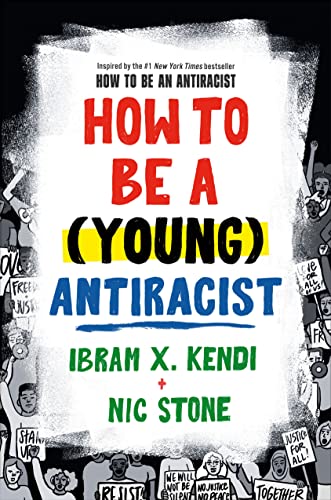
The #1 New York Times bestseller that sparked international dialogue is now a book for young adults! Based on the adult bestseller by Ibram X. Kendi, and co-authored by bestselling author Nic Stone, TROUBLEMAKER will serve as a guide for kids seeking a way forward in acknowledging, identifying, and dismantling racism and injustice.
The New York Times bestseller HOW TO BE AN ANTIRACIST by Ibram X. Kendi is shaping the way a generation thinks about race and racism. TROUBLEMAKER is a dynamic reframing of the concepts shared in the adult book, with young adulthood front and center. Aimed at readers 12 and up, and co-authored by award-winning children’s book author Nic Stone, TROUBLEMAKER empowers young readers to help create a more just society. Antiracism is a journey--and now young adults will have a map to carve their own path. Kendi and Stone have revised this work to provide anecdotes and data that speaks directly to the experiences and concerns of younger readers to think critically and build a more equitable world in doing so.
Die Inhaltsangabe kann sich auf eine andere Ausgabe dieses Titels beziehen.
Über die Autorin bzw. den Autor
Ibram X. Kendi is the Andrew W. Mellon Professor in the Humanities at Boston University and the founding director of the BU Center for Antiracist Research. He is the author of many books, including the #1 New York Times bestseller How to Be an Antiracist and the National Book Award winner Stamped from the Beginning: The Definitive History of Racist Ideas in America, which was remixed for young adult readers by Jason Reynolds into Stamped: Racism, Antiracism, and You, and adapted into a graphic novel by cartoonist Joel Christian Gill. Dr. Kendi was awarded a 2021 MacArthur Fellowship, popularly known as the “Genius Grant.” Find Dr. Kendi online @ibramxk on Instagram, TikTok, and Twitter.
Nic Stone is an Atlanta native and a Spelman College graduate. Her debut novel for young adults, Dear Martin, was a #1 New York Times bestseller. She is also the author of the New York Times bestseller Clean Getaway, the 2020 NPR Best Book of the Year selection Dear Justyce (a sequel to Dear Martin), the Rainbow Book List Top Ten selection Odd One Out, Jackpot, and Shuri: A Black Panther Novel. She is one of the authors in the New York Times bestselling book Blackout, recently optioned for as a new anthology program for Netflix by Barack and Michelle Obama’s production company, Higher Ground. Find her online at nicstone.info or @nicstone.
Auszug. © Genehmigter Nachdruck. Alle Rechte vorbehalten.
A Brief Word before We Begin . . .
As I’m sure you’ve deduced from that whole “Inspired by the #1 New York Times bestsellerHow to Be an Antiracist” statement on the cover, this book is . . . inspired by the #1New York Times bestseller How to Be an Antiracist, the paradigm-shifting memoir written by Dr. Ibram X. Kendi.
And the inspired by is very important. Because this book is structured differently than its source of inspiration. Hence me, your beloved narrator, Nic Stone, including thispre-intro as a bit of a road map for the nonlinear journey you’re about to take through Dr. Kendi’s life.
Said journey is broken up into three parts (or acts, if we want to get all narratively fancy with it):
INSIDE: Facing Yourself
The concepts covered here—definitions, dueling consciousness, power, biology, behavior, Black, and White—are all about turning inward and are focused on examining the paradigms, aka foundational thoughts and ideas, that form our views of ourselves and other people.
OUTSIDE: Facing the World
Once we’ve done some self-examination and rejiggering, it’ll be time to turn outward and take a microscopic-level look into the ways that racism permeates the world we live in and intersects with other forms of people being awful to each other. We’re talking color, ethnicity, body, gender, orientation, class, culture, and space.
UPSIDE DOWN: Flipping the World Over
This is where we get about that action, boss. We’re moving from failure to success and digging into whatI—Nic—call the Four C’s of Changemaking: cogency, compassion, creativity, and collaboration. We’ll also make sure we have a solid grip on the power of pushing forward in spite of obstacles. And I know that a lot of you readers feel like you’re ready to get out there and tear down the vile walls of racism, so, like, why not just jump to this section first, right?
Well, you could, obviously . . .
But in my humble opinion, it would behoove you to read the other two sections first.
Because as you, dear reader, will come to discover, being antiracist is more than a quick and easy decision you make. (And you don’t have to make it right now, by the way. Do yourself—and the world—a favor by reading the book first.)
Being antiracist is . . . Well, I won’t spoil it.
Just buckle up and get ready for the ride.
BEGINNING IN THE MIDDLE: Your (Racist) Introduction
The year is 2000, and you, Ibram X. Kendi, are seventeen years old.
You hate wearing suits. And ties.
Hate it.
Today, though, you’re in a suit and tie—black button-down, black slacks, golden-brown blazer, slick boots the color of the half-and-half you’ve seen adults pour into coffee, and the brightest, boldest tie you could find. You’re also standing somewhere you never expected to be, about to do something you never expected to do.
It’s your senior year of high school, and you’re mere months from graduation. Gettingthere felt like a hard-fought battle with one arm tied behind your back. So beinghere? In this chapel with upward of three thousand people seated in rows that curve around the long, arched pulpit, all waiting to hear what YOU have to say? Flanked by two other Black high schoolers also dressed to the nines and waiting for their turns at the mic?
Yeah, this feels real good.
It’s the perfect cap to a series of events that turned your world—both outer and inner, your sense of yourself and your capabilities—completely upside down. True, your competitors in the final round of the Prince William County Martin Luther King Jr. Oratorical Contest are a lot (book) smarter than you are. They certainly get better grades than the ones that make up your sub-3.0 GPA. And their SAT scores are hundreds of points higher than yours. You barely cracked 1000 . . .
But you are here, just like they are.
You won your high school oratorical competition, as you presume they did. You moved on to a countywide round, which they did as well. You were voted “best before the judge,” which is how you wound up right here beside them on this makeshift stage.
And the best part: Just like them, you’re headed to college.
Now, this might not sound like a huge deal—obviously, you’re eventually going to college, right? Your parents both went, and from what you’ve heard, that’s what all smart people do after graduating from high school. No-brainer.
The truth is, though, for a while you didn’t feel very smart. You’d dropped out of your IB English class because you couldn’t get your head around Shakespeare.There’s no way I’m smart enough for a university, you thought.
But being on this stage isn’t the first time you’ve been proven wrong about yourself. And as you’ll soon come to discover, the fiery speech you’re about to give is only the beginning.
The whole college thing had come as a huge surprise: A few weeks prior, you’d been minding your basketball business, running layup lines during a typical pre–home game warm-up session. Catch the pass, dribble forward, then gently leap and let the ball roll off your fingertips. Run to the opposite line and repeat.
But then the gym door opened, and in strode your dear ol’ dad. Six-foot-three and two hundred pounds. Waltzed right onto the court, long arms waving to get your attention.
Your gut reaction: wide-eyed, breath-stopping embarrassment. As much as you love your pops, his blasé-blah attitude toward what you’ll eventually come to call the “White judge”—a personified name for the overwhelming sense that power-bearing White people are evaluating your every move . . . something Dad couldn’t care less about—really got under your skin back then. Prevent his true feelings from showing on his face? Nope. Keep his voice down? No way. Avoid making any sort of scene? Forget about it.
It scared you to have an African American father who lived by his own rules. It was the precise type of attitude that might’ve gotten him lynched in the past or shot down by a vigilante civilian or law enforcement official now.
But at any rate, there he was. So you jogged over to meet him.
He looked really geeked. Which was weird.
When you reached him, he handed you an envelope. Told you to open it. Like . . . right then and there at the half-court line before a game. Witheverybody watching. Including all the White people.
Of course, you complied.
It was an acceptance letter from Hampton University, one of the two colleges you’d applied to for the sole purpose of being able to say you’d tried.
That acceptance letter flipped your worldview on its head. Despite the test scores and report cards, you were smart enough to go to college after all. The other school you applied to, Florida A&M University, is the one you’ll wind up attending, so you clearly got in there too (though you don’t know that yet).
Standing on that court in front of your dad, a number of faulty ideas faded from your mind. So did your sense of what you would later come to know as the “White gaze.” With that letter in your hand, the stuff you believed about “intelligence” being proven by grades and test scores? It lost a bit of its validity.
Granted, you’ve still got a lot of ideas to unlearn and replace. You’re not yet a reader, but you will be soon. And eventually, you’ll look back and see a number of...
„Über diesen Titel“ kann sich auf eine andere Ausgabe dieses Titels beziehen.
Suchergebnisse für How to Be a (Young) Antiracist

Beispielbild für diese ISBN
How to Be a (Young) Antiracist
Anbieter: medimops, Berlin, Deutschland
Verkäuferbewertung 5 von 5 Sternen

Zustand: very good. Gut/Very good: Buch bzw. Schutzumschlag mit wenigen Gebrauchsspuren an Einband, Schutzumschlag oder Seiten. / Describes a book or dust jacket that does show some signs of wear on either the binding, dust jacket or pages. Artikel-Nr. M00593529235-V
Gebraucht kaufen
EUR 9,84
EUR 10,00 Versand
Versand von Deutschland nach USA
Versand von Deutschland nach USA
Anzahl: 1 verfügbar
Beispielbild für diese ISBN
How to Be a (Young) Antiracist
Anbieter: ThriftBooks-Atlanta, AUSTELL, GA, USA
Verkäuferbewertung 5 von 5 Sternen
Paperback. Zustand: Good. No Jacket. Pages can have notes/highlighting. Spine may show signs of wear. ~ ThriftBooks: Read More, Spend Less. Artikel-Nr. G0593529235I3N00
Gebraucht kaufen
EUR 21,15
Versand gratis
Versand innerhalb von USA
Versand innerhalb von USA
Anzahl: 1 verfügbar
Foto des Verkäufers
How to Be a (Young) Antiracist
Verlag:
Penguin Random House, Kokila Feb 2023, 2023
ISBN 10: 0593529235
ISBN 13: 9780593529232
Neu
Taschenbuch
Anbieter: AHA-BUCH GmbH, Einbeck, Deutschland
Verkäuferbewertung 5 von 5 Sternen
Taschenbuch. Zustand: Neu. Neuware - The #1 New York Times bestseller that sparked international dialogue is now a book for young adults! Based on the adult bestseller by Ibram X. Kendi, and co-authored by bestselling author Nic Stone, TROUBLEMAKER will serve as a guide for kids seeking a way forward in acknowledging, identifying, and dismantling racism and injustice.The New York Times bestseller HOW TO BE AN ANTIRACIST by Ibram X. Kendi is shaping the way a generation thinks about race and racism. TROUBLEMAKER is a dynamic reframing of the concepts shared in the adult book, with young adulthood front and center. Aimed at readers 12 and up, and co-authored by award-winning children s book author Nic Stone, TROUBLEMAKER empowers young readers to help create a more just society. Antiracism is a journey--and now young adults will have a map to carve their own path. Kendi and Stone have revised this work to provide anecdotes and data that speaks directly to the experiences and concerns of younger readers to think critically and build a more equitable world in doing so. Artikel-Nr. 9780593529232
Neu kaufen
EUR 15,18
EUR 35,00 Versand
Versand von Deutschland nach USA
Versand von Deutschland nach USA
Anzahl: 2 verfügbar
Foto des Verkäufers
How to Be a Young Antiracist
Anbieter: moluna, Greven, Deutschland
Verkäuferbewertung 5 von 5 Sternen
Zustand: New. Ibram X. Kendi is the Andrew W. Mellon Professor in the Humanities at Boston University and the founding director of the BU Center for Antiracist Research. He is the author of many books, including the #1 New York Times bestseller How to Be. Artikel-Nr. 700942558
Neu kaufen
EUR 14,06
EUR 48,99 Versand
Versand von Deutschland nach USA
Versand von Deutschland nach USA
Anzahl: Mehr als 20 verfügbar
Foto des Verkäufers
How to Be a (Young) Antiracist
Anbieter: preigu, Osnabrück, Deutschland
Verkäuferbewertung 5 von 5 Sternen
Taschenbuch. Zustand: Neu. How to Be a (Young) Antiracist | Ibram X. Kendi (u. a.) | Taschenbuch | 208 S. | Englisch | 2023 | Kokila | EAN 9780593529232 | Verantwortliche Person für die EU: Petersen Buchimport GmbH, Vertrieb, Weidestr. 122a, 22083 Hamburg, gpsr[at]petersen-buchimport[dot]com | Anbieter: preigu. Artikel-Nr. 124148710
Neu kaufen
EUR 12,25
EUR 70,00 Versand
Versand von Deutschland nach USA
Versand von Deutschland nach USA
Anzahl: 5 verfügbar