
Verwandte Artikel zu Giving Hope: Conversations with Children About Illness,...
Inhaltsangabe
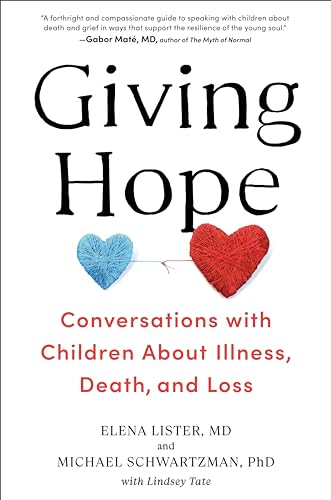
The best and only resource you will ever need for helping any child understand and cope with illness, death, and loss
Just as death is inevitable, talking about death is an inevitable part of parenting. Dr. Elena Lister and Dr. Michael Schwartzman offer us the way to have conversations with children that are as much about life as they are about death—conversations that anyone who parents, teaches, or counsels children can have.
Giving Hope is a must-have resource that expands our understanding of how to prepare for, initiate, and facilitate these personal and profound conversations. The approach is honest, practical, and compassionate and will benefit a grieving child both now and in the future. Giving Hope provides us with the tools to make our children’s experiences positive and life-affirming.
Die Inhaltsangabe kann sich auf eine andere Ausgabe dieses Titels beziehen.
Über die Autorin bzw. den Autor
Elena Lister, MD, is associate professor of clinical psychiatry at New York-Presbyterian/Weill Cornell Medical Center and senior consulting analyst for grief at Columbia University Psychoanalytic Center. She treats adults and children facing all life issues, specializes in grief, and is a frequently sought-out expert on dealing with loss in schools across the country. Dr. Lister is the coauthor of I Will Remember You: A Guidebook Through Grief for Teens.
Michael Schwartzman, PhD, ABPP, a senior psychologist and board-certified psychoanalyst, has worked with children, adolescents, adults, and families for more than forty years. In addition to his private practice, Dr. Schwartzman is the consulting psychologist at two independent schools for children and lectures regularly to parents and professional colleagues on child development, parenting, and school-related issues. He is the author of The Anxious Parent: Freeing Yourself from the Fears and Stresses of Parenting.
Auszug. © Genehmigter Nachdruck. Alle Rechte vorbehalten.
“Elena and Phil Lister,” I said to the receptionist, and she smiled. “They’re ready for you.” We were at our older daughter Molly’s school, not for another dance recital or parent-teacher conference, but to talk to her classmates about death. Her little sister, our younger daughter Liza, was dying of leukemia, and we knew there were questions in the air, some asked, some not, that we felt Molly shouldn’t have to navigate alone. We weren’t sure what to expect.
As we entered the classroom, the third graders were filing in, shuffling, whispering, full of life, and the teachers shushed them, telling them to settle down. There were about a hundred of them filling the room, their faces turned to my husband and me at the front. Many I recognized from years of play dates and sleepovers at our house, although there had been fewer of those recently, and that was part of the problem. What did one do when the sister of a classmate was dying? Were there rules? Expectations? Liza hadn’t wanted us to come in and talk to the grade; she thought it was too private. But we knew her illness was greatly impacting Molly, too, and we wanted to help with that. I scanned the room. Molly had chosen not to sit with us at the front, and there she was, surrounded by her closest friends, in one of the top rows of the tiered seating. She looked sad, scared, and brave, her arms folded across her chest. She knew what we had planned today and why we wanted to do it, as we had talked it through, but still it wouldn’t be easy for her. None of it was. I felt a lump in my throat and swallowed it down, turning to Phil and taking in his loving strength.
We had sent a letter to the students’ parents, explaining what was going on in our family, suggesting they talk to their child before our visit, though adding we would be prepared in case they didn’t. I looked out at the children’s expectant faces. Then we spoke. Briefly and to the point, explaining that Liza was sick with a disease called leukemia, that the doctors had done everything they could but the illness was too strong, that we knew that Liza would die. I said we were very sad about this, and paused. The children sat in silence, attentive, some nodding their heads. I added that even in the midst of our sadness, we were happy that we still had time left with Liza and we planned to enjoy it together to the fullest.
Next we asked the children if they had questions, or anything they’d like to say. Anything at all.
“My grandma died,” a girl piped up.
“Mine, too,” said another.
“I’m sorry,” I said. “Did that make you sad?”
“Yes,” one of the girls agreed. “She used to paint my nails.”
“I almost drowned,” said another child.
“And I broke my arm.”
I sensed they were trying to understand, trying to match their own experiences to Liza’s and Molly’s to relate as best they could.
“Does it hurt?” asked a boy, his eyes wide, looking up at me.
I realized he was asking about Liza’s illness, that there was empathy and compassion in his question and he hoped she wasn’t in pain.
“Yes,” I answered. “It does hurt. Some days are worse than others and then Liza takes medicine to make the pain go away.”
I looked across the room at Molly, seeing how she was doing with all this. She had leaned forward, listening. A friend next to her had draped her arm around her shoulders. The children asked lots of questions: What did Liza do all day, what were her favorite foods, would she come back to school, did she have bandages on. And we answered them all honestly in ways the children could understand. She did have bandages but only a few. She liked to build with her Legos when she could, and play cards, look at books, and watch TV, just as they all probably did, too. We said her favorite foods were an interesting mix: Mike and Ike candy, string beans, tomatoes, watermelon, and her grandma’s roast chicken. That she couldn’t return to school, as she might get infections from other people, and this made her sad, but a teacher gave her lessons at our house and she did homework and was learning to read. She was determined to read before she died.
“Is she nervous?” a boy asked.
I paused. So many answers buzzed in my head. That Liza was scared of leaving us. That she was frustrated by her limitations and angry at her sick white blood cells, but was she nervous? She’d worried when things were vague about her illness, when her oncologist squirmed in the face of her pointed questions, but when he told her she wouldn’t see her seventh birthday though he hoped she would make it to her sixth, her anxiety lessened. This truth, stark though it was, could be understood and processed.I told the children some version of this. That Liza was scared and had questions, but when they were answered truthfully and talked through with me, her dad, and her sister, it helped her. It took the anxiety of not knowing away and let her see that she wasn’t alone. I looked around the room at all these children with their engaged, curious faces and realized that we were going through the same process here. Creating a safe space for questions to be asked with the expectation that they would be answered truthfully. Like a game of catch where the ball is thrown, caught, and returned. A partnership. A conversation.
Phil and I had asked to come into the school to speak to the class that day. It was over twenty-five years ago and there were no formal structures in place for speaking about terminal illness and death, neither within the school system nor the healthcare system. But we needed to be there to help Molly. We’d seen her struggle to explain the situation to her friends and sensed their unease in coming to our house anymore. We had become something to be whispered about or avoided perhaps. We wanted to help the children understand a little so they would be kind to Molly and not be afraid of us. Once approached, the school was more than receptive to our wishes and helped facilitate the visit, and we were grateful for that.
Our conversation with the third graders confirmed several thoughts for me about children: they can handle the truth even on subjects that adults think are off-limits; they want to hear the truth; they are curious, even if fearful, around the subject of death; and having their questions validated and answered honestly creates trust. I knew this already, having seen it in my conversations with my daughters, but having witnessed this same openness in other children, this same need for the truth to address feelings of fear and anxiety, was inspiring to me. I was also struck by the children’s capacity for empathy. Their attempts to equate their own illnesses and mishaps to Liza’s and Molly’s situations were such a heartfelt effort to understand how they might feel and to respond. They were wondering what it was like to be them. I saw that we had gone into the school to help Molly, and we did—over time many of the children showed her kindness afterward and came to the house for play dates and sleepovers as before—but our conversation had done more than that. It had helped the other children, too. They’d been given a safe space and had brought their concerns out into the open to be addressed, and they had been heard. In the back-and-forth of questions and answers, the confusion and worries they may have felt had lessened. What was vague and unknown and possibly frightening had been spoken about. This knowledge made me feel hopeful. Many parents are scared that speaking about death will terrify their children. I would suggest the opposite is true.
After Liza’s death, I was determined to help...
„Über diesen Titel“ kann sich auf eine andere Ausgabe dieses Titels beziehen.
Suchergebnisse für Giving Hope: Conversations with Children About Illness,...

Beispielbild für diese ISBN
Giving Hope: Conversations with Children About Illness, Death, and Loss
Anbieter: World of Books (was SecondSale), Montgomery, IL, USA
Verkäuferbewertung 5 von 5 Sternen

Hardback. Zustand: Fair. The best and only resource you will ever need for helping any child understand and cope with illness, death, and loss Just as death is inevitable, talking about death is an inevitable part of parenting. Dr. Elena Lister and Dr. Michael Schwartzman offer us the way to have conversations with children that are as much about life as they are about death--conversations that anyone who parents, teaches, or counsels children can have. Giving Hope is a must-have resource that expands our understanding of how to prepare for, initiate, and facilitate these personal and profound conversations. The approach is honest, practical, and compassionate and will benefit a grieving child both now and in the future. Giving Hope provides us with the tools to make our children's experiences positive and life-affirming. Artikel-Nr. 00079898654
Gebraucht kaufen
EUR 4,05
Versand gratis
Versand innerhalb von USA
Versand innerhalb von USA
Anzahl: 1 verfügbar
Beispielbild für diese ISBN
Giving Hope: Conversations with Children About Illness, Death, and Loss
Anbieter: World of Books (was SecondSale), Montgomery, IL, USA
Verkäuferbewertung 5 von 5 Sternen
Hardback. Zustand: Good. The best and only resource you will ever need for helping any child understand and cope with illness, death, and loss Just as death is inevitable, talking about death is an inevitable part of parenting. Dr. Elena Lister and Dr. Michael Schwartzman offer us the way to have conversations with children that are as much about life as they are about death--conversations that anyone who parents, teaches, or counsels children can have. Giving Hope is a must-have resource that expands our understanding of how to prepare for, initiate, and facilitate these personal and profound conversations. The approach is honest, practical, and compassionate and will benefit a grieving child both now and in the future. Giving Hope provides us with the tools to make our children's experiences positive and life-affirming. Artikel-Nr. 00092641404
Gebraucht kaufen
EUR 4,05
Versand gratis
Versand innerhalb von USA
Versand innerhalb von USA
Anzahl: 1 verfügbar
Beispielbild für diese ISBN
Giving Hope: Conversations with Children About Illness, Death, and Loss
Anbieter: BooksRun, Philadelphia, PA, USA
Verkäuferbewertung 5 von 5 Sternen
Hardcover. Zustand: Very Good. With dust jacket. It's a well-cared-for item that has seen limited use. The item may show minor signs of wear. All the text is legible, with all pages included. It may have slight markings and/or highlighting. Artikel-Nr. 0593419154-8-6-29
Gebraucht kaufen
EUR 5,26
Versand gratis
Versand innerhalb von USA
Versand innerhalb von USA
Anzahl: 1 verfügbar
Beispielbild für diese ISBN
Giving Hope : Conversations with Children about Illness, Death, and Loss
Verlag:
Penguin Publishing Group, 2022
ISBN 10: 0593419154
ISBN 13: 9780593419151
Gebraucht
Hardcover
Anbieter: Better World Books, Mishawaka, IN, USA
Verkäuferbewertung 5 von 5 Sternen
Zustand: Very Good. Former library copy. Pages intact with possible writing/highlighting. Binding strong with minor wear. Dust jackets/supplements may not be included. Includes library markings. Stock photo provided. Product includes identifying sticker. Better World Books: Buy Books. Do Good. Artikel-Nr. 51325007-75
Gebraucht kaufen
EUR 6,74
Versand gratis
Versand innerhalb von USA
Versand innerhalb von USA
Anzahl: 1 verfügbar
Beispielbild für diese ISBN
Giving Hope : Conversations with Children about Illness, Death, and Loss
Verlag:
Penguin Publishing Group, 2022
ISBN 10: 0593419154
ISBN 13: 9780593419151
Gebraucht
Hardcover
Anbieter: Better World Books: West, Reno, NV, USA
Verkäuferbewertung 5 von 5 Sternen
Zustand: Very Good. Former library copy. Pages intact with possible writing/highlighting. Binding strong with minor wear. Dust jackets/supplements may not be included. Includes library markings. Stock photo provided. Product includes identifying sticker. Better World Books: Buy Books. Do Good. Artikel-Nr. 51325007-75
Gebraucht kaufen
EUR 6,74
Versand gratis
Versand innerhalb von USA
Versand innerhalb von USA
Anzahl: 2 verfügbar
Beispielbild für diese ISBN
Giving Hope: Conversations with Children about Illness, Death, and Loss
Anbieter: ThriftBooks-Atlanta, AUSTELL, GA, USA
Verkäuferbewertung 5 von 5 Sternen
Hardcover. Zustand: As New. No Jacket. Pages are clean and are not marred by notes or folds of any kind. ~ ThriftBooks: Read More, Spend Less. Artikel-Nr. G0593419154I2N00
Gebraucht kaufen
EUR 6,83
Versand gratis
Versand innerhalb von USA
Versand innerhalb von USA
Anzahl: 1 verfügbar
Beispielbild für diese ISBN
Giving Hope: Conversations with Children about Illness, Death, and Loss
Anbieter: ThriftBooks-Phoenix, Phoenix, AZ, USA
Verkäuferbewertung 5 von 5 Sternen
Hardcover. Zustand: Very Good. No Jacket. May have limited writing in cover pages. Pages are unmarked. ~ ThriftBooks: Read More, Spend Less. Artikel-Nr. G0593419154I4N00
Gebraucht kaufen
EUR 6,83
Versand gratis
Versand innerhalb von USA
Versand innerhalb von USA
Anzahl: 1 verfügbar
Beispielbild für diese ISBN
Giving Hope: Conversations with Children about Illness, Death, and Loss
Anbieter: ThriftBooks-Dallas, Dallas, TX, USA
Verkäuferbewertung 5 von 5 Sternen
Hardcover. Zustand: Very Good. No Jacket. May have limited writing in cover pages. Pages are unmarked. ~ ThriftBooks: Read More, Spend Less. Artikel-Nr. G0593419154I4N00
Gebraucht kaufen
EUR 6,83
Versand gratis
Versand innerhalb von USA
Versand innerhalb von USA
Anzahl: 1 verfügbar
Beispielbild für diese ISBN
Giving Hope: Conversations With Children About Illness, Death, and Loss
Anbieter: BookOutlet, Jefferson City, TN, USA
Verkäuferbewertung 5 von 5 Sternen
Hardcover. Zustand: New. Hardcover. Publisher overstock, may contain remainder mark on edge. Artikel-Nr. 9780593419151B
Beispielbild für diese ISBN
Giving Hope: Conversations With Children About Illness, Death, and Loss
Anbieter: Revaluation Books, Exeter, Vereinigtes Königreich
Verkäuferbewertung 5 von 5 Sternen
Hardcover. Zustand: Brand New. 368 pages. 9.00x6.00x0.91 inches. In Stock. Artikel-Nr. zk0593419154
Neu kaufen
EUR 43,02
EUR 11,87 Versand
Versand von Vereinigtes Königreich nach USA
Versand von Vereinigtes Königreich nach USA
Anzahl: 1 verfügbar